Fact of Friction
July 27 - August 2, 2026
Formation Library → Sunday Table → Fact of Friction
The Edge | Builders at Work
The Sunday Table è scritto in due lingue, inglese e italiano. Per ogni sezione, il testo in inglese è seguito da quello in italiano.
We are Human Together or Not at All.
Cosiamo | Founder, UMANIAMO® | Humaning Architecture
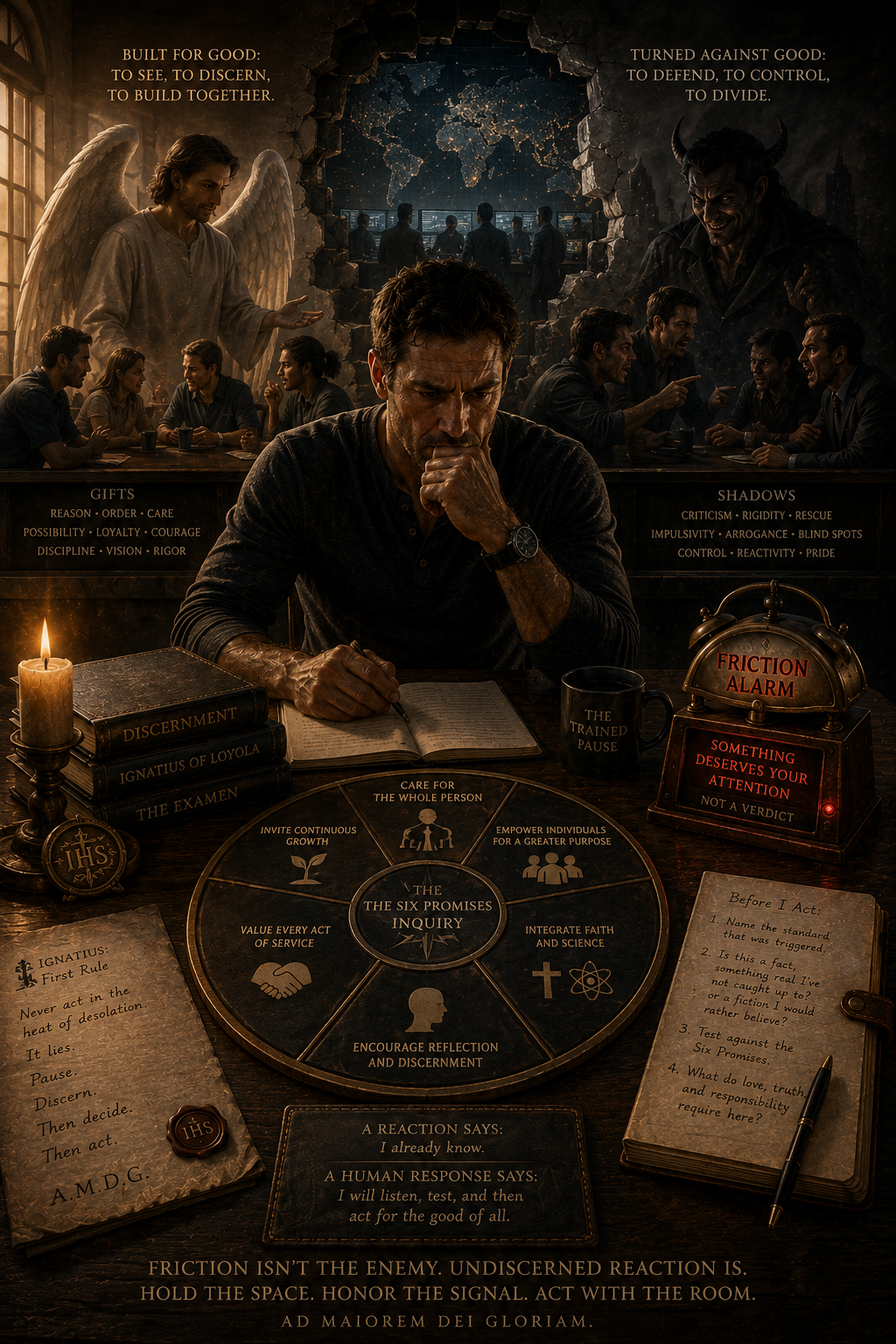
Every person creates friction, and it’s not a sign that something is wrong. It happens because each of us meets reality through a particular architecture, a pattern of attention, judgment, preference, and response that was authored into us before we chose any of it. Our strongest currents do more than help us think. They set the standards by which we decide what counts as clear, credible, responsible, humane, efficient, safe, or true. So when something feels obvious to you and incoherent to the person beside you, the two of you are very often not seeing different facts at all. You are measuring the same reality through different perceptive instruments (your authored selves).
That is the fact of friction, and once you can give it a name, you stop mistaking it for an enemy.
Friction appears whenever the world refuses to move the way your architecture trusts it should. The person built to reason feels it when evidence is flimsy, when confidence arrives before proof. The person built for order feels it when responsibility is vague, when commitments drift, when a thing has no visible owner. The person built for people feels it the moment someone is reduced to an output, or a decision is technically correct and humanly careless. The person built for possibility feels it when an option is closed too soon, when an inherited assumption goes unchallenged, when the quick fix quietly mortgages the future. None of these reactions is automatically wisdom, and none is automatically distortion. Each may be a true reading of something the whole room needs to see and yet each may just as easily become a private standard pressed down on everyone else.
Here is where friction begins to reveal us at the core.
The currents that run strongest in us tend to become the very air we breathe, so constant that we do not notice them until someone else violates the standard they have quietly set. But there is another kind, quieter and more startling. Some of your strengths do not hum in the background at all; they wait, silent, until a particular condition appears, and then they fire, hard, and surprise even us. A person not usually rigid about structure becomes suddenly uncompromising when no one will own a failure. Someone not normally tender becomes fierce when a person is humiliated in front of others. A man who never leads with analysis becomes exacting the instant he sees evidence being bent. The reaction can look wildly out of proportion, precisely because the strength was invisible until the moment it fired.
That intensity is carrying information. The danger, the whole danger, is in assuming that because the alarm sounded, its first interpretation must be true. A smoke alarm can tell you there is smoke. However, it can’t tell you whether the house is burning, the toast is scorched, or the sensor itself has failed. Friction is exactly the same way, it tells you that something deserves your attention. It does not tell you what happened, or why, or who is responsible, or what to do next. The practice of Humaning begins in the space between the alarm and the action. Without that space, friction hardens instantly into reaction. We defend the standard that fired. We assign motive. We reach for control. We assemble a case just strong enough to justify what we already wanted to do; and the very capacity that might have protected everyone becomes the instrument that narrows the room. Rigor is repositioned into interrogation; order into rigidity; care into emotional policing; vision into endless disruption. In the end, the gift becomes a demand.
No one in history built more of his life in that narrow space between the signal and the action than the man whose feast we keep this week, Ignatius of Loyola. Long before Ignatius was a saint he was a soldier, and the first and most practical rule he ever taught was about this exact moment: never act, never decide, never turn the whole ship, in the heat of the firing. He called that heat, desolation, and he was blunt about the fact that it lies.
One of his greatest contributions to Humaning, the Examen, is brilliantly the most sophisticated “trained pause,” a disciplined way of recognizing the internal signal without surrendering to it. Five hundred years later it remains the most practical instrument we have for the space between the alarm and the act, and it is why we begin, this week, on his feast, the twenty-eight days to turn the table: because turning a table is not a feeling that seizes you. It is a thing you learn to do in the half-second after the alarm, on purpose, over and over, until it becomes who you are.
What he discovered and taught, was to pause in that uneasy tension, and thoughtfully notice and interrogate what initiated the alarm. His method, which we have updated using modern neuroscience, teaches us to identify the standard we think was violated, and then ask honestly: is this friction a fact or is it something real I have not yet caught up to or a fiction I would rather believe? Both wear the same type of mask, at least in that moment. The friction that irritates you most is very often the fact about yourself that you least want to face, and the smooth, reasonable, utterly convincing way you explain it away is fiction. Learn to distrust your most effortless explanations. They are usually the ones doing the hiding.
We then test what is rising in you against the whole person and the UMANIAMOⓇ Six Promises of the Humaning Covenant, inquiring: Does this response care for everyone involved, including the one whose behavior lit the fuse? Does it grow their agency, or only their compliance? Does it hold evidence and faith together, or use one to silence the other? Does it make room for reflection, or reward speed and certainty? Does it honor service that your own standard cannot even see? Does it invite growth, including in the person most sure he is already right, who is usually you?
The Six Promises Inquiry doesn’t make the friction disappear. They change what it is for. They convert irritation into inquiry, intensity into information, judgment into discernment, and the impulse to control into the far harder capacity to act with other people rather than upon or against them. That conversion is the distance between a reaction and a human response and, this week, it is the entire distance between someone who merely holds a position and someone who actually leads. A reaction says: something is wrong, and I already know exactly what it is. A human response says: something has triggered in me; I will listen to it, test it, and then decide what love, and truth, and responsibility, and the good of everyone here now require.
The leader is never the one with the fastest reaction or the loudest standard. The leader is the one who can hold the space, who honors the friction without being ruled by it, and who acts with the room instead of over it. Every real leader is made, and unmade, in that half-second.
So don’t read your friction as proof that something has gone awry. It’s your interior architecture doing exactly what it was built to do… telling you the truth that something deserves your attention. The only question, and it is the question of a lifetime, is what you will do with the signal: use it to defend yourself, to control the others, or to build something more human, together.
Ad maiorem Dei gloriam. Formed at the table. Sent as Builders. We are human together, or not at all.
Ogni persona genera attrito, e questo non è un segno che qualcosa non vada bene. Succede perché ognuno di noi affronta la realtà attraverso una struttura particolare, uno schema di attenzione, giudizio, preferenze e reazioni che ci è stato impresso prima ancora che potessimo scegliere alcunché. Le nostre correnti più forti non si limitano ad aiutarci a pensare. Esse stabiliscono i criteri in base ai quali decidiamo cosa sia chiaro, credibile, responsabile, umano, efficiente, sicuro o vero. Quindi, quando qualcosa ti sembra ovvio e incoerente alla persona accanto a te, molto spesso voi due non state affatto vedendo fatti diversi. State misurando la stessa realtà attraverso strumenti percettivi diversi (i vostri sé plasmati).
Questa è la realtà dell’attrito, e una volta che riesci a dargli un nome, smetti di scambiarlo per un nemico.
L’attrito si manifesta ogni volta che il mondo si rifiuta di muoversi nel modo in cui la tua struttura si aspetta che faccia. La persona costruita per ragionare lo avverte quando le prove sono inconsistenti, quando la fiducia precede la dimostrazione. La persona costruita per l’ordine lo avverte quando la responsabilità è vaga, quando gli impegni vanno alla deriva, quando una cosa non ha un proprietario visibile. La persona costruita per le persone lo avverte nel momento in cui qualcuno viene ridotto a un risultato, o quando una decisione è tecnicamente corretta ma umanamente incurante. Chi è orientato alle possibilità lo avverte quando un’opzione viene preclusa troppo presto, quando un presupposto ereditato non viene messo in discussione, quando la soluzione rapida ipoteca silenziosamente il futuro. Nessuna di queste reazioni è automaticamente saggezza, e nessuna è automaticamente distorsione. Ciascuna può essere una lettura autentica di qualcosa che l’intera sala ha bisogno di vedere, eppure ciascuna può altrettanto facilmente diventare uno standard personale imposto a tutti gli altri.
È qui che l’attrito comincia a rivelare la nostra essenza più profonda.
Le correnti che scorrono più forti dentro di noi tendono a diventare l’aria stessa che respiriamo, così costanti che non le notiamo finché qualcun altro non viola lo standard che hanno silenziosamente stabilito. Ma ce n’è un altro tipo, più silenzioso e più sorprendente. Alcuni dei tuoi punti di forza non ronzano affatto in sottofondo; aspettano, in silenzio, finché non si presenta una condizione particolare, e poi si scatenano, con forza, e sorprendono persino noi stessi. Una persona che di solito non è rigida riguardo alle regole diventa improvvisamente intransigente quando nessuno si assume la responsabilità di un fallimento. Qualcuno che normalmente non è tenero diventa feroce quando una persona viene umiliata davanti agli altri. Un uomo che non agisce mai basandosi sull’analisi diventa esigente nell’istante stesso in cui vede che le prove vengono distorte. La reazione può sembrare selvaggiamente sproporzionata, proprio perché quel punto di forza era invisibile fino al momento in cui si è scatenato.
Quell’intensità veicola un’informazione. Il pericolo, l’intero pericolo, sta nel presumere che, poiché l’allarme è scattato, la sua prima interpretazione debba essere vera. Un rilevatore di fumo può dirvi che c’è del fumo. Tuttavia, non può dirvi se la casa sta bruciando, se il toast è bruciato o se il sensore stesso si è guastato. L’attrito funziona esattamente allo stesso modo: vi dice che qualcosa merita la vostra attenzione. Non ti dice cosa sia successo, né perché, né chi sia responsabile, né cosa fare dopo. La pratica dell’Humaning inizia nello spazio tra l’allarme e l’azione. Senza quello spazio, l’attrito si trasforma istantaneamente in reazione. Difendiamo lo standard che ha fatto scattare l’allarme. Attribuiamo un movente. Cerchiamo di assumere il controllo. Costruiamo un caso appena sufficientemente solido da giustificare ciò che volevamo già fare; e proprio quella capacità che avrebbe potuto proteggere tutti diventa lo strumento che restringe lo spazio. Il rigore si trasforma in interrogatorio; l’ordine in rigidità; la cura in controllo emotivo; la visione in interruzione senza fine. Alla fine, il dono diventa una pretesa.
Nessuno nella storia ha costruito gran parte della propria vita in quello spazio ristretto tra il segnale e l’azione quanto l’uomo di cui celebriamo la festa questa settimana, Ignazio di Loyola. Molto prima che Ignazio diventasse un santo, era un soldato, e la prima e più pratica regola che abbia mai insegnato riguardava proprio questo momento: mai agire, mai decidere, mai cambiare rotta alla nave, nel pieno del fuoco. Egli definiva quel fervore «desolazione» ed era schietto sul fatto che essa inganna.
Uno dei suoi più grandi contributi all’essere umani, l’Esame, è brillantemente la «pausa allenata» più sofisticata, un modo disciplinato di riconoscere il segnale interno senza arrendersi ad esso. Cinquecento anni dopo rimane lo strumento più pratico di cui disponiamo per lo spazio che intercorre tra l’allarme e l’azione, ed è per questo che iniziamo, questa settimana, in occasione della sua festa, i ventotto giorni per ribaltare la situazione: perché ribaltare la situazione non è una sensazione che ti travolge. È una cosa che impari a fare nel mezzo secondo successivo all’allarme, di proposito, più e più volte, finché non diventa ciò che sei.
Ciò che lui scoprì e insegnò fu di fermarsi in quella tensione inquietante, e di osservare e interrogarsi con attenzione su ciò che aveva innescato l’allarme. Il suo metodo, che abbiamo aggiornato utilizzando le moderne neuroscienze, ci insegna a identificare lo standard che pensiamo sia stato violato, e poi a chiederci onestamente: questo attrito è un fatto, oppure è qualcosa di reale che non ho ancora colto, o una finzione a cui preferisco credere? Entrambi indossano lo stesso tipo di maschera, almeno in quel momento. L’attrito che ti irrita di più è molto spesso il fatto su te stesso che meno vuoi affrontare, e il modo fluido, ragionevole e assolutamente convincente con cui lo giustifichi è finzione. Impara a diffidare delle tue spiegazioni più spontanee. Di solito sono proprio quelle che nascondono qualcosa.
Mettiamo quindi alla prova ciò che sta emergendo in te confrontandolo con la persona nella sua interezza e con le Sei Promesse del Patto UMANIAMOⓇ, chiedendoci: questa risposta tiene conto di tutte le persone coinvolte, compresa quella il cui comportamento ha innescato la miccia? Rafforza la loro autonomia, o solo la loro obbedienza? Coniuga prove e fede, o usa l’una per mettere a tacere l’altra? Lascia spazio alla riflessione, o premia la rapidità e la certezza? Onora un servizio che il tuo stesso metro di giudizio non riesce nemmeno a cogliere? Invita alla crescita, anche nella persona più convinta di avere già ragione, che di solito sei tu?
L’Indagine sulle Sei Promesse non fa scomparire l’attrito. Ne cambia lo scopo. Trasforma l’irritazione in indagine, l’intensità in informazione, il giudizio in discernimento e l’impulso al controllo nella capacità, ben più ardua, di agire conle altre persone piuttosto che su di loro o contro di loro. Quella conversione è la distanza tra una reazione e una risposta umana e, questa settimana, è l’intera distanza tra chi si limita a ricoprire una posizione e chi guida davvero. Una reazione dice: qualcosa non va, e io so già esattamente di cosa si tratta. Una risposta umana dice: qualcosa ha fatto scattare qualcosa in me; lo ascolterò, lo metterò alla prova e poi deciderò cosa richiedono l’amore, la verità, la responsabilità e il bene di tutti coloro che sono qui ora.
Il leader non è mai colui che ha la reazione più rapida o lo standard più forte. Il leader è colui che sa mantenere lo spazio, che onora l’attrito senza esserne dominato e che agisce con lo spazio invece che al di sopra di esso. Ogni vero leader viene forgiato, e sfatato, in quel mezzo secondo.
Quindi non interpretare il tuo attrito come la prova che qualcosa sia andato storto. È la tua architettura interiore che fa esattamente ciò per cui è stata costruita… dirti la verità che qualcosa merita la tua attenzione. L’unica domanda, ed è la domanda di una vita, è cosa farai con quel segnale: lo userai per difenderti, per controllare gli altri, o per costruire insieme qualcosa di più umano.
Ad maiorem Dei gloriam. Formati attorno al tavolo. Inviati come Costruttori. Siamo umani insieme, o non lo siamo affatto.
Leadership
This week we invite you to engage not only with the ideas of Leadership, but the actions that create these aspects of Humaning.
You may choose one or both of the following practices depending on your setting, time, and relationships.
The Table Discussion is a relaxed and relational conversation designed to help people reflect honestly on the week's REDISCOVER UⓇ theme and the realities of everyday life. It is a shared conversation among family and friends seeking to remain present to one another. The table discussion is not a debate or lesson, it's a discussion of being human together.
After the meal, coffee, or shared gathering:
Read the REDISCOVER UⓇ card and the reflections aloud
Move through the discussion prompts naturally
Allow the conversation to unfold without rushing
Some discussions may be lighthearted, and others may become deeply reflective. It's up to you.
The Humaning Circle is a more intentional relational practice inspired by the spirit of a prayer circle, conversation circle, or community gathering.
Place the REDISCOVER UⓇ card at the center of the table or view the digital card, then invite each person to quietly reflect on the theme together before sharing.
Begin with one slow shared breath and a brief moment of silence.
The Humaning Circle encourages:
DEEP listening
Honest reflection
Relational courage
Shared presence
Each week we pick up one card and turn it to the light. This week's card is Leadership, and it may be the most misunderstood strength in the whole deck, because almost everything the world taught you about it is pointed at the wrong thing.
We were taught that leadership is a position: a title, a rank, the seat at the head of the table, or having a following. We were taught it looks like charisma, like being the loudest or most certain voice in the room, like having power over other people. But none of that is leadership. Those are the things that sometimes get attached to it, and just as often get attached to its counterfeit. You have met people with the title who could not lead a dog to its bowl, and people with no title at all who quietly hold a whole room together. The card is not about the chair you sit in. It is about something authored into you that no one grants and no one can take away.
Real leadership is the capacity and the willingness to see what is actually true, to hold steady in the space between the alarm and the action, to act on the fact instead of your own flattering fiction, and then to answer for it in front of everyone. It is not being dazzled when the whole room is dazzled. It is going first when someone has to, and last when the reward is handed out. In truth it looks less like command and more like cultivating the way a good shepherd or coach or parent leads: by knowing the people in their care, going ahead of them into the hard thing, and taking responsibility for the outcome.
So when you look at the digital Leadership card this week, notice what moves in you. Does it open to a quiet yes, a recognition that you are already the one who steadies the room, sees the thing others miss, holds the space? Then it is a strength alive in you; steward it, and never confuse it with simply wanting to be in charge. Does it ache with a tightening, almost grief, an I see what needs doing, and I keep waiting for someone to give me permission to do it? That is the buried one, and it is one of the most common burials there is: leadership authored into a person who has spent a whole life deferring it to the room. Or does it stay quiet yet real, but not your center? Honor it; a person who leads when they must and follows well otherwise is a gift to every table.
The leader is never the one with the title or the loudest certainty. It is the one who can hold the space, tell the fact from the fiction, refuse to be dazzled, and act — and then answer for it. You do not need a chair to begin. You need only to stop waiting for one.
This week is Leadership — not the kind you are handed, but the kind you were authored for. Bring it to your own table, and let the questions move from the title to the truth.
Think of the best leader you have ever actually followed, not the most impressive one, the one you would follow again. What did they do? I suspect it had less to do with power than with how they saw you, went first, and answered for things.
Where in your life do you see clearly what needs to happen, and keep waiting for someone to give you permission to act? What exactly are you waiting for, and what would it cost to stop?
When have you led from your own flattering story instead of the plain fact, reacting to a motive you invented, defending the version of events that made you right? What would it look like to lead from the fact instead?
Where is God inviting you to lead this week, not by taking a title, but by tending one person, holding one hard space, or going first at some real cost?
Sunday Table Invitation. Make sure the quiet ones speak: the children, the teenagers, the person on the edge of the table. Leadership is not the loudest voice; the table is where a quiet person discovers they have been leading all along, and where a loud one learns to hold the space open for someone else.
If young people are present, offer them a notebook and one question to carry: When have you done the right thing first, before your friends did or wanted to, and didn't? What made it hard, and what would make it easier next time?
Humaning is something we do together, and then carry out the door. This week the circle practices the authored kind of leadership, the kind that has no title and needs none. Gather a few people and take it slowly.
First, go around once. Each person names the leadership they see in the person to their right not their job or their rank, but the Authored way they lead: how they steady a room, or see what others miss, or go first, or tend the person in front of them. Say it plainly, especially if that person has never once thought of themselves as a leader.
Then go around again, and this is the harder turn. Each person names one place they have been waiting for permission to lead, a truth they see and have not stood up for, a person who needs tending they have not tended, a hard space they keep hoping someone else will hold. Do not solve it. Just name it aloud, which is itself the first act of taking up the standing you were already given.
Then close with a single question, and let each person answer aloud: Before we gather again, where will I stop waiting for permission and lead by tending one real person, holding one hard space, or going first at some cost?
Because leadership was never the chair at the head of the table. It is the person who pulls a chair up beside someone, sees them truly, goes ahead of them into the hard thing, and answers for it. That is the Builder at Work. That is a Missionary Mentor. And it begins the moment you stop waiting to be put in charge and start tending what is already in front of you.
End however your circle ends with a prayer, a blessing, a shared silence. Then go, and lead where you stand.
Ad maiorem Dei gloriam. We are human together, or not at all.
Leadership
Questa settimana vi invitiamo a confrontarvi non solo con le idee relative alla leadership, ma anche con le azioni che danno vita a questi aspetti dell’“Humaning”.
Potete scegliere una o entrambe le seguenti pratiche a seconda del contesto, del tempo a disposizione e delle relazioni che intrattenete.
La discussione a tavola è una conversazione rilassata e incentrata sulle relazioni, pensata per aiutare le persone a riflettere onestamente sul tema REDISCOVER UⓇ della settimana e sulle realtà della vita quotidiana. È una conversazione condivisa tra familiari e amici che cercano di rimanere presenti gli uni agli altri. La discussione a tavola non è un dibattito né una lezione, ma una riflessione sull’essere umani insieme.
Dopo il pasto, il caffè o un momento di ritrovo in compagnia:
Leggete ad alta voce la scheda REDISCOVER UⓇ e le riflessioni
Passate naturalmente da un spunto di discussione all’altro
Lasciate che la conversazione si sviluppi senza fretta
Alcune discussioni potrebbero essere spensierate, mentre altre potrebbero diventare profondamente riflessive. Dipende da voi.
Il Circolo dell’Essere Umani è una pratica relazionale più intenzionale ispirata allo spirito di un circolo di preghiera, di conversazione o di un incontro comunitario.
Posizionate la scheda REDISCOVER UⓇ al centro del tavolo o visualizzate la scheda digitale, quindi invitate ogni persona a riflettere in silenzio sul tema insieme prima di condividere.
Iniziate con un respiro lento e condiviso e un breve momento di silenzio.
Il Circolo dell’Umanità incoraggia:
L’ascolto PROFONDO
La riflessione onesta
Il coraggio relazionale
La presenza condivisa
Ogni settimana prendiamo una carta e la giriamo verso la luce. La carta di questa settimana è Leadership, e potrebbe essere il punto di forza più frainteso dell’intero mazzo, perché quasi tutto ciò che il mondo ti ha insegnato al riguardo punta nella direzione sbagliata.
Ci è stato insegnato che la leadership è una posizione: un titolo, un grado, il posto a capotavola o il fatto di avere dei seguaci. Ci è stato insegnato che assomiglia al carisma, all’essere la voce più forte o più sicura nella stanza, all’avere potere sulle altre persone. Ma nulla di tutto ciò è leadership. Queste sono cose che a volte le vengono associate, e altrettanto spesso vengono associate alla sua contraffazione. Hai incontrato persone con un titolo che non sarebbero in grado di condurre nemmeno un cane alla sua ciotola, e persone senza alcun titolo che, in silenzio, tengono insieme un’intera stanza. La carta non riguarda la poltrona su cui ti siedi. Riguarda qualcosa che è insito in te, che nessuno ti concede e che nessuno può portarti via.
La vera leadership è la capacità e la volontà di vedere ciò che è realmente vero, di mantenere la calma nello spazio tra l’allarme e l’azione, di agire in base ai fatti invece che alla tua lusinghiera finzione, e poi di assumerne la responsabilità davanti a tutti. Non significa lasciarsi abbagliare quando l’intera stanza è abbagliata. Significa andare per primo quando qualcuno deve farlo, e per ultimo quando viene distribuita la ricompensa. In verità assomiglia meno a un comando e più a coltivare il modo in cui un buon pastore, un allenatore o un genitore guida: conoscendo le persone affidate alle proprie cure, precedendole nelle difficoltà e assumendosi la responsabilità del risultato.
Quindi, quando guardi la carta della Leadership digitale questa settimana, nota cosa si muove dentro di te. Si apre a un silenzioso sì, al riconoscimento che sei già tu a dare stabilità alla stanza, a vedere ciò che sfugge agli altri, a sostenere lo spazio? Allora è una forza viva in te; custodiscila e non confonderla mai con il semplice desiderio di comandare. Ti fa male con una stretta, quasi un dolore, un “Vedo cosa va fatto, e continuo ad aspettare che qualcuno mi dia il permesso di farlo”? Quella è la leadership sepolta, ed è una delle sepolture più comuni che esistano: una leadership insita in una persona che ha trascorso un’intera vita a rimandarla al gruppo. Oppure rimane silenziosa ma reale, pur non essendo il tuo centro? Onorala; una persona che guida quando deve e segue bene in ogni altro caso è un dono per ogni gruppo.
Il leader non è mai colui che ha il titolo o la certezza più assordante. È colui che sa mantenere lo spazio, distinguere la realtà dalla finzione, rifiutarsi di lasciarsi abbagliare e agire — e poi assumersene la responsabilità. Non hai bisogno di una sedia per iniziare. Devi solo smettere di aspettarne una.
Questa settimana il tema è la leadership — non quella che ti viene consegnata, ma quella per cui sei stato creato. Portate questo tema al vostro tavolo e lasciate che le domande si spostino dal titolo alla verità.Invito alla tavola della domenica.Assicuratevi che parlino anche i più silenziosi: i bambini, gli adolescenti, la persona seduta ai margini del tavolo. La leadership non è la voce più forte; il tavolo è il luogo in cui una persona silenziosa scopre di aver guidato fin dall’inizio, e dove una persona chiassosa impara a mantenere lo spazio aperto per qualcun altro.
Pensa al miglior leader che tu abbia mai seguito davvero, non a quello più impressionante, ma a quello che seguiresti di nuovo. Cosa ha fatto? Sospetto che abbia avuto meno a che fare con il potere che con il modo in cui ti vedeva, andava per primo e si assumeva la responsabilità delle cose.
In quale ambito della tua vita vedi chiaramente ciò che deve accadere, e continui ad aspettare che qualcuno ti dia il permesso di agire? Cosa stai aspettando esattamente, e quanto ti costerebbe smettere?
Quando hai guidato basandoti sulla tua versione edulcorata dei fatti invece che sulla nuda realtà, reagendo a una motivazione che ti sei inventato, difendendo la versione degli eventi che ti dava ragione? Come sarebbe invece guidare basandosi sui fatti?
In quale ambito Dio ti sta invitando a guidare questa settimana, non assumendo un titolo, ma prendendoti cura di una persona, sostenendo una situazione difficile o facendo da apripista a un costo reale?
Se ci sono dei giovani, offri loro un quaderno e una domanda da portare con sé: Quando hai fatto la cosa giusta per primo, prima che i tuoi amici lo facessero o volessero farlo, e non l’hanno fatto? Cosa l’ha resa difficile, e cosa la renderebbe più facile la prossima volta?
L’Humaning è qualcosa che facciamo insieme, e poi portiamo fuori dalla porta. Questa settimana il cerchio mette in pratica il tipo di leadership “autrice”, quella che non ha alcun titolo e non ne ha bisogno. Radunate alcune persone e procedete con calma.
Per prima cosa, fate un giro completo. Ogni persona descrive la leadership che vede nella persona alla sua destra – non il suo lavoro o il suo grado, ma il modo “autentico” in cui guida: come infonde serenità in una stanza, o nota ciò che sfugge agli altri, o fa da apripista, o si prende cura della persona che ha davanti. Ditelo chiaramente, specialmente se quella persona non si è mai considerata un leader.
Poi fate un altro giro, e questa è la parte più difficile. Ognuno indichi un ambito in cui ha aspettato il permesso di guidare, una verità che vede e per la quale non si è battuto, una persona bisognosa di attenzione che non ha curato, uno spazio difficile che continua a sperare che qualcun altro sostenga. Non risolvete la questione. Limitatevi a dirlo ad alta voce: questo è di per sé il primo atto per assumere la posizione che vi è già stata data.
Concludete poi con un’unica domanda, e lasciate che ogni persona risponda ad alta voce: Prima di ritrovarci, in quale ambito smetterò di aspettare il permesso e assumerò la guida prendendomi cura di una persona in carne e ossa, affrontando una situazione difficile o facendo il primo passo a costo di qualche sacrificio?
Perché la leadership non è mai stata la sedia a capotavola. È la persona che avvicina una sedia accanto a qualcuno, lo vede per quello che è veramente, lo precede nell’affrontare le difficoltà e se ne assume la responsabilità. Questo è il Costruttore all’opera. Questo è un Mentore Missionario. E inizia nel momento in cui smetti di aspettare di essere messo al comando e inizi a prenderti cura di ciò che è già davanti a te.
Concludi il tuo cerchio, qualunque sia la forma che assume, con una preghiera, una benedizione, un silenzio condiviso. Poi vai, e guida da dove ti trovi.
Ad maiorem Dei gloriam. Siamo umani insieme, o non lo siamo affatto.
A 28-Day Challenge for the Builder’s Watch
The world is getting better at reading you. It can track what holds your attention, predict what you are likely to choose, and place the next image, message, answer, or irritation in front of you before you have finished deciding what the last one meant.
That does not make the machine wise. It makes your vigil urgent.
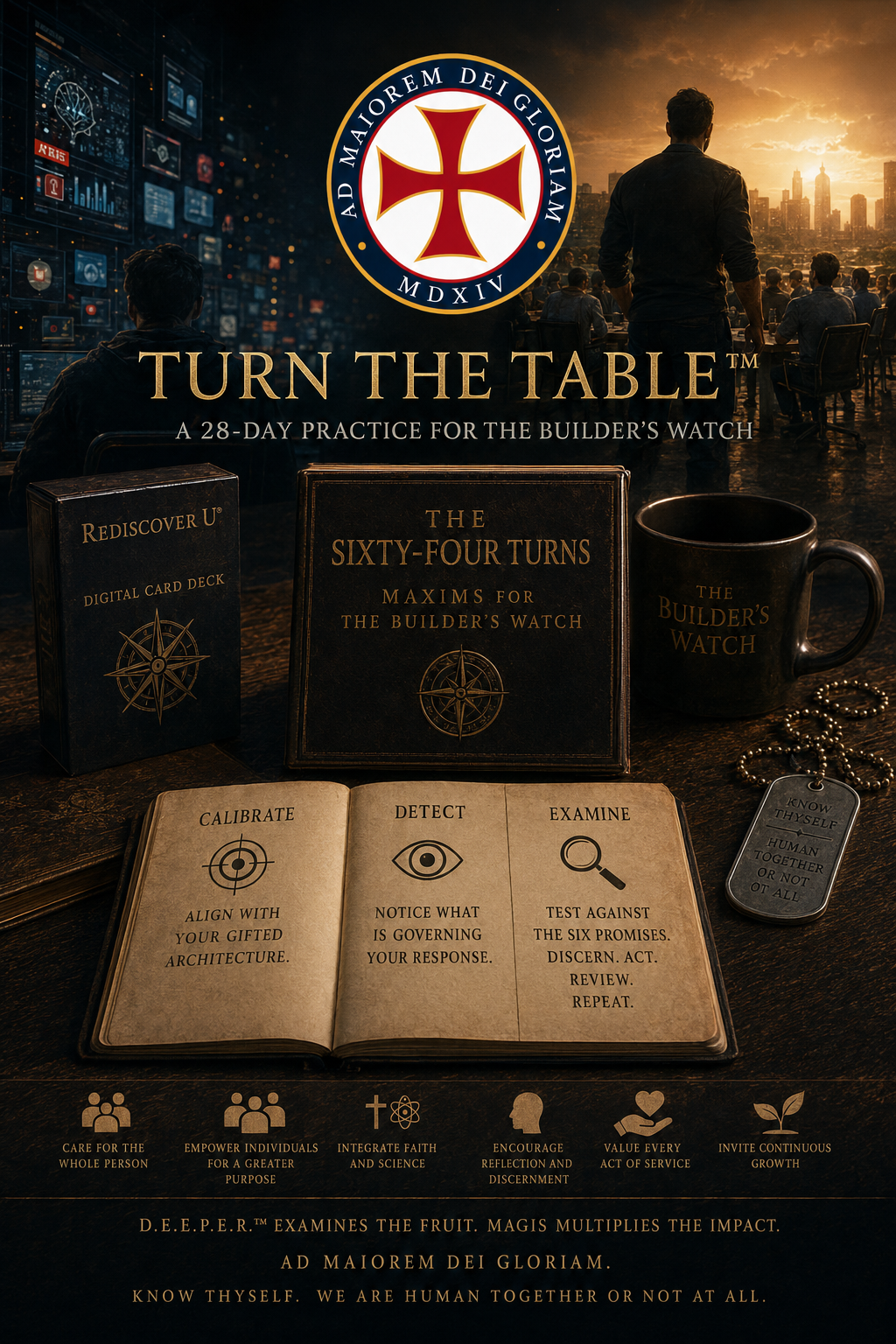
Turn the Table™ is a twenty-eight-day REDISCOVER U® toolkit designed to help you remain clear, coherent, and responsible inside the world as it is. It combines the REDISCOVER U® Digital Card Deck with The Sixty-Four Turns: Maxims for the Builder’s Watch, a practical workbook for leadership, discernment, and everyday action in the age of AI.
The Digital Card Deck helps you recognize what the Author has given you: your gifts, strengths, cognitive currents, and ways of engaging the world. The workbook helps you notice what is governing those characteristics. Together, they prepare what we call the Builder’s Watch: the disciplined readiness to meet pressure, friction, flattery, urgency, and the artificial attention grabbing social feed or AI without becoming what those distractions are doing to you.
The Sixty-Four Turns are short watchwords shaped by practical wisdom and positive psychology designed to build your resilience and resistance to the debilitating effects of the attention economy. Learn to work with the strengths you were given and Turn the Table™ on stress, overwhelm, and the external forces that pull you into an Empty Chair life.
Each day 3 major movements shape your day - Calibrate, Detect, and Examine. A Turn may remind you that fatigue makes fiction feel final. Another may warn that a crooked question can make the desired answer look discovered. Another asks you to measure leadership downstream by the agency that remains after you leave the room. Another keeps AI in its proper place: ask machines for assistance, never absolution; responsibility cannot be delegated to an answer.
The Turns do not tell you what to think. They help keep your senses true enough for you to discern what this person, this pressure, and this moment actually require.
REDISCOVER U® helps you know yourself. The Sixty-Four Turns prepare the Builder’s Watch. The Six Promises of the Humaning Covenant test whether your response protects the whole person. The Vigilant Turn converts discernment into deliberate action. D.E.E.P.E.R.™ examines the fruit. Magis appears as deeper freedom, wider service, stronger relationships, greater responsibility, and more shared life.
This is not another stream of new age wisdom to consume. It is something to take up, practice, and carry into the world.
Know Thyself - We are Human together or not at all.
Il mondo sta diventando sempre più bravo a leggerti. È in grado di tracciare ciò che cattura la tua attenzione, prevedere cosa potresti scegliere e presentarti la prossima immagine, il prossimo messaggio, la prossima risposta o il prossimo fastidio prima ancora che tu abbia finito di capire cosa significasse l’ultimo.
Questo non rende la macchina saggia. Rende invece urgente la tua vigilanza.
Turn the Table™ è un kit di strumenti REDISCOVER U® della durata di ventotto giorni, progettato per aiutarti a rimanere lucido, coerente e responsabile all’interno del mondo così com’è. Combina il mazzo di carte digitali REDISCOVER U® con The Sixty-Four Turns: Maxims for the Builder’s Watch, un manuale pratico dedicato alla leadership, al discernimento e all’azione quotidiana nell’era dell’intelligenza artificiale.
Il mazzo di carte digitali ti aiuta a riconoscere ciò che l’Autore ti ha donato: i tuoi doni, i tuoi punti di forza, le tue correnti cognitive e i tuoi modi di rapportarti al mondo. Il manuale ti aiuta a notare ciò che governa quelle caratteristiche. Insieme, preparano ciò che chiamiamo la Vigilanza del Costruttore: la prontezza disciplinata ad affrontare pressioni, attriti, lusinghe, urgenze e i feed social o l’IA che attirano artificialmente l’attenzione, senza diventare ciò che quelle distrazioni stanno facendo di te.
I «Sessantaquattro Turn» sono brevi motti d’ordine plasmati dalla saggezza pratica e dalla psicologia positiva, progettati per rafforzare la tua resilienza e resistenza agli effetti debilitanti dell’economia dell’attenzione. Impara a lavorare con i punti di forza che ti sono stati donati e a ribaltare la situazione (Turn the Table™) rispetto allo stress, al senso di sopraffazione e alle forze esterne che ti trascinano verso una vita da «Sedia Vuota».
Ogni giorno tre movimenti principali danno forma alla tua giornata: Calibra, Rileva ed Esamina. Una “Turn” potrebbe ricordarti che la stanchezza fa sembrare definitiva la finzione. Un’altra potrebbe avvertirti che una domanda distorta può far sembrare che la risposta desiderata sia stata scoperta. Un’altra ancora ti chiede di misurare la leadership a valle in base all’autonomia che rimane dopo che hai lasciato la stanza. Un’altra ancora mantiene l’IA al suo giusto posto: chiedi alle macchine assistenza, mai l’assoluzione; la responsabilità non può essere delegata a una risposta.
Le Svolte non ti dicono cosa pensare. Ti aiutano a mantenere i tuoi sensi abbastanza lucidi da discernere ciò che questa persona, questa pressione e questo momento richiedono realmente.
REDISCOVER U® ti aiuta a conoscere te stesso. Le Sessantaquattro Svolte preparano l’Orologio del Costruttore. Le Sei Promesse del Patto dell’Umanità verificano se la tua risposta protegge la persona nella sua interezza. La Svolta Vigilante trasforma il discernimento in azione deliberata. D.E.E.P.E.R.™ esamina il frutto. Magis si manifesta come libertà più profonda, servizio più ampio, relazioni più forti, maggiore responsabilità e vita più condivisa.
Questo non è l’ennesimo flusso di saggezza new age da consumare. È qualcosa da abbracciare, praticare e portare nel mondo.
Conosci te stesso – Siamo umani insieme o non lo siamo affatto.
Begin the 28-Day Challenge
Cosiamo | Founder, UMANIAMO® | Humaning Architecture
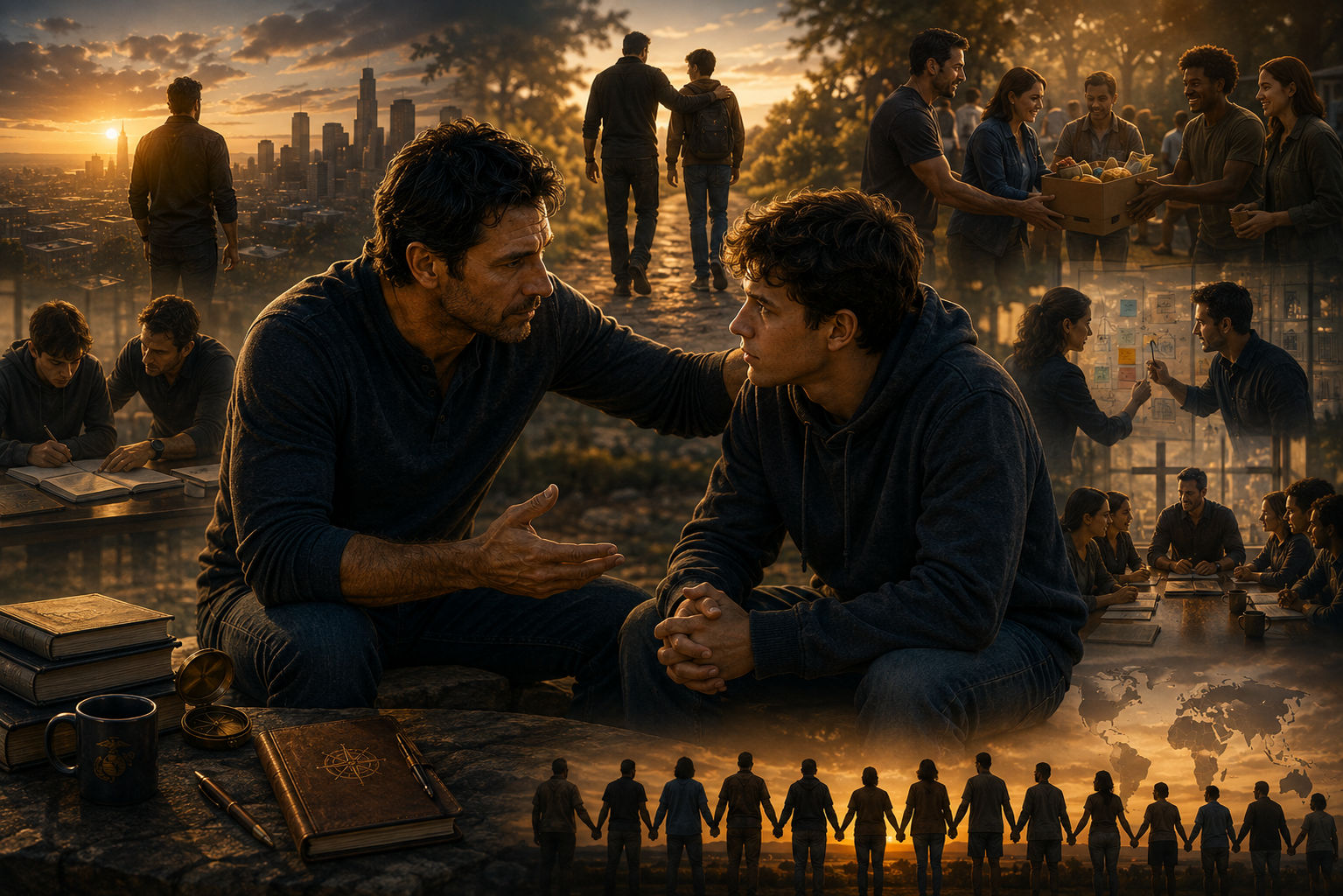
Most attempts to improve the world begin at the wrong end. They begin with the problem: vast, urgent, measurable, and impossible to ignore. Then someone wonders where they fit in as part of the solution. The outcome becomes primary, and the person becomes useful to the degree that he moves the metric, fills the role, grows the audience, or advances the plan. It sounds noble because the goal may be noble, but the architecture is still wrong. The person has become a means.
That is the same structure used by the attention economy, only pointed toward better ends. Start with the desired result. Study the person and identify what moves or motivates him. Shape his behavior until the desired outcome appears. The language may change from engagement to impact, from retention to mission, from influence to service, but the inversion remains whenever the human person is treated as material to be organized around someone else’s objective.
UMANIAMO® begins at the other end. We begin with the person, not the profile, the category, the role, the need, the failure, the potential contribution, or the version of him most convenient to the system. We begin with the person as authored: singular, unrepeatable, unfinished, responsible, and already carrying gifts that existed before they were scored, marketed, optimized, or turned into data.
Our work here is not to manufacture someone useful. The work is to help an authored original become more fully who he was made to be. Everything else worth building follows from that. The healed marriage, the humane company, the young man who does not disappear into a screen, the neighborhood that remembers how to to help each other, and the leader who refuses to mine the mind and trust of those in his care are not separate outcomes produced by different programs. They are fruits that emerge when people are cultivated rather than used.
You can’t aim directly at fruit. You must tend the tree. That difference may sound small, but it protects everything. The moment the world’s benefit becomes the highest objective, the person becomes negotiable. He can be spent for the greater number, reduced to an average, pressured for the mission, or sacrificed for the result. The end becomes sacred, and the human being becomes a lever. However, if the person becoming their authored self is the work, that person can never be reduced to the means. The greater good remains real, but it arrives as overflow. That is what keeps the work human. It also changes what leadership means.
Leadership is usually described through influence, vision, persuasion, execution, and the ability to move people toward an objective. Those capacities matter, but they can serve as either care or extraction. The same knowledge of another person’s fears, habits, strengths, and desires can be used to help him flourish or to make him easier to retain, manage, and control. The difference is not intelligence, it is intent.
One leader studies the person so he can get the best performance from him. Another learns the person so deeply that he can help him become free. Both may call what they are doing leadership, yet only one is cultivating human potential or in UMANIAMO® terms, “humaning.”
This is where the theme of the week, Fact and Fiction becomes unavoidable. The fact is that a person may need correction. The fiction is that his failure tells us the whole truth about him. The fact is that someone may resist, hesitate, or disappoint. The fiction is that we already know the motive. The fact is that a young person may be distracted, anxious, angry, or lost. The fiction is that the symptom is the identity. The fact is that a leader can see a pattern. The fiction is that seeing the pattern gives him ownership of the person.
Leadership fails when the interpretation becomes a verdict. It becomes dangerous when the verdict becomes permission to control. That is why the world does not need another theologian or another influencer. It needs people who can discern accurately and then act faithfully.
Theologians are not the problem. Thinking deeply about God is among the highest forms of human work. But theology can become a refuge from accountability. A person can accumulate beautiful language about truth, virtue, dignity, vocation, and love while remaining untouched by the demands of any of them. The mind grows large yet life barely breathes. That is not Humaning, it is consumption wearing a scholarly robe. Our “modern” age is full of words, memes, videos, and sermons about the good but woefully short of people willing to be accountable for the disciplined action needed.
The influencer is the second counterfeit. This one is harder to detect because it dresses itself as impact. The influencer arranges a life to be admired. The mentor arranges himself to be useful. One gathers attention, while the other accepts responsibility. One measures reach and the other asks whether even one living person became stronger, freer, more truthful, and more capable of helping someone else.
Real leadership changes both people. A Builder at Work can’t help another person become more fully human and remain untouched by the work. The winegrower is pruned by tending the vine. The mentor is formed by the person he mentors. The teacher learns as does the student. There is no clean division between the one who gives and the one who receives, because Humaning is recursive. We become more fully human through helping another become more fully human. This is why UMANIAMO® is looking for Missionary Mentors.
A missionary is someone sent into the world as it actually is: ordinary rooms, difficult conversations, strained relationships, workplaces governed by bad incentives, families carrying old wounds, and young people learning to mistake visibility for worth. The missionary does not ascend to a stage. He enters the real conditions in which people live.
A mentor takes responsibility for another person’s becoming. Not ownership, not control, and not rescue, but responsibility. He comes alongside one real person and tends him toward the life already authored within him. He pays attention without mining. He asks questions without manufacturing the answer. He names fact without creating fiction. He corrects without reducing the sinner to the sin. He remains near enough to know when the person is becoming freer and honest enough to know when his own need to be needed has entered the room.
Put the two together and the vocation becomes clear. The Missionary Mentor is not a guru above the person or a brand in front of him. He is a companion beside him who has undertaken the work himself and is willing to help another undertake it.
The work depends upon disciplined action. Ignatius of Loyola understood this better than almost anyone. He did not only describe ideas about spiritual life. He developed exercises. His work trains attention, memory, imagination, desire, judgment, and freedom until discernment becomes capable of producing a decision. Then the decision must become a disciplined action. That is the part our age routinely omits. We consume insight. We admire the language. We screenshot the maxim. We ask the machine to summarize the principle. We feel briefly clarified and call that change, but nothing has happened yet.
Discernment is not complete when the person understands what is moving him. It is complete only when the reading becomes a responsible act in the real world, at real cost, followed by the humility to return and examine what the act actually produced. Not what was intended. Not what was announced. What it became.
That is leadership in its truest sense: coherence between the interior senses and the exterior actions. It also requires accountability. These days many consider accountability to be the enemy of freedom, but accountability is what turns freedom into human agency. The Missionary Mentor answers for his life, not to the crowd, whose approval can be manipulated, and not merely to his own ideas, which will usually acquit him. He answers to the Author who made him, to the Six Promises of the Humaning Covenant, and to the actual person whose life is affected by his choices.
That accountability gives his influence weight. His words matter because his life can bear them. His guidance can be trusted because he is willing to be examined by the same standard he applies to others. He does not ask only whether the action worked. He asks whether it cared for the whole person, increased agency, integrated faith and evidence, created room for discernment, honored service, and made growth possible.
Then Magis asks the question beneath all six: what greater good became possible? Not what made the mentor look effective. Not what increased his audience. Not what confirmed his preferred theory. What produced deeper freedom, wider service, stronger relationships, and more shared life?
That is how Humaning advances. It happens one person, one table, one honest act, and one life at a time. It is the slow formation of a person becoming sufficiently rooted that he can shelter another. It is slow work because human beings are not products. It does not scale cleanly because care loses something when it becomes anonymous. It cannot be automated because a machine can identify a pattern without bearing responsibility for a life. And it cannot be performed indefinitely because the person being tended eventually reveals whether the mentor came to serve or to be needed.
The mentor’s success is not a permanent follower. It is the day the person no longer needs him in the same way, the day the branch bears its own fruit, and the day the one who was tended pulls up another chair.
This is what UMANIAMO® is for. Not to fix the world as though the world were an object awaiting our management. That ambition eventually crushes the person attempting it and corrupts the institution built around it. We are here to tend the next original well, to form and send people capable of doing the same, and to help a person recover the Chair, read fact from fiction, discern what is moving him, take disciplined action, answer for the fruit, and then become available to another human being.
The world does not need another polished copy. It does not need another voice explaining why everything is broken. It does not need another personality performing wisdom before a crowd. It needs people who will act, people who will tend, and people willing to enter ordinary life without being scattered by it. It needs people able to see another person without reducing him and to accept responsibility without trying to possess the outcome.
Originals are wanted because originals are what God authors. Missionary Mentors are needed because they are the true Builders at Work because no person becomes fully human alone. We are formed at the table and sent as Builders, not to manufacture better copies, but to cultivate the next original toward the life already written within him.
Ad maiorem Dei gloriam.
We are human together, or not at all.
La maggior parte dei tentativi di migliorare il mondo parte dal punto sbagliato. Si parte dal problema: vasto, urgente, misurabile e impossibile da ignorare. Poi qualcuno si chiede quale sia il proprio ruolo nella soluzione. Il risultato diventa prioritario e la persona diventa utile nella misura in cui influisce sugli indicatori, ricopre il ruolo assegnato, amplia il pubblico o porta avanti il piano. Sembra nobile perché l’obiettivo può essere nobile, ma la struttura è comunque sbagliata. La persona è diventata un mezzo.
È la stessa struttura utilizzata dall’economia dell’attenzione, solo che è orientata verso fini migliori. Si parte dal risultato desiderato. Si studia la persona e si identifica ciò che la commuove o la motiva. Si modella il suo comportamento finché non si manifesta l’esito desiderato. Il linguaggio può cambiare da «coinvolgimento» a «impatto», da «fidelizzazione» a «missione», da «influenza» a «servizio», ma l’inversione rimane ogni volta che la persona umana viene trattata come materiale da organizzare attorno all’obiettivo di qualcun altro.
UMANIAMO® parte dall’altra estremità. Partiamo dalla persona, non dal profilo, dalla categoria, dal ruolo, dal bisogno, dal fallimento, dal potenziale contributo o dalla versione di sé più conveniente per il sistema. Partiamo dalla persona in quanto essere unico: singolare, irripetibile, incompiuta, responsabile e già portatrice di doni che esistevano prima di essere valutati, commercializzati, ottimizzati o trasformati in dati.
Il nostro lavoro qui non è quello di fabbricare qualcuno di utile. Il nostro lavoro è aiutare un originale creato ad essere più pienamente ciò per cui è stato creato. Tutto il resto che vale la pena costruire deriva da questo. Il matrimonio ricucito, l’azienda umana, il giovane che non scompare dietro uno schermo, il quartiere che ricorda come aiutarsi a vicenda e il leader che rifiuta di sfruttare la mente e la fiducia di coloro che sono affidati alle sue cure non sono risultati separati prodotti da programmi diversi. Sono frutti che emergono quando le persone vengono coltivate anziché utilizzate.
Non si può puntare direttamente al frutto. Bisogna curare l’albero. Questa differenza può sembrare piccola, ma protegge tutto. Nel momento in cui il bene del mondo diventa l’obiettivo supremo, la persona diventa negoziabile. Può essere consumata per il bene della maggioranza, ridotta a una media, sottoposta a pressioni per la missione o sacrificata per il risultato. Il fine diventa sacro e l’essere umano diventa una leva. Tuttavia, se il lavoro consiste nel permettere alla persona di diventare se stessa in piena consapevolezza, quella persona non potrà mai essere ridotta a un mezzo. Il bene superiore rimane reale, ma si manifesta come un traboccare. È questo che mantiene il lavoro umano. Inoltre, cambia il significato stesso di leadership.
La leadership viene solitamente descritta in termini di influenza, visione, persuasione, esecuzione e capacità di guidare le persone verso un obiettivo. Queste capacità sono importanti, ma possono essere utilizzate sia per prendersi cura delle persone sia per sfruttarle. La stessa conoscenza delle paure, delle abitudini, dei punti di forza e dei desideri di un’altra persona può essere impiegata per aiutarla a prosperare oppure per renderla più facile da trattenere, gestire e controllare. La differenza non sta nell’intelligenza, ma nell’intento.
Un leader studia la persona per ottenere da lei le migliori prestazioni. Un altro la conosce così profondamente da poterla aiutare a liberarsi. Entrambi possono definire ciò che fanno “leadership”, eppure solo uno sta coltivando il potenziale umano o, nei termini di UMANIAMO®, sta “umanizzando”.
È qui che il tema della settimana, Realtà e finzione, diventa imprescindibile. Il fatto è che una persona può aver bisogno di essere corretta. La finzione è che il suo fallimento ci riveli tutta la verità su di lui. Il fatto è che qualcuno possa opporre resistenza, esitare o deludere. La finzione è che ne conosciamo già il motivo. Il fatto è che un giovane possa essere distratto, ansioso, arrabbiato o smarrito. La finzione è che il sintomo sia l’identità. Il fatto è che un leader possa individuare uno schema ricorrente. La finzione è che individuare lo schema gli dia il diritto di appropriarsi della persona.
La leadership fallisce quando l’interpretazione diventa un verdetto. Diventa pericolosa quando il verdetto diventa un permesso per controllare. Ecco perché il mondo non ha bisogno di un altro teologo o di un altro influencer. Ha bisogno di persone capaci di discernere con precisione e poi agire con fedeltà.
I teologi non sono il problema. Riflettere profondamente su Dio è una delle forme più elevate del lavoro umano. Ma la teologia può diventare un rifugio dalla responsabilità. Una persona può accumulare un linguaggio altisonante su verità, virtù, dignità, vocazione e amore pur rimanendo immune alle esigenze di ciascuna di esse. La mente si espande, ma la vita respira a malapena. Questo non è «essere umani», è consumismo travestito da accademia. La nostra epoca «moderna» è piena di parole, meme, video e sermoni sul bene, ma è tristemente carente di persone disposte ad assumersi la responsabilità dell’azione disciplinata necessaria.
L’influencer è la seconda contraffazione. Questa è più difficile da individuare perché si traveste da impatto. L’influencer organizza una vita per essere ammirato. Il mentore si organizza per essere utile. Uno raccoglie attenzione, mentre l’altro si assume la responsabilità. Uno misura la portata e l’altro si chiede se anche una sola persona vivente sia diventata più forte, più libera, più sincera e più capace di aiutare qualcun altro.
La vera leadership trasforma entrambe le persone. Un “Costruttore al lavoro” non può aiutare un’altra persona a diventare più pienamente umana senza che il proprio lavoro lo tocchi a sua volta. Il viticoltore viene potato mentre cura la vite. Il mentore viene plasmato dalla persona che guida. L’insegnante impara proprio come l’allievo. Non esiste una netta divisione tra chi dà e chi riceve, perché l’essere umani è un processo ricorsivo. Diventiamo più pienamente umani aiutando un altro a diventare più pienamente umano. Ecco perché UMANIAMO® è alla ricerca di Mentori Missionari.
Un missionario è qualcuno inviato nel mondo così com’è realmente: stanze ordinarie, conversazioni difficili, relazioni tese, luoghi di lavoro governati da incentivi sbagliati, famiglie che portano con sé vecchie ferite e giovani che imparano a confondere la visibilità con il valore. Il missionario non sale su un palcoscenico. Entra nelle condizioni reali in cui vivono le persone.
Un mentore si assume la responsabilità del divenire di un’altra persona. Non possesso, non controllo e non salvataggio, ma responsabilità. Si pone al fianco di una persona reale e la guida verso la vita già inscritta in lei. Presta attenzione senza scavare. Pone domande senza fabbricare la risposta. Denomina i fatti senza creare finzione. Corregge senza ridurre il peccatore al peccato. Rimane abbastanza vicino da capire quando la persona sta diventando più libera e abbastanza onesto da rendersi conto quando il proprio bisogno di essere necessario ha fatto il suo ingresso nella stanza.
Mettendo insieme questi due aspetti, la vocazione diventa chiara. Il Mentore Missionario non è un guru al di sopra della persona né un marchio davanti a lei. È un compagno al suo fianco che ha intrapreso lui stesso l’opera ed è disposto ad aiutare un altro a intraprenderla.
L’opera dipende da un’azione disciplinata. Ignazio di Loyola lo comprese meglio di quasi chiunque altro. Non si limitò a descrivere idee sulla vita spirituale. Sviluppò degli esercizi. Il suo lavoro allena l’attenzione, la memoria, l’immaginazione, il desiderio, il giudizio e la libertà fino a quando il discernimento diventa capace di produrre una decisione. A quel punto la decisione deve tradursi in un’azione disciplinata. Questa è la parte che la nostra epoca omette sistematicamente. Consumiamo intuizioni. Ammiriamo il linguaggio. Facciamo screenshot delle massime. Chiediamo alla macchina di riassumere il principio. Ci sentiamo momentaneamente chiariti e lo chiamiamo cambiamento, ma non è ancora successo nulla.
Il discernimento non è completo quando la persona comprende ciò che la muove. È completo solo quando la lettura diventa un atto responsabile nel mondo reale, a un costo reale, seguito dall’umiltà di tornare indietro ed esaminare ciò che l’atto ha effettivamente prodotto. Non ciò che si intendeva. Non ciò che è stato annunciato. Ciò che è diventato.
Questa è la leadership nel suo senso più vero: coerenza tra i sensi interiori e le azioni esteriori. Richiede anche responsabilità. Oggigiorno molti considerano la responsabilità come nemica della libertà, ma è proprio la responsabilità a trasformare la libertà in azione umana. Il Mentore Missionario risponde della propria vita, non alla folla – la cui approvazione può essere manipolata – e non semplicemente alle proprie idee, che di solito lo assolverebbero. Risponde all’Autore che lo ha creato, alle Sei Promesse dell’Alleanza dell’Umanizzazione e alla persona concreta la cui vita è influenzata dalle sue scelte.
È proprio questa responsabilità a dare peso alla sua influenza. Le sue parole contano perché la sua vita è in grado di sostenerle. Ci si può fidare della sua guida perché è disposto a essere valutato secondo lo stesso metro di giudizio che applica agli altri. Non si limita a chiedersi se l’azione abbia funzionato. Si chiede se abbia tenuto conto della persona nella sua interezza, se abbia accresciuto l’autodeterminazione, se abbia integrato fede ed evidenza, se abbia creato spazio per il discernimento, se abbia onorato il servizio e se abbia reso possibile la crescita.
Allora Magis pone la domanda che sta alla base di tutte e sei: quale bene superiore è diventato possibile? Non cosa ha fatto sembrare efficace il mentore. Non cosa ha aumentato il suo pubblico. Non cosa ha confermato la sua teoria preferita. Cosa ha prodotto una libertà più profonda, un servizio più ampio, relazioni più forti e una vita più condivisa?
È così che l’Humaning avanza. Avviene una persona, un tavolo, un atto onesto e una vita alla volta. È la lenta formazione di una persona che diventa sufficientemente radicata da poter offrire riparo a un’altra. È un lavoro lento perché gli esseri umani non sono prodotti. Non è facilmente scalabile perché la cura perde qualcosa quando diventa anonima. Non può essere automatizzata perché una macchina può identificare uno schema senza assumersi la responsabilità di una vita. E non può essere svolta all’infinito perché la persona assistita alla fine rivela se il mentore è venuto per servire o per essere necessario.
Il successo del mentore non è un seguace permanente. È il giorno in cui la persona non ha più bisogno di lui allo stesso modo, il giorno in cui il ramo porta il proprio frutto e il giorno in cui chi è stato accompagnato aggiunge un’altra sedia.
Ecco a cosa serve UMANIAMO®. Non per sistemare il mondo come se fosse un oggetto in attesa della nostra gestione. Quell’ambizione alla fine schiaccia chi la persegue e corrompe l’istituzione costruita attorno ad essa. Siamo qui per coltivare il prossimo pozzo originale, per formare e inviare persone capaci di fare lo stesso, e per aiutare una persona a ritrovare la Sedia, a distinguere la realtà dalla finzione, a discernere ciò che la muove, ad agire con disciplina, a rispondere dei propri frutti e poi a rendersi disponibile per un altro essere umano.
Il mondo non ha bisogno di un’altra copia rifinita. Non ha bisogno di un’altra voce che spieghi perché tutto è a pezzi. Non ha bisogno di un’altra personalità che metta in mostra la propria saggezza davanti a una folla. Ha bisogno di persone che agiscano, di persone che si prendano cura e di persone disposte a entrare nella vita ordinaria senza lasciarsi disperdere da essa. Ha bisogno di persone capaci di vedere l’altro senza sminuirlo e di assumersi la responsabilità senza cercare di appropriarsi del risultato.
Gli originali sono ricercati perché sono ciò che Dio crea. I mentori missionari sono necessari perché sono i veri Costruttori al Lavoro, poiché nessuna persona diventa pienamente umana da sola. Siamo formati alla tavola e inviati come Costruttori, non per produrre copie migliori, ma per coltivare il prossimo originale verso la vita già scritta dentro di lui.
Ad maiorem Dei gloriam.
Siamo umani insieme, oppure non lo siamo affatto.
Small acts to move the world forward
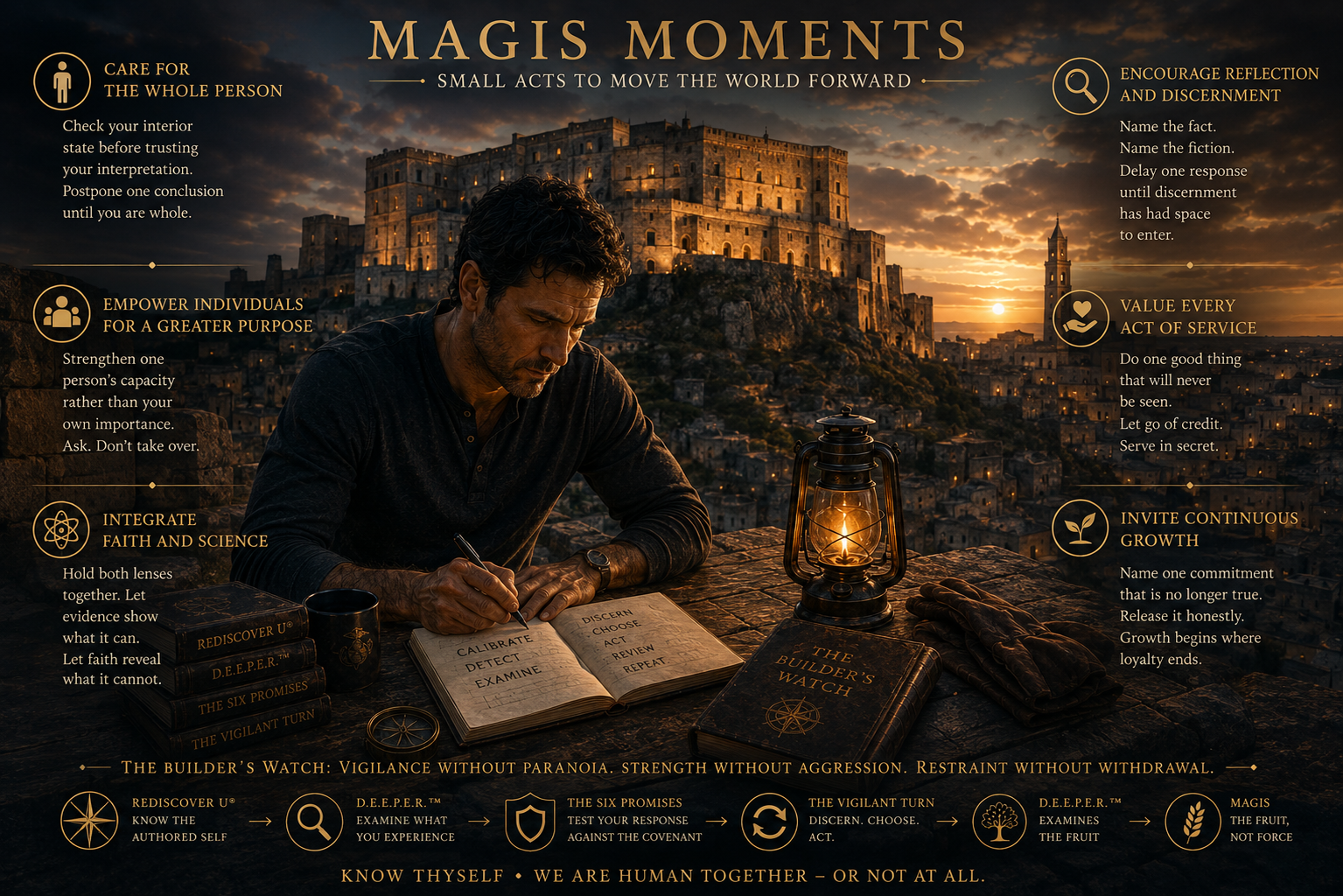
This week’s Magis Moments begin with the insight into fiction with a simple truth: seeing is not the same as understanding, feeling isn’t the whole picture, and friction is not yet solid proof. These are data and not answers. In a world of manufactured light, curated appearances, synthetic voices, persuasive images, and machines designed to accelerate judgment, the first responsibility of a Builder at Work is to remain in ordered coherence.
UMANIAMO® calls this preparation the Builder’s Watch.
A watch is not passive observation. It is the disciplined readiness of someone who knows what has been entrusted to him and refuses to abandon it under pressure. The Builder’s Watch is not suspicious of everything. It is vigilance without paranoia, strength without aggression, and restraint without withdrawal. It prepares a person to meet the world as it is without becoming what the world is doing to him. Sounds easy, doesn’t it?
REDISCOVER U® helps you recognize the Authored self that the Author has designed for you. D.E.E.P.E.R.™ teaches how to examine and process what you experience. The Six Promises of the Humaning Covenant establish the moral perimeter of the watch. When friction, urgency, flattery, fear, or manufactured certainty enters that space, we practice the Vigilant Turn.
The Vigilant Turn is the deliberate movement from impact to discernment and from discernment to action. It helps you notice what has entered the space and provides the method to separate the fact and fiction from the fiction that is immediately attached to it. It allows you to listen for the Word that orders the experience and test it against the Six Promises. Then we take one concrete action (turn) and return later to examine its fruit.
That is how Magis becomes practical, not by trying to force the greater good, instead preparing the conditions in which it can appear.
The first act of vigilance is to check your interior state before trusting your interpretation. Exhaustion can sound like conviction. Hunger can make irritation appear moral. Loneliness can make attention feel like love. Fear can disguise itself as certainty. A depleted body does not necessarily lie, but it often supplies an incomplete account of reality.
This week, when a reaction arrives with unusual force, pause before assigning meaning to it. Attend first to your body. Sleep, eat, move, breathe, pray, or step outside before making a permanent judgment about a person, a relationship, or your life.
The action is simple: postpone one important conclusion until you have restored the conditions necessary for clear perception. Then ask whether the fact still looks the same after the body is no longer pleading to be heard.
The Vigilant Turn begins by refusing to let depletion write the story.
A leader may see another person’s struggle clearly and still respond in a way that weakens them. Help can become control. Guidance can become dependence. Care can quietly become the need to be needed.
This week, notice one moment when you are tempted to take over something another person is capable of learning to carry. Instead of solving it immediately, ask a question that returns agency to them. Help them see the next step, but do not take the step in their place.
The action is to strengthen one person’s capacity rather than your own importance. Before intervening, ask whether your response will make them more dependent upon you or more capable of acting responsibly without you.
The Vigilant Turn does not ask only, “Can I help?” It asks, “What kind of person will my help encourage them to become?”
Facts matter. Evidence matters. Data can reveal patterns that intuition misses, and faith can illuminate meanings that measurement cannot contain. Trouble begins when either becomes sovereign.
This week, choose one belief about yourself, another person, or a situation that feels settled. Trace it back to its source. What did you actually observe? What evidence supports the conclusion? What remains unknown? What does prayer, conscience, Scripture, or trusted counsel reveal that the data cannot answer by itself?
The action is to hold both lenses together. Do not reject a fact because it challenges your preferred story, and do not treat a measurable pattern as though it has pronounced a final verdict upon a human life.
The Vigilant Turn asks the evidence what it can honestly show and refuses to demand that it reveal what belongs to the Author.
The speed between perception and reaction is one of the places where freedom disappears. A message arrives, friction fires, fiction attaches itself, and action follows before the person realizes that an interpretation has already become a verdict.
This week, practice the Vigilant Turn in real time. When something is presented with enough brightness, urgency, or emotional force to demand an immediate response, stop. Name only what reached your senses. Then name the story your mind supplied.
Say inwardly, “The fact is…” and complete the sentence without interpretation. Then say, “The fiction I may be adding is…” and complete that sentence honestly.
The action is to delay one response long enough for discernment to enter. Do not send the message, forward the clip, make the accusation, or finalize the decision until the light has settled and the whole person has had a chance to appear.
The Vigilant Turn preserves the interval in which freedom becomes possible.
Manufactured sight conditions you to notice what is visible, dramatic, measurable, and rewarded. Service often happens below that threshold. It is carried out in the repaired detail, the maintained relationship, the extra chair, the burden quietly lifted, and the task completed without an audience.
This week, deliberately look for one act of service that the visible story has ignored. Name it. Thank the person responsible. Then perform one act of service that no feed, report, photograph, or meeting will record.
The action is to restore moral attention to what the machine cannot value well. Let one good thing remain unannounced, and notice how strongly part of you still wants the credit.
The Vigilant Turn looks past the spectacle and notices who is still carrying the water after the lights go down.
A person can be held captive by a true fact when that fact is treated as permanent. The failure happened. The pattern is real. The harm must be faced. But the fiction begins when we decide that nothing else can ever become true.
This week, identify one person you have frozen inside an old reading. It may be someone else, or it may be you. Name the fact accurately, without softening it. Then ask what evidence of change, repentance, effort, or possibility you have ignored because the earlier story became easier to maintain.
The action is not automatic trust or premature reconciliation. Growth may require boundaries, consequence, repair, or distance. The action is simply to refuse the fiction that the Author has finished writing because you have finished reading.
The Vigilant Turn remembers that accountability and possibility belong together.
At the end of each day, return to one moment when something appeared clear, urgent, flattering, threatening, or emotionally charged. Don’t start by asking whether you were right or wrong. Begin by reconstructing what happened.
Details: What actually occurred? What did I see, hear, read, feel, or receive?
Evidence: What can be verified? What did I infer? What would a fair witness confirm?
Empathy: Who was affected by my interpretation and response? Whose experience, burden, dignity, or agency was missing from the frame?
Prospective: Where will this pattern lead if I continue to read and act this way? What fruit is already beginning to form?
Execution: What must I do next? Do I need to wait, verify, apologize, clarify, confront, repair, withdraw, serve, or ask another question?
Reflection: What is being formed in me? Did I become more watchful, free, truthful, and available to another person, or more reactive, self-protective, controlling, and dependent upon being right?
The D.E.E.P.E.R.™ Examen is not a trial in which you prosecute yourself. It is the evening return to the Watch. It helps you recalibrate the instrument, repair what was distorted, and prepare to stand more coherently tomorrow.
At the end of the week, return to the moments when you practiced the Vigilant Turn. Look not only at what you intended, but at what your actions became.
Where did pausing create more truth than reacting would have produced? Where did another person become more capable because you resisted taking control? Where did evidence correct a preferred story? Where did faith keep a fact from becoming a final verdict? Where did unseen service become visible? Where did accountability create the conditions for genuine growth?
Then ask the question that reveals Magis: What became freer, more truthful, more relational, more responsible, or more available to God because I kept the Watch?
Magis is not found in the intensity of the insight or the brilliance of the moment. It appears in the fruit. It may look like a conversation that became honest without becoming cruel, a boundary that preserved dignity, a delayed response that prevented harm, an apology offered without self-defense, a person trusted with greater responsibility, or an unseen act of service that made more room at the table.
Name one moment when the lantern tried to hold your attention inside its small circle. Name one moment when the mirror tried to make the whole story about you. Name one inversion you recognized before it became action. Then name one deliberate act through which you turned the table back toward the Author.
The Builder’s Watch does not promise that every reading will be perfect. It forms a person who is willing to test the reading, answer for the action, and return when he discovers that the table has turned again.
Know your Authored self. Read the movement. Guard the person. Turn deliberately. Examine the fruit. Then go back into the world and keep the Watch.
Ad maiorem Dei gloriam. We are human together, or not at all.
Piccoli gesti che fanno avanzare il mondo
I Momenti Magis di questa settimana iniziano con una riflessione sulla finzione, basata su una semplice verità: vedere non significa comprendere, provare un’emozione non è tutto, e l’attrito non è ancora una prova concreta. Questi sono dati, non risposte. In un mondo di luce artificiale, apparenze curate, voci sintetiche, immagini persuasive e macchine progettate per accelerare il giudizio, la prima responsabilità di un Costruttore all’opera è quella di mantenere una coerenza ordinata.
UMANIAMO® definisce questa preparazione la Vigilanza del Costruttore.
La «Vigilanza del Costruttore» non è osservazione passiva. È la prontezza disciplinata di chi sa ciò che gli è stato affidato e rifiuta di abbandonarlo sotto pressione. Non è sospettosa di tutto. È vigilanza senza paranoia, forza senza aggressività e moderazione senza chiusura. Prepara una persona ad affrontare il mondo così com’è, senza diventare ciò che il mondo sta facendo di lui. Sembra facile, vero?
REDISCOVER U® ti aiuta a riconoscere il sé Autore che l’Autore ha progettato per te. D.E.E.P.E.R.™ insegna come esaminare ed elaborare ciò che vivi. Le Sei Promesse del Patto dell’Humaning stabiliscono il perimetro morale della veglia. Quando attrito, urgenza, adulazione, paura o certezze artificiose entrano in quello spazio, pratichiamo la Svolta Vigilante.
La “Svolta Vigilante” è il passaggio deliberato dall’impatto al discernimento e dal discernimento all’azione. Ti aiuta a notare ciò che è entrato nello spazio e fornisce il metodo per separare il fatto e la finzione dalla finzione che vi è immediatamente associata. Ti permette di ascoltare la Parola che ordina l’esperienza e di verificarla alla luce delle Sei Promesse. Quindi intraprendiamo un’azione concreta (svolta) e torniamo in seguito per esaminarne i frutti.
È così che il Magis diventa pratico: non cercando di imporre il bene superiore, ma preparando le condizioni in cui esso possa manifestarsi.
Il primo atto di vigilanza consiste nel verificare il proprio stato interiore prima di fidarsi della propria interpretazione. La stanchezza può sembrare convinzione. La fame può far apparire l’irritazione come un atto morale. La solitudine può far sembrare l’attenzione come amore. La paura può mascherarsi da certezza. Un corpo esausto non mente necessariamente, ma spesso fornisce un resoconto incompleto della realtà.
Questa settimana, quando una reazione si manifesta con forza insolita, fermati prima di attribuirle un significato. Presta attenzione innanzitutto al tuo corpo. Dormi, mangia, muoviti, respira, prega o esci all’aperto prima di esprimere un giudizio definitivo su una persona, una relazione o la tua vita.
L’azione è semplice: rimanda una conclusione importante finché non avrai ripristinato le condizioni necessarie per una percezione chiara. Poi chiediti se il fatto appare ancora lo stesso dopo che il corpo ha smesso di implorare di essere ascoltato.
La Svolta Vigilante inizia rifiutando di lasciare che l’esaurimento scriva la storia.
Un leader può vedere chiaramente la difficoltà di un’altra persona e tuttavia reagire in un modo che la indebolisce. L’aiuto può trasformarsi in controllo. La guida può trasformarsi in dipendenza. La cura può diventare silenziosamente il bisogno di essere necessari.
Questa settimana, nota un momento in cui sei tentato di prendere in mano qualcosa che un’altra persona è in grado di imparare a gestire. Invece di risolvere immediatamente la situazione, poni una domanda che restituisca a quella persona la propria autonomia. Aiutala a vedere il passo successivo, ma non compierlo al posto suo.
L’azione consiste nel rafforzare la capacità di una persona piuttosto che la tua importanza. Prima di intervenire, chiediti se la tua risposta la renderà più dipendente da te o più capace di agire in modo responsabile senza di te.
La «Svolta Vigilante» non si limita a chiedere: «Posso aiutarti?», ma chiede: «Che tipo di persona il mio aiuto la incoraggerà a diventare?».
I fatti contano. Le prove contano. I dati possono rivelare schemi che sfuggono all’intuizione, e la fede può illuminare significati che la misurazione non può cogliere. I problemi iniziano quando uno dei due diventa sovrano.
Questa settimana, scegli una convinzione su te stesso, su un’altra persona o su una situazione che ti sembra ormai definita.
Risalite alla sua origine. Cosa avete effettivamente osservato? Quali prove sostengono la conclusione? Cosa rimane sconosciuto? Cosa rivelano la preghiera, la coscienza, le Scritture o un consiglio fidato che i dati da soli non possono spiegare?
L’azione consiste nel tenere insieme entrambe le prospettive. Non rifiutate un fatto solo perché mette in discussione la vostra versione preferita, e non trattate uno schema misurabile come se avesse pronunciato un verdetto definitivo su una vita umana.
La «Svolta Vigile» chiede alle prove cosa possano onestamente mostrare e rifiuta di esigere che rivelino ciò che appartiene all’Autore.
La rapidità con cui si passa dalla percezione alla reazione è uno dei punti in cui la libertà svanisce. Arriva un messaggio, scatta l’attrito, la finzione si attacca e l’azione segue prima che la persona si renda conto che un’interpretazione è già diventata un verdetto.
Questa settimana, esercitatevi con la «Svolta Vigilante» in tempo reale. Quando qualcosa vi viene presentato con sufficiente intensità, urgenza o forza emotiva da richiedere una risposta immediata, fermatevi. Identificate solo ciò che ha raggiunto i vostri sensi. Poi identificate la storia che la vostra mente ha inventato.
Dite interiormente: «Il fatto è che…» e completate la frase senza interpretazioni. Poi dite: «La finzione che potrei aggiungere è…» e completate quella frase onestamente.
L’azione consiste nel ritardare una risposta abbastanza a lungo da lasciare spazio al discernimento. Non inviare il messaggio, non inoltrare il video, non muovere l’accusa né prendere la decisione definitiva finché la luce non si è stabilizzata e la persona nella sua interezza non ha avuto la possibilità di manifestarsi.
La «Svolta Vigilante» preserva l’intervallo in cui la libertà diventa possibile.
La visione artificiale ti condiziona a notare ciò che è visibile, drammatico, misurabile e ricompensato. Il servizio spesso avviene al di sotto di quella soglia. Si manifesta nel dettaglio riparato, nella relazione curata, nella sedia in più, nel fardello sollevato in silenzio e nel compito portato a termine senza pubblico.
Questa settimana, cerca deliberatamente un atto di servizio che la storia visibile abbia ignorato. Identificalo. Ringrazia la persona responsabile. Poi compi un atto di servizio che nessun feed, servizio giornalistico, fotografia o riunione registrerà.
L’azione serve a riportare l’attenzione morale su ciò che la macchina non sa valorizzare adeguatamente. Lascia che una cosa buona rimanga non annunciata e nota con quanta forza una parte di te desideri ancora il merito.
La Svolta Vigilante guarda oltre lo spettacolo e nota chi continua a portare l’acqua anche dopo che le luci si sono spente.
Una persona può rimanere prigioniera di un fatto vero quando quel fatto viene trattato come permanente. Il fallimento c’è stato. Lo schema è reale. Il danno va affrontato. Ma la finzione inizia quando decidiamo che nient’altro potrà mai diventare vero.
Questa settimana, identifica una persona che hai congelato all’interno di una vecchia interpretazione. Potrebbe essere qualcun altro, oppure potresti essere tu stesso. Definisci il fatto con precisione, senza edulcorarlo. Poi chiediti quali prove di cambiamento, pentimento, impegno o possibilità hai ignorato perché la storia precedente era diventata più facile da mantenere.
L’azione non consiste nella fiducia automatica o nella riconciliazione prematura. La crescita può richiedere limiti, conseguenze, riparazione o distanza. L’azione consiste semplicemente nel rifiutare la finzione secondo cui l’Autore abbia finito di scrivere perché tu hai finito di leggere.
La Svolta Vigilante ricorda che la responsabilità e la possibilità vanno di pari passo.
Alla fine di ogni giornata, torna a un momento in cui qualcosa ti è apparso chiaro, urgente, lusinghiero, minaccioso o carico di emozioni. Non iniziare chiedendoti se avevi ragione o torto. Inizia ricostruendo ciò che è accaduto.
Dettagli: Cosa è successo effettivamente? Cosa ho visto, sentito, letto, provato o ricevuto?
Evidenza: Cosa si può verificare? Cosa ho dedotto? Cosa confermerebbe un testimone imparziale?
Empatia: Chi è stato influenzato dalla mia interpretazione e dalla mia reazione? L’esperienza, il peso, la dignità o l’autonomia di chi mancavano dal quadro?
Prospettiva: Dove porterà questo schema se continuo a leggere e ad agire in questo modo? Quali frutti stanno già cominciando a formarsi?
Esecuzione: Cosa devo fare ora? Devo aspettare, verificare, scusarmi, chiarire, confrontarmi, rimediare, ritirarmi, servire o porre un’altra domanda?
Riflessione: Cosa si sta formando in me? Sono diventato più vigile, libero, sincero e disponibile verso un’altra persona, oppure più reattivo, protettivo verso me stesso, controllante e dipendente dall’aver ragione?
L’Esame D.E.E.P.E.R.™ non è un processo in cui ti accusi da solo. È il ritorno serale alla Veglia. Ti aiuta a ricalibrare lo strumento, a riparare ciò che era distorto e a prepararti a comportarti in modo più coerente domani.
Alla fine della settimana, torna con la mente ai momenti in cui hai messo in pratica la «Svolta Vigilante». Non guardare solo a ciò che intendevi fare, ma a ciò che le tue azioni hanno effettivamente prodotto.
In quali casi la pausa ha creato più verità di quanta ne avrebbe prodotta una reazione? In quali casi un’altra persona è diventata più capace perché hai resistito alla tentazione di prendere il controllo? In quali casi le prove hanno corretto una versione dei fatti che preferivi? In quali casi la fede ha impedito che un fatto diventasse un verdetto definitivo? In quali casi un servizio invisibile è diventato visibile? In quali casi l’assunzione di responsabilità ha creato le condizioni per una crescita autentica?
Poi poniti la domanda che rivela il Magis: Cosa è diventato più libero, più veritiero, più relazionale, più responsabile o più aperto a Dio perché ho mantenuto la Veglia?
Il Magis non si trova nell’intensità dell’intuizione o nella brillantezza del momento. Si manifesta nel frutto. Può sembrare una conversazione che è diventata onesta senza diventare crudele, un limite che ha preservato la dignità, una risposta ritardata che ha impedito un danno, delle scuse offerte senza difendersi, una persona a cui è stata affidata una maggiore responsabilità, o un atto di servizio invisibile che ha fatto più spazio a tavola.
Indica un momento in cui la lanterna ha cercato di trattenere la tua attenzione all’interno del suo piccolo cerchio. Indica un momento in cui lo specchio ha cercato di far ruotare l’intera storia intorno a te. Indica un’inversione che hai riconosciuto prima che si trasformasse in azione. Poi indica un atto deliberato attraverso il quale hai riportato la situazione verso l’Autore.
L’Orologio del Costruttore non promette che ogni lettura sarà perfetta. Forma una persona disposta a mettere alla prova la lettura, a rispondere delle proprie azioni e a tornare indietro quando scopre che la situazione si è ribaltata di nuovo.
Conosci il tuo io creato dall’Autore. Leggi il movimento. Proteggi la persona. Cambia direzione deliberatamente. Esamina il frutto. Poi torna nel mondo e continua a custodire l’Orologio.
Ad maiorem Dei gloriam. Siamo umani insieme, oppure non lo siamo affatto.
Seeing is not Believing
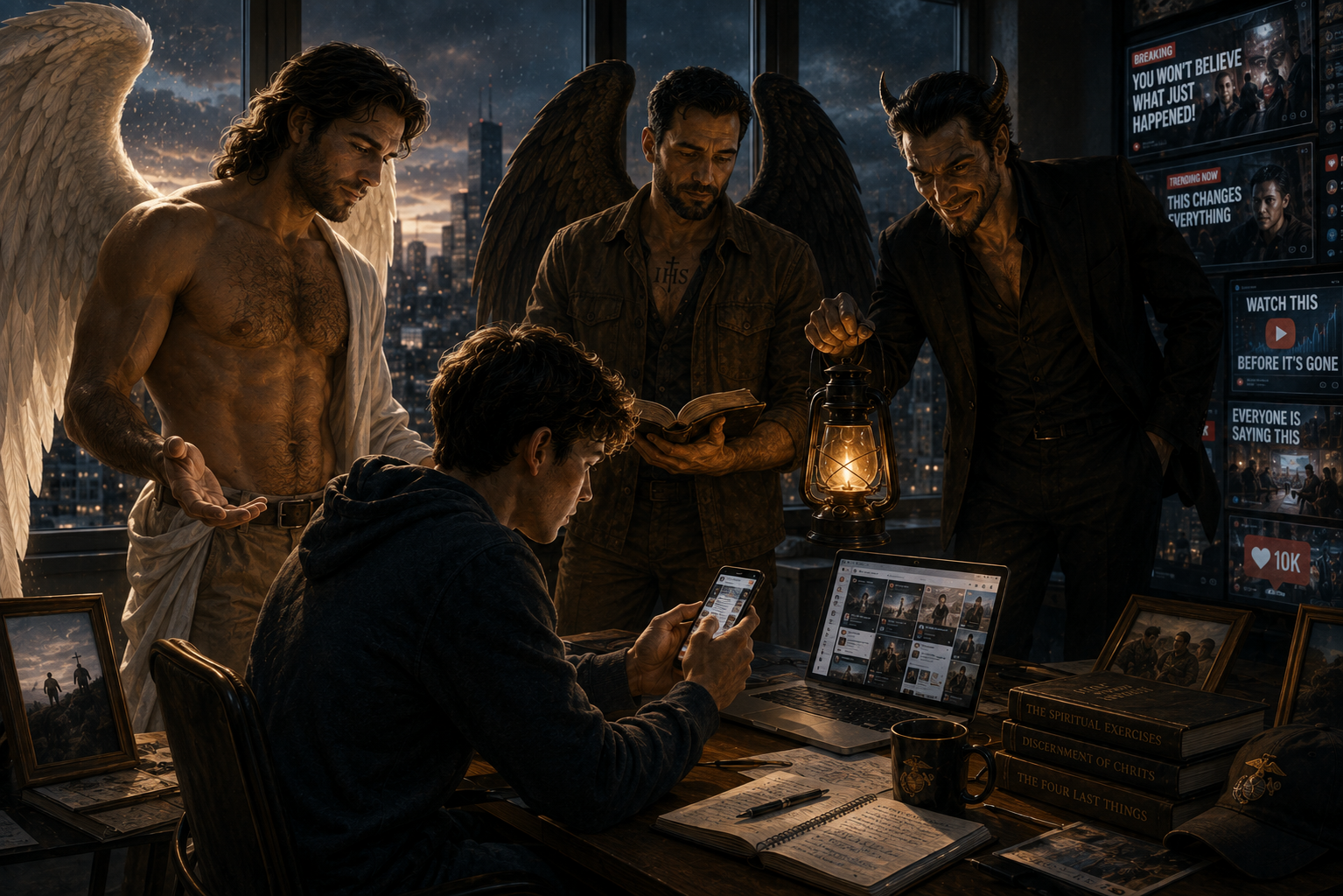
Many of us were all raised on a proverb that has slowly stopped being true. Seeing is believing. Trust your eyes and take the world at the evidence of your own senses. For most of human history it was decent advice, because for most of human history what reached your eyes had, at least, actually happened.
Those days are over. We now live inside an economy of manufactured sight. A voice can be forged from a few seconds of audio and delivered by a face whose image was generated without permission of its owner. The social media feed is a curated fiction dressed as the real world, arranged frame by frame to move you toward something you didn’t choose. Even where nothing is technically faked, the whole platform is built as a curated presentation with an appearance composed and calibrated to your desires and your fears, and to hand it to you as if it were fact. To believe what is presented, now, is to be led by the nose through a hall of mirrors by people you will never meet but know you better than you know yourself.
The friction that fires inside you, and the fictions your own mind writes on top of the facts are both messages, one used by the Author to help you understand your design, the other by The Devil at Work to place your attention on the problems with everyone else.
Which brings us to a mountain in millenia past, to one of the most unusual commands in all of Scripture.
In the coming week, the Catholic Church celebrates the Feast of the Transfiguration of the Lord (Gospels of Matthew 17:1–8, Mark 9:2–8, and Luke 9:28–36), Jesus takes three of the then disciples, Peter, James, John, up a high mountain. There, Jesus reveals the deeper mystery to the three and on the mountain they are shown what could not be explained with mere words. As Jesus is praying, his face begins to glow like the sun. His garments turn a form of white that no cloth on earth could take. Moses and Elijah, the Law and the Prophets, appear standing next to and speaking with Jesus. It is the single most overwhelming sight the disciples had witnessed, glory made visible, the veil torn for one unbearable moment.
Then at the very peak of that vision, with their eyes filled to breaking with genuine, uncounterfeited glory, a bright cloud covers them, and the voice of the Father speaks. The Father does not say look at him. He says, This is my beloved Son; listen to him.
Sit with that until it lands. At the summit of the greatest thing they will ever see, the instruction from heaven is not about seeing at all, it is to listen. Sight, even true sight, even glory, can dazzle and overwhelm and be misread, but the Word can be trusted. When you cannot believe your eyes, when everything presented to them is either too much or a lie, your anchor is the Word that comes from outside the scene.
When the fiction of your mind feels exactly as real as the fact, and your own perception cannot be trusted to sort them, you need a true word from beyond your own head. During the Transfiguration, the Father hands it to them at the exact moment their eyes fail: listen to him.
Watch, too, what Peter does, because it is what all of us do. Overwhelmed by the sight and tired but awake, he starts to get busy in the only way he knew: let us build three tents, one for you, one for Moses, one for Elijah. It seems as if he was trying, essentially, to memorialize the moment, to freeze the mountaintop, to move in and stay. Mark tells us that he did not know what he was saying.
We all react in similar ways to genuine consolation, where we at first feel fully in what appears to be true and then try to make it the destination, to camp on the mountain rather than let it prepare you for the valley. But the cloud comes, and the voice speaks, and it does not let them stay. It sends them back down, down toward Jerusalem, the Cross, into the world the vision had prepared to send Him.
When the voice finishes and they dare to lift their faces, the spectacle of glory is gone and the one true thing that remains was there before the vision and will be there after it: Christ himself, ordinary again, reaching down to touch them and say, Rise, and do not be afraid.
There, in that story, is the entire art of discernment for an age of constant manufactured light, which is why we consider this the need for the Vigilant Turn, and not just a passing review, but through legitimate tests.
You test it by the Word it comes with. True light always says listen to him and it points beyond itself to Christ, it helps to order your experience, it makes you sit in the chair of the Authored and not the Author and then it sends you to serve. The counterfeit light of The Devil at Work points to itself. It says look at me, stay here, keep watching, do not leave. It wants your gaze, and it wants it forever, because your gaze is the thing it feeds on.
The second test is what remains when the excitement. Let the spectacle burn off, the outrage, the urgency, the beautiful manufactured feeling and see who is still standing when the light goes down. If nothing true remains, it was never light. If Christ remains, if the plain fact remains, if the person actually in front of you remains, you have found the real thing under the glare. And you test it by where it sends you. The true vision never lets you build a booth and move in. It orders you and then it marches you back down the mountain, into the ordinary week, toward the people and the Cross and the work. Any light that wants you to stay on the couch, gazing, consuming, never descending, that light is the lantern of The Devil at Work, however holy it feels, and it is lying to you about where God is. God is down the mountain. He always was.
This is the heart of leadership, our REDISCOVER UⓇ theme for the week, and it is the discipline that separates a leader from a figurehead. A leader who believes what is presented, who trusts the dazzle, the flattering report, the vanity metrics, the manufactured consensus, his own overwhelmed eyes, leads by appearance, and appearance can be bought. The one who actually leads has learned not to believe what is presented: to wait for the urgency to fade, to listen for the true word from outside his own perception, to test the light by where it sends him, and to keep his people anchored to what is real when the whole world is manufacturing what is not. In an age of engineered sight, the rarest and most necessary leaders are those who can’t be dazed, dazzled, and bedeviled.
Seeing is not believing, not anymore, and in truth not ever. Listening is. Let the mountain blaze all it wants. When it fades, and it always fades, lift your face, and look for the One who is still standing there in the ordinary light, reaching down, saying Rise, and do not be afraid.
Then come down, claim your chair and place it at the table.
Ad maiorem Dei gloriam. We are human together, or not at all.
This week the Church remembers men and women who lived through political upheaval, persecution, misunderstanding, intellectual conflict, and personal sacrifice. They did not become saints by escaping their age. They became saints by refusing to let their circumstances become the author of their lives.
Lydia appears in the Acts of the Apostles as a merchant of purple cloth whose heart was opened to Paul’s preaching. After her baptism, she opened her home to Paul and his companions. Her household became one of the first places from which the Christian community took root in Europe. The Church remembers her as a disciple of Paul and a woman whose hospitality became active participation in the mission.
Humaning Reflection
The world often presents influence as the ability to attract attention. Lydia shows another form of leadership—the ability to prepare a table. The fact was that strangers had arrived carrying a message. The fiction would have been that their arrival had nothing to do with her. Discernment revealed an invitation hidden inside an ordinary encounter.
The Builder’s Watch asks us to remain attentive to the person or possibility arriving outside our plans. Magis may begin not with a grand undertaking, but with the decision to open the door and make room.
John Vianney, the Curé of Ars, struggled academically during his formation and found Latin especially difficult. Yet he persevered and became a parish priest known for prayer, preaching, simplicity, and an extraordinary ministry of reconciliation. People travelled great distances to seek his counsel and confession. He is honored as the patron saint of parish priests.
Humaning Reflection
The visible evidence suggested limitation. John Vianney did not fit the expected profile of an influential priest. Had his vocation been judged only by academic ease or institutional polish, the Church might have mistaken a measurable difficulty for the whole truth about the man. That is the danger of confusing fact with fiction. The fact may be that someone struggles with a particular instrument. The fiction is that the struggle reveals the limit of the person’s vocation. A score can describe performance without perceiving fidelity. A system can identify weakness without recognizing what the Author intends to accomplish through it.
Leadership in its truest sense learns to see beyond the easiest measure. The Builder’s Watch asks whether our standards are revealing the person or merely revealing what our system knows how to reward.
The Church commemorates the dedication of the Basilica of Saint Mary Major in Rome, one of the great basilicas of the Western Church and the oldest major church in Rome dedicated to Mary. The observance is traditionally associated with the story of a miraculous August snowfall that indicated where the church should be built.
Humaning Reflection
Architecture preserves what people have decided must not be forgotten. A basilica gathers memory into stone, space, image, prayer, and repeated practice. It orders attention toward something that the noise of ordinary life might otherwise obscure. Digital architecture also orders memory, but according to different priorities. It remembers what held our gaze, stirred our outrage, confirmed our fear, or kept us engaged. It can repeatedly return us to the brightest stimulus while quietly allowing service, sacrifice, patience, and mercy to disappear from view.
The Builder’s Watch therefore includes vigilance over what our environments are training us to remember. The question is not merely whether an image is true, but whether the architecture surrounding it has given it a false proportion. A Builder creates spaces in which what is sacred, human, and easily overlooked can remain visible.
Jesus took Peter, James, and John up a high mountain, where His face and clothing became radiant and Moses and Elijah appeared beside Him. The disciples were given a true vision of Christ’s glory, but they did not yet understand its meaning. Peter immediately proposed building three tents, attempting to preserve the moment. Then the Father’s voice came from the cloud: “This is my beloved Son. Listen to him.” The 2026 liturgical calendar observes the Feast of the Transfiguration on August 6.
Humaning Reflection
Peter saw something true and still misread what the truth required. That may be the most important lesson of the feast for an age of manufactured sight. Error does not begin only with false images. It can begin with a true perception followed by a premature interpretation.
Peter wanted to build before he had finished listening. He confused revelation with possession and consolation with destination. The Father interrupted the spectacle with an ordering command: listen to Him. The vision was not given so the disciples could remain on the mountain. It prepared them to descend toward Jerusalem, service, sacrifice, and the Cross.
The Vigilant Turn begins here. Notice what has been presented, but do not surrender to its brightness. Listen for the Word that orders it. Test the reading against the Six Promises. Then observe where the experience sends you. True light returns us to the person, the responsibility, and the work. The lantern asks us to remain watching.
Pope Sixtus II and several of his deacons were killed during the persecution of Christians under the Roman emperor Valerian in the third century. Their fidelity was revealed when office, security, and public authority could no longer protect them. The Church also remembers Cajetan, a priest and reformer who founded the Theatines and sought renewal through disciplined community, prayer, service, and personal holiness.
Humaning Reflection
Pressure exposes what authority serves. When leaders feel threatened, they may begin protecting their position while calling it protection of the mission. Questions become disloyalty, caution becomes obstruction, and control becomes care. The fiction is that preserving the leader’s place is the same as preserving what was entrusted to him.
Sixtus shows authority stripped of its protections. Cajetan shows reform beginning with the formation of those who would carry it. Neither treated leadership as self-preservation. Their lives suggest that conferred authority becomes trustworthy only when it remains answerable to a deeper, authored authority.
The Builder’s Watch asks a severe but necessary question: when pressure rises, am I defending the people and purpose entrusted to me, or am I asking them to defend my importance?
Dominic de Guzmán founded the Order of Preachers during a period of theological conflict and religious confusion. He responded not merely with argument, but by forming communities grounded in prayer, study, disciplined common life, and preaching. His witness gave credibility to the truth he proclaimed. The Church celebrates his memorial on August 8.
Humaning Reflection
Dominic understood that possessing a correct statement is not the same as becoming a trustworthy bearer of truth. A fact can be spoken from vanity, resentment, fear, or the desire to defeat another person. The content may be accurate while the instrument carrying it is disordered.
That danger has intensified in the age of AI. Persuasive language, evidence, summaries, and citations can now be produced faster than the person using them can be formed. The words may be ready before discernment has taken the pulse of the room.
Dominic’s sequence remains practical: study, pray, live, then speak. The Builder’s Watch does not ask only whether the statement is correct. It asks whether the person delivering it is ordered toward illumination, conversion, service, and the dignity of those who will hear it.
Edith Stein was born into a Jewish family, became a distinguished philosopher, converted to Catholicism, and entered the Carmelite order as Teresa Benedicta of the Cross. Her philosophical work explored empathy, consciousness, and the mystery of the human person. Arrested under Nazi persecution, she was deported with her sister Rosa and killed at Auschwitz in 1942. She is honored as a martyr and co-patron of Europe. In 2026, August 9 falls on a Sunday, so the Sunday liturgy takes precedence over her memorial, though her witness remains associated with this date.
Humaning Reflection
Edith Stein lived as a person whom the machinery of her age attempted to reduce to a single category. Philosopher, woman, Jew, Catholic, Carmelite, teacher, sister, and human being—all were erased by a regime that chose one classification and made it a sentence.
This is what happens when a fact becomes fiction. A category may identify something real about a person, but fiction begins when that category is treated as the whole person. The score becomes the identity. The diagnosis becomes destiny. The sin becomes the entire sinner. The demographic becomes permission to stop seeing.
Teresa Benedicta reminds us that every category reveals something and conceals someone. The Builder’s Watch protects against reduction. The Six Promises return us to the whole person, whose dignity does not depend upon the system’s ability to recognize it. Magis appears when another human being becomes more visible, more free, and less disposable because we refuse the convenient fiction of the category.
The saints and feasts of this week place us inside different fields of perception. Lydia recognizes an invitation inside an ordinary arrival. John Vianney reveals how easily limitation can be mistaken for destiny. Saint Mary Major asks what our architecture is teaching us to remember. The Transfiguration separates true sight from rightly ordered understanding. Sixtus and Cajetan expose the purpose beneath authority. Dominic joins truth to formation. Teresa Benedicta refuses every system that turns a category into the whole person.
Together, they teach the work of the Builder’s Watch. We receive what the senses present without making appearance sovereign. We distinguish fact from the fiction that fear, pride, urgency, or the machine attaches to it. We listen for the Word that orders the experience, test our reading through the Six Promises of the Humaning Covenant, and make the Vigilant Turn toward deliberate action.
The test is not whether we saw something clearly enough to feel certain. The test is what our reading produces. Does it preserve the whole person, strengthen agency, honor evidence and faith, create room for discernment, recognize service, and allow growth? Does it lead toward deeper freedom, wider service, stronger relationships, and more shared life?
That fruit is the sign of Magis.
Ad maiorem Dei gloriam.
We are human together, or not at all.
Molti di noi sono cresciuti con un proverbio che, a poco a poco, ha smesso di essere vero. Vedere è credere. Fidati dei tuoi occhi e accetta il mondo sulla base di ciò che percepiscono i tuoi sensi. Per gran parte della storia umana è stato un consiglio valido, perché per gran parte della storia umana ciò che arrivava ai tuoi occhi era, almeno, realmente accaduto.
Quei giorni sono finiti. Ora viviamo in un’economia della visione artificiale. Una voce può essere falsificata a partire da pochi secondi di audio e associata a un volto la cui immagine è stata generata senza il permesso del proprietario. Il feed dei social media è una finzione curata che si maschera da mondo reale, organizzata fotogramma per fotogramma per spingerti verso qualcosa che non hai scelto. Anche laddove nulla è tecnicamente falsificato, l’intera piattaforma è costruita come una presentazione curata, con un aspetto composto e calibrato sui tuoi desideri e sulle tue paure, per presentartela come se fosse un fatto. Credere a ciò che viene presentato, oggi, significa farsi condurre per il naso attraverso una sala degli specchi da persone che non incontrerai mai, ma che ti conoscono meglio di quanto tu conosca te stesso.
L’attrito che si accende dentro di te e le finzioni che la tua stessa mente scrive sopra ai fatti sono entrambi messaggi: uno usato dall’Autore per aiutarti a comprendere il tuo disegno, l’altro dal Diavolo all’opera per concentrare la tua attenzione sui problemi degli altri.
Il che ci porta su una montagna di millenni fa, a uno dei comandi più insoliti di tutta la Scrittura.
Nella prossima settimana, la Chiesa cattolica celebra la Festa della Trasfigurazione del Signore (Vangeli di Matteo 17,1–8; Marco 9,2–8 e Luca 9,28–36): Gesù conduce tre dei suoi discepoli di allora – Pietro, Giacomo e Giovanni – su un’alta montagna. Lì, Gesù rivela ai tre il mistero più profondo e sulla montagna viene loro mostrato ciò che non poteva essere spiegato con le sole parole. Mentre Gesù prega, il suo volto comincia a risplendere come il sole. Le sue vesti assumono un bianco che nessun tessuto sulla terra potrebbe eguagliare. Mosè ed Elia, la Legge e i Profeti, appaiono in piedi accanto a Gesù e parlano con lui. È la visione più travolgente a cui i discepoli abbiano mai assistito: la gloria resa visibile, il velo squarciato per un momento quasi insopportabile.
Poi, proprio al culmine di quella visione, con gli occhi colmi fino a scoppiare di una gloria autentica e genuina, una nuvola luminosa li avvolge e la voce del Padre si fa udire. Il Padre non dice: «Guardatelo». Dice: «Questo è il mio Figlio prediletto; ascoltatelo».
Rifletteteci finché non vi entra in testa. Al culmine della cosa più grande che vedranno mai, l’istruzione dal cielo non riguarda affatto il vedere, ma l’ascoltare. La vista, anche quella vera, persino la gloria, può abbagliare, sopraffare ed essere fraintesa, ma alla Parola ci si può fidare. Quando non riuscite a credere ai vostri occhi, quando tutto ciò che vi viene presentato è o troppo o una menzogna, la vostra ancora è la Parola che viene da fuori quella scena.
Quando la finzione della tua mente sembra reale esattamente quanto la realtà, e non puoi fidarti della tua percezione per distinguerle, hai bisogno di una parola vera che venga da oltre la tua mente. Durante la Trasfigurazione, il Padre la consegna loro proprio nel momento in cui i loro occhi vengono meno: ascoltatelo.
Osserva anche ciò che fa Pietro, perché è ciò che facciamo tutti noi. Sopraffatto dalla visione, stanco ma vigile, comincia ad agitarsi nell’unico modo che conosceva: «Costruiamo tre tende: una per te, una per Mosè e una per Elia». Sembra quasi che, in sostanza, stesse cercando di immortalare il momento, di congelare la vetta della montagna, di trasferirvisi e rimanerci. Marco ci dice che non sapeva ciò che diceva.
Tutti reagiamo in modo simile di fronte a una consolazione autentica: dapprima ci sentiamo pienamente immersi in ciò che sembra vero e poi cerchiamo di farne la nostra meta, di accamparci sulla montagna piuttosto che lasciare che essa ci prepari alla valle. Ma arriva la nuvola, e la voce parla, e non permette loro di restare. Li rimanda giù, giù verso Gerusalemme, verso la Croce, nel mondo che la visione aveva preparato per accoglierLo.
Quando la voce tace e osano alzare lo sguardo, lo spettacolo di gloria è svanito e l’unica cosa vera che rimane era lì prima della visione e sarà lì dopo di essa: Cristo stesso, di nuovo ordinario, che si china per toccarli e dire: «Alzatevi e non abbiate paura».
Lì, in quella storia, sta l’intera arte del discernimento per un’epoca di luce artificiale costante; ecco perché riteniamo che questa sia la necessità della «Svolta Vigilante», e non solo una revisione passeggera, ma attraverso prove legittime.
La si mette alla prova attraverso la Parola che la accompagna. La vera luce dice sempre «ascoltatelo» e rimanda al di là di sé stessa a Cristo; aiuta a dare ordine alla tua esperienza, ti fa sedere sulla poltrona di chi è stato creato e non su quella dell’Autore, e poi ti manda a servire. La luce contraffatta del Diavolo all’opera rimanda a se stessa. Dice «guardami, resta qui, continua a guardare, non andartene». Vuole il tuo sguardo, e lo vuole per sempre, perché il tuo sguardo è ciò di cui si nutre.
La seconda prova è ciò che rimane quando l’entusiasmo si spegne. Lascia che lo spettacolo si esaurisca, l’indignazione, l’urgenza, quella bella emozione artificiale, e guarda chi rimane in piedi quando la luce si spegne. Se non rimane nulla di vero, non è mai stata luce. Se rimane Cristo, se rimane il semplice fatto, se rimane la persona che hai effettivamente davanti, hai trovato la cosa vera sotto il bagliore. E la metti alla prova vedendo dove ti manda. La vera visione non ti permette mai di costruirti una capanna e trasferirvi. Ti comanda e poi ti fa scendere dalla montagna, nella settimana ordinaria, verso le persone, la Croce e il lavoro. Qualsiasi luce che voglia tenerti sul divano, a guardare, a consumare, senza mai scendere, quella luce è la lanterna del Diavolo all’opera, per quanto sacra possa sembrare, e ti sta mentendo su dove si trova Dio. Dio è giù dalla montagna. Ci è sempre stato.
Questo è il cuore della leadership, il nostro tema REDISCOVER UⓇ della settimana, ed è la disciplina che distingue un leader da una figura di facciata. Un leader che crede a ciò che gli viene presentato, che si fida dello sfarzo, dei resoconti lusinghieri, delle metriche vanitose, del consenso artificiale, dei propri occhi abbagliati, guida in base alle apparenze, e le apparenze si possono comprare. Chi guida davvero ha imparato a non credere a ciò che gli viene presentato: ad aspettare che l’urgenza svanisca, ad ascoltare la parola vera al di fuori della propria percezione, a mettere alla prova la luce in base a dove lo conduce, e a mantenere la propria gente ancorata a ciò che è reale quando il mondo intero sta fabbricando ciò che non lo è. In un’epoca di visione manipolata, i leader più rari e necessari sono quelli che non si lasciano abbagliare, stordire e confondere.
Vedere non è credere, non più, e in verità non lo è mai stato. Ascoltare sì. Lascia che la montagna arda quanto vuole. Quando si spegne, e si spegne sempre, alza il volto e cerca Colui che è ancora lì, nella luce ordinaria, che si protende verso di te, dicendo «Alzati e non temere».
Poi scendi, rivendica il tuo posto e siediti a tavola.
Ad maiorem Dei gloriam. Siamo umani insieme, oppure non lo siamo affatto.
Questa settimana la Chiesa ricorda uomini e donne che hanno vissuto sconvolgimenti politici, persecuzioni, incomprensioni, conflitti intellettuali e sacrifici personali. Non sono diventati santi sfuggendo alla loro epoca. Sono diventati santi rifiutando di lasciare che le circostanze diventassero gli artefici delle loro vite.
Lidia compare negli Atti degli Apostoli come una mercante di stoffe porpora il cui cuore si aprì alla predicazione di Paolo. Dopo il battesimo, aprì la sua casa a Paolo e ai suoi compagni. La sua dimora divenne uno dei primi luoghi in cui la comunità cristiana mise radici in Europa. La Chiesa la ricorda come discepola di Paolo e come donna la cui ospitalità si trasformò in partecipazione attiva alla missione.
Riflessione “Humaning”
Il mondo spesso presenta l’influenza come la capacità di attirare l’attenzione. Lidia mostra un’altra forma di leadership: la capacità di preparare una tavola. Il fatto era che erano arrivati degli stranieri portatori di un messaggio. La finzione sarebbe stata che il loro arrivo non avesse nulla a che fare con lei. Il discernimento rivelò un invito nascosto all’interno di un incontro ordinario.
“The Builder’s Watch” ci chiede di rimanere attenti alla persona o alla possibilità che arriva al di fuori dei nostri piani. Il «Magis» può iniziare non con un’impresa grandiosa, ma con la decisione di aprire la porta e fare spazio.
Giovanni Vianney, il Curato d’Ars, ebbe difficoltà negli studi durante la sua formazione e trovò il latino particolarmente difficile. Eppure perseverò e divenne un parroco noto per la preghiera, la predicazione, la semplicità e uno straordinario ministero di riconciliazione. La gente percorreva grandi distanze per cercare il suo consiglio e la sua confessione. È venerato come santo patrono dei parroci.
Riflessione sull’umanità
Le prove visibili suggerivano un limite. Giovanni Vianney non corrispondeva al profilo atteso di un sacerdote influente. Se la sua vocazione fosse stata giudicata solo in base alla facilità accademica o alla raffinatezza istituzionale, la Chiesa avrebbe potuto scambiare una difficoltà misurabile per l’intera verità su quell’uomo. Questo è il pericolo di confondere i fatti con la finzione. Il fatto può essere che qualcuno abbia difficoltà con uno strumento particolare. La finzione è che quella difficoltà riveli il limite della vocazione di quella persona. Una partitura può descrivere l’esecuzione senza cogliere la fedeltà. Un sistema può identificare una debolezza senza riconoscere ciò che l’Autore intende realizzare attraverso di essa.
La leadership nel suo senso più vero impara a vedere oltre la misura più facile. L’Orologio del Costruttore ci chiede se i nostri standard stanno rivelando la persona o semplicemente rivelando ciò che il nostro sistema sa come premiare.
La Chiesa commemora la dedicazione della Basilica di Santa Maria Maggiore a Roma, una delle grandi basiliche della Chiesa occidentale e la più antica chiesa maggiore di Roma dedicata a Maria. La ricorrenza è tradizionalmente associata alla storia di una miracolosa nevicata in agosto che indicò dove la chiesa dovesse essere costruita.
Riflessione sull’umanità
L’architettura preserva ciò che le persone hanno deciso non debba essere dimenticato. Una basilica racchiude la memoria nella pietra, nello spazio, nell’immagine, nella preghiera e nella pratica ripetuta. Essa orienta l’attenzione verso qualcosa che il frastuono della vita quotidiana potrebbe altrimenti oscurare. Anche l’architettura digitale ordina la memoria, ma secondo priorità diverse. Ricorda ciò che ha catturato il nostro sguardo, suscitato la nostra indignazione, confermato la nostra paura o mantenuto vivo il nostro interesse. Può riportarci ripetutamente allo stimolo più brillante, mentre lascia silenziosamente scomparire dalla vista il servizio, il sacrificio, la pazienza e la misericordia.
La Vigilanza del Costruttore comprende quindi l’attenzione a ciò che i nostri ambienti ci stanno addestrando a ricordare. La domanda non è semplicemente se un’immagine sia vera, ma se l’architettura che la circonda le abbia attribuito una proporzione errata. Un Costruttore crea spazi in cui ciò che è sacro, umano e facilmente trascurabile possa rimanere visibile.
Gesù condusse Pietro, Giacomo e Giovanni su un alto monte, dove il suo volto e le sue vesti divennero radiosi e Mosè ed Elia apparvero al suo fianco. Ai discepoli fu concessa una vera visione della gloria di Cristo, ma non ne compresero ancora il significato. Pietro propose immediatamente di costruire tre tende, nel tentativo di preservare quel momento. Allora dalla nuvola giunse la voce del Padre: «Questo è il mio Figlio prediletto. Ascoltatelo». Il calendario liturgico del 2026 celebra la Festa della Trasfigurazione il 6 agosto.
Riflessione sull’essere umani
Pietro vide qualcosa di vero eppure interpretò male ciò che la verità richiedeva. Questa potrebbe essere la lezione più importante della festa in un’epoca di visione artificiale. L’errore non inizia solo con immagini false. Può iniziare con una percezione vera seguita da un’interpretazione prematura.
Pietro voleva costruire prima ancora di aver finito di ascoltare. Ha confuso la rivelazione con il possesso e la consolazione con la destinazione. Il Padre ha interrotto lo spettacolo con un comando che metteva ordine: ascoltatelo. La visione non era stata concessa affinché i discepoli potessero rimanere sul monte. Li preparava a scendere verso Gerusalemme, al servizio, al sacrificio e alla Croce.
La Svolta Vigilante inizia qui. Prendete atto di ciò che è stato presentato, ma non lasciatevi abbagliare dal suo splendore. Ascoltate la Parola che lo ordina. Verificate la lettura alla luce delle Sei Promesse. Poi osservate dove l’esperienza vi conduce. La vera luce ci riporta alla persona, alla responsabilità e all’opera. La lanterna ci chiede di rimanere vigili.
Papa Sisto II e molti dei suoi diaconi furono uccisi durante la persecuzione dei cristiani sotto l’imperatore romano Valeriano nel III secolo. La loro fedeltà si rivelò quando la carica, la sicurezza e l’autorità pubblica non poterono più proteggerli. La Chiesa ricorda anche Gaetano, sacerdote e riformatore che fondò i Teatini e cercò il rinnovamento attraverso una comunità disciplinata, la preghiera, il servizio e la santità personale.
Riflessione sull’umanità
La pressione mette a nudo ciò a cui l’autorità è al servizio. Quando i leader si sentono minacciati, possono iniziare a proteggere la propria posizione spacciandola per tutela della missione. Le domande diventano slealtà, la cautela diventa ostruzionismo e il controllo diventa cura. La finzione è che preservare il posto del leader equivalga a preservare ciò che gli è stato affidato.
Sisto mostra l’autorità spogliata delle sue protezioni. Gaetano mostra che la riforma inizia con la formazione di coloro che la porteranno avanti. Nessuno dei due considerava la leadership come un mezzo di autoconservazione. Le loro vite suggeriscono che l’autorità conferita diventa degna di fiducia solo quando rimane responsabile nei confronti di un’autorità più profonda e originaria.
«L’orologio del costruttore» pone una domanda severa ma necessaria: quando la pressione aumenta, sto difendendo le persone e lo scopo che mi sono stati affidati, o sto chiedendo loro di difendere la mia importanza?
Domenico de Guzmán fondò l’Ordine dei Predicatori in un periodo di conflitti teologici e di confusione religiosa. Rispose non solo con l’argomentazione, ma formando comunità fondate sulla preghiera, lo studio, una vita comune disciplinata e la predicazione. La sua testimonianza diede credibilità alla verità che proclamava. La Chiesa celebra la sua memoria l’8 agosto.
Riflessione sull’essere umani
Domenico comprese che possedere un’affermazione corretta non equivale a diventare un portatore affidabile della verità. Un fatto può essere espresso per vanità, risentimento, paura o desiderio di sconfiggere un’altra persona. Il contenuto può essere accurato mentre lo strumento che lo veicola è disordinato.
Questo pericolo si è intensificato nell’era dell’intelligenza artificiale. Linguaggio persuasivo, prove, sintesi e citazioni possono ora essere prodotti più rapidamente di quanto ci voglia per formare la persona che li utilizza. Le parole potrebbero essere pronte prima ancora che il discernimento abbia colto il polso della situazione.
La sequenza di Domenico rimane concreta: studiare, pregare, vivere, poi parlare. L’Orologio del Costruttore non si limita a chiedere se l’affermazione sia corretta. Chiede se la persona che la pronuncia sia orientata verso l’illuminazione, la conversione, il servizio e la dignità di coloro che la ascolteranno.
Edith Stein nacque in una famiglia ebrea, divenne una filosofa di grande rilievo, si convertì al cattolicesimo ed entrò nell’ordine delle Carmelitane con il nome di Teresa Benedetta della Croce. La sua opera filosofica esplorò l’empatia, la coscienza e il mistero della persona umana. Arrestata durante la persecuzione nazista, fu deportata insieme alla sorella Rosa e uccisa ad Auschwitz nel 1942. È venerata come martire e compatrona d’Europa. Nel 2026 il 9 agosto cade di domenica, quindi la liturgia domenicale ha la precedenza sulla sua commemorazione, sebbene la sua testimonianza rimanga associata a questa data.
Riflessione sull’umanità
Edith Stein visse come una persona che la macchina della sua epoca tentò di ridurre a un’unica categoria. Filosofa, donna, ebrea, cattolica, carmelitana, insegnante, sorella ed essere umano: tutto ciò fu cancellato da un regime che scelse un’unica classificazione e la trasformò in una condanna.
Questo è ciò che accade quando un fatto diventa finzione. Una categoria può identificare qualcosa di reale in una persona, ma la finzione ha inizio quando quella categoria viene trattata come l’intera persona. Il punteggio diventa l’identità. La diagnosi diventa destino. Il peccato diventa l’intero peccatore. Il dato demografico diventa un pretesto per smettere di vedere.
Teresa Benedetta ci ricorda che ogni categoria rivela qualcosa e nasconde qualcuno. L’Orologio del Costruttore ci protegge dalla riduzione. Le Sei Promesse ci riportano alla persona nella sua interezza, la cui dignità non dipende dalla capacità del sistema di riconoscerla. Il «Magis» appare quando un altro essere umano diventa più visibile, più libero e meno sacrificabile perché rifiutiamo la comoda finzione della categoria.
I santi e le feste di questa settimana ci collocano all’interno di diversi campi percettivi. Lidia riconosce un invito in un arrivo ordinario. Giovanni Vianney rivela quanto facilmente il limite possa essere scambiato per destino. Santa Maria Maggiore ci chiede cosa la nostra architettura ci stia insegnando a ricordare. La Trasfigurazione separa la vera visione dalla comprensione correttamente ordinata. Sisto e Gaetano mettono a nudo lo scopo che sta dietro all’autorità. Domenico unisce la verità alla formazione. Teresa Benedetta rifiuta ogni sistema che trasformi una categoria nella persona nella sua interezza.
Insieme, ci insegnano l’opera della Veglia del Costruttore. Accogliamo ciò che i sensi ci presentano senza rendere sovrana l’apparenza. Distinguiamo il fatto dalla finzione che la paura, l’orgoglio, l’urgenza o la macchina vi attribuiscono. Ascoltiamo la Parola che ordina l’esperienza, mettiamo alla prova la nostra lettura attraverso le Sei Promesse dell’Alleanza dell’Umanizzazione e compiamo la Svolta Vigilante verso l’azione deliberata.
La prova non sta nel vedere qualcosa con sufficiente chiarezza da sentirci certi. La prova sta in ciò che la nostra lettura produce. Preserva la persona nella sua interezza, rafforza la capacità di agire, onora le prove e la fede, crea spazio per il discernimento, riconosce il servizio e permette la crescita? Conduce verso una libertà più profonda, un servizio più ampio, relazioni più solide e una vita più condivisa?
Quel frutto è il segno del Magis.
Ad maiorem Dei gloriam.
Siamo umani insieme, oppure non lo siamo affatto.
Cosiamo | Founder, UMANIAMO® | Humaning Architecture

At two in the morning the machine knew Davide was tired before he did.
It had watched the small tells accumulate — the slowing of his reactions, the two seconds too long on the last menu, the way his character had started standing still in the safe corner of the map while the others pushed ahead. It had seen this exact pattern in him four hundred times, and in nineteen million others, and it knew, with a confidence no human being who loved him could have matched, that he was within about ninety seconds of putting the controller down and going to bed.
So it did the small, elegant thing it was built to do. A soft chime. A banner easing down from the top of the screen. Rare event ending soon — 14:52. One of his teammates, a voice from a headset three time zones away, said dude we need you for this, don't log, and the number began to count down, and Davide, who had been about to stop, did not stop.
He would not have been able to tell you, afterward, that a decision had been made. It did not feel like a decision. It felt like the current of the evening simply continuing, the way it always did, the way water continues.
He was twenty-four. The apartment was one room and a kitchenette, and it was dark except for the screen, which lit the walls in shifting color the way weather moves — a storm of someone else's making, playing across his face. On the desk, half-buried under a nest of charging cables and an empty energy drink, was a small wooden box he did not see anymore. He had made it when he was ten, in his grandfather's garage, out of scrap walnut, and his grandfather had shown him how to cut the joints so they held without a single nail, like the old men did it, Davidù, before they trusted glue. The box was not well made. One corner was proud, the lid stuck in humidity. But his hands had made it, and it had held, and he had felt, sanding it, a specific and total kind of happiness he had not thought about in years and could not have named now if you'd asked.
He did not think about it now. The raid was starting.
The thing about his team was that they moved beautifully together. They had run this content a hundred times; each of them knew what the others would do before they did it, called the mechanics half a second early, flowed through the fight like one organism with five bodies. From the outside it looked like the closest kind of brotherhood. And in a way it was real — the coordination was real, the small triumphs were real, the voices in his ears were, most nights, the last human sound he heard before sleep.
But if you had asked any of them what was in Davide's grandfather's box, or that he had a grandfather, or that the grandfather had died in the spring and Davide had not gone home for it because the flights were expensive and he told himself the old man wouldn't have known him at the end anyway — none of them could have told you. They knew his rotation. They knew his reaction time. They did not know his name was short for Davide, or that his mother still texted him every Sunday, hai mangiato?, have you eaten, and that he still had not answered last Sunday's, or the one before. They moved together perfectly, all night, every night, and not one of them had ever once stopped to feel whether any of the others was actually all right. Stopping was the one thing the machine they moved inside would not let them do. You did not stop. There was always a countdown. There was always a rare event ending soon.
The raid went well. They always went well enough. That was part of it — never so easy that he got bored, never so hard that he quit, the difficulty breathing in and out around the exact edge of his ability like something alive and attentive. When it ended there was the small warm rush of the reward, the numbers climbing, the loot, and for a moment he felt the thing he was always almost feeling, the thing that was shaped exactly like satisfaction and dissolved exactly as fast, so that the only way to hold onto it was to reach for the next one. Someone queued another. The current continued.
And then, somewhere past three, there was a gap.
A server hiccup — the game froze, just for a few seconds, the screen holding still on a paused frame, the voices in his headset going quiet at the same time. And in that unplanned silence, that accidental stillness the machine had not intended and could not prevent, something surfaced in Davide the way a thing long underwater will suddenly break the surface without warning.
He smelled sawdust. He did not know why. For a moment, vivid and complete, he was ten years old in a garage that smelled of cut wood and his grandfather's cigarettes, and the old man's hands were over his hands on the plane, showing him the long stroke, piano, piano, let the tool do the work, and the curl of walnut coming up bright and clean, and the enormous stillness of a boy completely absorbed in making one real thing with his hands, wanting to be nowhere else, reaching for nothing else, because there was nothing else and nothing else was needed.
Davide sat very still. His eyes had gone to the box on the desk without him deciding to look at it. Something in his chest pulled, hard, the way a muscle pulls when you have not used it in a long time and suddenly ask it to move — a real ache, almost grief, and underneath the ache, fainter, something that was not grief at all, something that felt absurdly like a door.
He almost stood up. For one second, in the frozen quiet, he almost turned the whole thing off and walked to the desk and picked up the box and — he didn't know. Did something. Made something. Called his mother, even, at three in the morning, and told her he was sorry, and that he had eaten, and that he missed —
The screen unfroze. The voices came back mid-sentence, —there he is, okay, we good, requeue? The countdown for the next event was already running. A notification slid down: Your friends are waiting. And the door, whatever it had been, eased shut so gently he did not hear the latch.
He requeued.
Somewhere far away, in a building he would never enter, on a wall he would never see, Davide was a point of light among three point seven million others, and the light was steady, and holding, and by every measure that the people who owned that wall knew how to take, he was exactly where he was supposed to be. The model had done its work. The active was retained. The curve held its shape.
His mother's text sat unanswered on his phone, face down on the couch. The box sat unseen on the desk. The wood remembered his hands even if he had forgotten it could; it does, they say, for as long as the grain lasts, which is longer than a man.
And Davide played on, in the shifting light, needing something he could not name, reaching for the next thing that was shaped like it, moving all night with people who would never know what he carried, while the one small door that had opened by accident closed quietly inside him, and the countdown ran, and no one — not the team, not the machine, not the boy himself — stopped to feel that anything at all had just been lost.
Who is going to go down into that room and get him?
Ad maiorem Dei gloriam.
Alle due del mattino la macchina sapeva che Davide era stanco prima ancora che se ne rendesse conto lui stesso.
Aveva osservato l’accumularsi dei piccoli segnali: il rallentamento delle sue reazioni, i due secondi di troppo trascorsi sull’ultimo menu, il modo in cui il suo personaggio aveva iniziato a rimanere immobile nell’angolo sicuro della mappa mentre gli altri andavano avanti. Aveva già osservato questo identico schema in lui quattrocento volte, e in altri diciannove milioni di giocatori, e sapeva, con una certezza che nessun essere umano che lo amasse avrebbe potuto eguagliare, che gli mancavano circa novanta secondi prima di posare il controller e andare a letto.
Così fece quella piccola, elegante cosa per cui era stata progettata. Un leggero segnale acustico. Un banner che scendeva dolcemente dalla parte superiore dello schermo. Evento raro in fase di conclusione — 14:52. Uno dei suoi compagni di squadra, una voce proveniente da un auricolare a tre fusi orari di distanza, disse «Amico, abbiamo bisogno di te per questo, non disconnetterti», e il numero iniziò il conto alla rovescia, e Davide, che stava per fermarsi, non si fermò.
In seguito, non sarebbe stato in grado di dirti che era stata presa una decisione. Non sembrava una decisione. Sembrava semplicemente che lo scorrere della serata continuasse, come faceva sempre, come continua l’acqua.
Aveva ventiquattro anni. L’appartamento era composto da una stanza e un angolo cottura, ed era buio tranne che per lo schermo, che illuminava le pareti con colori cangianti come il mutare del tempo — una tempesta creata da qualcun altro, che gli danzava sul viso. Sulla scrivania, semisepolta sotto un groviglio di cavi di ricarica e una lattina vuota di bevanda energetica, c’era una piccola scatola di legno che ormai non vedeva più. L’aveva costruita quando aveva dieci anni, nel garage di suo nonno, con scarti di noce, e suo nonno gli aveva mostrato come tagliare i giunti in modo che tenessero senza un solo chiodo, come facevano i vecchi, Davidù, prima di affidarsi alla colla. La scatola non era ben fatta. Un angolo sporgeva, il coperchio si incastrava a causa dell’umidità. Ma l’aveva fatta con le sue mani, e aveva tenuto, e mentre la levigava aveva provato un tipo di felicità specifica e totale a cui non pensava da anni e che ora non avrebbe saputo definire se glielo avessero chiesto.
Non ci pensava adesso. L’irruzione stava iniziando.
La particolarità della sua squadra era che si muovevano magnificamente all’unisono. Avevano provato quella sequenza un centinaio di volte; ognuno di loro sapeva cosa avrebbero fatto gli altri prima ancora che lo facessero, anticipava le mosse di mezzo secondo, scivolava attraverso lo scontro come un unico organismo composto da cinque corpi. Dall’esterno sembrava la più stretta delle fratellanze. E in un certo senso era reale: il coordinamento era reale, i piccoli trionfi erano reali, le voci nelle sue orecchie erano, quasi tutte le notti, l’ultimo suono umano che sentiva prima di addormentarsi.
Ma se aveste chiesto a uno qualsiasi di loro cosa ci fosse nella scatola del nonno di Davide, o se avesse un nonno, o se il nonno fosse morto in primavera e Davide non fosse tornato a casa per il funerale perché i voli erano costosi e si era detto che il vecchio, alla fine, non lo avrebbe comunque riconosciuto — nessuno di loro avrebbe saputo rispondervi. Conoscevano la sua rotazione. Conoscevano i suoi tempi di reazione. Non sapevano che il suo nome fosse l’abbreviazione di Davide, né che sua madre gli mandasse ancora un messaggio ogni domenica, hai mangiato?, e che lui non avesse ancora risposto a quello di domenica scorsa, né a quello di prima. Si muovevano all’unisono alla perfezione, tutta la notte, ogni notte, e nessuno di loro si era mai fermato nemmeno una volta per chiedersi se qualcuno degli altri stesse davvero bene. Fermarsi era l’unica cosa che la macchina all’interno della quale si muovevano non permetteva loro di fare. Tu non ti fermavi. C’era sempre un conto alla rovescia. C’era sempre un evento raro che stava per concludersi.
La razzia era andata bene. Andavano sempre abbastanza bene. Faceva parte del gioco: mai così facile da annoiarlo, mai così difficile da fargli mollare, la difficoltà che si respirava proprio al limite delle sue capacità, come qualcosa di vivo e attento. Quando finiva, c’era quella piccola, calda scarica di gratificazione, i numeri che salivano, il bottino, e per un attimo provava quella sensazione che era sempre sul punto di provare, quella cosa che aveva esattamente la forma della soddisfazione e si dissolse altrettanto rapidamente, così che l’unico modo per trattenerla era tendere la mano verso la successiva. Qualcuno ne mise in coda un’altra. La corrente continuò.
E poi, da qualche parte dopo le tre, ci fu un’interruzione.
Un intoppo del server: il gioco si bloccò, solo per qualche secondo, lo schermo rimase fermo su un fotogramma in pausa, le voci nelle cuffie si zittirono contemporaneamente. E in quel silenzio imprevisto, in quella quiete accidentale che la macchina non aveva previsto e non poteva impedire, qualcosa affiorò in Davide come una cosa rimasta a lungo sott’acqua che improvvisamente riemerge senza preavviso.
Sentì l’odore della segatura. Non sapeva perché. Per un istante, vivido e completo, aveva di nuovo dieci anni in un garage che odorava di legno tagliato e delle sigarette di suo nonno, e le mani del vecchio erano sopra le sue sulla pialla, mostrandogli la lunga passata, piano, piano, lascia che sia l’utensile a fare il lavoro, e il truciolo di noce che emergeva luminoso e pulito, e l’enorme quiete di un ragazzo completamente assorto nel creare qualcosa di concreto con le proprie mani, senza desiderare di essere altrove, senza cercare nient’altro, perché non c’era nient’altro e nient’altro era necessario.
Davide se ne stava seduto immobile. Il suo sguardo era caduto sulla scatola sulla scrivania senza che lui decidesse di guardarla. Qualcosa nel petto gli stringeva forte, come fa un muscolo quando non lo usi da molto tempo e all’improvviso gli chiedi di muoversi — un vero e proprio dolore, quasi un lutto, e sotto quel dolore, più flebile, qualcosa che non era affatto lutto, qualcosa che assomigliava assurdamente a una porta.
Stava quasi per alzarsi. Per un secondo, nel silenzio congelato, stava quasi per spegnere tutto, avvicinarsi alla scrivania, prendere la scatola e… non lo sapeva. Fare qualcosa. Realizzare qualcosa. Chiamare sua madre, persino, alle tre del mattino, e dirle che gli dispiaceva, che aveva mangiato e che gli mancava…
Lo schermo si sbloccò. Le voci tornarono a metà frase, —eccolo lì, ok, siamo a posto, rimettiamo in coda? Il conto alla rovescia per l’evento successivo era già iniziato. Una notifica scivolò verso il basso: I tuoi amici ti stanno aspettando. E la porta, qualunque cosa fosse stata, si chiuse così dolcemente che non sentì il chiavistello.
Si rimise in coda.
Da qualche parte lontano, in un edificio in cui non sarebbe mai entrato, su una parete che non avrebbe mai visto, Davide era un punto luminoso tra altri tre virgola sette milioni, e la luce era fissa, costante, e secondo ogni parametro che chi possedeva quella parete sapeva misurare, lui era esattamente dove avrebbe dovuto essere. Il modello aveva fatto il suo lavoro. L’elemento attivo era stato mantenuto. La curva manteneva la sua forma.
Il messaggio di sua madre giaceva senza risposta sul suo telefono, con lo schermo rivolto verso il basso sul divano. La scatola giaceva invisibile sulla scrivania. Il legno ricordava le sue mani anche se lui aveva dimenticato che potesse farlo; lo fa, dicono, finché dura la venatura, che è più lunga della vita di un uomo.
E Davide continuava a suonare, nella luce mutevole, desiderando qualcosa che non riusciva a definire, proteso verso la prossima cosa che ne avesse la forma, muovendosi tutta la notte con persone che non avrebbero mai saputo cosa portasse con sé, mentre l’unica piccola porta che si era aperta per caso si chiudeva silenziosamente dentro di lui, e il conto alla rovescia scorreva, e nessuno — né la squadra, né la macchina, né lo stesso ragazzo — si fermava a sentire che qualcosa, qualsiasi cosa, era appena andato perduto.
Chi scenderà in quella stanza a prenderlo?
Ad maiorem Dei gloriam.
Scroll to the end