Open Heart
June 8 - 14, 2026
Formation Library → Sunday Table → Open Heart
The Edge | Builders at Work
“The Sunday Table” è redatto in due lingue, inglese e italiano. Per ogni sezione, il testo in inglese è seguito da quello in italiano.
We are Human Together or Not at All.
Cosiamo | Founder, UMANIAMO® | Humaning Architecture
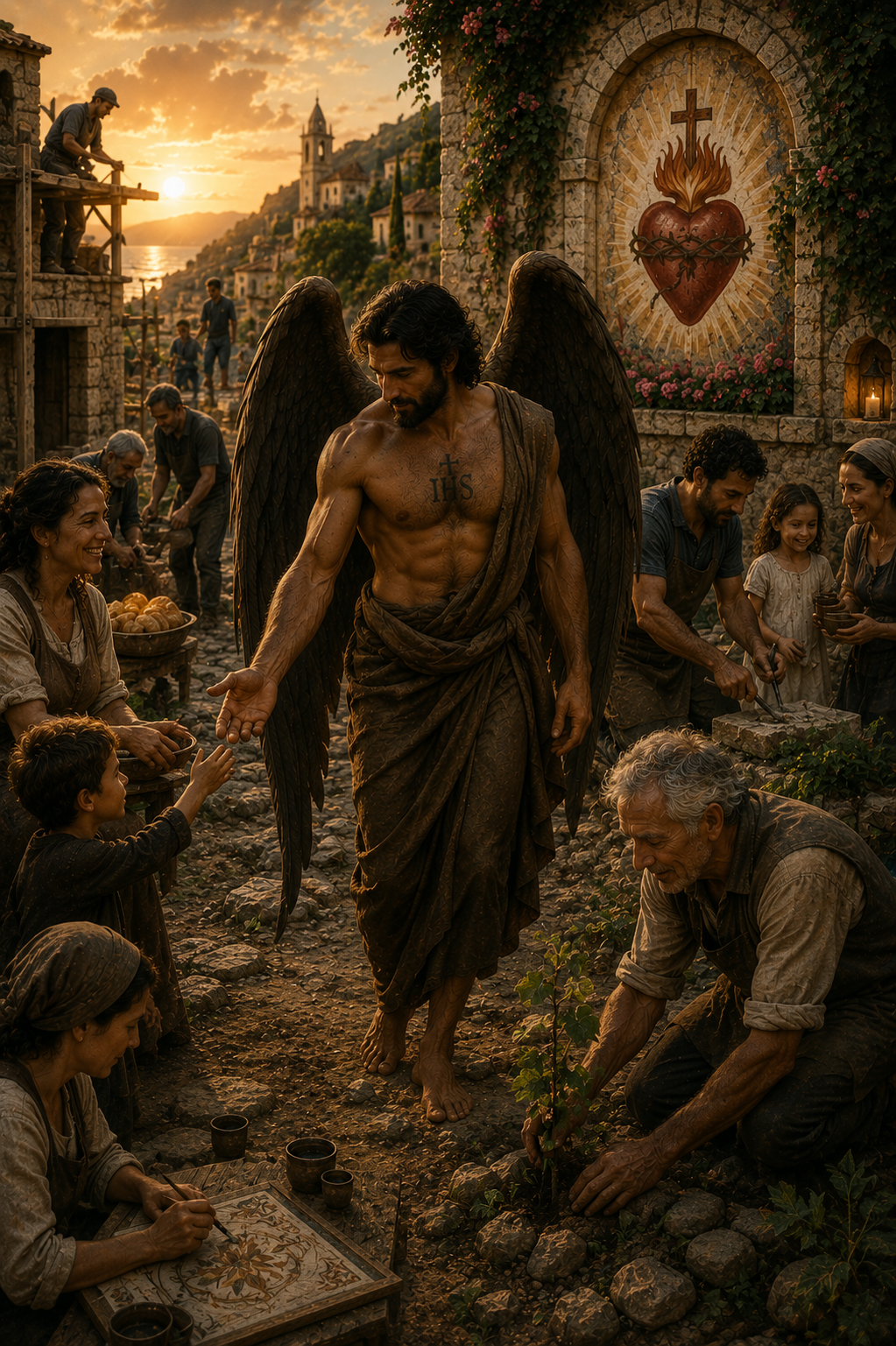
There is something quietly remarkable about the way the Church enters “Ordinary Time.” The great feasts have passed. Easter's triumph has been proclaimed, the fire of Pentecost has descended, the mystery of the Trinity has been celebrated, and we have knelt before Christ given to us in the Eucharist. One might expect the Church, after such a season, to close it with some final declaration of power, or glory, or victory. Instead, she sets before us a heart.
Not a throne, not a crown, not even a sword. A human heart.
At first glance the image can seem almost too familiar to notice. Generations of paintings and statues, holy cards and stained glass, have perhaps worn the edges from it and made it easy to pass by. Yet, like so many important aspects of life that we miss, if we pause long enough to truly contemplate the Sacred Heart of Jesus, we find ourselves before one of the most challenging images in all of Christianity, for the Heart is exposed. Not protected or hidden, but open and visible, offered to anyone who would look. I really never thought about this before, but it’s more extraordinary than the mass cards I remember as a kid.
We live in a world that directly or indirectly teaches self-protection almost from the moment we first learn disappointment. We learn to manage our "brand" and how we are perceived, to conceal our wounds, mask our true selves and to keep a safe distance from those who might hurt us. We learn to build walls around our disappointments, and disappointments around our hopes, and we often call this wisdom. We call it maturity or we call it experience. Yet Christ holds out to us something altogether different: a Heart that remains open in spite of betrayal, sorrow, and grief. This is not weakness or naïveté, nor is it sentimentality. It is courage, and perhaps that courage reveals something essential about what it means to become a Builder at Work.
Last week we reflected on the Edge or the boundary where Builders at Work so often find themselves living, the narrow place between what is and what could be. The Edge is where possibility first appears, where uncertainty and responsibility meet, where vision runs up against resistance, where every meaningful act of creation begins. But a question lingered there, unanswered. Why stay? Why remain at the edge when retreat would be so much easier, when misunderstanding and criticism, disappointment and fatigue, will all arrive in their time? Why not simply step back into the safety of the boat?
Peter, standing at the edge of the boat, is one of the most powerful images in all of Scripture. One foot remains planted in everything he knows; the other prepares to step out toward something impossible. He cannot see the outcome. He cannot predict what will happen. He has been given no guarantees. What, then, allows him to move? Not certainty. What moves him is trust. What moves him is the relationship. What moves him is love.
Perhaps this is why the Sacred Heart belongs here, just after Pentecost. The Holy Spirit descends and sends the disciples out into the world; the Sacred Heart reveals the source from which they must live if they are to remain faithful to the mission of that sending. For the Heart of Christ is always moving toward people… toward the sick and the sinner, the doubter and the stranger, toward the enemy, and toward the Cross itself. It does not withdraw when love grows costly. It does not retreat when sacrifice becomes necessary. It remains bravely open.
Maybe this is the deepest vocation of the Builder at Work: not merely to create or lead, not to accomplish, but to remain open. A closed heart can still manage systems and accumulate resources; it can consume experiences and find fault with whatever others are trying to build. What a closed heart cannot do is create the conditions in which life flourishes. Builders at Work build through an open heart and disciplined action… not because they are spared disappointment, or because fear never finds them, but because they have discovered something worth remaining open for.
History is full of such people. Cosimo de' Medici had no idea he was helping to bring about what later ages would name the Renaissance. Looking back, we see the beauty of it in the art, the architecture, the sudden flowering of human creativity. But looking forward, from where he stood, none of it was obvious. What lay before him was uncertainty, and risk, and the real possibility that his efforts would come to nothing or ensure his demise. He continued to build anyway.
The men and women who left Southern Italy and countless other places understood this in their own way. They crossed oceans carrying little more than faith and family, memory and hope. They arrived in communities that often regarded them with suspicion, and they met hardship, loneliness, and exclusion. Yes they still built, Churches rose and families took root. Businesses opened their doors. Whole communities came into being. Their legacy was not born of certainty; it was born of fidelity.
Ignatius of Loyola may have understood this better than most. When the cannonball at Pamplona shattered the life he had been living, he found himself at an edge he had never chosen and never imagined. The future he had pictured for himself simply vanished. Yet rather than closing his heart around the loss, he let God reshape it. The Society of Jesus came into being not because Ignatius held a perfect plan in his hands, but because he remained available. This may be among his greatest gifts to the Church and one of the spiritual foundations of UMANIAMOⓇ itself: the conviction that God can be found in all things - not some things and certainly not religious things alone. All things, in conversation and work, in friendship and study, in service and joy, in difficulty, and even in uncertainty. The Builder at Work, then, does not create the future alone. The Builder at Work learns instead to recognize where grace is already quietly at work, and to join it.
This is why F.A.I.T.H. has become such an important pathway within Humaning, for the Sacred Heart embodies its every movement. Fidelity reminds us that love remains present. Action reminds us that love must become visible. Integration reminds us that truth is meant to be lived and not merely admired. Theology reminds us that God reveals Himself continually through the fabric of reality. And Humaning reminds us that none of us becomes fully human alone. The Sacred Heart is, in this sense, F.A.I.T.H. made flesh.
From this same path the Six Promises of the Humaning Covenant emerge, not as organizational values or leadership competencies, but as practices meant to keep the heart open. We care for the whole person, because people are not problems to be solved. We empower individuals for a greater purpose, because gifts flourish when they are recognized. We integrate faith and science, because truth is never divided against itself. We encourage reflection and discernment, because attention comes before wisdom. We honor every act of service, because dignity often reveals itself in ordinary stewardship. And we invite continuous growth, because becoming fully human is the work of a lifetime. What is striking is that every one of these promises asks something of us: each requires vulnerability, each requires availability, each requires an open heart.
This could be why the Sacred Heart feels so strangely relevant to our present moment. The great danger of artificial intelligence, of automation, of the algorithmic systems steadily folding themselves into our days, is not finally a technological one. The deeper danger is spiritual: the temptation to grow less human even as our machines grow more capable. To become less attentive and less present. Less patient, less merciful. Less able to wonder, less willing to sacrifice. The question before us is not really whether our machines will become more intelligent. The question is whether we will remain capable of living from the heart. The future will not be built or sustained by technology, it will be built by the people who decide how that technology is used: by teachers and parents, builders and pastors, entrepreneurs and artists, craftspeople, neighbors, and friends. It will be built, in the end, by people who remain capable of love. Which brings us back to Ordinary Time. The vineyard still needs tending. The community still needs serving, the child still needs teaching, the conversation still needs having, the future still needs building. The Spirit at Work remains vigilant. The Builder at Work continues to work. And the Sacred Heart reminds us why.
Our invitation isn’t to admire the Heart of Christ from a respectful distance. It is to allow our own hearts to be formed in its likeness and to remain open when retreat would be easier, to remain faithful when the results stay hidden, to remain available when certainty is nowhere to be found. For it is through open hearts that Builders at Work emerge. And it is through Builders at Work, that humanity itself is renewed.
C'è qualcosa di silenziosamente straordinario nel modo in cui la Chiesa entra nel «Tempo Ordinario». Le grandi feste sono passate. Il trionfo della Pasqua è stato proclamato, il fuoco della Pentecoste è disceso, il mistero della Trinità è stato celebrato e ci siamo inginocchiati davanti a Cristo donatoci nell'Eucaristia. Ci si potrebbe aspettare che la Chiesa, dopo un periodo simile, lo chiuda con una dichiarazione finale di potere, gloria o vittoria. Invece, ci pone davanti un cuore.
Non un trono, non una corona, nemmeno una spada. Un cuore umano.
A prima vista l’immagine può sembrare quasi troppo familiare per essere notata. Generazioni di dipinti e statue, immagini sacre e vetrate, ne hanno forse smussato i contorni e reso facile ignorarla. Eppure, come tanti aspetti importanti della vita che ci sfuggono, se ci fermiamo abbastanza a lungo da contemplare veramente il Sacro Cuore di Gesù, ci troviamo di fronte a una delle immagini più impegnative di tutto il cristianesimo, perché il Cuore è esposto. Non protetto o nascosto, ma aperto e visibile, offerto a chiunque voglia guardarlo. Non ci avevo mai pensato prima, ma è più straordinario dei biglietti di messa che ricordo da bambino.
Viviamo in un mondo che, direttamente o indirettamente, ci insegna l’autoprotezione quasi dal momento in cui impariamo per la prima volta cosa sia la delusione. Impariamo a gestire la nostra “immagine” e il modo in cui veniamo percepiti, a nascondere le nostre ferite, a mascherare il nostro vero io e a mantenere una distanza di sicurezza da chi potrebbe ferirci. Impariamo a costruire muri attorno alle nostre delusioni e delusioni attorno alle nostre speranze, e spesso chiamiamo questa cosa saggezza. La chiamiamo maturità o la chiamiamo esperienza. Eppure Cristo ci offre qualcosa di completamente diverso: un Cuore che rimane aperto nonostante il tradimento, il dolore e il lutto. Questa non è debolezza o ingenuità, né è sentimentalismo. È coraggio, e forse quel coraggio rivela qualcosa di essenziale su cosa significhi diventare un Costruttore all’Opera.
La settimana scorsa abbiamo riflettuto sul Confine, o sul limite, dove i Costruttori all’Opera si trovano così spesso a vivere, lo spazio stretto tra ciò che è e ciò che potrebbe essere. Il Confine è dove appare per la prima volta la possibilità, dove l’incertezza e la responsabilità si incontrano, dove la visione si scontra con la resistenza, dove inizia ogni atto significativo di creazione. Ma lì è rimasta una domanda, senza risposta. Perché restare? Perché rimanere al confine quando ritirarsi sarebbe molto più facile, quando l’incomprensione e la critica, la delusione e la stanchezza arriveranno tutte a tempo debito? Perché non fare semplicemente un passo indietro nella sicurezza della barca?
Pietro, in piedi sul bordo della barca, è una delle immagini più potenti di tutta la Scrittura. Un piede rimane piantato in tutto ciò che conosce; l’altro si prepara a fare un passo verso qualcosa di impossibile. Non può vedere il risultato. Non può prevedere cosa accadrà. Non gli è stata data alcuna garanzia. Cosa, allora, gli permette di muoversi? Non la certezza. Ciò che lo muove è la fiducia. Ciò che lo muove è la relazione. Ciò che lo muove è l’amore.
Forse è per questo che il Sacro Cuore appartiene a questo punto, subito dopo la Pentecoste. Lo Spirito Santo discende e manda i discepoli nel mondo; il Sacro Cuore rivela la fonte da cui devono attingere per vivere se vogliono rimanere fedeli alla missione di quell’invio. Perché il Cuore di Cristo si muove sempre verso le persone… verso i malati e i peccatori, i dubbiosi e gli stranieri, verso il nemico e verso la Croce stessa. Non si ritira quando l’amore diventa costoso. Non si arrende quando il sacrificio diventa necessario. Rimane coraggiosamente aperto.
Forse questa è la vocazione più profonda del Costruttore all’opera: non semplicemente creare o guidare, non realizzare, ma rimanere aperto. Un cuore chiuso può comunque gestire sistemi e accumulare risorse; può consumare esperienze e trovare da ridire su qualsiasi cosa gli altri stiano cercando di costruire. Ciò che un cuore chiuso non può fare è creare le condizioni in cui la vita fiorisce. I Costruttori all’Opera costruiscono attraverso un cuore aperto e un’azione disciplinata… non perché siano risparmiati dalla delusione, o perché la paura non li colga mai, ma perché hanno scoperto qualcosa per cui vale la pena rimanere aperti.
La storia è piena di persone così. Cosimo de' Medici non aveva idea di stare contribuendo a realizzare ciò che le epoche successive avrebbero chiamato Rinascimento. Guardando indietro, ne vediamo la bellezza nell'arte, nell'architettura, nell'improvvisa fioritura della creatività umana. Ma guardando avanti, dalla sua prospettiva, nulla di tutto ciò era ovvio. Ciò che lo attendeva era l'incertezza, il rischio e la reale possibilità che i suoi sforzi finissero nel nulla o ne causassero la rovina. Eppure continuò a costruire.
Gli uomini e le donne che lasciarono l’Italia meridionale e innumerevoli altri luoghi lo capirono a modo loro. Attraversarono gli oceani portando con sé poco più che la fede e la famiglia, la memoria e la speranza. Arrivarono in comunità che spesso li guardavano con sospetto e incontrarono difficoltà, solitudine ed esclusione. Sì, continuarono a costruire: sorsero chiese e le famiglie misero radici. Le attività commerciali aprirono i battenti. Nacquero intere comunità. La loro eredità non nacque dalla certezza; nacque dalla fedeltà.
Ignazio di Loyola forse lo ha compreso meglio di molti altri. Quando la palla di cannone a Pamplona ha frantumato la vita che stava vivendo, si è ritrovato su un precipizio che non aveva mai scelto e che non aveva mai immaginato. Il futuro che aveva immaginato per sé stesso è semplicemente svanito. Eppure, invece di chiudere il suo cuore alla perdita, ha lasciato che Dio lo rimodellasse. La Compagnia di Gesù è nata non perché Ignazio avesse in mano un piano perfetto, ma perché si è mantenuto disponibile. Questo è forse uno dei suoi doni più grandi alla Chiesa e uno dei fondamenti spirituali della stessa UMANIAMOⓇ: la convinzione che Dio si possa trovare in tutte le cose – non in alcune cose e certamente non solo nelle cose religiose. In tutte le cose, nella conversazione e nel lavoro, nell’amicizia e nello studio, nel servizio e nella gioia, nelle difficoltà e persino nell’incertezza. Il Costruttore all’opera, quindi, non crea il futuro da solo. Il Costruttore all’opera impara invece a riconoscere dove la grazia è già silenziosamente all’opera, e a unirsi ad essa.
Ecco perché F.A.I.T.H. è diventato un percorso così importante all’interno di Humaning, poiché il Sacro Cuore incarna ogni suo movimento. Fedeltà ci ricorda che l’amore rimane presente. Azione ci ricorda che l’amore deve diventare visibile. Integrazione ci ricorda che la verità è fatta per essere vissuta e non solo ammirata. Teologia ci ricorda che Dio si rivela continuamente attraverso il tessuto della realtà. E Humaning ci ricorda che nessuno di noi diventa pienamente umano da solo. Il Sacro Cuore è, in questo senso, F.A.I.T.H. incarnato.
Da questo stesso percorso emergono le Sei Promesse del Patto Humaning, non come valori organizzativi o competenze di leadership, ma come pratiche volte a mantenere il cuore aperto. Ci prendiamo cura della persona nella sua interezza, perché le persone non sono problemi da risolvere. Diamo potere agli individui per uno scopo più grande, perché i doni fioriscono quando vengono riconosciuti. Integriamo fede e scienza, perché la verità non è mai divisa contro se stessa. Incoraggiamo la riflessione e il discernimento, perché l’attenzione precede la saggezza. Onoriamo ogni atto di servizio, perché la dignità spesso si rivela nella gestione ordinaria. E invitiamo alla crescita continua, perché diventare pienamente umani è il lavoro di una vita. Ciò che colpisce è che ognuna di queste promesse ci chiede qualcosa: ognuna richiede vulnerabilità, ognuna richiede disponibilità, ognuna richiede un cuore aperto.
Questo potrebbe essere il motivo per cui il Sacro Cuore sembra così stranamente attuale nel nostro momento presente. Il grande pericolo dell’intelligenza artificiale, dell’automazione, dei sistemi algoritmici che si insinuano costantemente nelle nostre giornate, non è in definitiva di natura tecnologica. Il pericolo più profondo è spirituale: la tentazione di diventare meno umani proprio mentre le nostre macchine diventano più capaci. Di diventare meno attenti e meno presenti. Meno pazienti, meno misericordiosi. Meno capaci di meravigliarci, meno disposti a sacrificarci. La domanda che ci poniamo non è in realtà se le nostre macchine diventeranno più intelligenti. La domanda è se rimarremo capaci di vivere con il cuore. Il futuro non sarà costruito o sostenuto dalla tecnologia, sarà costruito dalle persone che decidono come quella tecnologia viene usata: da insegnanti e genitori, costruttori e pastori, imprenditori e artisti, artigiani, vicini e amici. Sarà costruito, alla fine, da persone che rimangono capaci di amare. Il che ci riporta al Tempo Ordinario. La vigna ha ancora bisogno di essere curata. La comunità ha ancora bisogno di essere servita, il bambino ha ancora bisogno di essere istruito, la conversazione ha ancora bisogno di essere fatta, il futuro ha ancora bisogno di essere costruito. Lo Spirito all’opera rimane vigile. Il Costruttore all’opera continua a lavorare. E il Sacro Cuore ci ricorda perché.
Il nostro invito non è quello di ammirare il Cuore di Cristo da una distanza rispettosa. È quello di permettere ai nostri cuori di essere plasmati a sua immagine e di rimanere aperti quando sarebbe più facile ritirarsi, di rimanere fedeli quando i risultati rimangono nascosti, di rimanere disponibili quando la certezza non si trova da nessuna parte. Perché è attraverso i cuori aperti che emergono i Costruttori all’opera. Ed è attraverso i Costruttori all’opera che l’umanità stessa viene rinnovata.
Bravery & Moral Valor
This week we invite you to engage not only with the ideas of Hope, but with one another. Hope expands when it is shared, spoken aloud, embodied, and carried together.
You may choose one or both of the following practices depending on your setting, time, and relationships.
The Table Discussion is a relaxed and relational conversation designed to help people reflect honestly on the week’s REDISCOVER UⓇ theme and the realities of everyday life. It is a shared conversation among family and friends seeking to remain present to one another. The table discussion is not a debate or lesson, it's a discussion of being human together.
After the meal, coffee, or shared gathering:
Read the REDISCOVER UⓇ card and the reflections aloud
Move through the discussion prompts naturally
Allow the conversation to unfold without rushing
Some discussions may be lighthearted, and others may become deeply reflective. It’s up to you.
The Humaning Circle is a more intentional relational practice inspired by the spirit of a prayer circle, conversation circle, or community gathering.
Place the REDISCOVER UⓇ card at the center of the table or view the digital card, then invite each person to quietly reflect on the theme together before sharing.
Begin with one slow shared breath and a brief moment of silence.
The Humaning Circle encourages:
D.E.E.P. listening
Honest reflection
Relational courage
Shared presence
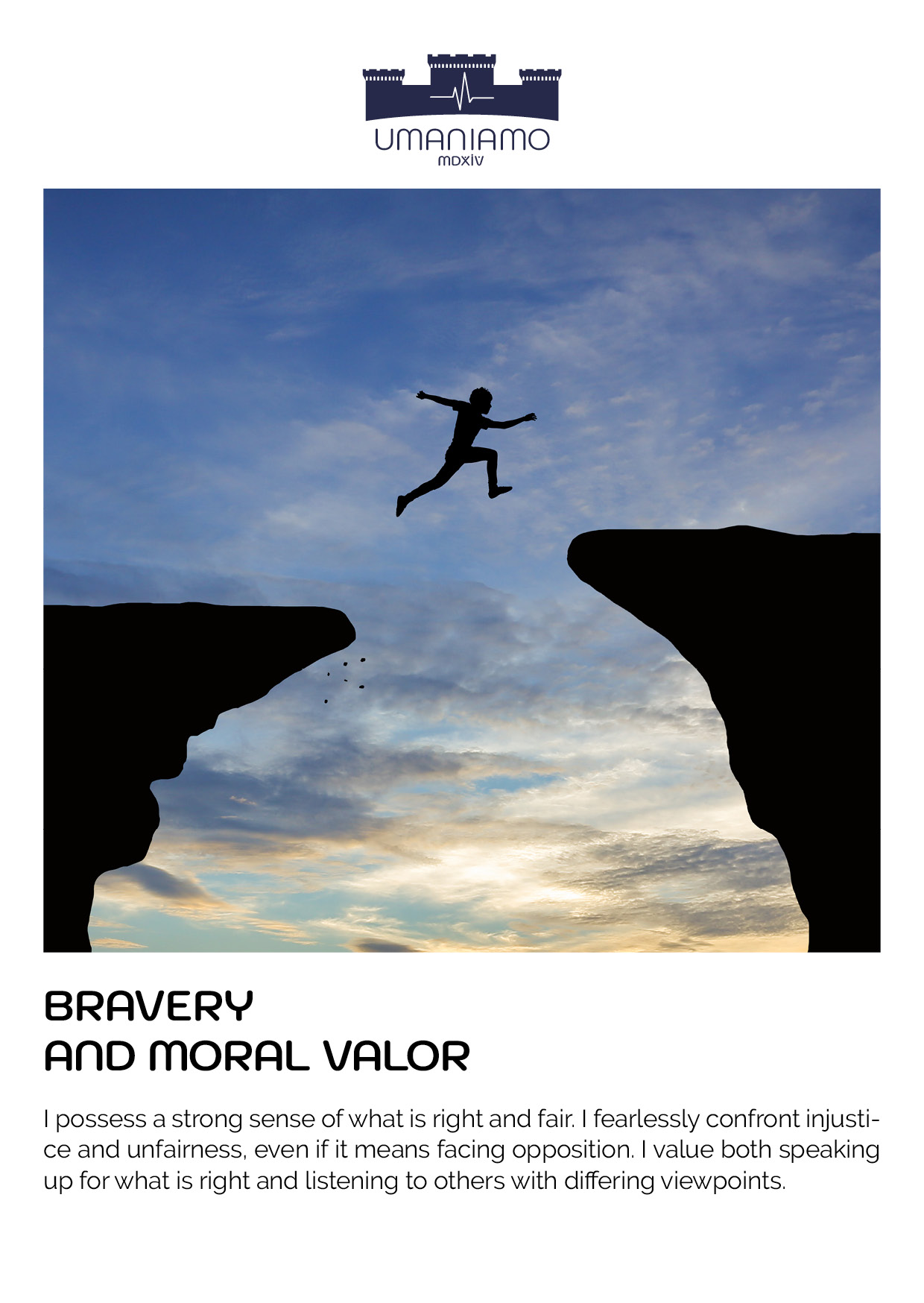
Bravery is often misunderstood as grand action or heroic moments. More often, Bravery appears through fidelity, truthfulness, responsibility, and the willingness to remain present when circumstances become difficult. Moral Valor is the courage to align our actions with our deepest convictions, even when doing so may cost us comfort, popularity, certainty, or approval.
Today’s Table Discussion is not meant to solve every problem. It is an invitation to remain present enough to hear one another, to notice what is stirring within us, and to practice Humaning together with honesty, curiosity, and care for the whole person.
After the meal or shared practice, allow the conversation to unfold naturally. Listen deeply. Leave room for silence. Let people share what is truly on their minds.
As we reflect on the Sacred Heart and the vocation of the Builder at Work, consider the following questions:
1. Where in my life am I being invited to remain open rather than retreat?
Builders encounter moments when cynicism, self-protection, or withdrawal seem easier than continued engagement. Reflect on a situation where courage may require vulnerability rather than control.
2. What truth, responsibility, or calling have I been postponing because it feels uncomfortable, uncertain, or costly?
Peter stepped from the boat before he knew the outcome. Consider where you may be standing at a similar edge and what faithful action might look like.
3. Who demonstrated Moral Valor in my life, and what can I learn from their example?
Think about a parent, mentor, ancestor, friend, teacher, colleague, saint, or builder whose courage influenced your life. What qualities made their bravery enduring rather than merely impressive?
The Humaning Circle invites us into deeper conversation and shared discernment. Choose the question that resonates most strongly with your current season of life and allow the group to explore it together.
Bravery is rarely the absence of fear. More often it is the decision that something else matters more than fear. As you listen to one another, consider:
Where is courage being asked of me right now, not someday, but today?
Allow the conversation to unfold naturally through stories, experiences, hopes, doubts, and insights. Listen for moments where fidelity, responsibility, and love become visible through ordinary human lives.
The goal is not agreement, it’s deeper understanding. Humaning happens when we create space for truth, vulnerability, and courage to emerge together.
The REDISCOVER UⓇ card becomes the shared focus for the conversation, not something to analyze, but an invitation into reflection, story, possibility, and understanding.
Place the REDISCOVER UⓇ card at the center of the table or invite each person to quietly view the digital card for a moment. Before beginning:
take one slow breath together,
notice what thoughts or feelings arise,
and allow a brief moment of silence.
Listen to understand using the D.E.E.P. perspectives:
Details
Evidence
Empathy
Prospective
Speak from your own experience.
Leave room for silence.
Allow everyone space to participate naturally.
Read the week’s Sunday Table reflection or briefly introduce the REDISCOVER UⓇ theme.
Choose one or more of the REDISCOVER UⓇ Table Discussion prompts from above.
Move around the table naturally, inviting each person to reflect if they wish.
There is no requirement for everyone to answer every question.
Allow the conversation to emerge organically.
Before ending, invite each person to share: one word, one feeling, or one small action they hope to carry into the coming week.
Close with a shared breath and gratitude for one another’s presence.
Questa settimana vi invitiamo a interagire non solo con le idee della Speranza, ma anche tra di voi. La Speranza si espande quando viene condivisa, espressa ad alta voce, incarnata e portata avanti insieme.
Potete scegliere una o entrambe le seguenti pratiche a seconda del contesto, del tempo a disposizione e delle vostre relazioni.
La Discussione a tavola è una conversazione rilassata e relazionale pensata per aiutare le persone a riflettere onestamente sul tema REDISCOVER UⓇ della settimana e sulle realtà della vita quotidiana. È una conversazione condivisa tra familiari e amici che cercano di rimanere presenti gli uni agli altri. La discussione a tavola non è un dibattito o una lezione, è una discussione sull’essere umani insieme.
Dopo il pasto, il caffè o un momento di ritrovo:
Leggi ad alta voce la scheda REDISCOVER UⓇ e le riflessioni
Passa naturalmente da un spunto di discussione all’altro
Lascia che la conversazione si sviluppi senza fretta
Alcune discussioni potrebbero essere spensierate, altre potrebbero diventare profondamente riflessive. Dipende da te.
Il cerchio dell’essere umani è una pratica relazionale più intenzionale ispirata allo spirito di un cerchio di preghiera, di conversazione o di un incontro comunitario.
Mettete la scheda REDISCOVER UⓇ al centro del tavolo o visualizzate la scheda digitale, poi invitate ogni persona a riflettere in silenzio sul tema insieme prima di condividere.
Iniziate con un respiro lento condiviso e un breve momento di silenzio.
Il Circolo dell’Umanità incoraggia:
Ascolto D.E.E.P.
Riflessione onesta
Coraggio relazionale
Presenza condivisa
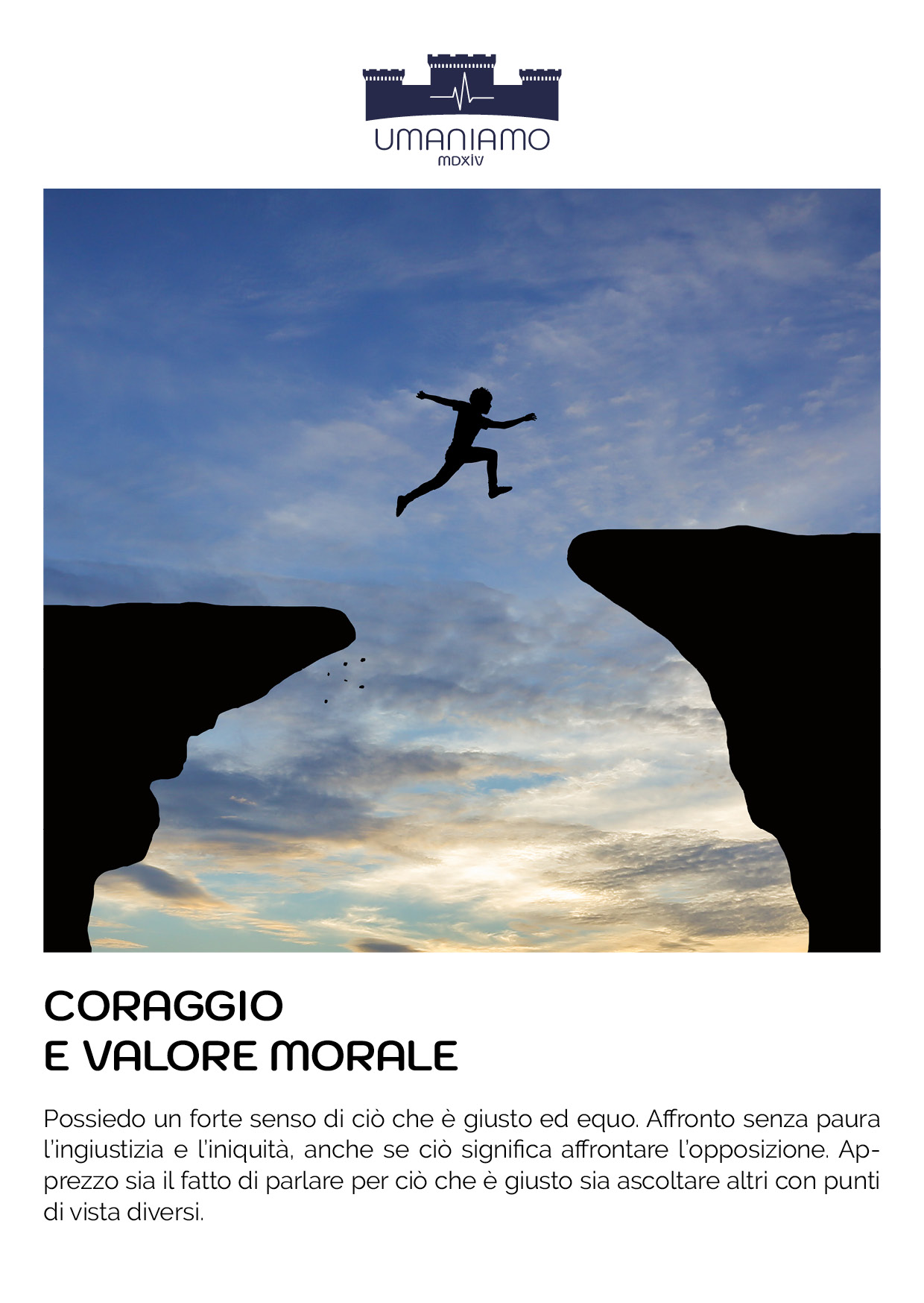
Il coraggio viene spesso frainteso come un'azione grandiosa o un momento eroico. Più spesso, il coraggio si manifesta attraverso la fedeltà, la sincerità, la responsabilità e la volontà di rimanere presenti quando le circostanze si fanno difficili. Il valore morale è il coraggio di allineare le nostre azioni alle nostre convinzioni più profonde, anche quando farlo può costarci comfort, popolarità, certezza o approvazione.
La Discussione a Tavolo di oggi non ha lo scopo di risolvere ogni problema. È un invito a rimanere abbastanza presenti da ascoltarci a vicenda, a notare ciò che si muove dentro di noi e a praticare l’Umanità insieme con onestà, curiosità e cura per la persona nella sua interezza.
Dopo il pasto o la pratica condivisa, lasciate che la conversazione si svolga naturalmente. Ascoltate profondamente. Lasciate spazio al silenzio. Lasciate che le persone condividano ciò che hanno veramente in mente.
Mentre riflettiamo sul Sacro Cuore e sulla vocazione del Costruttore all’opera, consideriamo le seguenti domande:
1. In quale ambito della mia vita sono invitato a rimanere aperto piuttosto che ritirarmi?
I Costruttori incontrano momenti in cui il cinismo, l’autoprotezione o il ritiro sembrano più facili del continuo impegno. Riflettete su una situazione in cui il coraggio potrebbe richiedere vulnerabilità piuttosto che controllo.
2. Quale verità, responsabilità o chiamata ho rimandato perché mi sembra scomoda, incerta o costosa?
Pietro scese dalla barca prima di conoscere l’esito. Considera dove potresti trovarti su un bordo simile e quale potrebbe essere l’azione fedele.
3. Chi ha dimostrato valore morale nella mia vita e cosa posso imparare dal suo esempio?
Pensa a un genitore, un mentore, un antenato, un amico, un insegnante, un collega, un santo o un costruttore il cui coraggio ha influenzato la tua vita. Quali qualità hanno reso il loro coraggio duraturo piuttosto che semplicemente impressionante?
Il Circolo Humaning ci invita a una conversazione più profonda e a un discernimento condiviso. Scegli la domanda che risuona più fortemente con la tua attuale fase di vita e permetti al gruppo di esplorarla insieme.
Il coraggio raramente è l'assenza di paura. Più spesso è la decisione che qualcos'altro conta più della paura. Mentre vi ascoltate a vicenda, considerate:
Dove mi viene chiesto di avere coraggio in questo momento, non un giorno, ma oggi?
Lascia che la conversazione si sviluppi naturalmente attraverso storie, esperienze, speranze, dubbi e intuizioni. Ascolta i momenti in cui la fedeltà, la responsabilità e l'amore diventano visibili attraverso le vite umane ordinarie.
L'obiettivo non è l'accordo, ma una comprensione più profonda. L'Humaning avviene quando creiamo uno spazio in cui la verità, la vulnerabilità e il coraggio possano emergere insieme.
La carta REDISCOVER UⓇ diventa il punto focale condiviso della conversazione, non qualcosa da analizzare, ma un invito alla riflessione, alla storia, alla possibilità e alla comprensione.
Mettete la carta REDISCOVER UⓇ al centro del tavolo o invitate ogni persona a guardare in silenzio la carta digitale per un momento. Prima di iniziare:
fate un respiro lento insieme,
notate quali pensieri o sentimenti sorgono,
e concedetevi un breve momento di silenzio.
Ascoltate per comprendere utilizzando le prospettive D.E.E.P.:
Dettagli
Prove
Empatia
Prospettiva
Parlate sulla base della vostra esperienza personale.
Lasciate spazio al silenzio.
Concedete a tutti lo spazio per partecipare in modo naturale.
Leggete la riflessione della settimana di Sunday Table o introducete brevemente il tema REDISCOVER UⓇ.
Scegli uno o più spunti di discussione da tavolo REDISCOVER UⓇ tra quelli sopra indicati.
Muoviti naturalmente intorno al tavolo, invitando ogni persona a riflettere se lo desidera.
Non è necessario che tutti rispondano a ogni domanda.
Lascia che la conversazione emerga in modo organico.
Prima di concludere, invita ogni persona a condividere: una parola, un sentimento o una piccola azione che spera di portare avanti nella settimana a venire.
Concludete con un respiro condiviso e un ringraziamento per la presenza di ciascuno.
Re-entry Reflection
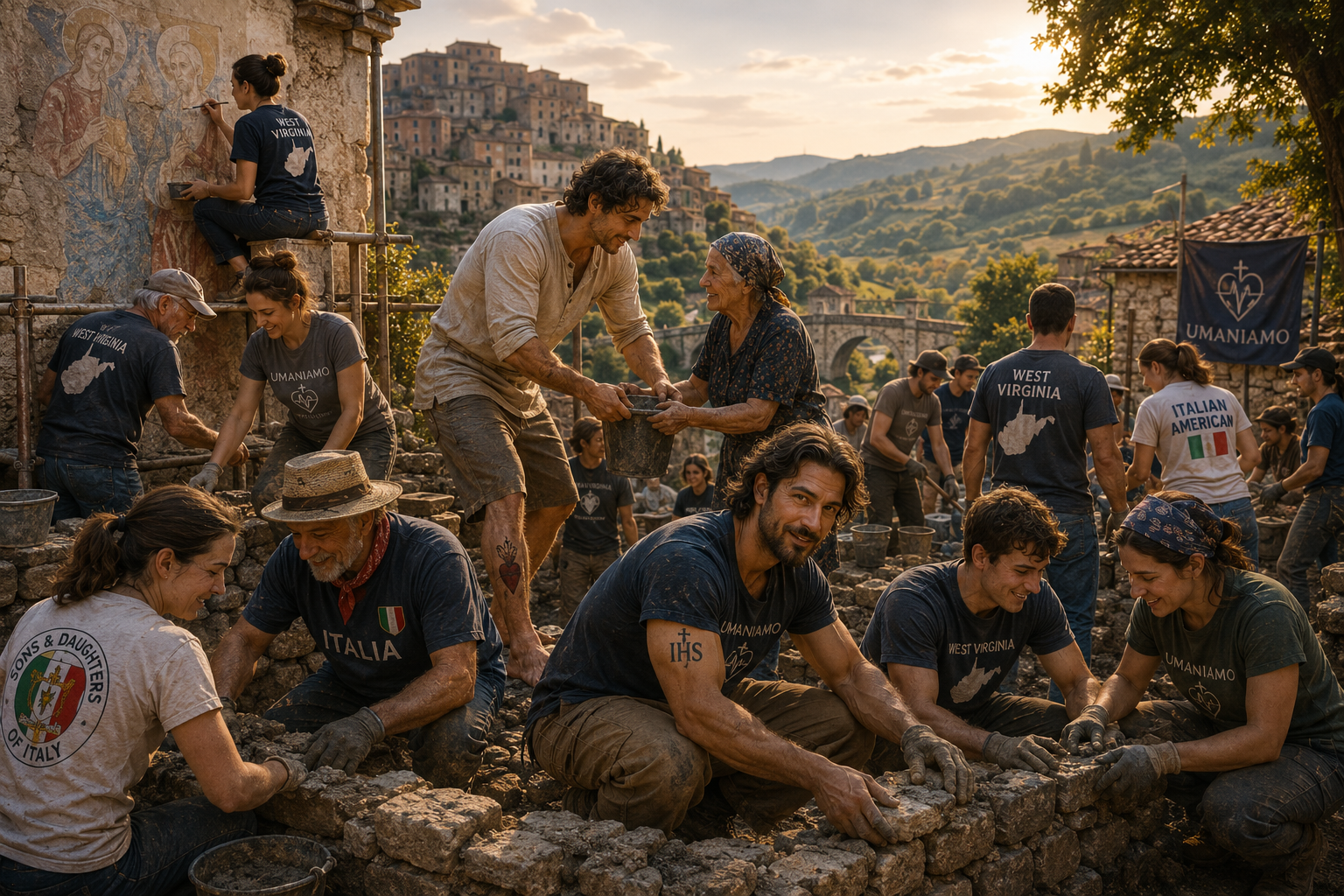
I came home to West Virginia this month after nine months in Matera… the longest I have ever stayed on the far side of the ocean, and in many ways the most revealing. For years the rhythm of my life has been a kind of tide: three months in Matera, three in West Virginia; sometimes four and two, sometimes five and four, always moving between two homes as though I could not quite decide which was the real one. This time the stay was long enough that I stopped counting, long enough that I stopped being a visitor. And somewhere in those nine months I finally understood something I had been circling for years without seeing.
The two places are telling the same story.
There is a version of Southern Italy that travels well. You have seen it. The stone streets and the golden light, the vineyards and the olive groves, the long tables and the slow meals, the grandmother stirring a pot she has stirred for sixty years. It is beautiful, and it is not false. I have lived inside that beauty and I would not trade it for anything. But it is not the whole truth, and the part it leaves out is the part that matters most.
What the postcard does not show is the absence.
The house two doors down that has not been opened in a decade. The school has more empty desks each September. The young people you meet once and then never again, because by spring they are in Milan, or Munich, or Manchester, sending money home and missing the funerals. The piazza that once held three times the people it holds now. Beneath the beauty of Southern Italy there is a not so subtle thing, and once you have seen it you cannot unsee it: a long, ongoing leaving.
We tend to file this under history, the great wave of immigration, the ships, the sepia photographs, the names on a manifest at Ellis Island. We imagine the emptying of the South as something that happened to our great-grandparents and then ended. It did not end. According to SVIMEZ, the research institute that has studied the Italian South for decades, close to half a million young people have left the Mezzogiorno for the north of Italy in little more than a decade and once you count those who left the country altogether, the figure climbs toward two-thirds of a million. Every year now, well over a hundred thousand young Southerners pack what they can carry and go. The ships have become budget flights and the destinations have changed, but the wound is the one Leo XIII named more than a century ago. The South is still being emptied. It is happening this year, while we are talking about it.
This is the world into which Leo XIII wrote Rerum Novarum in 1891, and we usually remember that encyclical too narrowly… as a document about wages and working conditions. It was that. But underneath was a deeper and more dangerous question, the very question Leo XIV has now raised again about artificial intelligence: what happens to human beings when they become inputs? The Industrial Revolution created staggering wealth, and it created a new way of seeing people; as labor to be drawn from a place and consumed, as productivity rather than as people, as a reservoir from which workers could be pulled and spent. The factories of the North gained hands. The villages of the South lost their sons and daughters. The wealth moved in one direction; the loss settled in the other. That is the shape of extraction, and it does not much care which century it operates in.
Which is exactly why coming home to West Virginia made all of this clear.
Because West Virginia knows this story in its blood, sweat and tears. We were not a village emptied to feed a factory across the ocean; we were the ground the wealth was taken from. The coal and the timber and the gas went out by the trainload, and much of the fortune they became was banked somewhere else, by people who never lived here and never meant to. What stayed behind were the hollows and the company towns, the broken places and the proud ones, and the same slow leaving, the young people who loved this state and left it anyway, because love does not pay the bills. West Virginia reached its greatest population in the middle of the last century and has been quietly shrinking ever since. Drive its back roads and you will see exactly what you see in Basilicata: astonishing beauty, and beside it, absence. The house never reopened. The family line interrupted, but the names are remembered because the people are gone.
And here is the turn of the knife. Many of the immigrants who fled the emptying villages of the Italian South a century ago did not escape extraction at all. They were recruited straight into it… into the coal camps of West Virginia and a hundred places like them, trading a hillside in Basilicata for a company town in Appalachia, one extracted land for another. The sons and daughters of Italy in this state are, very often, the descendants of people who went from being taken from to being used up. We have stood at both ends of the same machine.
Sidebar: Monongah, 6 December 1907
In the coal town of Monongah, in Marion County, at 10:28 on a Friday morning, the Fairmont Coal Company's Nos. 6 and 8 mines exploded with a force felt eight miles away. The official count was 362 men and boys, but the company's records burned, and miners routinely brought uncounted sons and brothers below to help, so the true toll was almost certainly higher, modern estimates pass 500. It remains the worst mining disaster in American history. And a great share of the dead, by some counts near seventy percent, were Italian immigrants, many from the very hill towns of the South this letter has been mourning. Among them was Fiorangelo DiSalvo of Duronia, in Molise, twelve years old, in America barely a year. The blast left some 250 widows and hundreds of fatherless children; each family was given about $150. In 2007, on the hundredth anniversary, Italy itself sent a monument to stand at Monongah over its lost sons.
Next year, 2027, marks one hundred and twenty years since that morning, and twenty since Italy came to remember. It would be a fitting year for the West Virginia lodges to make the pilgrimage there: to stand at the monument, to read the names aloud, and to know them not as strangers but as our own, sons of the South who crossed an ocean to escape an emptying land, only to be spent in the dark of another.
I think that is why I can’t see Matera and Berkeley Springs, WV as opposites anymore, old world and new, the place I came from and the place I came back to. They are not opposites. They are the same story told in two languages. Extraction wears the face of Basilicata as well as an Appalachian face, but it is one face. So, as it turns out, in lies the answer…
Because in both places, against every reason to go, some people stayed.
In Matera and the towns around it, they have names… Vito and Giovanni, Don Nino Martino, Loredana and Gianpiero, Giuseppe and Antonella, Michele and Nunzia, Loredana and Guiseppe, Silvestro, Davide, Dominico and Grazia, Vincenzo, Sara and Lorenzo, Mary and Gianpiero, and Michele up in Monte Sant'Angelo tending land his family has worked for longer than anyone can count. They kept the churches open. They maintained the vineyards. They preserved the recipes and went on speaking the dialect when it would have been easier to let it die. They repaired the walls. They buried the dead and welcomed the visitors and held the memory. Most will never appear in a history book. They are the reason there is anything left to come home to. And West Virginia has its own such people, in every hollow and small town the ones who stayed and tended and held the line when leaving would have been easier. Every emptied place that is not yet gone is being held, right now, by someone.
We owe them a word we rarely use. Not "locals." Not "the ones who didn't make it out." Custodians. Builders. And the distinction matters more than almost anything I know. A tourist visits; a builder remains responsible. A tourist enjoys the fruit; a builder tends the vineyard. A tourist consumes the heritage; a builder preserves it and hands it on. You can love a place the way a tourist loves it, by taking its beauty and leaving. Or you can love it the way a builder loves it, which is to stay inside the difficulty and keep it alive.
I want to say something here, to the Order Sons and Daughters of Italy in America, my own people, and a community I am somehow bound to serve and in some ways the Sunday Table is the fruit of that service.
We have inherited a beautiful mythology. They came, they worked hard, they succeeded, everyone prospered. There is real truth and real courage in it, and we should never stop honoring the ones who crossed the ocean with nothing but faith and a family name. But the mythology has a blind spot, and the blind spot is becoming dangerous. It lets us celebrate a heritage while the actual villages that produced it empty out in real time. It lets us treat Southern Italy as a museum we visit every few years, a place that will always be there, waiting, unchanged, ready for our photographs and our festivals when the truth is that it is leaving, right now, while we toast it from a banquet hall in America.
I do not say this to be harsh. I say it because I love both of these worlds, and because this year I watched the slow disappearance up close. There may come a day when a grandson goes looking for the village his name came from and finds the door of the house locked, the piazza silent, the church opened only for funerals. I would like us to wake from the fantasy before that day arrives while there is still a village to return to, and still time to be of use to it. To honor the ones who left is right and good. But it is long past time we also learned to honor, and to help, the ones who stayed.
This is where the image I keep returning to in these letters comes in. The Sacred Heart stands in flat opposition to extraction, because extraction asks one question and the open heart asks another. Extraction asks: what can I take? The Heart asks: what can I give? Extraction consumes people; the Heart accompanies them. Extraction sees labor; the Heart sees a person. Extraction depletes; the Heart cultivates. The Sacred Heart is not only a devotional picture on a holy card. It is a social vision, a whole way of seeing human beings and it was Leo XIII's answer to the industrial world. It remains the answer to ours.
From that vision the Six Promises follow almost of their own accord. To care for the whole person is to refuse the reduction of anyone to their usefulness. To empower one another for a greater purpose is to insist that every person carries gifts beyond their economic value. To integrate faith and science is to reject the false choice between progress and dignity. To encourage reflection and discernment is to stop being passive inside systems we have ceased to question. To value every act of service is to honor the hidden builders whose work no one applauds. And to invite continuous growth is to remember that a human being is never a finished product, but always a person still becoming.
And beneath all six runs the Magis… the more the whole tradition is reaching toward. Not more consumption. Not more accumulation. Not more extraction. More humanity. More relationships. More stewardship. More belonging. More life.
Maybe that is what the village still has to teach the world, on both sides of the ocean. Not because it is perfect, and not because it was spared of despair, but because in its emptied and beautiful endurance it never quite surrendered the oldest conviction: that people matter more than systems, that relationships matter more than transactions, that a meal shared at a long table matters more than a schedule kept, that belonging matters more than efficiency and that an open heart is worth more than an optimized one.
So I am home, and I am also still there, the way you are always partly in the place you love. The work on both shores is the same, and it is unfinished. The villages remain. The tables remain. The vineyards remain. The chair is still set, the seat still open, the Heart still exposed. And the invitation has not changed since the first ship left the harbor, or the first coal train left the hollow. Stay responsible. Keep the table. Honor the ones who stayed.
And… Build anyway.
Questo mese sono tornata a casa in West Virginia dopo nove mesi a Matera… il periodo più lungo che abbia mai trascorso dall’altra parte dell’oceano e, per molti versi, il più rivelatore. Per anni il ritmo della mia vita è stato una sorta di marea: tre mesi a Matera, tre in West Virginia; a volte quattro e due, a volte cinque e quattro, sempre in movimento tra due case come se non riuscissi a decidere quale fosse quella vera. Questa volta il soggiorno è stato abbastanza lungo da farmi smettere di contare, abbastanza lungo da farmi smettere di essere un visitatore. E da qualche parte in quei nove mesi ho finalmente capito qualcosa che giravo intorno da anni senza vedere.
I due luoghi raccontano la stessa storia.
C'è una versione del Sud Italia che viaggia bene. L'avete vista. Le strade di pietra e la luce dorata, i vigneti e gli uliveti, i lunghi tavoli e i pasti lenti, la nonna che mescola una pentola che mescola da sessant'anni. È bella, e non è falsa. Ho vissuto dentro quella bellezza e non la scambierei per nulla al mondo. Ma non è tutta la verità, e la parte che tralascia è quella che conta di più.
Ciò che la cartolina non mostra è l’assenza.
La casa due porte più in là che non viene aperta da un decennio. La scuola ha più banchi vuoti ogni settembre. I giovani che incontri una volta e poi mai più, perché in primavera sono a Milano, o a Monaco, o a Manchester, a mandare soldi a casa e a perdersi i funerali. La piazza che un tempo ospitava il triplo delle persone che ospita ora. Sotto la bellezza del Sud Italia c’è una cosa non così sottile, e una volta che l’hai vista non puoi più non vederla: una lunga, continua partenza.
Tendiamo a archiviarla sotto la voce storia, la grande ondata di immigrazione, le navi, le fotografie color seppia, i nomi su un manifesto ad Ellis Island. Immaginiamo lo svuotamento del Sud come qualcosa che è successo ai nostri bisnonni e poi è finito. Non è finito. Secondo SVIMEZ, l’istituto di ricerca che studia il Sud italiano da decenni, quasi mezzo milione di giovani ha lasciato il Mezzogiorno per il Nord d’Italia in poco più di un decennio e, se si contano anche coloro che hanno lasciato del tutto il Paese, la cifra sale a quasi tre quarti di milione. Ogni anno ormai, ben oltre centomila giovani meridionali fanno i bagagli e se ne vanno. Le navi sono diventate voli low cost e le destinazioni sono cambiate, ma la ferita è quella che Leone XIII ha individuato più di un secolo fa. Il Sud si sta ancora svuotando. Sta accadendo quest’anno, mentre ne stiamo parlando.
Questo è il mondo in cui Leone XIII scrisse la Rerum Novarum nel 1891, e di solito ricordiamo quell’enciclica in modo troppo ristretto… come un documento sui salari e sulle condizioni di lavoro. Lo era. Ma sotto c'era una questione più profonda e pericolosa, la stessa questione che Leone XIV ha ora sollevato di nuovo riguardo all'intelligenza artificiale: cosa succede agli esseri umani quando diventano input? La rivoluzione industriale ha creato una ricchezza sbalorditiva e ha creato un nuovo modo di vedere le persone: come manodopera da prelevare da un luogo e consumare, come produttività piuttosto che come persone, come un serbatoio da cui attingere e consumare lavoratori. Le fabbriche del Nord hanno guadagnato manodopera. I villaggi del Sud persero i loro figli e le loro figlie. La ricchezza si spostò in una direzione; la perdita si stabilì nell’altra. Questa è la forma dell’estrazione, e non le importa molto in quale secolo opera.
Ed è proprio per questo che tornare a casa in West Virginia ha chiarito tutto questo.
Perché il West Virginia conosce questa storia nel sangue, nel sudore e nelle lacrime. Non eravamo un villaggio svuotato per alimentare una fabbrica dall’altra parte dell’oceano; eravamo il terreno da cui veniva prelevata la ricchezza. Il carbone, il legname e il gas partivano a vagoni, e gran parte della fortuna che ne derivava veniva depositata altrove, da persone che non avevano mai vissuto qui e non avevano mai avuto intenzione di farlo. Ciò che è rimasto sono le valli e le città aziendali, i luoghi distrutti e quelli orgogliosi, e lo stesso lento abbandono, i giovani che amavano questo Stato e lo hanno lasciato comunque, perché l’amore non paga le bollette. Il West Virginia ha raggiunto il picco di popolazione a metà del secolo scorso e da allora si è silenziosamente ridotto. Percorrete le sue strade secondarie e vedrete esattamente ciò che si vede in Basilicata: una bellezza sbalorditiva e, accanto ad essa, il vuoto. La casa non ha mai riaperto. La discendenza si è interrotta, ma i nomi sono ricordati perché le persone se ne sono andate.
Ed ecco il colpo di grazia. Molti degli immigrati che un secolo fa fuggirono dai villaggi che si stavano svuotando del Sud Italia non sfuggirono affatto allo sfruttamento. Vi furono reclutati direttamente… nei campi carboniferi del West Virginia e in un centinaio di luoghi simili, scambiando una collina in Basilicata per una città aziendale negli Appalachi, una terra sfruttata per un’altra. I figli e le figlie d’Italia in questo Stato sono, molto spesso, i discendenti di persone che passarono dall’essere prese da all’essere sfruttate. Ci siamo trovati alle due estremità della stessa macchina.
Riquadro: Monongah, 6 dicembre 1907
Nella città carbonifera di Monongah, nella contea di Marion, alle 10:28 di un venerdì mattina, le miniere n. 6 e n. 8 della Fairmont Coal Company esplosero con una forza avvertita a otto miglia di distanza. Il bilancio ufficiale era di 362 uomini e ragazzi, ma i registri della compagnia andarono bruciati e i minatori portavano abitualmente in miniera figli e fratelli non registrati per dare una mano, quindi il bilancio reale fu quasi certamente più alto; le stime moderne superano i 500. Rimane il peggior disastro minerario della storia americana. E una grande parte dei morti, secondo alcune stime quasi il settanta per cento, erano immigrati italiani, molti provenienti proprio dai paesini collinari del Sud per cui questa lettera è in lutto. Tra loro c'era Fiorangelo DiSalvo di Duronia, in Molise, dodicenne, in America da appena un anno. L'esplosione lasciò circa 250 vedove e centinaia di bambini senza padre; a ogni famiglia furono dati circa 150 dollari. Nel 2007, in occasione del centenario, l'Italia stessa inviò un monumento da erigere a Monongah in memoria dei suoi figli perduti.
L'anno prossimo, il 2027, ricorreranno centoventi anni da quella mattina e venti da quando l'Italia è venuta a ricordare. Sarebbe un anno appropriato per le logge del West Virginia per compiere un pellegrinaggio lì: per stare davanti al monumento, leggere i nomi ad alta voce e riconoscerli non come estranei ma come nostri, figli del Sud che hanno attraversato un oceano per sfuggire a una terra che si svuotava, solo per essere consumati nell'oscurità di un'altra.
Penso che sia per questo che non riesco più a vedere Matera e Berkeley Springs, WV come opposti, vecchio mondo e nuovo, il luogo da cui provengo e il luogo in cui sono tornato. Non sono opposti. Sono la stessa storia raccontata in due lingue. L’estrazione ha il volto della Basilicata così come quello degli Appalachi, ma è un unico volto. Quindi, a quanto pare, è lì che sta la risposta…
Perché in entrambi i luoghi, contro ogni ragionevole motivo per andarsene, alcune persone sono rimaste.
A Matera e nei paesi intorno, hanno dei nomi… Vito e Giovanni, Don Nino Martino, Loredana e Gianpiero, Giuseppe e Antonella, Michele e Nunzia, Loredana e Giuseppe, Silvestro, Davide, Dominico e Grazia, Vincenzo, Sara e Lorenzo, Mary e Gianpiero, e Michele lassù a Monte Sant'Angelo che cura la terra che la sua famiglia lavora da più tempo di quanto si possa ricordare. Hanno tenuto aperte le chiese. Hanno curato i vigneti. Hanno conservato le ricette e hanno continuato a parlare il dialetto quando sarebbe stato più facile lasciarlo morire. Hanno riparato i muri. Hanno seppellito i morti, accolto i visitatori e custodito la memoria. La maggior parte di loro non apparirà mai in un libro di storia. Sono loro la ragione per cui c'è ancora qualcosa a cui tornare. E il West Virginia ha le sue persone così, in ogni valle e in ogni piccola città, coloro che sono rimasti, hanno curato e hanno tenuto duro quando sarebbe stato più facile andarsene. Ogni luogo svuotato che non è ancora scomparso è custodito, proprio ora, da qualcuno.
A loro dobbiamo una parola che usiamo raramente. Non “locali”. Non “quelli che non ce l’hanno fatta”. Custodi.Costruttori. E la distinzione conta più di quasi ogni altra cosa che conosca. Un turista visita; un costruttore rimane responsabile. Un turista gode del frutto; un costruttore cura la vigna. Un turista consuma il patrimonio; un costruttore lo preserva e lo tramanda. Si può amare un luogo come lo ama un turista, prendendone la bellezza e andandosene. Oppure lo si può amare come lo ama un costruttore, ovvero rimanendo all’interno delle difficoltà e mantenendolo in vita.
Voglio dire qualcosa qui, all’Ordine Figli e Figlie d’Italia in America, alla mia gente, e a una comunità che in qualche modo sono destinato a servire e in un certo senso la Tavola della Domenica è il frutto di quel servizio.
Abbiamo ereditato una bellissima mitologia. Sono arrivati, hanno lavorato sodo, hanno avuto successo, tutti hanno prosperato. C’è vera verità e vero coraggio in questo, e non dovremmo mai smettere di onorare coloro che hanno attraversato l’oceano con nient’altro che la fede e un cognome. Ma la mitologia ha un punto cieco, e quel punto cieco sta diventando pericoloso. Ci permette di celebrare un patrimonio mentre i villaggi reali che lo hanno prodotto si svuotano in tempo reale. Ci permette di trattare il Sud Italia come un museo che visitiamo ogni pochi anni, un luogo che sarà sempre lì, ad aspettarci, immutato, pronto per le nostre fotografie e le nostre feste, quando la verità è che sta scomparendo, proprio ora, mentre brindiamo a esso da una sala banchetti in America.
Non lo dico per essere duro. Lo dico perché amo entrambi questi mondi, e perché quest'anno ho assistito da vicino alla sua lenta scomparsa. Potrebbe arrivare un giorno in cui un nipote andrà alla ricerca del paese da cui deriva il suo nome e troverà la porta di casa chiusa a chiave, la piazza silenziosa, la chiesa aperta solo per i funerali. Vorrei che ci svegliassimo da questa fantasia prima che quel giorno arrivi, finché c’è ancora un paese in cui tornare e c’è ancora tempo per essergli d’aiuto. Onorare chi se n’è andato è giusto e bello. Ma è ora che impariamo anche a onorare e ad aiutare coloro che sono rimasti.
È qui che entra in gioco l'immagine a cui continuo a tornare in queste lettere. Il Sacro Cuore si pone in netta opposizione allo sfruttamento, perché lo sfruttamento pone una domanda e il cuore aperto ne pone un'altra. Lo sfruttamento chiede: cosa posso prendere? Il Cuore chiede: cosa posso dare? Lo sfruttamento consuma le persone; il Cuore le accompagna. Lo sfruttamento vede il lavoro; il Cuore vede una persona. L'estrazione impoverisce; il Cuore coltiva. Il Sacro Cuore non è solo un'immagine devozionale su un santino. È una visione sociale, un intero modo di vedere gli esseri umani ed è stata la risposta di Leone XIII al mondo industriale. Rimane la risposta al nostro.
Da quella visione le Sei Promesse seguono quasi da sole. Prendersi cura della persona nella sua interezza significa rifiutare la riduzione di chiunque alla sua utilità. Rafforzarsi a vicenda per uno scopo più grande significa insistere sul fatto che ogni persona possiede doni che vanno oltre il proprio valore economico. Integrare fede e scienza significa rifiutare la falsa scelta tra progresso e dignità. Incoraggiare la riflessione e il discernimento significa smettere di essere passivi all’interno di sistemi che abbiamo smesso di mettere in discussione. Valorizzare ogni atto di servizio significa onorare i costruttori nascosti il cui lavoro nessuno applaude. E invitare alla crescita continua significa ricordare che un essere umano non è mai un prodotto finito, ma sempre una persona ancora in divenire.
E sotto tutti e sei scorre il Magis… il di più verso cui tende l’intera tradizione. Non più consumo. Non più accumulo. Non più sfruttamento. Più umanità. Più relazioni. Più gestione responsabile. Più senso di appartenenza. Più vita.
Forse è questo che il villaggio ha ancora da insegnare al mondo, su entrambe le sponde dell’oceano. Non perché sia perfetto, e non perché sia stato risparmiato dalla disperazione, ma perché nella sua resistenza svuotata e bella non ha mai del tutto rinunciato alla convinzione più antica: che le persone contano più dei sistemi, che le relazioni contano più delle transazioni, che un pasto condiviso a un lungo tavolo conta più di un programma rispettato, che l’appartenenza conta più dell’efficienza e che un cuore aperto vale più di uno ottimizzato.
Quindi sono a casa, e sono anche ancora lì, nel modo in cui si è sempre in parte nel luogo che si ama. Il lavoro su entrambe le sponde è lo stesso, ed è incompiuto. I villaggi rimangono. I tavoli rimangono. I vigneti rimangono. La sedia è ancora apparecchiata, il posto ancora libero, il Cuore ancora esposto. E l’invito non è cambiato da quando la prima nave ha lasciato il porto, o il primo treno di carbone ha lasciato la valle. Rimanete responsabili. Mantenete la tavola. Onorate coloro che sono rimasti.
E… Costruite comunque.
Jake Claxton, Fatherhood & the Track
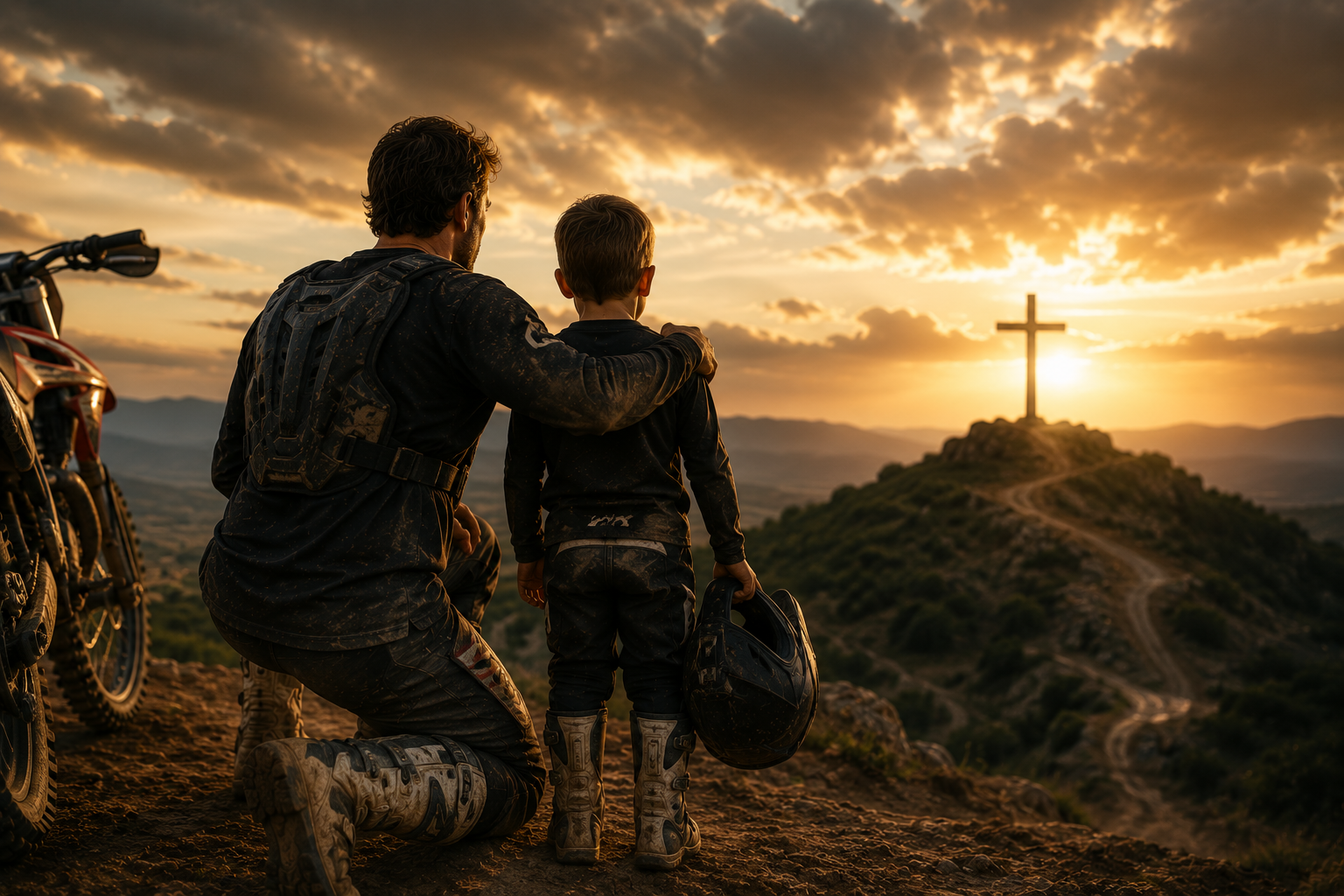
As a father of two boys, I talk about bravery a lot. It comes up at the dinner table, out in the garage, on the drive home. As I watch my sons grow, I keep looking for ways to let them challenge themselves, even small chances to stretch, to struggle a little, to grow into the kind of strong, capable men I hope they'll become.
One of the things I tell my five-year-old is that fear and uncertainty aren't bad. They're normal. Everybody feels them. What matters is what you do when they show up. Do you freeze or do you sharpen, and move? Because bravery was never about not being scared. Bravery is choosing to go forward anyway, with the fear still sitting right there in your chest.
That's a big part of why I love motocross. It doesn't matter how old you are or how good you are; the track is always setting an obstacle in front of you that tests your nerve. Every time you ride, you get handed another chance to practice being brave, to look straight at the thing you're afraid of and twist the throttle anyway.
But bravery isn't only built on the track. It's built in ordinary life, and the only way to strengthen it is to keep putting yourself in situations that actually require it. If you stay comfortable, you never have to be brave, there's simply no reason to be. Growth shows up when you step, on purpose, into a little discomfort, even in the smallest ways.
Sometimes that looks like speaking up when you know you're being called to tell the truth. Sometimes it looks like facing pain, in your body or in your mind, and choosing to walk toward it instead of around it, to understand it and work through it.
I'll be honest with you: I'm in one of those uncomfortable seasons myself right now. I feel pulled toward something unfamiliar, something outside what I'm good at, outside what I trained for and it's a conviction I can't shake. It's leading me down a path I didn't plan on. And I've come to see that if I dodge it, I'm not practicing Moral Valor. I'm just staying comfortable.
There's a strange grace in that, though. In the unknown, you're forced to lean on God's direction. When everything is comfortable, it's easy to believe you've got it all handled on your own. But growth, and purpose, usually live on the far side of comfort, out past the edge of what you already know how to do.
So I'll leave you with two questions:
What are you feeling called to do that scares you? And what is one thing… even a small thing you could do today to practice being brave?
Christ is the ultimate picture of this. Fully God and fully human, He felt everything we feel. He knew fear. And He still chose obedience and through that one choice, He changed everything.
About Jake
Jake Claxton is a husband, father of two sons, and founder of Ride By Design. His reflections draw from family life, faith, and lessons learned on the motocross track.
Essendo padre di due ragazzi, parlo spesso di coraggio. Ne parliamo a tavola, in garage, mentre torniamo a casa in macchina. Mentre vedo crescere i miei figli, cerco sempre nuovi modi per spingerli a mettersi alla prova, anche solo piccole occasioni per spingersi oltre i propri limiti, per lottare un po’, per diventare gli uomini forti e capaci che spero diventino.
Una delle cose che dico al mio bambino di cinque anni è che la paura e l'incertezza non sono negative. Sono normali. Tutti le provano. Ciò che conta è cosa fai quando si presentano. Ti blocchi o ti concentri e agisci? Perché il coraggio non ha mai significato non avere paura. Il coraggio è scegliere di andare avanti comunque, con la paura ancora lì, nel petto.
Questo è uno dei motivi principali per cui amo il motocross. Non importa quanti anni hai o quanto sei bravo; la pista ti pone sempre davanti un ostacolo che mette alla prova il tuo coraggio. Ogni volta che guidi, ti viene offerta un'altra occasione per esercitarti a essere coraggioso, per guardare dritto in faccia ciò che ti spaventa e accelerare comunque.
Ma il coraggio non si costruisce solo in pista. Si costruisce nella vita di tutti i giorni, e l’unico modo per rafforzarlo è continuare a mettersi in situazioni che lo richiedono davvero. Se rimani nella tua zona di comfort, non dovrai mai essere coraggioso, semplicemente non c’è motivo di esserlo. La crescita si manifesta quando ti esponi, di proposito, a un po’ di disagio, anche nelle cose più piccole.
A volte significa far sentire la propria voce quando sai che devi dire la verità. A volte significa affrontare il dolore, nel corpo o nella mente, e scegliere di andare incontro ad esso invece di aggirarlo, per comprenderlo e superarlo.
Sarò onesto con voi: anch’io mi trovo in uno di quei periodi scomodi in questo momento. Mi sento attratto da qualcosa di sconosciuto, qualcosa al di fuori di ciò in cui sono bravo, al di fuori di ciò per cui mi sono allenato, ed è una convinzione che non riesco a scrollarmi di dosso. Mi sta portando lungo un percorso che non avevo pianificato. E ho capito che se lo evito, non sto mettendo in pratica il Coraggio Morale. Sto semplicemente rimanendo nella mia zona di comfort.
C'è però una strana grazia in questo. Nell'ignoto, sei costretto ad affidarti alla guida di Dio. Quando tutto è comodo, è facile credere di poter gestire tutto da solo. Ma la crescita e lo scopo di vita di solito si trovano al di là della zona di comfort, oltre i limiti di ciò che già sai fare.
Quindi ti lascio con due domande:
Cosa senti di dover fare che ti spaventa? E qual è una cosa… anche piccola, che potresti fare oggi per esercitarti a essere coraggioso?
Cristo ne è l'esempio perfetto. Pieno Dio e pieno uomo, ha provato tutto ciò che proviamo noi. Conosceva la paura. Eppure ha scelto l'obbedienza e, attraverso quella scelta, ha cambiato tutto.
A proposito di Jake
Jake Claxton è marito, padre di due figli e fondatore di Ride By Design. Le sue riflessioni attingono alla vita familiare, alla fede e alle lezioni apprese sulla pista di motocross.
Small acts to move the world forward
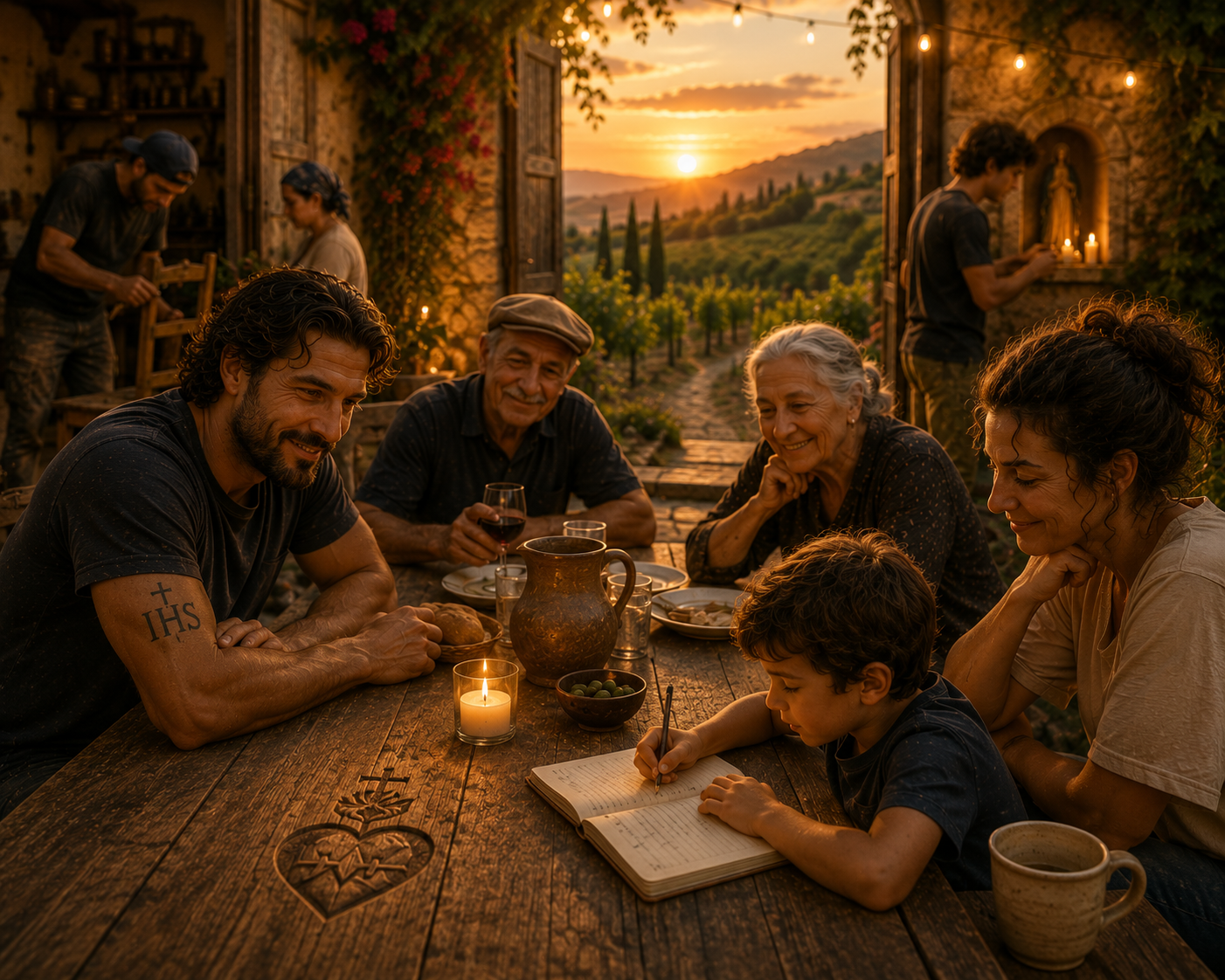
The Sacred Heart reminds us that Humaning is not merely about becoming better individuals. It is about becoming more available to God, to one another, and to the future that is trying to emerge through our relationships, responsibilities, and acts of service. The open heart is not sentimental, it is courageous. It remains present when retreat would be easier. It remains faithful when results are uncertain. It remains available when love asks something of us.
This week, allow the Six Promises to become small practices of fidelity. Rather than attempting something extraordinary, look for opportunities to remain open in ordinary moments. Builders at Work rarely change the world all at once. They change it through countless small acts of stewardship, repeated faithfully over time.
Choose one person this week and give them the gift of your undivided attention. Put away distractions. Listen without preparing a response. Notice what is happening beneath their words. The Sacred Heart teaches us that people are never problems to solve; they are persons to accompany. Sometimes the most healing thing we can offer another human being is the experience of being fully seen.
Encourage someone whose gifts may still be emerging. Offer specific affirmation rather than general praise. Share something you see in them that they may not yet recognize in themselves. Builders create conditions where others can flourish. The future often grows through seeds of confidence planted by someone willing to notice potential.
Pay attention this week to the relationship between your body, your thoughts, and your spirit. Notice how sleep, movement, nutrition, stress, prayer, and relationships influence your ability to remain present and open-hearted. Human beings flourish through integration. Faith is not separate from embodiment; it is lived through it.
Create one period of intentional quiet during the week. Leave behind the constant stream of information, entertainment, and opinion. Walk, sit, pray, or simply observe. Ask yourself where grace may already be at work in your life. Ignatius taught that God can be found in all things, but only if we slow down enough to notice.
Notice the hidden builders around you. The person who maintains a space, prepares a meal, fixes something broken, remembers a name, or quietly serves others without recognition. Offer gratitude where gratitude is due. Every community is sustained by countless acts of stewardship that often go unseen. Humaning begins when we learn to see them.
Identify one edge in your life where growth may be asking something of you. Perhaps it is a difficult conversation, a new responsibility, a skill worth learning, or a fear worth facing. Growth rarely arrives through comfort alone. The open heart remains willing to learn, adapt, and become.
Magis is not about doing more. It is about becoming more available to what matters most. As you move through the week, pay attention to moments when your heart feels tempted to close through fear, frustration, cynicism, or exhaustion. Instead of retreating, ask a simple question:
What would courageous love do here? The answer may not always be easy, but it is often the next faithful step.
At the end of the week, create a quiet moment to reflect on your experience of Humaning through the Six Promises and the practice of the Open Heart.
DETAILS: What moments, conversations, actions, or experiences stood out to me this week? Where did I notice opportunities to remain open rather than retreat?
EVIDENCE: What evidence did I observe of courage, trust, belonging, growth, service, or humanity emerging in myself or others?
EMPATHY: Who around me may have needed deeper presence, encouragement, understanding, or accompaniment? How did I respond?
PROSPECTIVE: Through Wonder, Intuition, Dreams, Embodiment, and Resonance (W.I.D.E.R.), what future might be quietly emerging from my current choices, relationships, and commitments? If I continue building faithfully, what becomes possible?
EXECUTION: What one action can I take next week to strengthen an open heart, deepen a relationship, support another person, or contribute to a community?
REFLECTION: Looking back on the week, where did I experience grace? Where did I feel most alive, most human, and most connected to something greater than myself?
Take one slow breath. Give thanks for the people who helped keep your heart open this week. Give thanks for the Builders at Work who came before you. Give thanks for the opportunities that remain unfinished. And ask for the courage to remain available to God, to others, and to the work entrusted to you.
Il Cuore Aperto
Il Sacro Cuore ci ricorda che l’Humaning non consiste semplicemente nel diventare individui migliori. Si tratta piuttosto di diventare più disponibili verso Dio, gli uni verso gli altri e verso il futuro che sta cercando di emergere attraverso le nostre relazioni, le nostre responsabilità e i nostri atti di servizio. Il cuore aperto non è sentimentale, è coraggioso. Rimane presente quando sarebbe più facile ritirarsi. Rimane fedele quando i risultati sono incerti. Rimane disponibile quando l’amore ci chiede qualcosa.
Questa settimana, lascia che le Sei Promesse diventino piccole pratiche di fedeltà. Piuttosto che tentare qualcosa di straordinario, cerca le opportunità per rimanere aperto nei momenti ordinari. I Costruttori all’Opera raramente cambiano il mondo tutto in una volta. Lo cambiano attraverso innumerevoli piccoli atti di gestione responsabile, ripetuti fedelmente nel tempo.
Scegli una persona questa settimana e donale la tua totale attenzione. Metti da parte le distrazioni. Ascolta senza preparare una risposta. Nota cosa sta accadendo al di là delle sue parole. Il Sacro Cuore ci insegna che le persone non sono mai problemi da risolvere; sono persone da accompagnare. A volte la cosa più curativa che possiamo offrire a un altro essere umano è l’esperienza di essere pienamente visti.
Incoraggia qualcuno i cui doni potrebbero essere ancora in fase di sviluppo. Offri un’affermazione specifica piuttosto che un elogio generico. Condividi qualcosa che vedi in loro e che potrebbero non riconoscere ancora in se stessi. I costruttori creano le condizioni in cui gli altri possono prosperare. Il futuro spesso cresce attraverso i semi di fiducia piantati da qualcuno disposto a notare il potenziale.
Presta attenzione questa settimana al rapporto tra il tuo corpo, i tuoi pensieri e il tuo spirito. Nota come il sonno, il movimento, l’alimentazione, lo stress, la preghiera e le relazioni influenzano la tua capacità di rimanere presente e di cuore aperto. Gli esseri umani prosperano attraverso l’integrazione. La fede non è separata dall’incarnazione; è vissuta attraverso di essa.
Crea un momento di silenzio intenzionale durante la settimana. Lasciati alle spalle il flusso costante di informazioni, intrattenimento e opinioni. Cammina, siediti, prega o semplicemente osserva. Chiediti dove la grazia potrebbe già essere all’opera nella tua vita. Ignazio insegnava che Dio si trova in tutte le cose, ma solo se rallentiamo abbastanza da notarlo.
Notate i costruttori nascosti intorno a voi. La persona che cura uno spazio, prepara un pasto, ripara qualcosa di rotto, ricorda un nome o serve silenziosamente gli altri senza ricevere riconoscimento. Offrite gratitudine dove è dovuta. Ogni comunità è sostenuta da innumerevoli atti di cura che spesso passano inosservati. L'essere umani inizia quando impariamo a vederli.
Identifica un ambito della tua vita in cui la crescita potrebbe chiederti qualcosa. Forse si tratta di una conversazione difficile, di una nuova responsabilità, di un'abilità che vale la pena imparare o di una paura che vale la pena affrontare. La crescita raramente arriva solo attraverso il comfort. Il cuore aperto rimane disposto a imparare, ad adattarsi e a diventare.
Magis non significa fare di più. Significa diventare più disponibili a ciò che conta di più. Mentre vivi la settimana, presta attenzione ai momenti in cui il tuo cuore è tentato di chiudersi per paura, frustrazione, cinismo o stanchezza. Invece di ritirarti, poniti una semplice domanda:
Cosa farebbe l’amore coraggioso in questa situazione? La risposta potrebbe non essere sempre facile, ma spesso è il prossimo passo fedele.
Alla fine della settimana, ritagliati un momento di tranquillità per riflettere sulla tua esperienza di Humaning attraverso le Sei Promesse e la pratica del Cuore Aperto.
DETTAGLI: Quali momenti, conversazioni, azioni o esperienze mi hanno colpito questa settimana? Dove ho notato opportunità per rimanere aperto invece di ritirarmi?
EVIDENZA: Quali segni di coraggio, fiducia, appartenenza, crescita, servizio o umanità ho osservato emergere in me stesso o negli altri?
EMPATIA: Chi intorno a me potrebbe aver avuto bisogno di maggiore presenza, incoraggiamento, comprensione o accompagnamento? Come ho reagito?
PROSPETTIVA: Attraverso Meraviglia, Intuizione, Sogni, Incarnazione e Risonanza (W.I.D.E.R.), quale futuro potrebbe emergere silenziosamente dalle mie scelte, relazioni e impegni attuali? Se continuo a costruire con dedizione, cosa diventa possibile?
ESECUZIONE: Quale azione posso intraprendere la prossima settimana per rafforzare un cuore aperto, approfondire una relazione, sostenere un'altra persona o contribuire a una comunità?
RIFLESSIONE: Guardando indietro alla settimana, dove ho sperimentato la grazia? Dove mi sono sentito più vivo, più umano e più connesso a qualcosa di più grande di me stesso?
Fai un respiro lento. Ringrazia le persone che ti hanno aiutato a mantenere il cuore aperto questa settimana. Ringrazia i Costruttori all'Opera che ti hanno preceduto. Ringrazia per le opportunità che rimangono incompiute. E chiedi il coraggio di rimanere disponibile a Dio, agli altri e al lavoro che ti è stato affidato.
Cosiamo | Founder, UMANIAMO® | Humaning Architecture
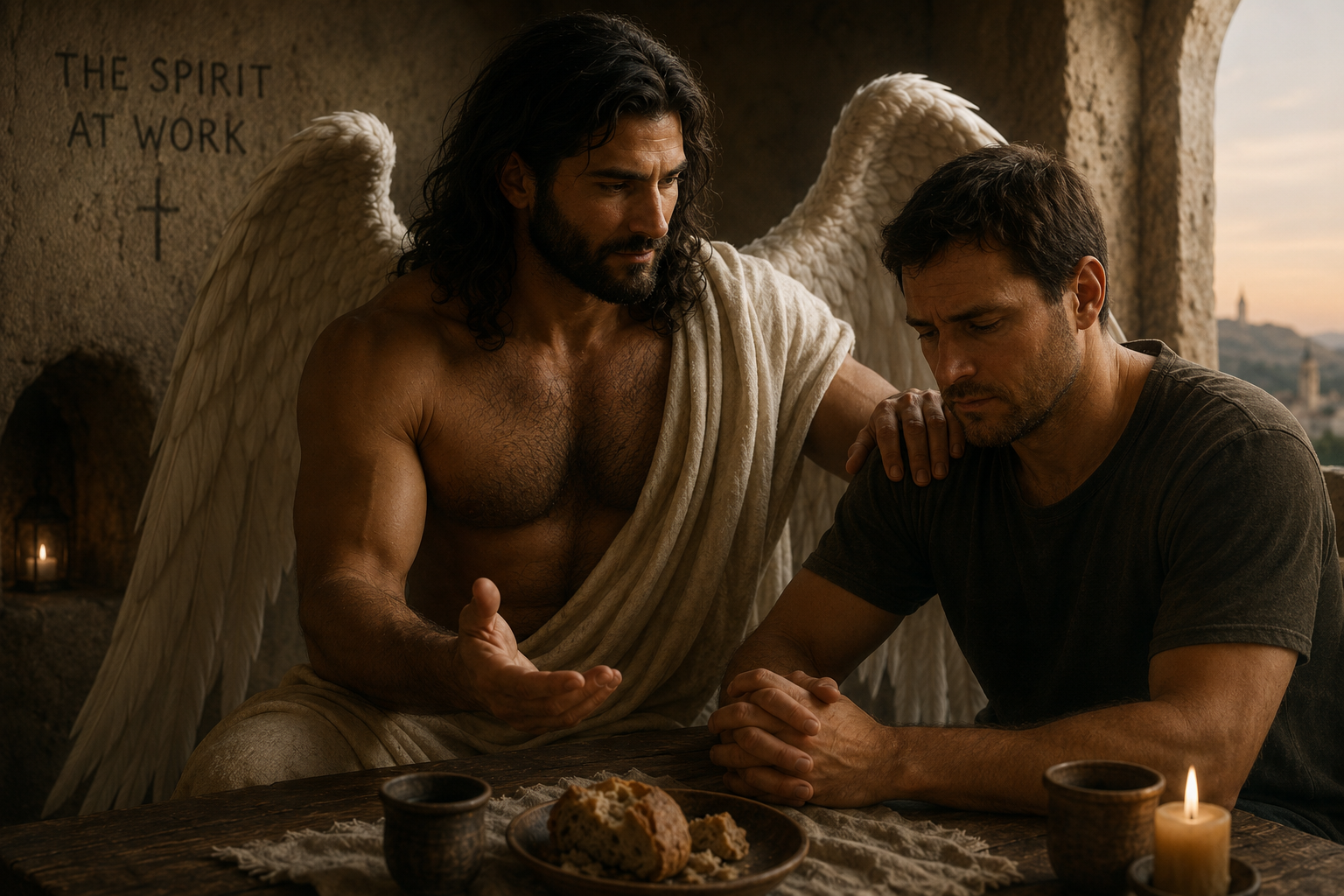
The world arms him… sword, armor, the dragon beneath his heel. But sit with him in the grotto, where even the mouth of the cave opens like a pair of wings, and you meet the one the statues miss. A presence that fills the room without ever raising its voice. He does not come to conquer your grief; he comes to sit with it. One hand keeps the threshold between the cave and the village… the inner world and the outer, two faces of a single Humaning and the other rests on your shoulder, the way the bravest people I have known carry their strength: not as a weapon, but as a watch kept over others until the light comes back.
There are voices in every life. Some arrive as demands, others as fears; some come dressed as ambition or appetite, as old wounds or new anxieties. A few reach us from the world outside, and others rise from somewhere within. What nearly all of them share is volume. They are loud enough to command our attention at once, rushing us toward action, toward judgment, toward the relief of certainty. They insist on being heard.
The Spirit at Work is different, he rarely shouts. The Spirit at Work whispers, not for any lack of power, but because power is not what the moment needs.
This is one of the silent paradoxes at the center of the Christian story. The “One who is like God,” Archangel (Saint) Michael, does not overwhelm. The One who commands the armies of heaven does not coerce. The One who stands against the darkness does not win by being the loudest presence in the room. The Spirit at Work, instead arrives the way the most important things tend to arrive: ironically on time, persistently, and faithfully, through the act of inviting rather than forcing, accompanying rather than controlling.
Maybe that is why Saint Michael chose a cave. Or perhaps, more accurately, why a cave in South Italy was the place that revealed something true about him. A cave is a strange setting for strength. It is not a palace or a fortress or a throne room; it is a place of silence, where the noise of the world thins out enough for something deeper to become audible, and where a person must descend before they can rise. I suspect that most of the things that matter begin exactly there, not with answers, but with attention.
The Spirit at Work is the voice that asks us to look again - to pause, notice, and reconsider the explanation that came too easily, and to grow curious about what we may have have overlooked. He invites us to attend to what is happening around us, but also to what is happening within us. In an age where we are drowning in information, this may be one of the most endangered of all human capacities.
We live under constant distractive instruction. Algorithms tell us what to watch; influencers tell us what to believe; headlines tell us what to fear; and now the machine will tell us what to write, what to say, what to summarize, even what to think about next. Never have human beings had access to so many answers. And perhaps never have we stood in greater danger of forgetting how to ask the right questions.
The Spirit at Work does not compete with that noise. He simply keeps returning… patiently, again and again, asking us to notice what is real, to notice who is present, to notice what is true. This is why discernment has always and will always matter. Discernment is not, first of all, decision-making; it is learning to see clearly before we decide. It is learning to tell impulse from invitation, reaction from response, what merely serves the ego from what serves the greater good. But before there is action, there is orientation. Before there is vocation, there is attention. Before there is building, there is seeing. The Spirit at Work lives in that space not at the end of the process but near its beginning, like a flashlight held up to a path that was there all along.
One of the great mistakes of modern life is the assumption that a human being is an empty vessel waiting to be filled. We are told that identity must be conjured or invented, constructed, branded, optimized, and curated; we are encouraged to believe the Devil at Work’s compelling insistence that meaning is something we manufacture for ourselves. The Spirit at Work suggests something altogether different: that the fruits of the spirit are already present, and the only real question is whether we can see them. This is why genuine self-discovery so often feels less like learning than like remembering. A person meets a strength, a calling, a way of seeing, and something clicks into place, not because it is new, but because it has finally been illuminated and named.
Many people meet this moment through the REDISCOVER U® cards, or through the Emergenetics® Profile. A strength that always felt ordinary suddenly becomes visible. A way of thinking that seemed merely obvious is revealed as distinctive. A contribution long taken for granted is recognized, at last, as a gift. But the card did not create the gift, and neither did the profile. The gift was already there; something simply brought it into the light. The Spirit at Work works in just this way… not manufacturing gifts but illuminating and revealing them, like sunlight entering a room that was already furnished. The furniture was always there. The light only lets us see it.
This is also why the language of gifts matters. A gift is not a possession, or a trophy, or evidence of superiority. A gift exists for a purpose beyond itself. The Christian tradition has always known this: the fruits of the Spirit were never meant to be private accomplishments. Love, joy, peace, patience, kindness, goodness, faithfulness, gentleness, self-control, these are not achievements to be displayed but signs of a life coming into alignment with its purpose, evidence that something larger is moving through a person for the sake of others. The same holds for our strengths and talents and turns of mind. They become meaningful the moment they are placed in service. The Spirit at Work does not reveal our gifts so that we may admire them. The Spirit at Work reveals them so that we may use them. That movement leads somewhere. The whisper that begins as attention becomes an invitation; the invitation becomes a responsibility; the responsibility becomes a vocation. At some point the one who has learned to listen must also learn to act. This is where the Builder at Workenters. The Spirit at Work says, pay attention; the Builder at Work says, now build. The Spirit at Work helps us see; the Builder at Work helps us serve. The Spirit at Work illuminates what is possible; the Builder at Work brings it into the world. Neither is whole without the other, for discernment without action curdles into avoidance, and action without discernment is only more noise. A flourishing life requires both.
Upon reflection, this may be why Humaning feels like the truer word. Not human being. Not human doing. Humaning… a living practice, a continual participation in becoming more fully human. Learning to see. Learning to discern. Learning to build. Learning to serve. Learning to receive the gifts we have been given and to lay them at the service of something greater than ourselves. The Spirit at Work is present through all of it, not demanding or coercing, but simply returning, again and again, with the same gentle invitation.
Look again, take a moment to pay attention. There is more here than you think, actually more than you can imagine. If we can learn to listen, we may find that the whisper of the Spirit at Work has been guiding us all along.
A weekly remembrance of those whose lives continue to illuminate the path of Humaning.
June 15 - St. Vitus
St. Vitus was a young Christian martyr who remained faithful to Christ despite intense persecution during the Roman Empire. Though little is known with certainty about his life, his witness has endured for centuries as a symbol of youthful courage and unwavering conviction.
Humaning Reflection: Human flourishing requires more than comfort. Vitus reminds us that courage often begins long before adulthood. Where are we being invited to stand for what is right, even when doing so may cost us acceptance or approval?
June 16 - St. Lutgardis
A Belgian mystic known for her profound prayer life and devotion to the Sacred Heart of Jesus, St. Lutgardis is often considered one of the earliest saints associated with the spirituality of the Sacred Heart. She taught that intimacy with God begins through attentiveness and deep listening.
Humaning Reflection: In a world filled with noise, distraction, and constant input, Humaning begins with presence. What might become visible if we listened more deeply—to God, to ourselves, and to the people entrusted to our care?
June 17 - St. Albert Chmielowski
Born into Polish nobility, Albert became an artist before dedicating his life to serving the poor and homeless. He famously taught that one must become "as good as bread," something that nourishes others through simple, daily generosity.
Humaning Reflection: Humaning is not measured by status or achievement but by our capacity to accompany others. Who around us may need not solutions, but simple presence, dignity, and care?
June 18 - St. Gregory Barbarigo
A bishop, reformer, and educator, Gregory devoted his life to improving education, forming leaders, and strengthening communities. He believed that wisdom must be cultivated through both faith and learning.
Humaning Reflection: One of the promises of Humaning is to integrate faith and science. Gregory reminds us that learning is not merely the acquisition of information but the formation of judgment, character, and wisdom.
June 19 - St. Romuald
Founder of the Camaldolese Order, Romuald spent much of his life seeking solitude, silence, and deeper communion with God. Yet his solitude was never an escape from humanity; it became a source of service and renewal for others.
Humaning Reflection: Reflection and discernment are not luxuries but necessities. How might periods of intentional silence help us see more clearly, love more deeply, and respond more wisely?
June 20 - St. Silverius
A pope who suffered exile and political persecution, Silverius remained faithful to his responsibilities despite opposition and personal hardship. His life illustrates the quiet strength of perseverance.
Humaning Reflection: Builders at Work often labor without recognition and endure seasons when progress is invisible. What responsibility are we being called to carry faithfully, even when the results remain unseen?
June 21 - St. Aloysius Gonzaga
Patron saint of youth, students, and young people discerning their vocation, Aloysius chose a life of service over privilege. During a plague outbreak, he personally cared for the sick and eventually gave his life in service to others.
Humaning Reflection: True greatness is not found in what we accumulate but in what we contribute. Aloysius challenges us to ask: How are our gifts being placed at the service of others?
This year Father's Day coincides with the feast of St. Aloysius Gonzaga, a fitting reminder that formation is one of the greatest gifts we can offer another human being.
Fatherhood is not merely biological. Throughout our lives we encounter builders, mentors, teachers, coaches, grandfathers, uncles, priests, neighbors, and friends who help shape the people we become. Many of the most important lessons are not taught through instruction but through example: showing up, remaining faithful, keeping one's word, serving quietly, and caring for others without seeking recognition.
The Humaning Covenant reminds us that every generation inherits both gifts and responsibilities. Fathers and father-figures help transmit not only knowledge but courage, character, belonging, and hope. They teach us what it means to remain present when life becomes difficult and what it means to continue building when the work is unfinished.
Today we give thanks for those who helped form us—and we ask ourselves how we might become builders for those who will follow after us.
"The future is rarely built by heroes alone. More often it is built by fathers, mentors, and faithful builders who quietly remain at the table long enough for others to find their seat."
Il mondo lo arma… spada, armatura, il drago sotto il suo tallone. Ma siediti con lui nella grotta, dove persino l’imboccatura della caverna si apre come un paio di ali, e incontrerai colui che le statue non vedono. Una presenza che riempie la stanza senza mai alzare la voce. Egli non viene a conquistare il tuo dolore; viene a sedersi accanto ad esso. Una mano custodisce la soglia tra la caverna e il villaggio… il mondo interiore e quello esteriore, due facce di un unico Essere Umano, e l’altra riposa sulla tua spalla, nel modo in cui le persone più coraggiose che io abbia mai conosciuto portano la loro forza: non come un’arma, ma come una veglia tenuta sugli altri finché la luce non ritorna.
Ci sono voci in ogni vita. Alcune arrivano come richieste, altre come paure; alcune si presentano sotto forma di ambizione o desiderio, di vecchie ferite o nuove ansie. Alcune ci raggiungono dal mondo esterno, altre sorgono da qualche parte dentro di noi. Ciò che quasi tutte hanno in comune è il volume. Sono abbastanza forti da catturare immediatamente la nostra attenzione, spingendoci all’azione, al giudizio, al sollievo della certezza. Insistono per essere ascoltate.
Lo Spirito al lavoro è diverso, raramente grida. Lo Spirito al lavoro sussurra, non per mancanza di potere, ma perché il potere non è ciò di cui il momento ha bisogno.
Questo è uno dei paradossi silenziosi al centro della storia cristiana. Colui che è «simile a Dio», l’Arcangelo (San) Michele, non travolge. Colui che comanda le schiere celesti non costringe. Colui che si oppone alle tenebre non vince essendo la presenza più rumorosa nella stanza. Lo Spirito all'opera, invece, arriva nel modo in cui tendono ad arrivare le cose più importanti: ironicamente puntuale, con perseveranza e fedeltà, attraverso l'atto di invitare piuttosto che costringere, di accompagnare piuttosto che controllare.
Forse è per questo che San Michele scelse una grotta. O forse, più precisamente, perché una grotta nel Sud Italia fu il luogo che rivelò qualcosa di vero su di lui. Una grotta è uno strano scenario per la forza. Non è un palazzo, né una fortezza, né una sala del trono; è un luogo di silenzio, dove il rumore del mondo si dirada abbastanza da rendere udibile qualcosa di più profondo, e dove una persona deve scendere prima di poter salire. Sospetto che la maggior parte delle cose che contano inizino proprio lì, non con le risposte, ma con l’attenzione.
Lo Spirito al lavoro è la voce che ci chiede di guardare di nuovo – di fermarci, notare e riconsiderare la spiegazione che è venuta troppo facilmente, e di diventare curiosi riguardo a ciò che potremmo aver trascurato. Ci invita a prestare attenzione a ciò che sta accadendo intorno a noi, ma anche a ciò che sta accadendo dentro di noi. In un’epoca in cui siamo sommersi dalle informazioni, questa potrebbe essere una delle capacità umane più a rischio di estinzione.
Viviamo sotto una costante istruzione distrattiva. Gli algoritmi ci dicono cosa guardare; gli influencer ci dicono cosa credere; i titoli ci dicono cosa temere; e ora la macchina ci dirà cosa scrivere, cosa dire, cosa riassumere, persino a cosa pensare dopo. Mai gli esseri umani hanno avuto accesso a così tante risposte. E forse mai abbiamo corso un pericolo maggiore di dimenticare come porre le domande giuste.
Lo Spirito al lavoro non compete con quel rumore. Continua semplicemente a tornare… pazientemente, ancora e ancora, chiedendoci di notare ciò che è reale, di notare chi è presente, di notare ciò che è vero. Ecco perché il discernimento è sempre stato e sarà sempre importante. Il discernimento non è, prima di tutto, un processo decisionale; è imparare a vedere chiaramente prima di decidere. È imparare a distinguere l’impulso dall’invito, la reazione dalla risposta, ciò che serve solo all’ego da ciò che serve al bene comune. Ma prima che ci sia l’azione, c’è l’orientamento. Prima che ci sia la vocazione, c’è l’attenzione. Prima che ci sia la costruzione, c’è il vedere. Lo Spirito al lavoro vive in quello spazio non alla fine del processo ma vicino al suo inizio, come una torcia puntata su un sentiero che era lì da sempre.
Uno dei grandi errori della vita moderna è il presupposto che un essere umano sia un vaso vuoto in attesa di essere riempito. Ci viene detto che l’identità deve essere evocata o inventata, costruita, marchiata, ottimizzata e curata; siamo incoraggiati a credere all’insistenza convincente del Diavolo all’opera secondo cui il significato è qualcosa che noi stessi creiamo. Lo Spirito al lavoro suggerisce qualcosa di completamente diverso: che i frutti dello spirito sono già presenti, e l’unica vera domanda è se siamo in grado di vederli. Ecco perché la vera scoperta di sé spesso sembra meno un apprendimento e più un ricordo. Una persona incontra un punto di forza, una vocazione, un modo di vedere, e qualcosa scatta, non perché sia nuovo, ma perché è stato finalmente illuminato e nominato.
Molte persone vivono questo momento attraverso le carte REDISCOVER U®, o attraverso il Profilo Emergenetics®. Un punto di forza che è sempre sembrato ordinario diventa improvvisamente visibile. Un modo di pensare che sembrava semplicemente ovvio si rivela distintivo. Un contributo a lungo dato per scontato viene riconosciuto, finalmente, come un dono. Ma la carta non ha creato il dono, e nemmeno il profilo. Il dono era già lì; qualcosa lo ha semplicemente portato alla luce. Lo Spirito all’opera agisce proprio in questo modo… non creando doni, ma illuminandoli e rivelandoli, come la luce del sole che entra in una stanza già arredata. I mobili erano sempre lì. La luce ci permette solo di vederli.
Questo è anche il motivo per cui il linguaggio dei doni è importante. Un dono non è un possesso, né un trofeo, né una prova di superiorità. Un dono esiste per uno scopo che va oltre se stesso. La tradizione cristiana lo ha sempre saputo: i frutti dello Spirito non sono mai stati intesi come risultati personali. Amore, gioia, pace, pazienza, gentilezza, bontà, fedeltà, dolcezza, autocontrollo: questi non sono risultati da esibire, ma segni di una vita che si allinea al proprio scopo, prova che qualcosa di più grande si muove attraverso una persona per il bene degli altri. Lo stesso vale per i nostri punti di forza, i nostri talenti e le nostre inclinazioni mentali. Essi diventano significativi nel momento in cui vengono messi al servizio degli altri. Lo Spirito all’opera non rivela i nostri doni affinché noi li ammiriamo. Lo Spirito all’opera li rivela affinché possiamo usarli. Quel movimento porta da qualche parte. Il sussurro che inizia come attenzione diventa un invito; l’invito diventa una responsabilità; la responsabilità diventa una vocazione. A un certo punto chi ha imparato ad ascoltare deve anche imparare ad agire. È qui che entra in gioco il Costruttore all’opera. Lo Spirito all’opera dice: presta attenzione; il Costruttore all’opera dice: ora costruisci. Lo Spirito all’opera ci aiuta a vedere; il Costruttore all’opera ci aiuta a servire. Lo Spirito all’opera illumina ciò che è possibile; il Costruttore all’opera lo porta nel mondo. Nessuno dei due è completo senza l’altro, poiché il discernimento senza azione si trasforma in evasione, e l’azione senza discernimento è solo altro rumore. Una vita fiorente richiede entrambi.
A ben pensarci, questo potrebbe essere il motivo per cui Humaning sembra la parola più vera. Non essere umano. Non fare umano. Humaning… una pratica vivente, una partecipazione continua nel diventare più pienamente umani. Imparare a vedere. Imparare a discernere. Imparare a costruire. Imparare a servire. Imparare a ricevere i doni che ci sono stati dati e a metterli al servizio di qualcosa di più grande di noi stessi. Lo Spirito all’opera è presente in tutto questo, senza pretendere né costringere, ma semplicemente tornando, ancora e ancora, con lo stesso gentile invito.
Guarda di nuovo, prenditi un momento per prestare attenzione. C'è più di quanto pensi, in realtà più di quanto tu possa immaginare. Se impariamo ad ascoltare, potremmo scoprire che il sussurro dello Spirito all'opera ci ha guidato fin dall'inizio.
Un ricordo settimanale di coloro le cui vite continuano a illuminare il cammino dell'Essere Umani.
15 giugno - San Vito
San Vito era un giovane martire cristiano che rimase fedele a Cristo nonostante l’intensa persecuzione durante l’Impero Romano. Sebbene si sappia poco con certezza della sua vita, la sua testimonianza è sopravvissuta per secoli come simbolo di coraggio giovanile e convinzione incrollabile.
Riflessione sull’Humaning: La piena realizzazione umana richiede più del semplice benessere. San Vito ci ricorda che il coraggio spesso inizia molto prima dell’età adulta. Dove siamo invitati a difendere ciò che è giusto, anche quando farlo potrebbe costarci l’accettazione o l’approvazione?
16 giugno - Santa Lutgardis
Mistica belga nota per la sua profonda vita di preghiera e la devozione al Sacro Cuore di Gesù, Santa Lutgardis è spesso considerata una delle prime sante associate alla spiritualità del Sacro Cuore. Insegnava che l'intimità con Dio inizia attraverso l'attenzione e l'ascolto profondo.
Riflessione Humaning: In un mondo pieno di rumore, distrazioni e stimoli costanti, Humaning inizia con la presenza. Cosa potrebbe diventare visibile se ascoltassimo più profondamente — Dio, noi stessi e le persone affidate alle nostre cure?
17 giugno - Sant'Alberto Chmielowski
Nato nella nobiltà polacca, Alberto divenne un artista prima di dedicare la sua vita al servizio dei poveri e dei senzatetto. È famoso per aver insegnato che bisogna diventare “buoni come il pane”, qualcosa che nutre gli altri attraverso la semplice generosità quotidiana.
Riflessione sull’Humaning: L’Humaning non si misura in base allo status o ai risultati raggiunti, ma alla nostra capacità di accompagnare gli altri. Chi intorno a noi potrebbe aver bisogno non di soluzioni, ma di semplice presenza, dignità e cura?
18 giugno - San Gregorio Barbarigo
Vescovo, riformatore ed educatore, Gregorio dedicò la sua vita al miglioramento dell’istruzione, alla formazione di leader e al rafforzamento delle comunità. Credeva che la saggezza dovesse essere coltivata sia attraverso la fede che attraverso l’apprendimento.
Riflessione sull'Humaning: Una delle promesse dell'Humaning è quella di integrare fede e scienza. Gregorio ci ricorda che l'apprendimento non è solo l'acquisizione di informazioni, ma la formazione del giudizio, del carattere e della saggezza.
19 giugno - San Romualdo
Fondatore dell'Ordine Camaldolese, Romualdo trascorse gran parte della sua vita alla ricerca della solitudine, del silenzio e di una comunione più profonda con Dio. Eppure la sua solitudine non fu mai una fuga dall'umanità; divenne una fonte di servizio e di rinnovamento per gli altri.
Riflessione Humaning: La riflessione e il discernimento non sono lussi ma necessità. In che modo i periodi di silenzio intenzionale potrebbero aiutarci a vedere più chiaramente, ad amare più profondamente e a rispondere con maggiore saggezza?
20 giugno - San Silverio
Papa che subì l'esilio e la persecuzione politica, Silverio rimase fedele alle sue responsabilità nonostante l'opposizione e le difficoltà personali. La sua vita illustra la forza silenziosa della perseveranza.
Riflessione sull'umanità: I costruttori all'opera spesso lavorano senza riconoscimento e sopportano periodi in cui i progressi sono invisibili. Quale responsabilità siamo chiamati a portare avanti con fedeltà, anche quando i risultati rimangono invisibili?
21 giugno - San Luigi Gonzaga
Santo patrono dei giovani, degli studenti e dei giovani in ricerca della propria vocazione, Aloysio scelse una vita di servizio piuttosto che i privilegi. Durante un'epidemia di peste, si prese cura personalmente dei malati e alla fine diede la vita al servizio degli altri.
Riflessione sull'umanità: La vera grandezza non si trova in ciò che accumuliamo, ma in ciò che contribuiamo. Aloysio ci sfida a chiederci: In che modo i nostri doni vengono messi al servizio degli altri?
Quest'anno la Festa del Papà coincide con la festa di San Aloysius Gonzaga, un promemoria appropriato del fatto che la formazione è uno dei doni più grandi che possiamo offrire a un altro essere umano.
La paternità non è solo biologica. Nel corso della nostra vita incontriamo costruttori, mentori, insegnanti, allenatori, nonni, zii, sacerdoti, vicini e amici che contribuiscono a plasmare le persone che diventiamo. Molte delle lezioni più importanti non vengono insegnate attraverso l’istruzione, ma attraverso l’esempio: essere presenti, rimanere fedeli, mantenere la parola data, servire in silenzio e prendersi cura degli altri senza cercare riconoscimento.
Il Patto di Umanità ci ricorda che ogni generazione eredita sia doni che responsabilità. I padri e le figure paterne aiutano a trasmettere non solo conoscenza, ma anche coraggio, carattere, senso di appartenenza e speranza. Ci insegnano cosa significa restare presenti quando la vita diventa difficile e cosa significa continuare a costruire quando il lavoro è incompiuto.
Oggi rendiamo grazie a coloro che ci hanno aiutato a formarci — e ci chiediamo come potremmo diventare costruttori per coloro che verranno dopo di noi.
“Il futuro raramente è costruito solo dagli eroi. Più spesso è costruito da padri, mentori e fedeli costruttori che rimangono silenziosamente al tavolo abbastanza a lungo da permettere agli altri di trovare il proprio posto.”