Fire
Cosiamo | Founder, UMANIAMO® | Humaning Architecture
The past two weeks have felt different. Not wrong or lost, but unsettled in a way that is difficult to describe. If you have experienced this, you continue to show up and do what needs to be done. From the outside, very little has changed, but internally, there is a sense that things are not fully aligned. My energy is lower and I’ve felt less focused. I also noticed how some relationships have drifted in different directions. I move through the days, but not with the same clarity or ease. It is a subtle experience, but it is real. It is what it feels like to be in the Crossing.
There is a natural desire to move through it quickly, to resolve the tension, to return to something that feels stable and known. We look for answers and now we have AI to help answer and even reinforce the distorted feeling. If you’ve followed the Sunday Table for a while you may remember we refer to distortion at the illusion as The Devil at Work. We want to feel like ourselves again but until we can illuminate our way through The Spirit at Work, we think we are stuck in the Crossing because it unfolds in its own time, but we also have a choice, that choice is The Builder at Work so through disciplined action we can move through this and any Crossing with the agency that is human nature.
If we consider the experience of the disciples after the Resurrection, we begin to see this more clearly and we will continue to reflect on that experience and what happened through their choices and combined strengths. They were left to live in the tension between what they had seen and what they could not yet understand, much like the world we find ourselves in today.
Most days are not necessarily defined by clarity, but by presence and the presence of others. They walked, spoke, and shared meals and showed up and didn’t give up.There is a moment described where two of them reflect on what they had experienced and say, “Did not our hearts burn within us?” Luke 24:32. It is a simple statement, but it reveals something profound about humaning, they didn’t start with understanding or thinking, they began with a sensation. Something in them had come alive again. This week we look to the REDISCOVER UⓇ strength of Enthusiasm. The word itself comes from the Greek entheos, meaning “God within.” It is not excitement in the way we often use the word. It is not an emotional high or a forced sense of positivity. It is the Spirit at Work, illuminating with a fire within. It is the moment when something that had gone still or cold begins to move again. It is not created through effort alone it emerges when a person begins to re-engage with what is real and alive.
In the Crossing, energy is often the first thing to diminish. Tasks require more effort and decisions feel heavier. Even simple actions can feel disproportionate in their difficulty and we become hyper-vigilant to every challenge. In these cases, Enthusiasm allows us to respond differently to who and what is already present. We see the results as the Builder at Work, engaging disciplined action rather than delay, to jump in rather than withdraw, to adjust rather than repeat the same pattern. Interestingly, this is not abstract or wishful thinking, it’s a practical and truly humaning agentic experience. This Builder at Work, is closely tied to the work of the Temple Virtues within the SMARTER Castle. Strengths do not disappear in the Crossing, but they can become less visible or feel compressed. They require activation and Accountability to what bring them forward. Not Accountability to some outside force or authority, but the Enthusiastic demand that you use what you have, even in this moment. It’s the willingness to act in alignment with your capacities, even when you do not feel fully prepared. When a person begins to act from their strengths again, the fruit of the spirit is coherent and enthusiasm is abundant. The person begins to feel more like themselves, not because their circumstances have changed, but because they have re-engaged with who they are.
There are also a physical dimensions the Temple virtues which is often overlooked. Your body is not separate from this process. It is deeply involved in it. The human voice, in particular, plays a significant role. Singing, humming, and full expression of your voice are directly connected to the vagus nerve, which regulates the nervous system. When the voice is used fully, the body shifts from a state of contraction to a state of engagement. This is not symbolic. It is physiological. It is measurable and Enthusiastic and may even feel like the fire returning to your heart.
Dr. Rhett Bogacz, DC, Health & Embodied Humaning
What many men experience during periods like the Crossing is not simply mental fatigue or lack of motivation,it is a measurable physiological shift. When stress is prolonged or when expression is consistently restrained, the body adapts - it’s very good at adapting without any guidance. Breathing becomes shallow. The chest remains slightly contracted. The voice is used in a limited range functional, but not fully expressive. Over time, this pattern conditions the nervous system to remain in a more guarded, energy-conserving state. This has direct implications for what we are describing this week as enthusiasm.
Enthusiasm, from entheos or “God within”can be understood not only as a spiritual or emotional state, but as a physiological one. It reflects a system that is engaged, responsive, and capable of generating energy. When that system is suppressed, enthusiasm diminishes. When it is restored, energy returns.
One of the most direct ways to influence this system is through the vagus nerve, which plays a central role in regulating the autonomic nervous system. The vagus nerve is highly responsive to breath and vocalization. When the voice is underutilized or constrained, vagal tone tends to decrease, reinforcing a state of low energy and reduced engagement. When the voice is activated—through humming, sustained vocalization, or singing—vagal tone improves, supporting a shift toward a more open, regulated, and energized state.
This is not theoretical. It is well-established in both clinical and performance settings.
For many men, the reduction in vocal expression happens gradually and without awareness. It is often associated with discipline, control, or professionalism. However, the unintended consequence is a narrowing of physiological capacity. Reintroducing vocal engagement can restore aspects of that capacity quickly and effectively.
Practical applications that can be implemented immediately:
1. Low-Frequency Humming (2–5 minutes)
Sit or stand comfortably and begin a steady, low-pitched hum. Focus on creating vibration in the chest and throat rather than producing volume. Keep the mouth closed and allow the breath to flow naturally. This stimulates the vagus nerve and can quickly shift the nervous system toward a more regulated state. Many individuals notice deeper breathing and a reduction in internal tension within minutes.
2. Extended Exhale with Vocalization (5–10 repetitions)
Inhale slowly through the nose for a count of four. Exhale through the mouth for a count of six to eight while producing a steady sound such as “ah” or “oh.” The extended exhale activates the parasympathetic response, while the vocalization enhances vagal engagement. This practice is particularly effective when feeling mentally overloaded or physically tense.
3. Structured Vocal Activation (3–5 minutes)
Select a simple melody or repetitive tone pattern and vocalize at a comfortable volume. This can be as informal as singing along to a familiar song or repeating a single note with variation in pitch. The goal is to engage the full range of the voice without strain. This practice integrates breath, posture, and sound, supporting a transition from a constrained to an engaged physiological state.
These practices are simple, but they are effective. The return of enthusiasm is not solely a cognitive process. It is supported by the body’s ability to shift out of contraction and into engagement. When the voice is reintroduced as a functional tool not for communication alone, but for regulation and activation it becomes a direct pathway for restoring energy.
These crossings are not pathological, but they are physiological and psychological stress points that benefit from adaptation from a health practitioner.
One of the most common occurs in work and identity. A man may remain fully employed and outwardly successful, yet experience a decline in engagement. The work no longer produces the same internal response. This is often misinterpreted as burnout or lack of discipline, when in reality it reflects a shift in meaning. The system is no longer receiving the same internal reinforcement, and energy decreases accordingly.
Family transitions present another significant crossing. The arrival of children, changes in responsibility, or the transition to an empty household all alter a man’s role and daily structure. These shifts affect not only behavior, but also identity and physiological regulation. The body adapts to patterns of responsibility and engagement; when those patterns change, there is often a temporary loss of orientation and energy.
Physical changes must also be considered. Injury, reduced recovery capacity, or changes in baseline health can alter how a man experiences effort and output. These changes are often resisted or ignored, which can increase strain on the system. When the body’s capacity shifts, the approach to movement, recovery, and engagement must also shift.
Relational factors are equally relevant. Many men operate with limited outlets for expression. Over time, this can result in reduced emotional range and decreased physiological flexibility. Social isolation, even when subtle, has measurable effects on stress regulation and overall system responsiveness.
Finally, there are cumulative transitions that do not correspond to a single event. Increased awareness of time, reassessment of priorities, or recognition of unaddressed areas of life can create a sustained low-level stress response. These are often difficult to articulate, but they are consistently observed.
Across these crossings, the underlying mechanism is similar. The system is adapting to a change in input—whether that input is physical, relational, or cognitive. During this period, energy may decrease, clarity may diminish, and engagement may feel more effortful.
None are dysfunction, they are adaptive ways of recalibration.
Interventions, therefore, should not be limited to cognitive reframing. They must include physiological engagement. As outlined earlier, breath, posture, and vocalization are effective entry points for restoring system responsiveness. In parallel, small, consistent actions aligned with existing strengths help reestablish coherence between internal state and external behavior.
In practical terms, a man does not need to resolve the entire transition at once. He needs to re-engage the system.
Enthusiasm
Two Ways to Engage This Week
Each week, we offer two easy ways to reflect depending on how and where you are.
The Table Conversation is a short, shared reflection. It works best around a meal, in the living room, or during unhurried time with friends or family. No preparation is required, only presence.
The D.E.E.P.E.R. Examen is a longer, personal reflection.
It’s designed to be done on your own, at your own pace, with space for silence, journaling, or prayer. You don’t need to do both. Choose the one that fits your moment. Both are ways of paying attention to what has been forming you, so experience can mature into wisdom.
This reflection works best around a meal, in the living room, or during unhurried time with friends or family. No preparation is required only your presence. Take a moment to take a look at the REDISCOVER UⓇ digital image together and allow a brief silence before beginning conversation.
Enthusiasm, as a strength, is often thought to be personality. It gets associated with outward energy, charisma, or visible excitement. But as a strength, enthusiasm is not about how expressive someone is. It is about how fully a person is engaged with life.
At its root, entheos—“God within”—points to something foundational. Enthusiasm is the capacity to come alive in what you are doing. It is the ability to connect your energy, attention, and action in a way that creates movement. It is not constant, and it is not forced. It emerges when there is alignment between who you are and what you are engaging.
This is why enthusiasm can feel absent in the Crossing.
When things are unclear, when roles are shifting, or when meaning is not fully formed, the system pulls back. Energy becomes more conservative. You may still perform, still meet expectations, but the sense of aliveness is reduced. This is not a failure of character. It is a natural response to uncertainty.
What makes enthusiasm a strength is not that it is always present, but that it can be reactivated. Unlike traits that are fixed, enthusiasm is similar to Magis, and responds to engagement. It increases when you act, even in small ways. It strengthens when you take ownership of what is in front of you. It grows when you align your actions with your strengths, rather than waiting for ideal conditions.
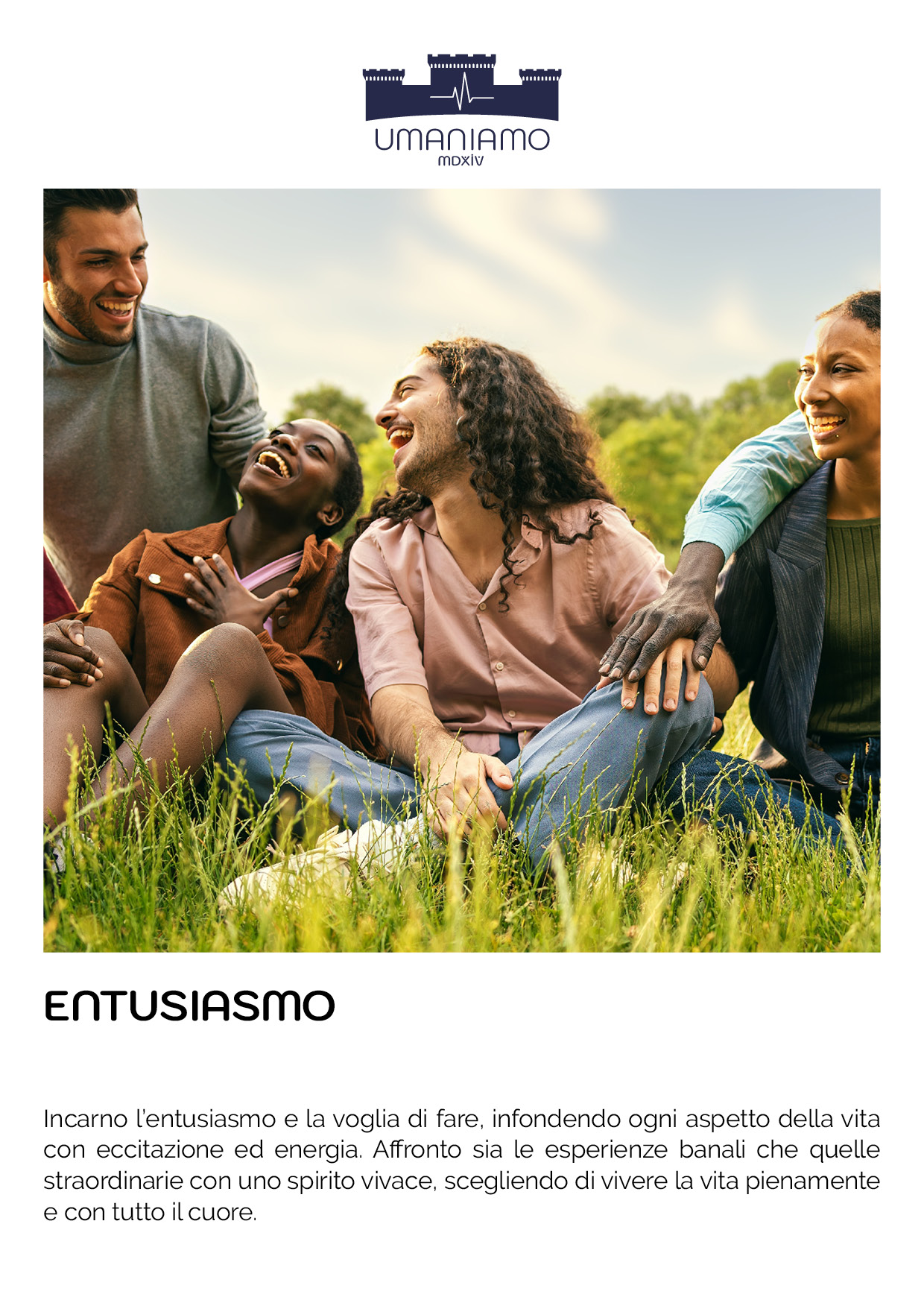
Enthusiasm, as a strength, is often thought to be personality. It gets associated with outward energy, charisma, or visible excitement. But as a strength, enthusiasm is not about how expressive someone is. It is about how fully a person is engaged with life.
At its root, entheos—“God within”—points to something foundational. Enthusiasm is the capacity to come alive in what you are doing. It is the ability to connect your energy, attention, and action in a way that creates movement. It is not constant, and it is not forced. It emerges when there is alignment between who you are and what you are engaging.
This is why enthusiasm can feel absent in the Crossing.
When things are unclear, when roles are shifting, or when meaning is not fully formed, the system pulls back. Energy becomes more conservative. You may still perform, still meet expectations, but the sense of aliveness is reduced. This is not a failure of character. It is a natural response to uncertainty.
What makes enthusiasm a strength is not that it is always present, but that it can be reactivated. Unlike traits that are fixed, enthusiasm is similar to Magis, and responds to engagement. It increases when you act, even in small ways. It strengthens when you take ownership of what is in front of you. It grows when you align your actions with your strengths, rather than waiting for ideal conditions.
Details: Make a list of five things this week that were energizing.
Evidence: Why did those feel energizing?
Empathy: Who was involved?
Prospective: What might open up if I keep moving in that direction?
Execution: What is one thing I will do tomorrow without overthinking it?
Reflection: What is different now compared to a few days ago
This week is not about intensity. It’s about ignition. Something is already there, we need to use it.
You do not need to become someone new. You may only need to recover something you were taught to put away. The Spirit at Work reveals what was always yours. The Builder at Work restores it through practice. And sometimes, that restoration begins with something as simple as this: A man, alone or with others, choosing to use his voice again—not to impress, but to inhabit his life more fully.