Where am I?
June 15 - 21, 2026
Formation Library → Sunday Table → Where am I?
The Edge | Builders at Work
“The Sunday Table” è scritto in due lingue, inglese e italiano. Per ogni sezione, il testo in inglese è seguito da quello in italiano.
We are Human Together or Not at All.
Cosiamo | Founder, UMANIAMO® | Humaning Architecture
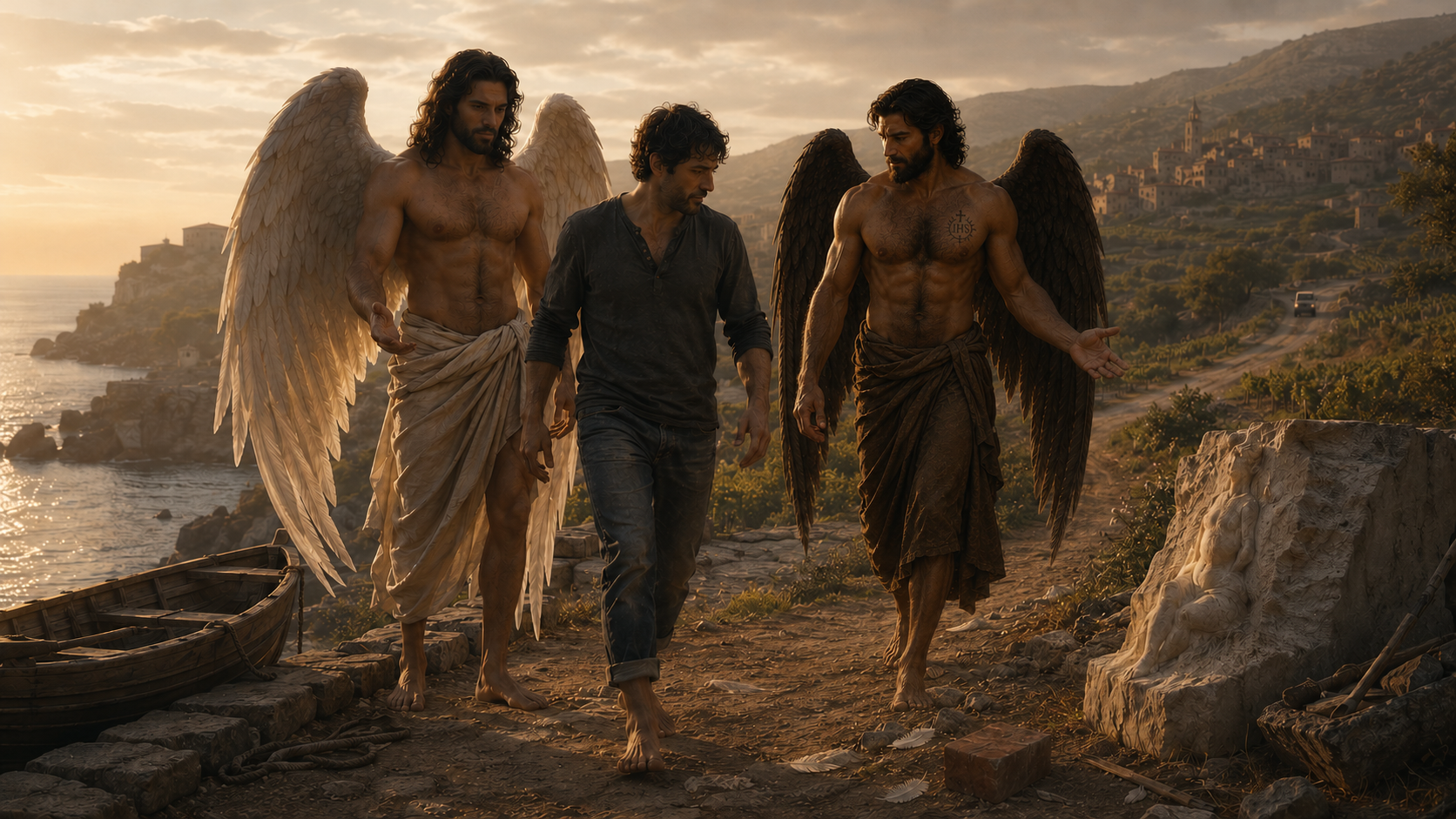
Some words grow smaller with time, not because they lose their meaning, but because we forget them. Sin may be one of them. Many of us think of Sin as a list of rules and prohibitions, of failures and transgressions; we picture sin as wrongdoing, and it can mean that. However, the older understanding is both deeper and more disarming and unsettling. The ancient Greek word so often translated as Sin is hamartia, a term borrowed from the practice of archery. It means to miss the mark or to fail to hit the target, to fall short of what was intended.
That single shift changes the whole meaning. Sin is no longer only a matter of what we have done wrong. It becomes a question of what we failed to become and that alone may be one of the most eye opening questions a person can ask. Not what career was I meant to pursue, or how successful was I supposed to be, or did I receive recognition and rewards along the way, and perhaps most interestingly… did I follow my bliss. Beneath all of those self-focused questions rests a harder one: who was I created to be? Who was and is God calling me to become?
Every life begins as a possibility. Every child enters the world carrying gifts that have not emerged yet, strengths that have not yet been tested, a vocation that has not yet shown its face. To become human or as we refer to it, Humaning is not merely to acquire skills or gain knowledge; it is the slow discovery of who we are, why we are here, and what we are uniquely meant to offer.
Perhaps this is why the great figures of history still matter, centuries after they are gone. David had to become David, the shepherd boy could have stayed in the pasture, could have chosen the familiar over the calling, and yet somewhere between the field and the throne he found the courage to step toward the life that was asking something of him. Michelangelo had to become Michelangelo, the marble did not carve itself, and the figure waiting inside the stone did not emerge from a formula or mandate, but because one man answered for a gift entrusted to him alone. Ignatius had to become Ignatius, the young soldier dreaming of glory could never have pictured the limping pilgrim who would one day father the Society of Jesus. Had he stayed the man he was, the Exercises would never have been written, the schools never founded, the countless lives formed in that tradition left untouched. The tragedy, in each case, was never that they struggled. The tragedy would have been if they had never answered.
God does not make copies. The One who paints each sunrise differently, who sets no two fingerprints alike, who fills the world with such reckless variety, does not suddenly lose imagination when it comes to us, messy humans. Each person carries something that has never existed before and will never exist again.
Yet so much of modern life teaches us to forget this or it tells us that it’s not true. The algorithms invite us to conform, while social media invites us to compare. Institutions invite us to perform or feign engagement, and now artificial intelligence increasingly offers us answers before we have even finished forming our own questions. While none of these are inherently evil, The Devil at Work knows that every tool carries its own temptation, and the temptation of our age may not be wickedness, it may be imitation and the slow drift toward becoming a copy, a consumer, an audience rather than a participant; toward spending so much of ourselves answering what the world expects that we never discover what God intends - and What God Builds, He Intends.
This is why the Parable of the Talents (Matthew 25:14-30) remains so quietly disturbing. The servant who buried his talents did not waste it in reckless living. He did not destroy it or give it away. He simply refused to risk it. He chose safety, preservation, certainty, anything but becoming more. We tend to read the story as a lesson about productivity. Perhaps it is really a lesson about vocation, for the talent entrusted to each of us was never merely money or ability. It is the possibility of a life fully lived. The great tragedy is not failure, it is burial.
For the third week we revisit the image of Peter stepping from the boat, one foot stays planted in certainty; the other moves out toward possibility. He does not know how the story ends. He has no guarantees and can’t know the outcome, but he responds. The moment suspended between safety and calling may be exactly where every Builder at Work is born.
I think that this is usually how God speaks to us while we are one foot in and one foot out… through almost silent invitations at first. A friend of mine refers to this as a feather, brick, and a truck. A recurring thought, a conversation that will not leave us, a longing we cannot quite explain, an opportunity that keeps appearing across the years. At first the invitation arrives gently, like a feather drifting across the path, easy to notice, easier still to ignore. Later it comes as a brick: heavier, harder to step around. And eventually, if we keep refusing to look, it arrives as a truck, not because God is angry, but because vocation matters that much. Life has a way of forcing our attention back to the questions we have spent years avoiding. Looking back, most of us can name the feathers and the bricks and the trucks that shaped our own stories; what felt random at the time often turns out, in hindsight, to have been part of a larger pattern. Discernment, in the end, is less about predicting the future than about recognizing where grace has been quietly inviting us all along.
This is exactly why at UMANIAMOⓇ we emphasize the Spiritual Exercises of Ignatius and why they still matter so much. They are not group therapy or motivational exercises or guided distractions. They are a disciplined search for the unique conversation between God and us. Who am I? Who am I becoming? What is being asked of me? Where is grace already at work? These are questions that cannot be outsourced - no algorithm can answer them; no artificial companion can discern them; no institution can settle them on our behalf; and no substance or ceremony is a short cut to the answers. The true answers to those questions come slowly through relationship and reflection, through experience and prayer and community, and through the sometimes difficult labor of paying attention.
The opposite of Sin, then, may not simply be obedience. Perhaps it is participation in the life God is inviting us to live, in the gifts we have already been given, in the vocation that waits beneath all the noise. The greatest Sin of our age may not be rebellion at all. It may be a distraction. It may be spending so long becoming what others expect that we never discover who God intended us to be. To die without ever finding that gift would be a sorrow. To find it and refuse it would be a greater one.
Alcune parole perdono importanza col passare del tempo, non perché perdano il loro significato, ma perché le dimentichiamo. Il peccato potrebbe essere una di queste. Molti di noi pensano al peccato come a un elenco di regole e divieti, di fallimenti e trasgressioni; immaginiamo il peccato come un’azione riprovevole, e in effetti può significare proprio questo. Tuttavia, la concezione più antica è al tempo stesso più profonda, più disarmante e più inquietante. L’antica parola greca così spesso tradotta come “peccato” è hamartia, un termine preso in prestito dalla pratica del tiro con l’arco. Significa mancare il bersaglio o non riuscire a colpirlo, non raggiungere ciò che ci si era prefissati.
Quel singolo cambiamento trasforma l’intero significato. Il peccato non è più solo una questione di ciò che abbiamo fatto di sbagliato. Diventa una questione di ciò che non siamo riusciti a diventare e questa, da sola, può essere una delle domande più illuminanti che una persona possa porsi. Non quale carriera avrei dovuto intraprendere, né quanto successo avrei dovuto avere, né se ho ricevuto riconoscimenti e ricompense lungo il percorso, e forse, cosa più interessante… se ho seguito la mia felicità. Sotto tutte queste domande incentrate su me stesso si nasconde una domanda più difficile: chi sono stato creato per essere? Chi Dio mi ha chiamato e mi chiama a diventare?
Ogni vita inizia come una possibilità. Ogni bambino viene al mondo portando con sé doni che non si sono ancora manifestati, punti di forza che non sono stati ancora messi alla prova, una vocazione che non ha ancora mostrato il suo volto. Diventare umani, o come noi lo chiamiamo, «Humaning», non significa semplicemente acquisire competenze o conoscenze; è la lenta scoperta di chi siamo, perché siamo qui e quale contributo unico siamo destinati a offrire.
Forse è per questo che le grandi figure della storia contano ancora, secoli dopo la loro scomparsa. Davide doveva diventare Davide; il giovane pastore avrebbe potuto restare al pascolo, avrebbe potuto scegliere ciò che gli era familiare piuttosto che la vocazione, eppure, da qualche parte tra i campi e il trono, trovò il coraggio di avvicinarsi alla vita che gli chiedeva qualcosa. Michelangelo doveva diventare Michelangelo; il marmo non si scolpì da solo, e la figura che attendeva all’interno della pietra non emerse da una formula o da un mandato, ma perché un uomo rispose al dono affidato solo a lui. Ignazio doveva diventare Ignazio; il giovane soldato che sognava la gloria non avrebbe mai potuto immaginare il pellegrino zoppicante che un giorno avrebbe dato vita alla Compagnia di Gesù. Se fosse rimasto l’uomo che era, gli Esercizi non sarebbero mai stati scritti, le scuole non sarebbero mai state fondate, le innumerevoli vite plasmate in quella tradizione sarebbero rimaste intatte. La tragedia, in ciascun caso, non è mai stata il fatto che abbiano lottato. La tragedia sarebbe stata se non avessero mai risposto.
Dio non fa copie. Colui che dipinge ogni alba in modo diverso, che non crea due impronte digitali uguali, che riempie il mondo di una varietà così sfrenata, non perde improvvisamente l’immaginazione quando si tratta di noi, esseri umani imperfetti. Ogni persona porta in sé qualcosa che non è mai esistito prima e che non esisterà mai più.
Eppure gran parte della vita moderna ci insegna a dimenticarlo o ci dice che non è vero. Gli algoritmi ci invitano a conformarci, mentre i social media ci invitano a confrontarci. Le istituzioni ci invitano a recitare o a fingere coinvolgimento, e ora l’intelligenza artificiale ci offre sempre più spesso delle risposte prima ancora che abbiamo finito di formulare le nostre domande. Sebbene nessuno di questi elementi sia intrinsecamente malvagio, The Devil at Work sa che ogni strumento porta con sé una propria tentazione, e la tentazione della nostra epoca potrebbe non essere la malvagità, ma l’imitazione e la lenta deriva verso il diventare una copia, un consumatore, un pubblico piuttosto che un partecipante; verso il dedicare così tanto di noi stessi a rispondere a ciò che il mondo si aspetta da noi, al punto da non scoprire mai ciò che Dio intende – e ciò che Dio costruisce, Egli lo intende.
Ecco perché la parabola dei talenti (Matteo 25,14-30) rimane così silenziosamente inquietante. Il servo che seppellì i suoi talenti non li sperperò in una vita sconsiderata. Non li distrusse né li regalò. Si limitò semplicemente a rifiutarsi di rischiare. Scelse la sicurezza, la conservazione, la certezza, tutto tranne che diventare di più. Tendiamo a leggere questa storia come una lezione sulla produttività. Forse è in realtà una lezione sulla vocazione, poiché il talento affidato a ciascuno di noi non è mai stato semplicemente denaro o abilità. È la possibilità di una vita vissuta appieno. La grande tragedia non è il fallimento, è l’interramento.
Per la terza settimana torniamo all’immagine di Pietro che scende dalla barca: un piede rimane ben piantato nella certezza; l’altro si muove verso la possibilità. Non sa come finisca la storia. Non ha garanzie e non può conoscere l’esito, ma risponde. Il momento sospeso tra sicurezza e chiamata potrebbe essere proprio il punto in cui nasce ogni «Costruttore all’opera».
Penso che di solito sia così che Dio ci parla mentre abbiamo un piede dentro e uno fuori… attraverso inviti quasi silenziosi all’inizio. Un mio amico lo descrive come una piuma, un mattone e un camion. Un pensiero ricorrente, una conversazione che non ci abbandona, un desiderio che non riusciamo a spiegare del tutto, un’opportunità che continua a presentarsi nel corso degli anni. All’inizio l’invito arriva delicatamente, come una piuma che fluttua sul sentiero, facile da notare, ancora più facile da ignorare. Più tardi si presenta come un mattone: più pesante, più difficile da aggirare. E alla fine, se continuiamo a rifiutarci di guardare, arriva come un camion, non perché Dio sia arrabbiato, ma perché la vocazione è davvero così importante. La vita ha un modo tutto suo di riportare la nostra attenzione sulle domande che abbiamo passato anni a evitare. Guardando indietro, la maggior parte di noi sa riconoscere le piume, i mattoni e i camion che hanno plasmato le nostre storie; ciò che all’epoca sembrava casuale spesso, col senno di poi, si rivela parte di uno schema più ampio. Il discernimento, in fin dei conti, non consiste tanto nel prevedere il futuro quanto nel riconoscere dove la grazia ci ha silenziosamente invitato fin dall’inizio.
È proprio per questo che noi di UMANIAMOⓇ poniamo l’accento sugli Esercizi Spirituali di Ignazio e sul motivo per cui sono ancora così importanti. Non si tratta di terapia di gruppo, né di esercizi motivazionali, né di distrazioni guidate. Sono una ricerca disciplinata del dialogo unico tra Dio e noi. Chi sono? Chi sto diventando? Cosa mi viene chiesto? Dove è già all’opera la grazia? Sono domande che non possono essere esternalizzate: nessun algoritmo può rispondere; nessun compagno artificiale può discernere; nessuna istituzione può risolverle al posto nostro; e nessuna sostanza o cerimonia è una scorciatoia per le risposte. Le vere risposte a queste domande arrivano lentamente attraverso la relazione e la riflessione, attraverso l’esperienza, la preghiera e la comunità, e attraverso il lavoro, a volte difficile, di prestare attenzione.
Il contrario del peccato, quindi, potrebbe non essere semplicemente l’obbedienza. Forse è la partecipazione alla vita che Dio ci invita a vivere, ai doni che ci sono già stati dati, alla vocazione che attende al di là di tutto il frastuono. Il peccato più grande della nostra epoca potrebbe non essere affatto la ribellione. Potrebbe essere una distrazione. Potrebbe essere dedicare così tanto tempo a diventare ciò che gli altri si aspettano da noi, da non scoprire mai chi Dio voleva che fossimo. Morire senza aver mai trovato quel dono sarebbe un dolore. Trovarlo e rifiutarlo sarebbe un dolore ancora più grande.
Visionary Mindset
This week we invite you to engage not only with the ideas of Hope, but with one another. Hope expands when it is shared, spoken aloud, embodied, and carried together.
You may choose one or both of the following practices depending on your setting, time, and relationships.
The Table Discussion is a relaxed and relational conversation designed to help people reflect honestly on the week’s REDISCOVER UⓇ theme and the realities of everyday life. It is a shared conversation among family and friends seeking to remain present to one another. The table discussion is not a debate or lesson, it's a discussion of being human together.
After the meal, coffee, or shared gathering:
Read the REDISCOVER UⓇ card and the reflections aloud
Move through the discussion prompts naturally
Allow the conversation to unfold without rushing
Some discussions may be lighthearted, and others may become deeply reflective. It’s up to you.
The Humaning Circle is a more intentional relational practice inspired by the spirit of a prayer circle, conversation circle, or community gathering.
Place the REDISCOVER UⓇ card at the center of the table or view the digital card, then invite each person to quietly reflect on the theme together before sharing.
Begin with one slow shared breath and a brief moment of silence.
The Humaning Circle encourages:
D.E.E.P. listening
Honest reflection
Relational courage
Shared presence
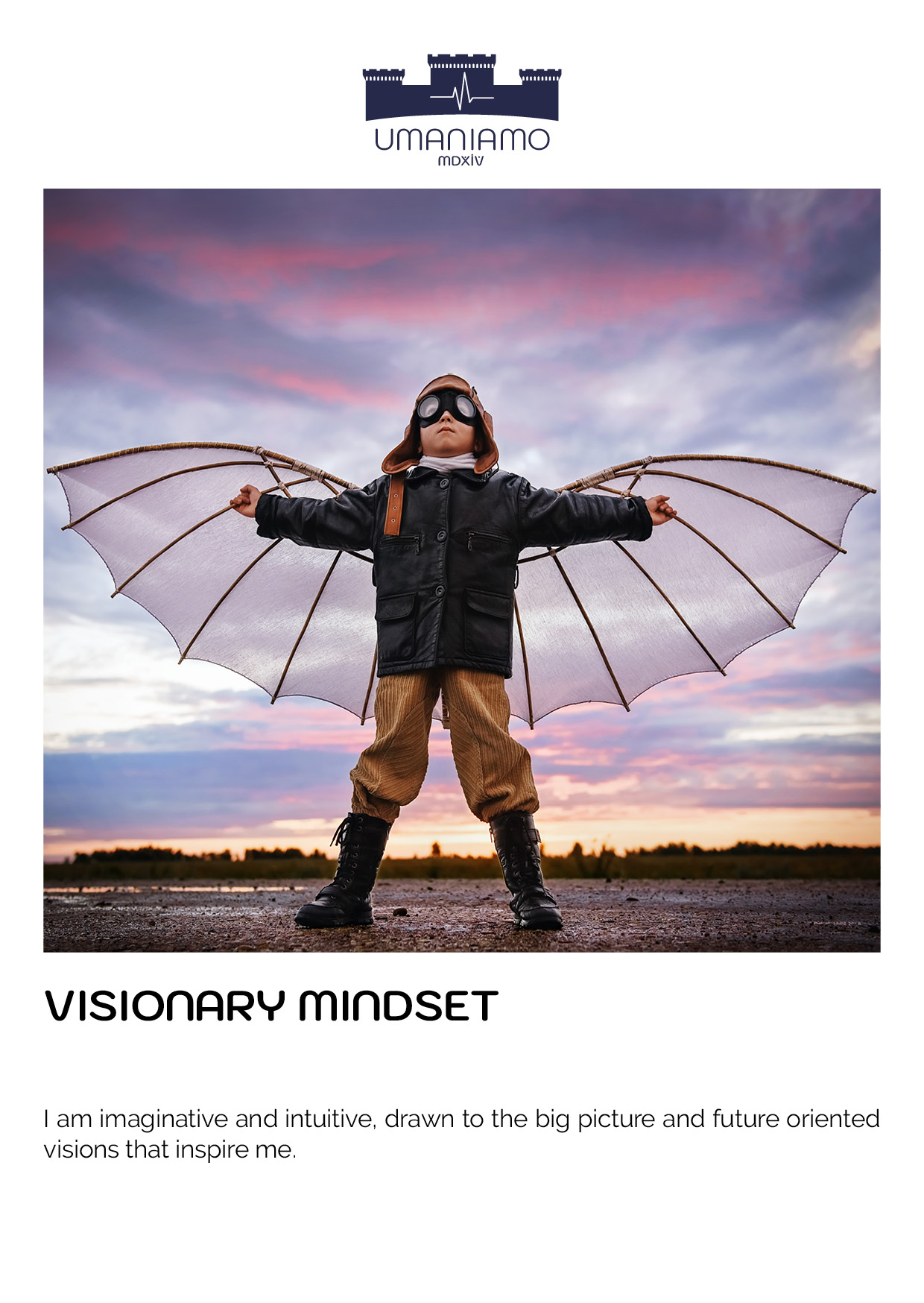
Each week, REDISCOVER U® invites us to pick up one of the gifts already living in us and turn it to the light. This week's gift is the Visionary Mindset.
The Visionary Mindset is the capacity to see what is not yet there. It is the part of you that asks what if and where shall we go? It pictures a better way before anyone has built it, that catches the shape of the future out of the corner of the eye. Visionaries live a half-step ahead of the room. They see possibilities where others see only what already is. Every Builder at Work begins here: the Spirit at Work illuminates what is possible, and the visionary is the one who notices it first.
Like every gift, it was never meant to be a private possession. A vision kept to yourself is only a daydream; a vision offered becomes a door other people can walk through. Cosimo de' Medici could not see the Renaissance, but he could sense that something wanted to be born, and he gave it room. The visionary's truest work is not to admire the future but to hand it to others as hope.
Like every strength, the Visionary Mindset carries a temptation. Vision cut loose from action curdles into fantasy or the thrilling daydream that leaves you restless and dry, the future you would rather imagine than build. This is exactly the false vision Ignatius learned to detect: the one that excites and then empties, set against the one that excites and leaves a quiet that stays. So the visionary needs the discipline of The Builder at Work - vision has to touch the ground and the visionary needs discernment. A true vision draws you toward the table and the work. A false one pulls you away from both. This week, notice where your mind runs ahead. Pay attention to the futures you imagine, and ask which ones leave you with that grounded, lasting peace, and which only thrill and vanish. Then take the truest one and give it a single, concrete step. That is the Visionary Mindset becoming a Builder at Work.
Bring these to your table this week at dinner, in the car, wherever your people gather. They are meant to be talked through together, out loud, not just turned over alone.
When you were a child, what did you imagine your life would become? Looking back, how much of that was a true vision and how much was someone else's expectation?
Who at this table sees the possibility most easily, "the what if" person among us? When has their way of seeing blessed the rest of us? (Let them be named, and thanked.)
Name a vision you have been carrying but haven't acted on. What is the one small step that would move it out of your imagination and into the world?
Where might we, together, be seeing only "what is," when grace is quietly trying to show us "what could be"?
Humaning is not a noun. It is something we do and something we do together. This week's circle puts the Visionary Mindset to work, not as a daydream but as a gift laid at the service of one another. Gather a few people, family, friends, a small group at the table or in a shared seated circle and move through it slowly.
First, go around once. Each person names one gift or possibility they see in the person to their right something that person may not fully see in themselves. "I see in you the gift of ___. I believe you could ___." Speak it the way a Builder at Work speaks: with the hand extended.
Then, go around again. This time each person names one thing they feel quietly invited toward, such as a vision they have been carrying. No need to defend it or have it figured out. Just say it aloud, where others can hold it with you.
Then close the circle with a single question, and let each person answer: What is one step I will take this week to move from imagining to building? Keep it small, concrete, and real.
That is the whole movement of this season gathered into one circle: the Spirit at Work reveals, and we name the gift we see; the vision is spoken, and we say what we are drawn toward; the Builder at Work responds, and we each take one step. Seeing, then building, together.
End however your circle ends, a prayer, a blessing, a shared silence. Then go, and build.
Questa settimana vi invitiamo a interagire non solo con le idee della Speranza, ma anche gli uni con gli altri. La Speranza si espande quando viene condivisa, espressa ad alta voce, incarnata e portata avanti insieme.
Potete scegliere una o entrambe le seguenti pratiche a seconda del contesto, del tempo a disposizione e delle vostre relazioni.
La discussione a tavola è una conversazione rilassata e incentrata sulle relazioni, pensata per aiutare le persone a riflettere onestamente sul tema REDISCOVER UⓇ della settimana e sulle realtà della vita quotidiana. È una conversazione condivisa tra familiari e amici che cercano di rimanere presenti gli uni agli altri. La discussione a tavola non è un dibattito né una lezione, ma una riflessione sull’essere umani insieme.
Dopo il pasto, il caffè o un momento di ritrovo in compagnia:
Leggete ad alta voce la scheda REDISCOVER UⓇ e le riflessioni
Passate naturalmente da un spunto di discussione all’altro
Lasciate che la conversazione si sviluppi senza fretta
Alcune discussioni potrebbero essere spensierate, mentre altre potrebbero diventare profondamente riflessive. Dipende da voi.
Il cerchio dell’essere umani è una pratica relazionale più intenzionale, ispirata allo spirito di un cerchio di preghiera, di conversazione o di un incontro comunitario.
Posizionate la scheda REDISCOVER UⓇ al centro del tavolo o visualizzate la scheda digitale, quindi invitate ogni persona a riflettere in silenzio sul tema insieme prima di condividere le proprie riflessioni.
Iniziate con un respiro lento e condiviso e un breve momento di silenzio.
Il Circolo dell’Umanità incoraggia:
L’ascolto D.E.E.P.
La riflessione onesta
Il coraggio relazionale
La presenza condivisa
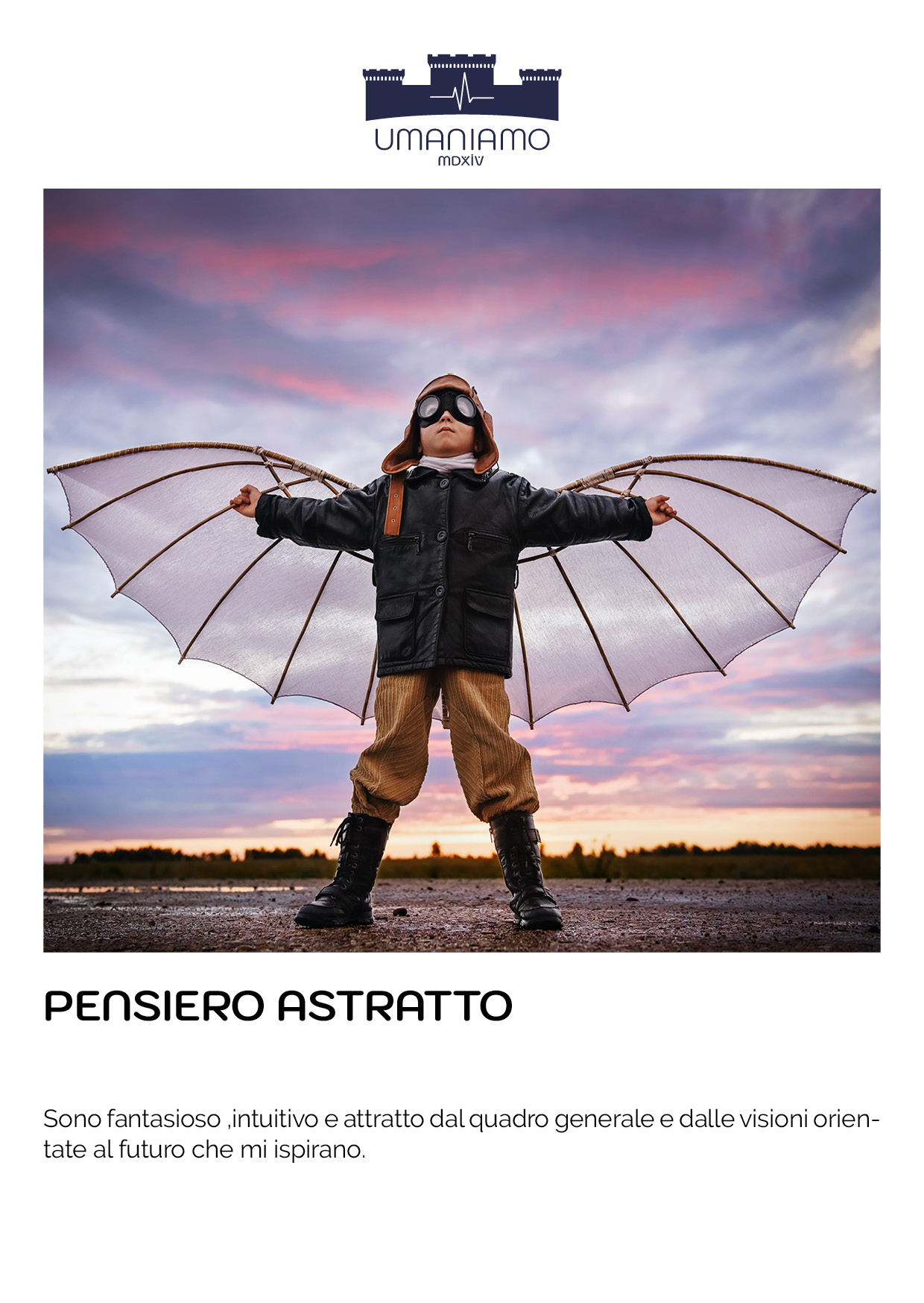
Ogni settimana, REDISCOVER U® ci invita a riscoprire uno dei doni che già vivono dentro di noi e a portarlo alla luce. Il dono di questa settimana è le Pensiero Astratto.
Le pensiero astratto è la capacità di vedere ciò che ancora non c’è. È quella parte di te che si chiede “e se…” e “dove andremo?” Immagina una via migliore prima ancora che qualcuno l’abbia costruita, cogliendo con la coda dell’occhio i contorni del futuro. I visionari vivono sempre un mezzo passo avanti rispetto agli altri. Vedono possibilità dove gli altri vedono solo ciò che già esiste. Ogni “Costruttore al lavoro” inizia da qui: lo Spirito al lavoro illumina ciò che è possibile, e il visionario è colui che lo nota per primo.
Come ogni dono, non è mai stato concepito per essere un possesso privato. Una visione tenuta per sé è solo un sogno ad occhi aperti; una visione offerta diventa una porta attraverso cui altre persone possono passare. Cosimo de’ Medici non poteva vedere il Rinascimento, ma percepiva che qualcosa voleva nascere, e gli diede spazio. Il lavoro più autentico del visionario non è ammirare il futuro, ma consegnarlo agli altri come speranza.
Come ogni forza, la mentalità visionaria porta con sé una tentazione. Una visione slegata dall’azione si trasforma in fantasia o in quel sogno ad occhi aperti elettrizzante che ti lascia irrequieto e arido, il futuro che preferiresti immaginare piuttosto che costruire. Questa è esattamente la falsa visione che Ignazio imparò a individuare: quella che entusiasma e poi svuota, in contrapposizione a quella che entusiasma e lascia una quiete che permane. Quindi il visionario ha bisogno della disciplina del «Costruttore al lavoro» – la visione deve toccare terra e il visionario ha bisogno di discernimento. Una vera visione ti attira verso il tavolo e il lavoro. Una falsa ti allontana da entrambi. Questa settimana, nota dove la tua mente corre avanti. Presta attenzione ai futuri che immagini e chiediti quali ti lasciano quella pace radicata e duratura, e quali invece ti danno solo un brivido per poi svanire. Poi prendi quello più vero e trasformalo in un singolo passo concreto. È così che la mentalità visionaria diventa un “Costruttore all’opera”.
Portate questi spunti al vostro tavolo questa settimana a cena, in auto, ovunque si riuniscano i vostri cari. Sono pensati per essere discussi insieme, ad alta voce, non solo per essere rimuginati da soli.
Quando eri bambino, come immaginavi che sarebbe diventata la tua vita? Guardando indietro, quanto di tutto ciò era una vera visione e quanto era l’aspettativa di qualcun altro?
Chi a questo tavolo vede più facilmente le possibilità, chi è tra noi la persona del «e se»? Quando il suo modo di vedere è stato di benedizione per tutti noi? (Facciamo in modo che venga nominato e ringraziato.)
Indica una visione che porti con te ma che non hai ancora messo in pratica. Qual è quel piccolo passo che la farebbe uscire dalla tua immaginazione per renderla realtà?
In quali situazioni potremmo, insieme, vedere solo “ciò che è”, mentre la grazia sta silenziosamente cercando di mostrarci “ciò che potrebbe essere”?
Humaning non è un sostantivo. È qualcosa che facciamo e che facciamo insieme. Il cerchio di questa settimana mette in pratica le Pensiero Asratto, non come un sogno ad occhi aperti ma come un dono messo al servizio gli uni degli altri. Radunate alcune persone, familiari, amici, un piccolo gruppo attorno a un tavolo o seduti in cerchio, e procedete lentamente.
Per prima cosa, fate un giro completo. Ogni persona indica un dono o una possibilità che vede nella persona alla sua destra, qualcosa che quella persona potrebbe non vedere appieno in se stessa. «Vedo in te il dono di ___. Credo che tu possa ___.» Ditelo come parlerebbe un “Costruttore al lavoro” (Builder at Work): con la mano tesa.
Poi, fate di nuovo il giro. Questa volta ogni persona nomini una cosa verso cui si sente silenziosamente invitata, come una visione che porta con sé. Non c’è bisogno di difenderla o di averla già ben definita. Basta dirla ad alta voce, affinché gli altri possano sostenerla insieme a te.
Poi chiudete il cerchio con un’unica domanda, e lasciate che ogni persona risponda: Qual è un passo che farò questa settimana per passare dall’immaginare al costruire? Che sia piccolo, concreto e reale.
Questo è l’intero percorso di questo periodo racchiuso in un unico cerchio: lo Spirito al lavoro rivela, e noi diamo un nome al dono che vediamo; la visione viene espressa, e diciamo verso cosa siamo attratti; il Costruttore al lavoro risponde, e ognuno di noi compie un passo. Vedere, poi costruire, insieme.
Concludete il vostro cerchio come preferite: con una preghiera, una benedizione, un silenzio condiviso. Poi andate, e costruite.
This week the Church kept the Most Chaste Heart of Joseph. It came on the seventeenth, a few days after the Immaculate Heart of Mary on the thirteenth, which had followed hard upon the Sacred Heart of Jesus. After Pentecost, during mid-June this year, the liturgy lays three hearts before us, almost in procession the Heart of the Son, the Heart of the Mother, and the Heart of the carpenter, or more likely a stone mason, who raised Him. I have come to think of them as three distinct kinds of courage. The Sacred Heart of Jesus, which we honored last week, is the courage to remain open, with love exposed, unarmored, poured out. The Immaculate Heart of Mary is the courage to receive, the fiat, the yes that lets something larger than yourself be done through you. Then the Most Chaste Heart of Joseph is the courage to protect and to steward and to take responsibility for what has been entrusted to you, and to build a life around it, faithfully, in the quiet.
Three hearts. Open, receiving, building. I did not understand, until recently, how completely they had already written the story of UMANIAMOⓇ without even noticing.
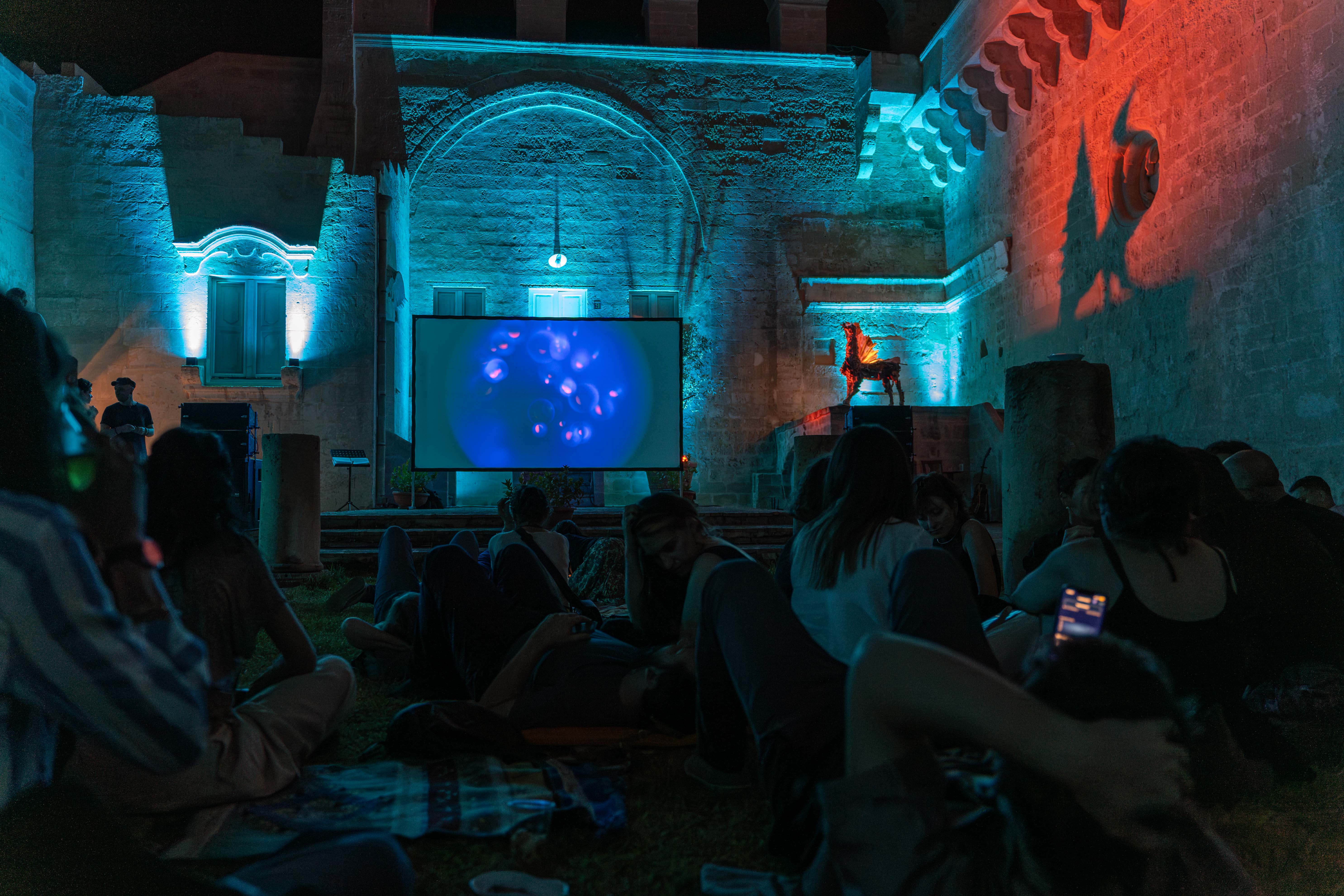
Let me tell you the story of how UMANIAMOⓇ was born, because the truth of it still undoes me a little. Two Junes ago, in 2024, in Matera, we held a festival where UMANIAMOⓇ and REDISCOVER U® first were introduced to the world. The centerpiece of the UMANIAMOⓇ Festival was a concert unlike anything anyone had seen before… a symphony composed from the live data of human hearts, the actual heartbeats and heart coherence information of the people present, all gathered and woven into music that played out across the ancient stone walls of Le Monacelle. Le Monacelle: a convent once kept by religious sisters, on a street called Via del Riscatto — the Street of the Ransom or the Street of Redemption. The christening of that founding night was the human heart itself, many hearts made visible as one. That same pulse still runs across the battlements of our logo, fashioned after the Castle Tramontano, in Matera. It’s funny, I didn’t plan how any of this would turn out, it was an experiment of sorts and we set off to do something no-one had ever done with that symphony.I
Here is a little secret that I wasn’t so proud of at the time, but I’m happy to share. I chose June 8th and 9th in June for the UMANIAMOⓇ Festival because I believed they were Pentecost. I wanted and had planned for UMANIAMOⓇ to be born when the Holy Spirit was poured out. But, I looked at the wrong calendar. Pentecost had already come and gone, three weeks earlier, in May. I had aimed at the great feast of the Spirit and missed it entirely. Except that the wrong calendar turned out to be the right one. Because June 7, 2024 was the Solemnity of the Most Sacred Heart of Jesus and June 8, our opening day, was the Memorial of the Immaculate Heart of Mary. Without knowing it, I had set the first symphony of living human hearts onto the Feasts of the Heart, the Heart of the Son and the Heart of the Mother, the two the Church places side by side, on purpose, on the very days I happened to choose. I had reached for the Spirit and landed on the Heart.
After sitting with this for two years, it feels less of a mistake and more like a divine intervention… Pentecost is the Spirit poured out; the Sacred Heart is the wound the love pours from. They are not two events but one mystery seen from two sides, the love given, and the place it comes from. Paul says it in a single breath: God's love has been poured into our hearts through the Holy Spirit who was given to us. I never left the room I was aiming for, I just wandered through the other door and discovered the heartbeat already playing.
In my case, the wrong calendar was the right one only because no one thought to correct it. For any of us, a mistake can sometimes be the very thing grace works through, not as a flaw to ignore but a door to walk through. This is the Ignatian teaching of finding God in all things: not to claim that everything is a divine message, but the discovery that a person who stays attentive keeps being surprised by the most ordinary of events.
But there is good news, and it is this: as long as we are alive, the invitation still stands. The feather still drifts across the path. The chair at the table is still open. The Builder is still becoming. And God is not finished calling us forward.
Questa settimana la Chiesa ha celebrato il Cuore Castissimo di Giuseppe. La ricorrenza è caduta il 17, pochi giorni dopo il Cuore Immacolato di Maria, celebrato il 13, che a sua volta era seguito a ruota al Sacro Cuore di Gesù. Dopo la Pentecoste, a metà giugno di quest’anno, la liturgia ci presenta tre cuori, quasi in processione: il Cuore del Figlio, il Cuore della Madre e il Cuore del falegname – o, più probabilmente, dello scalpellino – che Lo ha cresciuto. Sono giunto a considerarli come tre tipi distinti di coraggio. Il Sacro Cuore di Gesù, che abbiamo onorato la settimana scorsa, è il coraggio di rimanere aperti, con l’amore esposto, senza difese, riversato. Il Cuore Immacolato di Maria è il coraggio di accogliere, il fiat, il sì che permette che qualcosa di più grande di te stesso si compia attraverso di te. Il Cuore Castissimo di Giuseppe, poi, è il coraggio di proteggere, di custodire e di assumersi la responsabilità di ciò che ti è stato affidato, e di costruire una vita attorno ad esso, fedelmente, in silenzio.
Tre cuori. Aperti, che accolgono, che costruiscono. Fino a poco tempo fa non avevo capito quanto essi avessero già scritto, senza nemmeno accorgersene, la storia di UMANIAMOⓇ.
Lasciate che vi racconti la storia di come è nato UMANIAMOⓇ, perché la verità di questa storia mi commuove ancora un po’. Due giugno fa, nel 2024, a Matera, abbiamo organizzato un festival in cui UMANIAMOⓇ e REDISCOVER U® sono stati presentati per la prima volta al mondo. Il fulcro del Festival UMANIAMOⓇ è stato un concerto diverso da qualsiasi cosa si fosse mai vista prima… una sinfonia composta dai dati in tempo reale dei cuori umani, dai battiti cardiaci effettivi e dalle informazioni sulla coerenza cardiaca delle persone presenti, tutti raccolti e intrecciati in una musica che risuonava tra le antiche mura di pietra de Le Monacelle. Le Monacelle: un convento un tempo abitato da suore, situato in una via chiamata Via del Riscatto — la Via del Riscatto. Il battesimo di quella serata inaugurale è stato il cuore umano stesso, tanti cuori resi visibili come uno solo. Quello stesso battito scorre ancora lungo i merli del nostro logo, ispirato al Castello Tramontano, a Matera. È buffo, non avevo pianificato come sarebbe andata a finire, era una sorta di esperimento e ci siamo lanciati a fare qualcosa che nessuno aveva mai fatto con quella sinfonia.
Ecco un piccolo segreto di cui all’epoca non andavo molto fiero, ma che sono felice di condividere. Avevo scelto l’8 e il 9 giugno per il Festival UMANIAMOⓇ perché credevo fossero i giorni di Pentecoste. Volevo e avevo pianificato che UMANIAMOⓇ nascesse nel momento in cui lo Spirito Santo si fosse riversato. Ma avevo guardato il calendario sbagliato. La Pentecoste era già passata, tre settimane prima, a maggio. Avevo puntato alla grande festa dello Spirito e l’avevo completamente mancata. Solo che il calendario sbagliato si è rivelato essere quello giusto. Perché il 7 giugno 2024 era la Solennità del Sacro Cuore di Gesù e l’8 giugno, il nostro giorno di apertura, era la Memoria del Cuore Immacolato di Maria. Senza saperlo, avevo ambientato la prima sinfonia dei cuori umani viventi proprio nelle Feste del Cuore, il Cuore del Figlio e il Cuore della Madre, i due che la Chiesa pone fianco a fianco, di proposito, proprio nei giorni che mi era capitato di scegliere. Avevo cercato lo Spirito e avevo trovato il Cuore.
Dopo averci riflettuto per due anni, mi sembra meno un errore e più un intervento divino… La Pentecoste è lo Spirito effuso; il Sacro Cuore è la ferita da cui l’amore sgorga. Non sono due eventi, ma un unico mistero visto da due lati: l’amore donato e il luogo da cui proviene. Paolo lo dice in un unico respiro: l’amore di Dio è stato riversato nei nostri cuori attraverso lo Spirito Santo che ci è stato donato. Non ho mai lasciato la stanza a cui miravo, ho semplicemente varcato l’altra porta e ho scoperto il battito del cuore che già risuonava.
Nel mio caso, il calendario sbagliato era quello giusto solo perché nessuno aveva pensato di correggerlo. Per chiunque di noi, un errore a volte può essere proprio ciò attraverso cui opera la grazia, non come un difetto da ignorare, ma come una porta da attraversare. Questo è l’insegnamento ignaziano di trovare Dio in tutte le cose: non affermare che tutto sia un messaggio divino, ma scoprire che chi rimane attento continua a lasciarsi sorprendere dagli eventi più ordinari.
Ma c’è una buona notizia, ed è questa: finché siamo vivi, l’invito rimane valido. La piuma continua a fluttuare lungo il sentiero. Il posto a tavola è ancora libero. Il Costruttore è ancora in divenire. E Dio non ha finito di chiamarci ad andare avanti.
Ignatius of Loyola
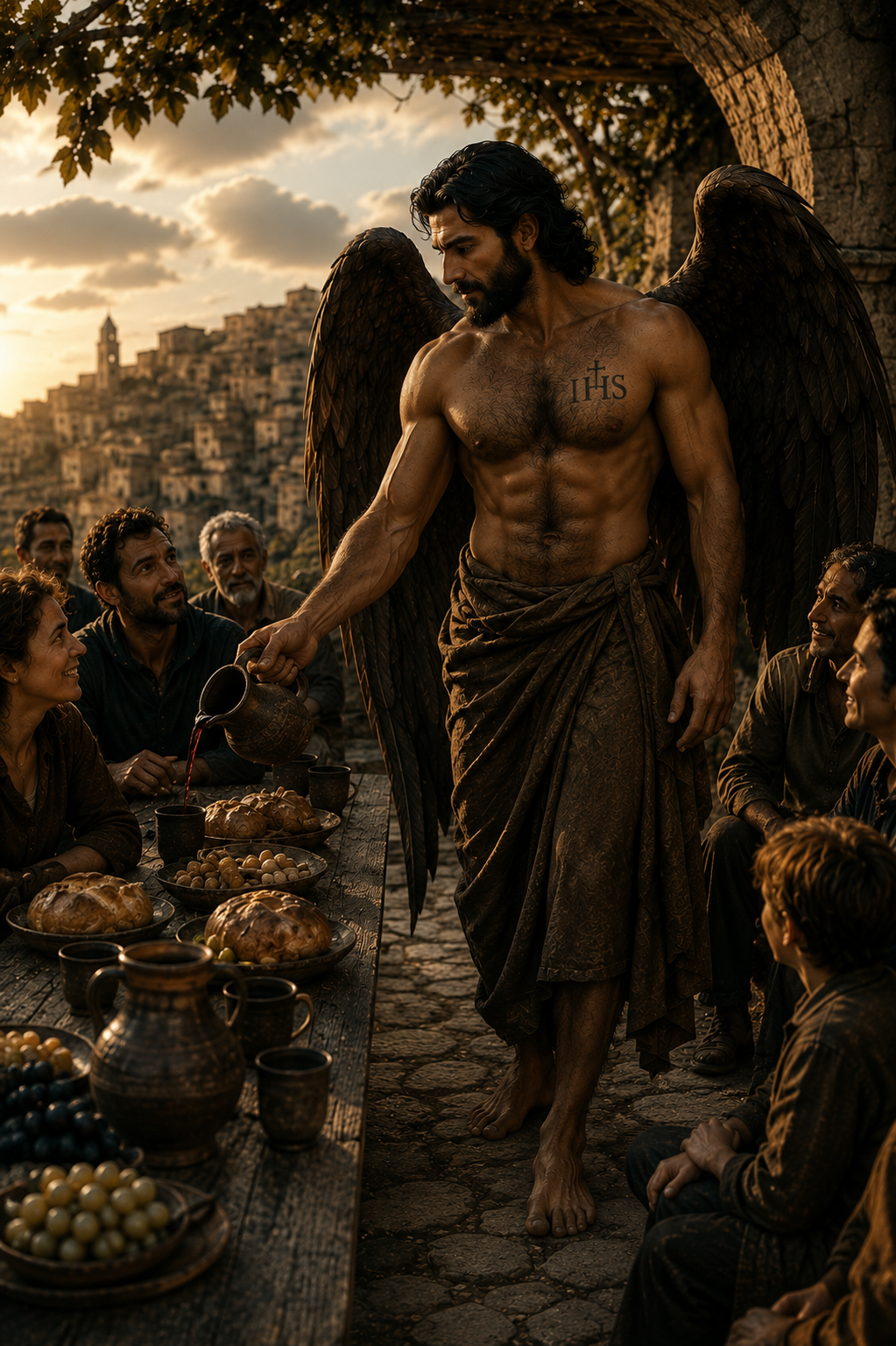
Last week we sat with the Spirit at Work, the quiet voice that asks us only to look again, to notice, to pay attention. But attention was never meant to be the end of the matter. Once a person has truly seen… seen the gift, the need, the calling, the open door something in them has to rise and answer. The Spirit at Work says, look. And then someone has to stand up from the table and begin. That someone is the Builder at Work.
I have carried an image of him since Monte Sant'Angelo. Not a figure on a throne or a pedestal, set apart and above. A figure walking among people moving down the length of a long table laden with bread and fruit and rough cups of wine, the old village climbing the hill behind him in the last gold of the evening, his hand extended, not in command but in invitation, toward the faces turned up to meet him. The Builder at Work does not order the people to come to him. He comes and walks among them. He builds, and he builds where they already are.
The Builder at Work has a face, and in the UMANIAMOⓇ tradition it is the face of Ignatius of Loyola. But if that name paints the picture of a serene saint in a stained-glass window, hands folded, eyes lifted to heaven, then you have met the holy card and not the man. The man is far more interesting, and far more like the rest of us.
He began as Iñigo López de Loyola: a minor Basque nobleman with a sword, a temper, and a very high opinion of himself. He loved fine clothes, gambling, women and his own reflection. He brawled, dreamed of glory and of impressing the kind of noblewoman who would never have looked twice at him. He was, by his own later admission, a vain and worldly man, not a plaster statue of a saint but a man - a soldier with something to prove.
During the battle at Pamplona in 1521, a cannonball found him and shattered his leg, and with it so went the whole life he had imagined for himself. The bone was set badly, so he had it re-broken and reset, an agony, with nothing to dull it. When the bone healed with an unsightly knob of bone protruding, he ordered the surgeons to saw it off and stretch the leg with weights, enduring all of it for one reason: so the leg would look right in the close-fitting hose of a courtier. That is the man we are talking about. Flat on his back and nearly dead, his first concern was how his leg would look in his boots.
If you have ever cared too much about the wrong thing while your life quietly came apart, you already have something in common with the founder of the Jesuits and the major inspiration of the UMANIAMOⓇ Theology. What saved Iñigo was boredom, and what boredom forced on him was attention. Convalescing, he wanted to read about romances and tales of knights and conquests. But there were no such books in the house. The only reading materials they could give him were readings of the life of Christ and a book of the lives of the saints, and so, grudgingly, he read them. And as he read, he began to notice something. When he daydreamed of worldly glory, the fantasy thrilled him and then left him dry and restless. When he imagined giving his life to God as the saints had, that thought left behind a quiet that stayed. He was paying attention to the movements of his own heart, and in that small - tiny, bored noticing, the discernment of spirits was born. The Spirit at Work had whispered and the man we refer to as The Builder at Work had finally begun to listen.
What he did next is the part worth honoring. He laid down his sword before the Black Madonna at Montserrat and gave his fine clothes to a beggar. He spent most of the year at Manresa, much of it in a cave (there is always a cave) living as a penitent, tormented at times by doubts to the very edge of despair, and then flooded by a light along the river Cardoner that he said taught him more than all his later studies combined. Out of that cave came the Spiritual Exercises of Ignatius of Loyola: not a book to read but a method to be used, which is used to this day and lives and breathes in UMANIAMOⓇ and in the way of teaching ordinary people to find God in all things and to choose the greater good. He made the inner life teachable.
Ignatius of Loyola as we know him now, kept building. In his thirties he went back to school and sat among boys learning their Latin grammar, swallowing his pride to start again at the beginning. He was jailed and investigated more than once by the Inquisition, on suspicion, simply for daring to teach others about prayer without the proper credentials. He gathered companions in Paris (Francis Xavier and Peter Faber among them) who would one day scatter across the world. Almost in spite of himself, the man who had once wanted only his own glory founded the Society of Jesus, governed it through thousands of letters forged with both iron and tenderness, and opened schools across Europe, schools whose way of forming the whole person, through experience and reflection, still shapes millions five centuries later.
He didn’t build a monument to himself. He built tables where others could be formed. That is the whole difference and what his legacy continues to give. This is why he is the Builder at Work. Not because he was powerful, and not even because he succeeded, but because of the kind of building he did. There is a type of “building” that extracts… that uses people, consumes them, raises a name and leaves a ruin. But there is also a “building” that forms… that tends people, draws out their gifts, and leaves them more than they found them. Ignatius built the second kind. He took the gift the Spirit at Work had shown him and spent it, not on himself, but among people, at the table, in the world. The Spirit at Work reveals; the Builder at Work responds. The Spirit at Work helps us see; the Builder at Work helps us serve.
Here is what makes him more than a figure in a history book. The Builder at Work is not only Ignatius. Ignatius is the pattern, not the exception. The vain soldier who became a builder of souls is proof of what grace can do with any of us… with the proud, the wounded, the ones who cared about the wrong things until life broke the right ones open. He is relatable precisely because he was not finished when grace found him. None of us is. Which means the Builder at Work is still at work, and the work has never been more needed. Ours is an age tempted toward extraction and imitation, toward consuming rather than forming, toward becoming an audience instead of a participant. An age like that does not need more cleverness. It needs more Builders at Work: people like you and me who, having paid attention, get up from the table and make something that leaves others more human than they found them. That is the whole of it. That is what comes next.
So I keep returning to that image of him, walking among the people with his hand held out. It is an invitation, not a summons. He is not asking to be admired from across the room. He is asking you to take the hand, and rise, and join the work to stop being a spectator of your own life and become a builder in it.
La settimana scorsa ci siamo soffermati sullo Spirito al lavoro, quella voce sommessa che ci chiede solo di guardare di nuovo, di notare, di prestare attenzione. Ma l’attenzione non è mai stata pensata come il punto di arrivo. Una volta che una persona ha davvero visto… ha visto il dono, il bisogno, la chiamata, la porta aperta, qualcosa in lei deve sorgere e rispondere. Lo Spirito al lavoro dice: guarda. E allora qualcuno deve alzarsi dal tavolo e cominciare. Quel qualcuno è il Costruttore al lavoro.
Ne porto con me un’immagine sin da Monte Sant’Angelo. Non una figura su un trono o un piedistallo, separata e al di sopra di tutto. Una figura che cammina tra la gente, percorrendo la lunghezza di un lungo tavolo imbandito di pane, frutta e tazze rustiche di vino, con il vecchio borgo che si arrampica sulla collina alle sue spalle nell’ultima luce dorata della sera, la mano tesa, non per comandare ma per invitare, verso i volti rivolti verso di lui. Il Costruttore al Lavoro non ordina alle persone di venire a lui. È lui che viene e cammina in mezzo a loro. Costruisce, e costruisce proprio dove loro già si trovano.
Il Costruttore al Lavoro ha un volto, e nella tradizione UMANIAMOⓇ è il volto di Ignazio di Loyola. Ma se quel nome evoca l’immagine di un santo sereno in una vetrata, con le mani giunte e lo sguardo rivolto al cielo, allora avete conosciuto l’immagine da santino e non l’uomo. L’uomo è molto più interessante e molto più simile a noi.
Iniziò come Iñigo López de Loyola: un nobile basco di basso rango con una spada, un carattere irascibile e un’altissima opinione di sé. Amava gli abiti eleganti, il gioco d’azzardo, le donne e il proprio riflesso. Litigava, sognava la gloria e di fare colpo su quel tipo di nobildonna che non lo avrebbe mai degnato di uno sguardo. Era, come lui stesso ammise in seguito, un uomo vanitoso e mondano, non una statua in gesso di un santo ma un uomo – un soldato con qualcosa da dimostrare.
Durante la battaglia di Pamplona nel 1521, una palla di cannone lo colpì e gli frantumò la gamba, e con essa andò in frantumi l’intera vita che si era immaginato. L’osso fu sistemato male, così lo fece rompere di nuovo e sistemare, un’agonia, senza nulla per alleviare il dolore. Quando l’osso guarì con una protuberanza antiestetica che sporgeva, ordinò ai chirurghi di segarla via e di allungare la gamba con dei pesi, sopportando tutto questo per un unico motivo: affinché la gamba apparisse perfetta nelle calze attillate di un cortigiano. Questo è l’uomo di cui stiamo parlando. Disteso supino e quasi morto, la sua prima preoccupazione era come sarebbe apparsa la gamba negli stivali.
Se vi è mai capitato di preoccuparvi troppo delle cose sbagliate mentre la vostra vita andava silenziosamente in pezzi, avete già qualcosa in comune con il fondatore dei Gesuiti e la principale fonte di ispirazione della Teologia UMANIAMOⓇ. Ciò che salvò Iñigo fu la noia, e ciò che la noia gli impose fu l’attenzione. Durante la convalescenza, voleva leggere romanzi e racconti di cavalieri e conquiste. Ma in casa non c’erano libri del genere. Gli unici testi che potevano dargli erano letture sulla vita di Cristo e un libro sulle vite dei santi, e così, a malincuore, li lesse. E mentre leggeva, cominciò a notare qualcosa. Quando fantasticava sulla gloria mondana, la fantasia lo emozionava e poi lo lasciava vuoto e irrequieto. Quando immaginava di dedicare la propria vita a Dio come avevano fatto i santi, quel pensiero lasciava dietro di sé una quiete che permaneva. Stava prestando attenzione ai movimenti del proprio cuore, e in quella piccola – minuscola, quasi annoiata – osservazione, nacque il discernimento degli spiriti. Lo Spirito al lavoro aveva sussurrato e l’uomo che chiamiamo «Il Costruttore al lavoro» aveva finalmente cominciato ad ascoltare.
Ciò che fece in seguito è la parte che merita di essere onorata. Depose la spada davanti alla Madonna Nera di Montserrat e donò i suoi abiti eleganti a un mendicante. Trascorse gran parte dell’anno a Manresa, per lo più in una grotta (c’è sempre una grotta), vivendo da penitente, tormentato a volte da dubbi che lo portavano sull’orlo della disperazione, per poi essere inondato da una luce lungo il fiume Cardoner che, secondo lui, gli insegnò più di tutti i suoi studi successivi messi insieme. Da quella grotta nacquero gli Esercizi Spirituali di Ignazio di Loyola: non un libro da leggere, ma un metodo da mettere in pratica, che viene utilizzato ancora oggi e vive e respira in UMANIAMOⓇ e nel modo di insegnare alle persone comuni a trovare Dio in tutte le cose e a scegliere il bene maggiore. Rese la vita interiore qualcosa che si può insegnare.
Ignazio di Loyola, così come lo conosciamo oggi, continuò a costruire. A trent’anni tornò a scuola e si sedette tra i ragazzi che imparavano la grammatica latina, mettendo da parte il proprio orgoglio per ricominciare da zero. Fu incarcerato e indagato più di una volta dall’Inquisizione, con l’accusa, semplicemente, di aver osato insegnare agli altri a pregare senza le credenziali adeguate. A Parigi radunò dei compagni (tra cui Francesco Saverio e Pietro Fabro) che un giorno si sarebbero dispersi in tutto il mondo. Quasi suo malgrado, l’uomo che un tempo aveva desiderato solo la propria gloria fondò la Compagnia di Gesù, la governò attraverso migliaia di lettere forgiate con fermezza e tenerezza, e aprì scuole in tutta Europa, scuole il cui modo di formare la persona nella sua interezza, attraverso l’esperienza e la riflessione, continua a plasmare milioni di persone cinque secoli dopo.
Non si è costruito un monumento a se stesso. Ha costruito tavoli dove gli altri potessero formarsi. È questa la differenza fondamentale e ciò che la sua eredità continua a donare. Ecco perché è il Costruttore al lavoro. Non perché fosse potente, e nemmeno perché abbia avuto successo, ma per il tipo di costruzione che ha realizzato. Esiste un tipo di “costruzione” che sfrutta… che usa le persone, le consuma, eleva un nome e lascia una rovina. Ma c’è anche un “costruire” che forma… che si prende cura delle persone, ne fa emergere i doni e le lascia migliori di come le ha trovate. Ignazio ha costruito secondo questo secondo modo. Ha preso il dono che lo Spirito al lavoro gli aveva mostrato e lo ha speso, non per se stesso, ma tra le persone, a tavola, nel mondo. Lo Spirito al lavoro rivela; il Costruttore Al Lavoro risponde. Lo Spirito al lavoro ci aiuta a vedere; il Costruttore Al Lavoro ci aiuta a servire.
Ecco cosa lo rende più di una figura in un libro di storia. Il Costruttore al Lavoro non è solo Ignazio. Ignazio è il modello, non l’eccezione. Il soldato vanitoso che è diventato un costruttore di anime è la prova di ciò che la grazia può fare con chiunque di noi… con gli orgogliosi, i feriti, coloro che tenevano alle cose sbagliate finché la vita non ha aperto quelle giuste. È una figura con cui ci si può identificare proprio perché non era ancora completo quando la grazia lo ha trovato. Nessuno di noi lo è. Il che significa che il Costruttore al Lavoro è ancora al lavoro, e il suo operato non è mai stato così necessario. La nostra è un’epoca tentata dall’estrazione e dall’imitazione, dal consumare piuttosto che dal plasmare, dal diventare pubblico invece che partecipante. Un’epoca come questa non ha bisogno di maggiore astuzia. Ha bisogno di più Costruttori al Lavoro: persone come te e me che, dopo aver prestato attenzione, si alzano da tavola e creano qualcosa che rende gli altri più umani di quanto li avessero trovati. Questo è tutto. Questo è ciò che verrà dopo.
Così continuo a tornare a quell’immagine di lui, che cammina tra la gente con la mano tesa. È un invito, non una convocazione. Non sta chiedendo di essere ammirato dall’altra parte della stanza. Ti sta chiedendo di prendere la mano, di alzarti e di unirti all’opera per smettere di essere uno spettatore della tua stessa vita e diventare un costruttore in essa.
Small acts to move the world forward
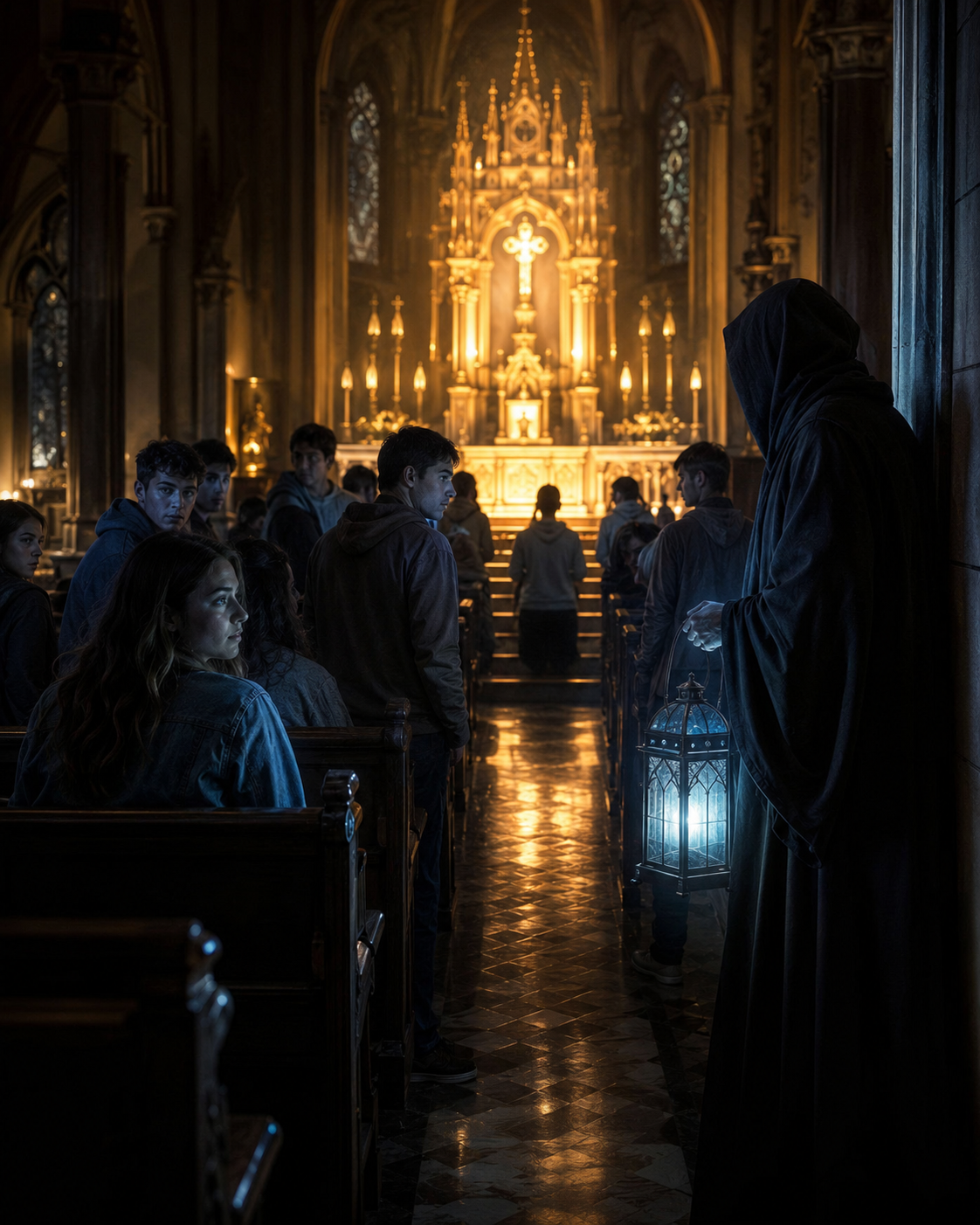
A story has been circulating about a Lantern held before young people in church. Each person who looked into it saw something different: a desire, a worry, a game, a grievance, a fear, a future. The Lantern did not force anyone to leave. It did something subtler. It gave each person exactly the light most likely to turn his face away from the altar.
Whether the story is old or newly shaped by our own moment, the image is true. The Devil at Work rarely begins by dragging us into darkness. He begins by holding up a light that reflects back what already has our attention. He does not create; he mirrors. He does not need to make us evil; he only needs to make us distracted. If he can turn us a few degrees away from Christ, away from Truth, away from the person in front of us, he has already begun his work.
The Spirit at Work does something different. The Spirit at Work illuminates rather than extracts. The Spirit at Work does not flatter our desire or feed our fear. He turns the head gently but firmly: Look again, that is not your life in the glass - that is only your wanting. The Truth is here; Christ is here; the person beside you is here, right now next to you or in front of you or even behind you.
The Builder at Work then moves the feet. He does not wait for a grand gesture or big project. He does one small disciplined thing, a builder at work (you) puts the phone down, asks the question, and maybe pours the wine. Every Builder at Work sets the chair, tells the truth and finishes his work. He returns to the table and turns attention into action. That is a Magis Moment.
A Magis Moment is a small act done with formed intention and attention for the greater good, for Christ, for the greater glory of God, and for His people. It is not overdone or a “look at me” selfie moment. The act not the Builder at Work does not need or seek applause, or likes or followers. The Builder at Work knows that a small act is enough to do today and serious enough to move the world forward because it reorients the human person toward Truth, love, service, and responsibility.
The Lantern offered by The Devil at Work extracts attention; The Spirit at Work restores illumination; and The Builder at Work responds with disciplined action… then Humaning begins there.
1. Care for the Whole Person
A small act of care is any gesture that refuses to reduce a person to output, usefulness, mood, role, or mistake. Ask one real question and wait for the answer. Notice whether someone is tired, anxious, isolated, or carrying more than they say. Offer food, water, rest, presence, or patience before offering advice.
Magis Moment:
Today, I will treat one person as whole, not as a function.
2. Empower Individuals for a Greater Purpose
A small act of empowerment helps someone see that his or her work, effort, or presence matters beyond the immediate task. Name the good you see in someone. Invite a younger person to help. Give someone real responsibility instead of only instructions. Connect the work in front of them to the people it serves.
Magis Moment:
Today, I will help one person see why their contribution matters.
3. Integrate Faith and Science
A small act of integration refuses false separation between evidence and meaning, reason and belief, body and soul, data and dignity. Check the claim before sharing it. Ask what the facts show. Ask what love requires. Let truth correct your desire, even when the correction is inconvenient.
Magis Moment:
Today, I will seek what is true before defending what I want to be true.
4. Encourage Reflection and Discernment
A small act of discernment creates a pause between stimulus and reaction (response). Do not answer immediately or forward immediately. Do not decide at that moment just because the room is moving. Take one breath and ask: Where am I? What is actually happening here and to whom? Which way am I facing (toward the “Lantern” or Truth)... PRO TIP: If you are asking the questions to your phone or computer… you are staring directly at the Lantern!
Magis Moment:
Today, I will pause long enough to choose rather than react.
5. Value Every Act of Service
A small act of service honors the hidden work that keeps people, families, teams, and communities standing. Thank the person who cleaned, prepared, drove, repaired, listened, carried, cooked, watched, waited, or stayed. Do one unglamorous task without “announcing it.” It could be putting down the toilet seat, or wiping the water off the faucet, or the little splash on the floor you made.
Magis Moment:
Today, I will notice and honor one act of service that could easily be missed.
6. Invite Continuous Growth
A small act of growth receives correction without collapse and begins again without drama. Admit one thing you could do better. Ask for feedback. Practice one weak area. Return to the work after the mistake. Let becoming matter more than appearing perfect and complete.
Magis Moment:
Today, I will take one honest step toward becoming more fully human - Humaning.
Use this brief Examen when the Lantern has your attention, when your mind is scattered, or when you need to return to the stance of The Builder at Work.
Details: What actually happened? Name the concrete facts without exaggeration, fantasy, fear, or defense.
Small act: Write one sentence that begins, “What actually happened was…”
Evidence: What do the facts show? Ask what is supported, what is assumed, and what you simply wanted to believe.
Small act: Check one claim, clarify one fact, or ask one evidence-based question. PRO TIP: Don’t look to the Lantern for evidence.
Empathy: Who was affected by my choices? Look beyond your intention to the impact on others.
Small act: Name one person affected by your attention, absence, silence, or action.
Prospective: What future am I creating? Use imagination as prayerful vision, not escape. See where this path leads.
Small act: Complete the sentence, “If I keep facing this light, I am becoming…”
Execution: What one action will I take next? Do not wait for a perfect plan. Choose one disciplined step.
Small act: Take one action within the next hour that turns you back toward Truth.
Reflection: How did I process the day? Did I hide, avoid, collapse, perform, or rise? Where and when did I feel God’s presence?
Small act: Speak or write one honest line before sleep: “Today I faced…”
Sit quietly for one minute, breathing slow and deep. Imagine the Lantern held by the left hand and the altar before you or towards the right. The Lantern shows you what you want, fear, crave, resent, or already believe. The altar does not flatter you, it simply remains present. Which way are you facing after your minute - toward the Lantern or the Light of the Altar?
Then choose one small act and do it purposefully for Christ, for the greater glory of God, and for His people. This is how the Lantern offered by the Devil at Work loses his power.
Circola una storia su una lanterna mostrata ai giovani in chiesa. Chiunque la guardasse vedeva qualcosa di diverso: un desiderio, una preoccupazione, un gioco, un risentimento, una paura, un futuro. La lanterna non costringeva nessuno ad andarsene. Faceva qualcosa di più sottile. Dava a ciascuno esattamente la luce più adatta a distogliere il suo sguardo dall’altare.
Che la storia sia antica o che abbia preso forma di recente nel nostro momento storico, l’immagine è vera. Il Diavolo al lavoro raramente inizia trascinandoci nell’oscurità. Inizia mostrando una luce che riflette ciò su cui già è concentrata la nostra attenzione. Egli non crea; riflette. Non ha bisogno di renderci malvagi; gli basta solo distrarci. Se riesce a distoglierci di qualche grado da Cristo, dalla Verità, dalla persona che abbiamo davanti, ha già iniziato la sua opera.
Lo Spirito al lavoro fa qualcosa di diverso. Lo Spirito al lavoro illumina anziché sottrarre. Lo Spirito al lavoro non lusinga il nostro desiderio né alimenta la nostra paura. Volta la testa con delicatezza ma con fermezza: «Guarda di nuovo, quella riflessa nello specchio non è la tua vita – è solo il tuo desiderio». La Verità è qui; Cristo è qui; la persona accanto a te è qui, proprio ora accanto a te, davanti a te o persino dietro di te.
Il Costruttore al Lavoro poi muove i piedi. Non aspetta un gesto grandioso o un grande progetto. Fa una piccola cosa con disciplina: un costruttore al lavoro (tu) posa il telefono, pone la domanda e magari versa il vino. Ogni Costruttore al Lavoro sistema la sedia, dice la verità e porta a termine il proprio lavoro. Torna a tavola e trasforma l’attenzione in azione. Questo è un Momento Magis.
Un Momento Magis è un piccolo gesto compiuto con intenzione consapevole e attenzione per il bene comune, per Cristo, per la maggiore gloria di Dio e per il Suo popolo. Non è un gesto esagerato né un momento da selfie del tipo «guardatemi». L’azione, non il Costruttore Al Lavoro, non ha bisogno né cerca applausi, né “mi piace” né follower. Il Costruttore Al Lavoro sa che un piccolo gesto è sufficiente da compiere oggi ed è abbastanza serio da far progredire il mondo, perché riorienta la persona umana verso la Verità, l’amore, il servizio e la responsabilità.
La Lanterna offerta dal Diavolo Al Lavoro distoglie l’attenzione; lo Spirito Al Lavoro ripristina l’illuminazione; e il Costruttore Al Lavoro risponde con un’azione disciplinata… ed è lì che ha inizio l’Humaning.
1. Prendersi cura della persona nella sua interezza
Un piccolo gesto di cura è qualsiasi atto che si rifiuti di ridurre una persona a un risultato, a un’utilità, a uno stato d’animo, a un ruolo o a un errore. Ponete una domanda sincera e aspettate la risposta. Notate se qualcuno è stanco, ansioso, isolato o se porta un peso maggiore di quanto dica. Offrite cibo, acqua, riposo, presenza o pazienza prima di offrire consigli.
Momento Magis:
Oggi tratterò una persona nella sua interezza, non come una funzione.
2. Responsabilizzare le persone per uno scopo più grande
Un piccolo atto di responsabilizzazione aiuta qualcuno a capire che il proprio lavoro, il proprio impegno o la propria presenza contano al di là del compito immediato. Indica il bene che vedi in qualcuno. Invita una persona più giovane ad aiutare. Affida a qualcuno una responsabilità reale invece di limitarti a dare istruzioni. Metti in relazione il lavoro che hanno davanti con le persone a cui è destinato.
Momento Magis:
Oggi aiuterò una persona a capire perché il suo contributo è importante.
3. Integrare fede e scienza
Un piccolo gesto di integrazione rifiuta la falsa separazione tra prove e significato, ragione e fede, corpo e anima, dati e dignità. Verifica l’affermazione prima di condividerla. Chiediti cosa dimostrano i fatti. Chiediti cosa richiede l’amore. Lascia che la verità corregga il tuo desiderio, anche quando la correzione è scomoda.
Momento Magis:
Oggi cercherò ciò che è vero prima di difendere ciò che vorrei fosse vero.
4. Incoraggiare la riflessione e il discernimento
Un piccolo atto di discernimento crea una pausa tra stimolo e reazione (risposta). Non rispondere immediatamente né inoltrare subito. Non decidere in quel momento solo perché l’ambiente circostante è in fermento. Fai un respiro e chiediti: Dove mi trovo? Cosa sta realmente accadendo qui e a chi? In che direzione sono rivolto (verso la «Lanterna» o verso la Verità)... CONSIGLIO DA ESPERTO: Se stai ponendo queste domande al tuo telefono o al tuo computer… stai guardando direttamente la Lanterna!
Momento Magis:
Oggi mi fermerò abbastanza a lungo da scegliere, anziché reagire.
5. Apprezza ogni atto di servizio
Un piccolo atto di servizio onora il lavoro nascosto che sostiene le persone, le famiglie, i gruppi e le comunità. Ringrazia la persona che ha pulito, preparato, guidato, riparato, ascoltato, trasportato, cucinato, sorvegliato, aspettato o è rimasta. Svolgi un compito poco appariscente senza «annunciarlo». Potrebbe essere abbassare la tavoletta del water, asciugare l’acqua dal rubinetto o la piccola macchia sul pavimento che hai lasciato.
Momento Magis:
Oggi noterò e onorerò un atto di servizio che potrebbe facilmente passare inosservato.
6. Invita alla crescita continua
Un piccolo atto di crescita accetta la correzione senza crollare e ricomincia senza drammi. Ammetti una cosa che potresti fare meglio. Chiedi un feedback. Esercitati in un’area in cui sei debole. Torna al lavoro dopo l’errore. Lascia che il divenire conti più dell’apparire perfetto e completo.
Momento Magis:
Oggi farò un passo onesto verso il diventare più pienamente umano – Humaning.
Usa questo breve Esame quando la Lanterna ha la tua attenzione, quando la tua mente è dispersa o quando hai bisogno di tornare all’atteggiamento del Costruttore all’opera.
Dettagli: Cosa è successo realmente? Elenca i fatti concreti senza esagerazioni, fantasie, paure o difese.
Piccolo gesto: Scrivi una frase che inizi con: «Quello che è successo realmente è stato…»
Evidenza: Cosa mostrano i fatti? Chiediti cosa è comprovato, cosa è supposto e cosa volevi semplicemente credere.
Piccolo gesto: Verifica un’affermazione, chiarisci un fatto o poni una domanda basata sulle prove. CONSIGLIO DEL PRO: Non cercare le prove nella Lanterna.
Empatia: Chi è stato influenzato dalle mie scelte? Guarda oltre la tua intenzione per cogliere l’impatto sugli altri.
Piccolo gesto: Indica una persona influenzata dalla tua attenzione, assenza, silenzio o azione.
Prospettiva: quale futuro sto creando? Usa l’immaginazione come visione di preghiera, non come fuga. Guarda dove conduce questo sentiero.
Piccolo gesto: completa la frase: «Se continuo ad affrontare questa luce, sto diventando…»
Esecuzione: quale azione intraprenderò ora? Non aspettare un piano perfetto. Scegli un passo concreto.
Piccolo gesto: compie un’azione entro la prossima ora che ti riporti verso la Verità.
Riflessione: Come ho elaborato la giornata? Mi sono nascosto, ho evitato, mi sono lasciato andare, ho recitato o mi sono elevato? Dove e quando ho sentito la presenza di Dio?
Piccolo gesto: Pronuncia o scrivi una frase sincera prima di dormire: «Oggi ho affrontato…»
Siediti in silenzio per un minuto, respirando lentamente e profondamente. Immagina la Lanterna tenuta nella mano sinistra e l’altare davanti a te o alla tua destra. La Lanterna ti mostra ciò che desideri, temi, brami, provi risentimento o già credi. L’altare non ti lusinga, rimane semplicemente presente. Verso dove sei rivolto dopo il tuo minuto: verso la Lanterna o verso la Luce dell’Altare?
Scegli quindi un piccolo gesto e compilo con determinazione per Cristo, per la maggiore gloria di Dio e per il Suo popolo. È così che la Lanterna offerta dal Diavolo al Lavoro perde il suo potere.

When Pope Leo XIV released his first encyclical, Magnifica Humanitas: On Safeguarding the Human Person in the Time of Artificial Intelligence, he signed it on the 135th anniversary of Rerum Novarum, and the choice of date was itself an argument. Where Leo XIII once stood before the machinery of the Industrial Revolution and insisted that the worker was not a cog but a person, Leo XIV now stands before a subtler machinery and makes the same insistence about all of us. He sets artificial intelligence exactly where his predecessor set the factory: at the very center of the Church's concern for human dignity.
One of the encyclical's sections needs no commentary. It is titled, simply, What must not be lost. I have not been able to stop thinking about that phrase. In four words, it is the reason UMANIAMOⓇ exists.
The argument beneath it cuts deeper than a warning about misuse. The encyclical refuses to let the technology be called neutral. Every system, it insists, carries within it a vision of the human person, in what it chooses to measure and what it ignores, in what it rewards and what it discards, whether or not anyone meant to put one there. The gravest danger it names is not that the machine will make mistakes; it is that we will hand it our judgments while no one remains answerable for them and that the most human act of all, taking responsibility for a decision, will quietly slip out of the room. A machine can imitate the appearance of compassion, the Holy Father observes, but it cannot know compassion, or mercy, or forgiveness, and least of all the hope that a person might still change. And so the real question is no longer whether a tool is used well. It is what understanding of the human person has already been built into the tool itself.
This is where we begin, because an encyclical can name a wound with perfect clarity and still not heal it. A teaching is a call, and someone has to answer it not with a better argument, but with a practice. That is the whole of our conviction, and it is simply stated: the answer to the machine is not less technology - it is more humanity deliberately, patiently restored. UMANIAMOⓇ refers to this as Humaning.
We are not here to elaborate the Holy Father's case. We are here to turn it from a teaching into a way of life. Because here is the thing about what must not be lost: it cannot be installed, bought, enforced, downloaded, or legislated into being or maybe even restored once gone. Discernment or the capacity to weigh, to judge, to choose the good and not merely what one can justify or defend. Wisdom does not ship, character doesn’t come in a meme, and Discernment does not exist in any algorithm. These things are formed, and they are formed the slow, human way: in relationship, through honest reflection on real experience, in the very friction the machine is forever offering to remove for us. The remedy our age needs is not less technology; it is the deliberate restoration of the reflective act that the technology is systematically dissolving: the pause, the examen, the question held long enough to ripen into wisdom. There is a kind of building that uses people and leaves a ruin, and a kind that forms them and leaves them more themselves. We have staked literally everything on the second.
To call a spade a spade, the danger the encyclical describes is a kind of illusion: the quiet, flattering lie that you are only an input; that you are a consumer, an audience, a copy; that your judgment is dispensable and your seat at the table not really yours. UMANIAMOⓇ refers to this force as The Devil at Work or the illusion, the lie in plain sights.
The answer to the illusion of The Devil at Work is never more cleverness. It is agency and the recovery of the two powers the lie steals first: the power to see truly or The Spirit at Work, and the power to act - The Builder at Work. This is a call to action to pay attention again, to rise, and build. To remain against every pressure to become less than who God intended us to be… the kind of people the machine cannot replace: present, patient, merciful, capable of wonder and of sacrifice, capable of hoping that someone might still change.
This is what the Humaning Covenant is for. Its Six Promises of the Humaning Covenant are not corporate values dressed in gentler language; they are practices for keeping alive precisely what must not be lost. We care for the whole person, because no one is reducible to their usefulness. We empower one another for a greater purpose, because every person carries gifts beyond their economic value. We integrate faith and science, because truth is never divided against itself. We encourage reflection and discernment, because attention comes before wisdom. We honor every act of service, because dignity reveals itself in ordinary things. And we invite continuous growth, because a human being is never a finished product, but always a person still becoming. Beneath all six runs a single question… not what can I defend? but what is the greater good here? That is the Magis, and it is the exact distance Magnifica Humanitas asks the world to keep from a culture content with the merely defensible.
This is what we mean by Humaning: not human being, not human doing, but human as a verb the lifelong, shared practice of becoming fully human, and of refusing to let anyone near us become less.
In the end, the encyclical's call will not be answered on a page, this one included. It will be answered the way every true formation has ever happened, through real people, in real relationships, at an actual table where someone is known, and challenged, and loved, and formed. That is where what must not be lost is finally kept: not in a policy, not in a tool, but in a person who has been formed enough to hold it, and to hand it on. The Holy Father has issued the call and the Six Promises of the Humaning Covenant is our way of answering it.
We are human together, or not at all.
A weekly remembrance of those whose lives continue to illuminate the path of Humaning.
June 22 - St. Thomas More and St. John Fisher
St. Thomas More and St. John Fisher were English martyrs who remained faithful to conscience and truth when political pressure demanded compromise. More was a statesman, scholar, husband, father, and servant of public life. Fisher was a bishop and theologian known for his integrity and courage. Both remind us that fidelity is not abstract. It is tested when comfort, reputation, security, and approval are at stake.
Humaning Reflection: Sin is often understood as wrongdoing, but in its older sense it means missing the mark. Thomas More and John Fisher remind us that one way we miss the mark is by surrendering conscience to convenience. Where are we being invited to remain faithful to truth, even when silence would be easier?
June 23 - St. Joseph Cafasso
St. Joseph Cafasso was an Italian priest from Piedmont remembered for his pastoral care, spiritual guidance, and ministry to prisoners, especially those condemned to death. He became known as the “Priest of the Gallows” because he accompanied the condemned with compassion and dignity in their final hours. His holiness was not loud or theatrical. It was patient, merciful, and deeply present to those many others had forgotten.
Humaning Reflection: Joseph Cafasso reminds us that no person is disposable, even when society has already judged them. Humaning requires us to see the person before the label, the soul before the sentence, and the possibility of grace even at the edge of despair. Who near us needs to be accompanied rather than abandoned?
June 24 - The Nativity of St. John the Baptist
The Nativity of St. John the Baptist celebrates the birth of the one who prepared the way for Christ. John’s life was not centered on himself, but on the One he came to announce. He stood at the threshold between old and new, calling people to repentance, renewal, and readiness. His vocation was clear: to point beyond himself and help others return to the mark.
Humaning Reflection: John the Baptist reminds us that becoming fully ourselves does not mean becoming self-absorbed. True vocation always points beyond the self toward God and neighbor. Where are we being called to prepare the way for someone else’s becoming?
June 25 - St. William of Vercelli
St. William of Vercelli was a hermit, pilgrim, and founder of the Abbey of Montevergine in southern Italy. His life was marked by prayer, simplicity, and the desire to build a community rooted in holiness. He reminds us that some Builders are first formed in silence before their work becomes visible. The foundation often comes before the structure.
Humaning Reflection: William of Vercelli invites us to honor the hidden seasons of formation. Not every quiet season is wasted. Sometimes God withdraws us from noise so something deeper can take root. What foundation is God building in us before asking us to build for others?
June 26 - St. Josemaría Escrivá
St. Josemaría Escrivá taught that ordinary work can become a path to holiness when offered with love, excellence, and fidelity. He reminded Christians that sanctity is not reserved for monasteries, pulpits, or heroic moments. It can be found in the daily tasks of family, labor, responsibility, friendship, study, and service. His witness helps us see ordinary life as a place of vocation.
Humaning Reflection: The unlived life often hides beneath busyness. Josemaría reminds us that work is not merely something we get through; it can become a place where we become. How might our ordinary responsibilities become more fully aligned with who God is calling us to be?
June 27 - St. Cyril of Alexandria
St. Cyril of Alexandria was a bishop, theologian, and defender of the mystery of Christ. He is remembered for his role in affirming Mary as Theotokos, the God-bearer, and for insisting that Christ is truly God and truly human. His life reminds us that words matter because truth matters. What we say about God shapes what we understand about ourselves.
Humaning Reflection: Cyril reminds us that confusion about God often leads to confusion about the human person. If Christ reveals both divine love and full humanity, then every human life carries sacred meaning. What false words, labels, or stories have kept us from seeing ourselves or others truthfully?
June 28 - St. Irenaeus of Lyon
St. Irenaeus of Lyon was a bishop, theologian, and defender of the apostolic faith. He is often remembered for the beautiful teaching that “the glory of God is the human person fully alive.” His vision was not shallow self-expression, but fullness of life in communion with God. He saw human flourishing as inseparable from divine life.
Humaning Reflection: Irenaeus speaks directly to this week’s theme. If sin is missing the mark, then one of the deepest tragedies is never becoming fully alive in God. The glory of God is not the human person diminished, distracted, or copied. It is the human person awakened, formed, and offered. What part of our life is still waiting to become fully alive?
This year Father's Day coincides with the feast of St. Aloysius Gonzaga, a fitting reminder that formation is one of the greatest gifts we can offer another human being.
Fatherhood is not merely biological. Throughout our lives we encounter builders, mentors, teachers, coaches, grandfathers, uncles, priests, neighbors, and friends who help shape the people we become. Many of the most important lessons are not taught through instruction but through example: showing up, remaining faithful, keeping one's word, serving quietly, and caring for others without seeking recognition.
The Humaning Covenant reminds us that every generation inherits both gifts and responsibilities. Fathers and father-figures help transmit not only knowledge but courage, character, belonging, and hope. They teach us what it means to remain present when life becomes difficult and what it means to continue building when the work is unfinished.
Today we give thanks for those who helped form us—and we ask ourselves how we might become builders for those who will follow after us.
"The future is rarely built by heroes alone. More often it is built by fathers, mentors, and faithful builders who quietly remain at the table long enough for others to find their seat."
Quando Papa Leone XIV ha pubblicato la sua prima enciclica, Magnifica Humanitas: Sulla salvaguardia della persona umana nell’era dell’intelligenza artificiale, l’ha firmata nel 135° anniversario della Rerum Novarum, e la scelta della data era di per sé un argomento. Così come un tempo Leone XIII si era opposto alla macchina della Rivoluzione Industriale insistendo sul fatto che il lavoratore non era un ingranaggio ma una persona, così ora Leone XIV si oppone a una macchina più sottile e ribadisce lo stesso concetto riguardo a tutti noi. Egli colloca l’intelligenza artificiale esattamente dove il suo predecessore aveva collocato la fabbrica: al centro stesso dell’attenzione della Chiesa per la dignità umana.
Una delle sezioni dell’enciclica non ha bisogno di commenti. Si intitola, semplicemente, Ciò che non deve andare perduto. Non sono riuscito a smettere di pensare a quella frase. In quattro parole, è la ragione per cui esiste UMANIAMOⓇ.
L’argomentazione che sta alla base va ben oltre un semplice monito contro l’uso improprio. L’enciclica rifiuta di considerare la tecnologia come neutra. Ogni sistema, insiste, porta in sé una visione della persona umana, in ciò che sceglie di misurare e in ciò che ignora, in ciò che premia e in ciò che scarta, indipendentemente dal fatto che qualcuno abbia voluto inserirla o meno. Il pericolo più grave che essa individua non è che la macchina commetta errori; è che le affidiamo i nostri giudizi mentre nessuno ne rimane responsabile e che l’atto più umano di tutti, assumersi la responsabilità di una decisione, scivoli silenziosamente fuori dalla stanza. Una macchina può imitare l’apparenza della compassione, osserva il Santo Padre, ma non può conoscere la compassione, né la misericordia, né il perdono, e men che meno la speranza che una persona possa ancora cambiare. E così la vera domanda non è più se uno strumento venga usato bene. È quale concezione della persona umana sia già stata incorporata nello strumento stesso.
È da qui che partiamo, perché un’enciclica può individuare una ferita con perfetta chiarezza e tuttavia non guarirla. Un insegnamento è una chiamata, e qualcuno deve rispondervi non con un argomento migliore, ma con una pratica. Questa è tutta la nostra convinzione, ed è espressa in modo semplice: la risposta alla macchina non è meno tecnologia, ma più umanità, deliberatamente e pazientemente ricostruita. UMANIAMOⓇ definisce questo processo «Humaning».
Non siamo qui per approfondire la tesi del Santo Padre. Siamo qui per trasformarla da insegnamento a stile di vita. Perché ecco il punto su ciò che non deve andare perduto: non può essere installato, acquistato, imposto, scaricato o creato per legge, né forse nemmeno ripristinato una volta scomparso. Il discernimento, ovvero la capacità di soppesare, giudicare, scegliere il bene e non semplicemente ciò che si può giustificare o difendere. La saggezza non si spedisce, il carattere non si trova in un meme e il discernimento non esiste in nessun algoritmo. Queste cose si formano, e si formano nel modo lento e umano: nelle relazioni, attraverso l’onesta riflessione sull’esperienza reale, proprio in quell’attrito che la macchina cerca incessantemente di eliminare per noi. Il rimedio di cui la nostra epoca ha bisogno non è meno tecnologia; è il ripristino deliberato dell’atto riflessivo che la tecnologia sta sistematicamente dissolvendo: la pausa, l’esame di coscienza, la domanda che viene tenuta viva abbastanza a lungo da maturare in saggezza. Esiste un tipo di costruzione che usa le persone e lascia una rovina, e un tipo che le forma e le rende più se stesse. Abbiamo puntato letteralmente tutto sul secondo.
Per dire le cose come stanno, il pericolo descritto dall’enciclica è una sorta di illusione: la menzogna silenziosa e lusinghiera secondo cui sei solo un dato in ingresso; che sei un consumatore, un pubblico, una copia; che il tuo giudizio è superfluo e il tuo posto a tavola non è davvero tuo.
UMANIAMOⓇ definisce questa forza «Il Diavolo Al Lavoro» o l’illusione, la menzogna sotto gli occhi di tutti.
La risposta all’illusione del «Diavolo Al Lavoro» non è mai una maggiore astuzia. È l’azione e il recupero dei due poteri che la menzogna ruba per primi: il potere di vedere veramente, ovvero «Lo Spirito Al Lavoro», e il potere di agire – «Il Costruttore Al Lavoro». Questo è un invito all’azione per prestare nuovamente attenzione, per rialzarsi e costruire.
Per resistere a ogni pressione che ci spinge a diventare meno di ciò che Dio ha voluto che fossimo… il tipo di persone che la macchina non può sostituire: presenti, pazienti, misericordiose, capaci di meraviglia e di sacrificio, capaci di sperare che qualcuno possa ancora cambiare.Ecco a cosa serve l'Alleanza Umanizzante. Le sue Sei Promesse dell'Alleanza Umanizzante non sono valori aziendali rivestiti di un linguaggio più gentile; sono pratiche per mantenere in vita proprio ciò che non deve andare perduto. Ci prendiamo cura della persona nella sua interezza, perché nessuno è riducibile alla propria utilità. Ci sosteniamo a vicenda per uno scopo più grande, perché ogni persona porta con sé doni che vanno oltre il proprio valore economico. Integriamo fede e scienza, perché la verità non è mai divisa contro se stessa. Incoraggiamo la riflessione e il discernimento, perché l’attenzione precede la saggezza. Onoriamo ogni atto di servizio, perché la dignità si rivela nelle cose ordinarie. E invitiamo alla crescita continua, perché un essere umano non è mai un prodotto finito, ma sempre una persona in divenire. Alla base di tutte e sei c’è un’unica domanda… non cosa posso difendere? ma qual è il bene superiore in questo caso? Questo è il Magis, ed è esattamente la distanza che Magnifica Humanitas chiede al mondo di mantenere da una cultura che si accontenta del mero difendibile.
Questo è ciò che intendiamo per «Humaning»: non «essere umano», non «fare umano», ma «umano» come verbo — la pratica condivisa e che dura tutta la vita di diventare pienamente umani e di rifiutarsi di lasciare che chiunque ci sia vicino diventi meno di ciò.
Alla fine, l’appello dell’enciclica non troverà risposta su una pagina, compresa questa. Troverà risposta nel modo in cui ogni vera formazione è sempre avvenuta: attraverso persone reali, in relazioni autentiche, attorno a una tavola vera dove qualcuno viene conosciuto, messo alla prova, amato e formato. È lì che ciò che non deve andare perduto viene infine custodito: non in una politica, non in uno strumento, ma in una persona che è stata formata a sufficienza per custodirlo e per trasmetterlo. Il Santo Padre ha lanciato l’appello e le Sei Promesse del Patto di “Humaning” sono il nostro modo di rispondervi.
Siamo umani insieme, o non lo siamo affatto.
Un ricordo settimanale di coloro le cui vite continuano a illuminare il cammino di Humaning.
22 giugno - San Tommaso Moro e San Giovanni Fisher
San Tommaso Moro e San Giovanni Fisher furono martiri inglesi che rimasero fedeli alla coscienza e alla verità quando le pressioni politiche esigevano un compromesso. Moro era uno statista, uno studioso, un marito, un padre e un servitore della vita pubblica. Fisher era un vescovo e teologo noto per la sua integrità e il suo coraggio. Entrambi ci ricordano che la fedeltà non è un concetto astratto. Viene messa alla prova quando sono in gioco il benessere, la reputazione, la sicurezza e l’approvazione.
Riflessione sull’Humaning: Il peccato è spesso inteso come un’azione sbagliata, ma nel suo significato più antico significa “mancare il bersaglio”. Tommaso Moro e Giovanni Fisher ci ricordano che un modo in cui manchiamo il bersaglio è quello di sacrificare la coscienza alla convenienza. In quali situazioni siamo chiamati a rimanere fedeli alla verità, anche quando il silenzio sarebbe più facile?
23 giugno - San Giuseppe Cafasso
San Giuseppe Cafasso era un sacerdote italiano del Piemonte ricordato per la sua cura pastorale, la guida spirituale e il ministero a favore dei carcerati, specialmente di quelli condannati a morte. Divenne noto come il «Sacerdote del patibolo» perché accompagnava i condannati con compassione e dignità nelle loro ultime ore. La sua santità non era appariscente né teatrale. Era paziente, misericordiosa e profondamente presente verso coloro che molti altri avevano dimenticato.
Riflessione sull’Humaning: Giuseppe Cafasso ci ricorda che nessuna persona è sacrificabile, anche quando la società l’ha già giudicata. “Humaning” ci chiede di vedere la persona prima dell’etichetta, l’anima prima della sentenza e la possibilità della grazia anche sull’orlo della disperazione. Chi, tra coloro che ci sono vicini, ha bisogno di essere accompagnato anziché abbandonato?
24 giugno - Natività di San Giovanni Battista
La Natività di San Giovanni Battista celebra la nascita di colui che ha preparato la via a Cristo. La vita di Giovanni non era incentrata su se stesso, ma su Colui che era venuto ad annunciare. Egli si trovava sulla soglia tra il vecchio e il nuovo, invitando le persone al pentimento, al rinnovamento e alla prontezza. La sua vocazione era chiara: indicare oltre se stesso e aiutare gli altri a tornare sulla retta via.
Riflessione sull’Humaning: Giovanni Battista ci ricorda che diventare pienamente noi stessi non significa diventare egocentrici. La vera vocazione punta sempre oltre il sé, verso Dio e il prossimo. Dove siamo chiamati a preparare la via affinché qualcun altro possa realizzarsi?
25 giugno - San Guglielmo di Vercelli
San Guglielmo di Vercelli fu un eremita, un pellegrino e il fondatore dell’Abbazia di Montevergine nel sud Italia. La sua vita fu caratterizzata dalla preghiera, dalla semplicità e dal desiderio di costruire una comunità radicata nella santità. Egli ci ricorda che alcuni Costruttori vengono prima formati nel silenzio prima che la loro opera diventi visibile. Le fondamenta spesso precedono la struttura.
Riflessione sull’Humaning: Guglielmo da Vercelli ci invita a onorare i periodi nascosti della formazione. Non tutti i periodi di silenzio sono sprecati. A volte Dio ci allontana dal frastuono affinché qualcosa di più profondo possa mettere radici. Quali fondamenta sta costruendo Dio in noi prima di chiederci di costruire per gli altri?
26 giugno - San Josemaría Escrivá
San Josemaría Escrivá insegnava che il lavoro quotidiano può diventare un cammino verso la santità quando offerto con amore, eccellenza e fedeltà. Ricordava ai cristiani che la santità non è riservata ai monasteri, ai pulpiti o ai momenti eroici. Si può trovare nelle attività quotidiane della famiglia, del lavoro, delle responsabilità, dell’amicizia, dello studio e del servizio. La sua testimonianza ci aiuta a vedere la vita ordinaria come un luogo di vocazione.
Riflessione sull'Humaning: La vita non vissuta spesso si nasconde dietro la frenesia. Josemaría ci ricorda che il lavoro non è semplicemente qualcosa da sbrigare; può diventare un luogo in cui realizziamo noi stessi. In che modo le nostre responsabilità ordinarie potrebbero allinearsi più pienamente a ciò che Dio ci chiama ad essere?
27 giugno - San Cirillo di Alessandria
San Cirillo di Alessandria fu vescovo, teologo e difensore del mistero di Cristo. È ricordato per il suo ruolo nell’affermare Maria come Theotokos, colei che porta Dio, e per aver insistito sul fatto che Cristo è veramente Dio e veramente uomo. La sua vita ci ricorda che le parole contano perché la verità conta. Ciò che diciamo di Dio plasma ciò che comprendiamo di noi stessi.
Riflessione sull’Humaning: Cirillo ci ricorda che la confusione riguardo a Dio spesso porta alla confusione riguardo alla persona umana. Se Cristo rivela sia l’amore divino che la piena umanità, allora ogni vita umana porta in sé un significato sacro. Quali parole false, etichette o storie ci hanno impedito di vedere noi stessi o gli altri in modo veritiero?
28 giugno - Sant’Ireneo di Lione
Sant’Ireneo di Lione fu vescovo, teologo e difensore della fede apostolica. È spesso ricordato per il bellissimo insegnamento secondo cui «la gloria di Dio è la persona umana pienamente viva». La sua visione non era una superficiale espressione di sé, ma la pienezza della vita in comunione con Dio. Egli vedeva la realizzazione umana come inseparabile dalla vita divina.
Riflessione sull’Humaning: Ireneo parla direttamente del tema di questa settimana. Se il peccato è mancare il bersaglio, allora una delle tragedie più profonde è non diventare mai pienamente vivi in Dio. La gloria di Dio non è la persona umana sminuita, distratta o imitata. È la persona umana risvegliata, formata e offerta. Quale parte della nostra vita sta ancora aspettando di diventare pienamente viva?
Quest’anno la Festa del Papà coincide con la festa di Sant’Aloysius Gonzaga, un promemoria appropriato del fatto che la formazione è uno dei doni più grandi che possiamo offrire a un altro essere umano.
La paternità non è solo biologica. Nel corso della nostra vita incontriamo guide, mentori, insegnanti, allenatori, nonni, zii, sacerdoti, vicini e amici che contribuiscono a plasmare le persone che diventiamo. Molte delle lezioni più importanti non vengono insegnate attraverso l’istruzione, ma con l’esempio: essere presenti, rimanere fedeli, mantenere la parola data, servire in silenzio e prendersi cura degli altri senza cercare riconoscimento.
L'Alleanza Umana ci ricorda che ogni generazione eredita sia doni che responsabilità. I padri e le figure paterne contribuiscono a trasmettere non solo la conoscenza, ma anche il coraggio, il carattere, il senso di appartenenza e la speranza. Ci insegnano cosa significa rimanere presenti quando la vita diventa difficile e cosa significa continuare a costruire quando il lavoro è incompiuto.
Oggi rendiamo grazie a coloro che hanno contribuito a plasmarci — e ci chiediamo come potremmo diventare noi stessi costruttori per coloro che verranno dopo di noi.
«Il futuro raramente viene costruito solo dagli eroi. Più spesso è opera di padri, mentori e costruttori fedeli che rimangono silenziosamente a tavola abbastanza a lungo da permettere agli altri di trovare il proprio posto».