Brotherhood of We
Crossing
Humaning Library → Sunday Table → Brotherhood of We
April 20 - 26, 2026
The Crossing with Brother-God
We are Human Together or Not at All.
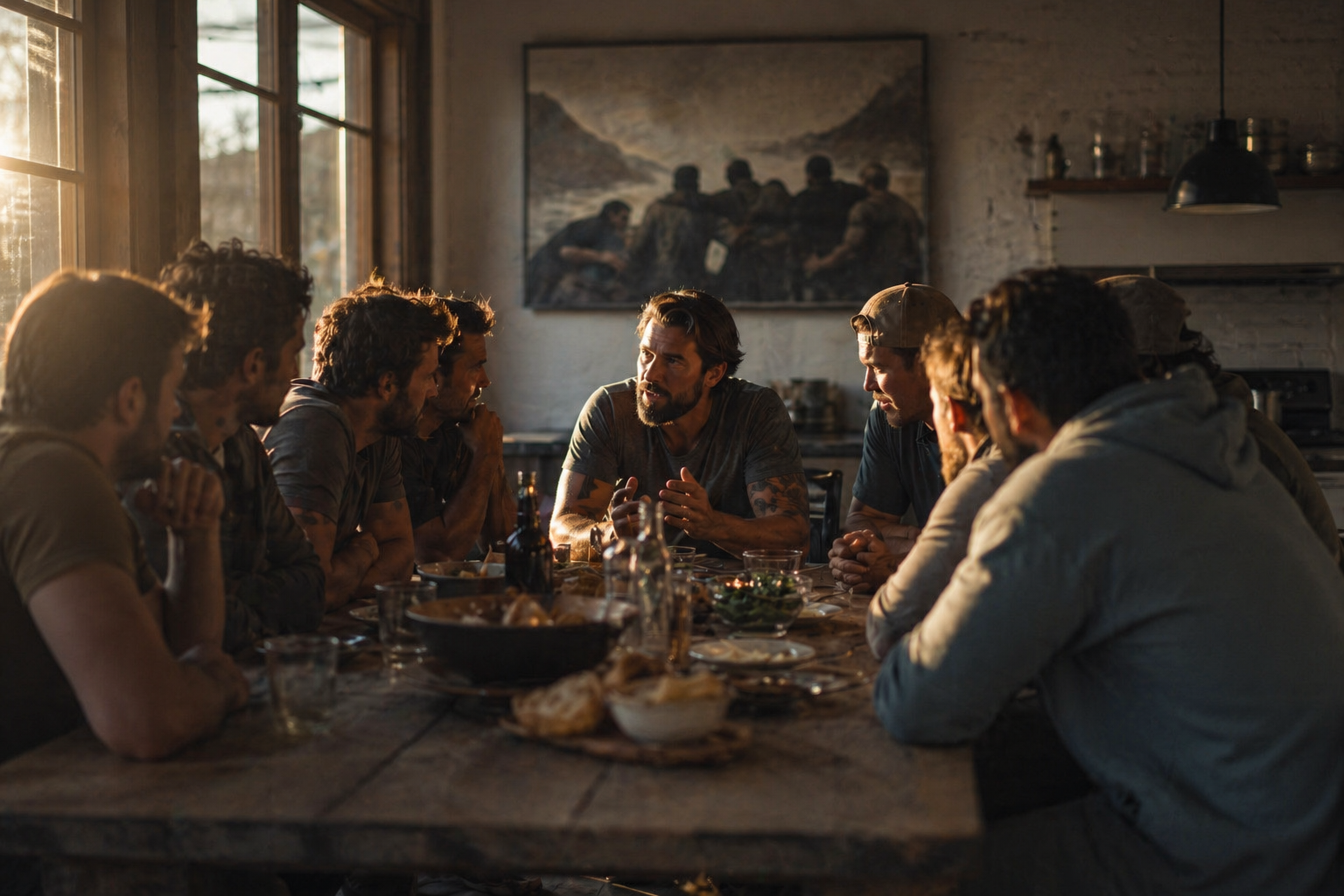
There is a point in the Crossing where you realize you don’t actually know where you are. Up to now, there has been an arc to the journey. You could look back and recognize movement. You began as a tourist, observing, taking things in without much cost. Then something drew you in and you became a pilgrim, more intentional, more aware that the path mattered. From there, you stepped into being a disciple, committed in a deeper way, learning, following, aligning yourself with something beyond your own preferences. There was direction in that, but the Crossing is different.
The Crossing does not arrive with warning. It does not announce itself with trumpets or a marching band. You don’t decide to enter it. One day you realize you are already in it and sometimes up to your neck. The common markers and signs that helped you orient yourself are no longer as clear. You are still moving, still showing up, morning comes and the moon rises at night, but you can’t define the path the same way you once did. Now the path is emerging and that can feel disorienting. For anyone that knows me, I love “flip charts” and markers. One day years ago, I wrote “where am I, and what was the last sign?” Sometimes the last sign was a “sin” that opened the next arch of your Humaning.
In the earlier stages, there was a sense of progression. Even when it was difficult, you knew what you were doing and why. In the Crossing, that clarity fades away. You are still committed, but you don’t always understand what that commitment is leading to. That’s where many os us hesitate. We try to go back to what made sense before. We try to recover a sense of control, to reestablish clarity, to define the next step before taking it. But the Crossing doesn’t work that way. It invites a different response, it asks something different, remain and understand a new version of “WE.” UMANIAMOⓇ, we are human together or not at all.
“Abide in me, and I in you. As the branch cannot bear fruit by itself, unless it abides in the vine, neither can you, unless you abide in me. I am the vine; you are the branches… apart from me you can do nothing.” John 15:4–5
If you sit with that idea and invitation long enough, something begins to change - How you understand your place in this brotherhood.
Up to this point, even when you were moving with others, there was still a strong sense of “I.” My growth, My decisions, My path. Even as a disciple, there was still a personal orientation to the work and you were learning how to align yourself.
In the Crossing, something shifts not because you decide, but because it must be this way. You (We) begin to see that you are not meant to move through this alone. Not just in a general sense, but in a very specific way. The brotherhood you are part of is not simply with others who are also trying to figure things out. It is with Christ, and through that, with others.
That changes everything, because now the question is no longer just what you are doing.
It is who you are becoming with. Christ does not meet you as an abstract idea in this space. He meets you in the reality of it. In the confusion. In the lack of clarity. In the moments where you are still showing up but not fully certain of what comes next. He does not send you through it alone as a grifter would, he gathers - intentionally.
“For where two or three are gathered in my name, there am I among them.” (Matthew 18:20) Not a symbolic statement in an old book, a descriptive. invitation
There is something that happens when people are gathered in Him that does not happen in isolation. Something becomes present that cannot be generated individually. A different kind of awareness, a different kind of strength, a different kind of movement. That is the new “we” or Magis, the more.
Not teamwork as we usually think about it. Not coordination for the sake of efficiency. But a brotherhood that is formed in Christ, where each person is learning how to human—not as a static identity, but as an active way of being. Because human is not just something you are. It is something you do.
You are humaning along with the rest of us. We are learning, in real time, how to live, how to respond, how to engage, how to remain. And you are not doing that alone. You are doing it in relationship with Christ, and with others who are also in their Crossing.
That is why it feels the way it does, picking up your Cross is disorienting commitment. Present but unclear but there is no failure - only the process of Humaning.
Even the earliest disciples experienced this. They were no longer tourists or observers. They were no longer simply learning as individuals. They were bound together by what they had seen and experienced. Their commitment was real. But their understanding was incomplete…
That is where we are.
The invitation now is not to figure everything out, but to begin to move within this brotherhood differently. To recognize that your strength is not only your own. That your accountability is not only internal. That your presence affects others, and theirs affects you.
This is where teamwork becomes something deeper, not about working alongside others. It is about being with them. In Christ, and allowing that to shape how you move.
We are human together, or not at all.
C'è un momento nel Passaggio in cui ti rendi conto di non sapere davvero dove ti trovi. Fino a quel momento, il viaggio aveva seguito un arco narrativo. Potevi guardarti indietro e riconoscere il percorso compiuto. Hai iniziato come turista, osservando, assorbendo le cose senza troppa fatica. Poi qualcosa ti ha attirato e sei diventato un pellegrino, più determinato, più consapevole dell'importanza del cammino. Da lì, sei diventato un discepolo, impegnato in modo più profondo, imparando, seguendo, allineandoti a qualcosa che va oltre le tue preferenze. C'era una direzione in questo, ma l'Attraversamento è diverso.
L'Attraversamento non arriva con preavviso. Non si annuncia con trombe o una banda musicale. Non sei tu a decidere di entrarvi. Un giorno ti rendi conto di esserci già dentro e a volte ci sei fino al collo. I punti di riferimento e i segni comuni che ti aiutavano a orientarti non sono più così chiari. Ti stai ancora muovendo, sei ancora presente, il mattino arriva e la luna sorge di notte, ma non riesci a definire il percorso come facevi una volta. Ora il percorso sta emergendo e questo può sembrare disorientante. Chi mi conosce sa che adoro le “lavagne a fogli mobili” e i pennarelli. Un giorno, anni fa, ho scritto: “Dove sono e qual è stato l’ultimo segno?”. A volte l’ultimo segno era un “peccato” che apriva l’arco successivo del tuo Essere Umani.
Nelle fasi iniziali, c’era un senso di progressione. Anche quando era difficile, sapevi cosa stavi facendo e perché. Nel Passaggio, quella chiarezza svanisce. Sei ancora impegnato, ma non sempre capisci dove ti sta portando quell’impegno. È lì che molti di noi esitano. Cerchiamo di tornare a ciò che prima aveva senso. Cerchiamo di recuperare un senso di controllo, di ristabilire la chiarezza, di definire il passo successivo prima di compierlo. Ma l’Attraversamento non funziona così. Invita una risposta diversa, chiede qualcosa di diverso: rimanere e comprendere una nuova versione del “NOI”. UMANIAMOⓇ, siamo umani insieme o non lo siamo affatto.
“Rimanete in me, e io in voi. Come il tralcio non può portare frutto da sé stesso, se non rimane nella vite, così neppure voi, se non rimanete in me. Io sono la vite; voi siete i tralci… senza di me non potete fare nulla.” Giovanni 15:4–5
Se ti soffermi abbastanza a lungo su quell’idea e su quell’invito, qualcosa comincia a cambiare: il modo in cui comprendi il tuo posto in questa fratellanza.
Fino a questo punto, anche quando ti muovevi con gli altri, c’era ancora un forte senso dell’“io”. La mia crescita, le mie decisioni, il mio percorso. Anche come discepolo, c’era ancora un orientamento personale al lavoro e stavi imparando ad allinearti.
Nel Passaggio, qualcosa cambia non perché lo decidi tu, ma perché deve essere così. Tu (noi) cominci a vedere che non sei destinato ad attraversare tutto questo da solo. Non solo in senso generale, ma in un modo molto specifico. La fratellanza di cui fai parte non è semplicemente con altri che stanno cercando di capire le cose. È con Cristo, e attraverso di Lui, con gli altri.
Questo cambia tutto, perché ora la domanda non è più solo cosa stai facendo.
È con chi stai diventando. Cristo non ti incontra come un'idea astratta in questo spazio. Ti incontra nella realtà di esso. Nella confusione. Nella mancanza di chiarezza. Nei momenti in cui sei ancora presente ma non del tutto certo di ciò che verrà dopo. Egli non ti manda ad attraversarlo da solo come farebbe un imbroglione, ma raduna – intenzionalmente.
“Perché dove sono due o tre riuniti nel mio nome, lì sono io in mezzo a loro.” (Matteo 18:20) Non è un’affermazione simbolica in un libro antico, ma un invito descrittivo
C’è qualcosa che accade quando le persone sono riunite in Lui che non accade nell’isolamento. Si manifesta qualcosa che non può essere generato individualmente. Un diverso tipo di consapevolezza, un diverso tipo di forza, un diverso tipo di movimento. Questo è il nuovo “noi” o Magis, il “di più”.
Non il lavoro di squadra come lo intendiamo di solito. Non il coordinamento per il solo scopo dell’efficienza. Ma una fratellanza che si forma in Cristo, dove ogni persona sta imparando a essere umana – non come identità statica, ma come modo attivo di essere. Perché essere umani non è solo qualcosa che si è. È qualcosa che si fa.
Stai diventando umano insieme a tutti noi. Stiamo imparando, in tempo reale, come vivere, come rispondere, come impegnarci, come rimanere. E non lo stai facendo da solo. Lo stai facendo in relazione con Cristo e con gli altri che sono anch’essi nel loro Attraversamento.
Ecco perché ci si sente così: prendere la propria Croce è un impegno disorientante. Presente ma poco chiaro, ma non c’è fallimento – solo il processo di Diventare Umani.
Anche i primi discepoli hanno vissuto questo. Non erano più turisti o osservatori. Non stavano più semplicemente imparando come individui. Erano legati insieme da ciò che avevano visto e vissuto. Il loro impegno era reale. Ma la loro comprensione era incompleta…
Ecco dove siamo.
L'invito ora non è quello di capire tutto, ma di iniziare a muoverci in modo diverso all'interno di questa fratellanza. Riconoscere che la tua forza non è solo tua. Che la tua responsabilità non è solo interna. Che la tua presenza influenza gli altri, e la loro influenza te.
È qui che il lavoro di squadra diventa qualcosa di più profondo, non si tratta di lavorare al fianco degli altri. Si tratta di stare con loro. In Cristo, e permettere che questo plasmi il modo in cui ti muovi.
Siamo umani insieme, o non lo siamo affatto.
Teamwork
Each week, we offer two easy ways to reflect depending on how and where you are.
The Table Conversation is a short, shared reflection. It works best around a meal, in the living room, or during unhurried time with friends or family. No preparation is required, only presence.
The D.E.E.P.E.R. Examen is a longer, personal reflection.
It’s designed to be done on your own, at your own pace, with space for silence, journaling, or prayer. You don’t need to do both. Choose the one that fits your moment. Both are ways of paying attention to what has been forming you, so experience can mature into wisdom.
This reflection works best around a meal, in the living room, or during unhurried time with friends or family. No preparation is required only your presence. Take a moment to take a look at the REDISCOVER UⓇ digital image together and allow a brief silence before beginning conversation.
This week, the Sunday Table is not about ideas. It is about how you feel together.
Sit down and notice the room before anyone speaks. Is it tight? Scattered? Calm? Distracted? Don’t analyze it, just feel it and Start there.
Then move into three simple reflections:
1. What state am I bringing into this space right now? Not what you think—what you feel. Tension, calm, distraction, energy. Say it plainly.
2. What strength is showing up for me today—and what is missing? Use the digital card as a doorway. The cards don’t define you they reveal where you are aligned or where something is underused.
3. How do I think when I’m at my best—and how might that be different from you?
This is where neuro-cognitive-character diversity becomes visible. Some of us move through details. Some through logic. Some through people. Some through ideas. None are wrong, but they don’t naturally align unless you are regulated enough to stay open.
Stay with the conversation long enough for the room to shift. You will feel it when it does. That is coherence.
At the close of the day, or in a quiet moment between activities, this practice invites you to move gently through what you have experienced, not to analyze it, but to understand how you are living, relating, and responding within the Crossing.
Details: Where did I feel in sync with others today—and where did I feel out of rhythm?
Evidence: What did I actually do that contributed to coherence or fragmentation?
Empathy: How did others experience me? Did my presence settle the space or add tension?
Prospective: What thinking style (mine or others’) did I resist—and what might happen if I stayed open to it?
Execution: What is one way I will regulate myself tomorrow before entering an important space?
Reflection: When did I feel the group come alive—and what made that possible?
This week is not about getting it right. It is about learning how to be together in a way that allows something better to emerge. REDISCOVER UⓇ cards don’t give you answers. They reveal the advantage already in the room.
Teamwork as Neuro-Physiological Coherence
Teamwork is often treated as something conceptual—communication, roles, or shared goals—but at a deeper level, it is physiological. Human beings regulate together. When people gather with intention, something begins to happen beneath the surface. Breathing patterns begin to synchronize. Heart rhythms can align during shared activity, especially in moments of coordinated effort or even something as simple as singing. The body releases oxytocin during cooperative engagement, increasing trust and connection without anyone needing to force it.
Cognitive diversity is also part of this neurological coherence. Different ways of thinking—analytical, relational, structural, conceptual—do not naturally align under pressure. They require regulation. When the nervous system is stable, the brain becomes more flexible, more capable of integrating different perspectives instead of resisting them. This is where true collaboration begins.
Teamwork, then, is not just about skill. It is about human regulation and rhythm. A dysregulated body can disrupt a group and a body fully aligned in coherence stabilizes it. This is one of the reasons that some teams feel heavy and strained, while others feel alive and fluid, even when talent and intelligence are equal.
Over time many readers discover that the Sunday Table and the REDISCOVER U® practices becomes a weekly rhythm of reflection and humaning which supports wellbeing and flourishing.
→ Learn more about REDISCOVER U®
Ogni settimana proponiamo due semplici modi per riflettere, a seconda di come e dove ti trovi.
La conversazione a tavola è una breve riflessione condivisa. È ideale durante un pasto, in salotto o in un momento tranquillo con amici o familiari. Non serve alcuna preparazione, basta solo essere presenti.
L’Esame D.E.E.P.E.R. è una riflessione personale più approfondita.
È pensata per essere fatta da soli, al proprio ritmo, con spazio per il silenzio, la scrittura nel diario o la preghiera. Non è necessario fare entrambe. Scegli quella che si adatta al tuo momento. Entrambe sono modi per prestare attenzione a ciò che ti ha plasmato, affinché l'esperienza possa maturare in saggezza.
Questa riflessione funziona meglio durante un pasto, in salotto o in un momento tranquillo con amici o familiari. Non è richiesta alcuna preparazione, solo la vostra presenza. Prendetevi un momento per guardare insieme l’immagine digitale REDISCOVER UⓇ e concedetevi un breve silenzio prima di iniziare la conversazione.
Questa settimana, la tavola della domenica non riguarda le idee. Riguarda come vi sentite insieme.
Sedetevi e osservate l'atmosfera della stanza prima che qualcuno parli. È tesa? Disordinata? Calma? Distratta? Non analizzatela, limitatevi a percepirla e partite da lì.
Poi passate a tre semplici riflessioni:
1. Quale stato sto portando in questo spazio in questo momento? Non ciò che pensate, ma ciò che sentite. Tensione, calma, distrazione, energia. Dite lo chiaramente.
2. Quale forza si sta manifestando per me oggi – e cosa manca? Usa la carta digitale come una porta d’accesso. Le carte non ti definiscono, ma rivelano dove sei in sintonia o dove qualcosa è sottoutilizzato.
3. Come penso quando sono al meglio – e in che modo potrebbe essere diverso da te?
È qui che diventa visibile la diversità neuro-cognitiva e caratteriale. Alcuni di noi si muovono attraverso i dettagli. Alcuni attraverso la logica. Alcuni attraverso le persone. Alcuni attraverso le idee. Nessuno di questi modi è sbagliato, ma non si allineano naturalmente a meno che tu non sia abbastanza equilibrato da rimanere aperto.
Rimani nella conversazione abbastanza a lungo da permettere alla stanza di cambiare. Lo sentirai quando accadrà. Quella è coerenza.
A fine giornata, o in un momento di tranquillità tra un’attività e l’altra, questa pratica ti invita a ripercorrere con delicatezza ciò che hai vissuto, non per analizzarlo, ma per comprendere come stai vivendo, relazionandoti e reagendo all’interno del Crossing.
Dettagli: In quali momenti oggi mi sono sentito in sintonia con gli altri — e in quali mi sono sentito fuori ritmo?
Evidenza: cosa ho fatto concretamente che ha contribuito alla coerenza o alla frammentazione?
Empatia: come mi hanno percepito gli altri? La mia presenza ha calmato l’atmosfera o ha creato tensione?
Prospettiva: a quale stile di pensiero (mio o degli altri) ho opposto resistenza, e cosa sarebbe potuto accadere se fossi rimasto aperto ad esso?
Esecuzione: qual è un modo in cui mi regolerò domani prima di entrare in uno spazio importante?
Riflessione: Quando ho sentito il gruppo prendere vita – e cosa lo ha reso possibile?
Questa settimana non si tratta di fare tutto nel modo giusto. Si tratta di imparare a stare insieme in un modo che permetta a qualcosa di meglio di emergere. Le carte REDISCOVER UⓇ non ti danno risposte. Rivelano il potenziale già presente nella stanza.
Il lavoro di squadra come coerenza neurofisiologica
Il lavoro di squadra è spesso trattato come qualcosa di concettuale – comunicazione, ruoli o obiettivi condivisi – ma a un livello più profondo è fisiologico. Gli esseri umani si regolano insieme. Quando le persone si riuniscono con un intento, qualcosa comincia ad accadere sotto la superficie. I modelli di respirazione iniziano a sincronizzarsi. I ritmi cardiaci possono allinearsi durante un’attività condivisa, specialmente nei momenti di sforzo coordinato o anche in qualcosa di semplice come cantare. Il corpo rilascia ossitocina durante l’impegno cooperativo, aumentando la fiducia e la connessione senza che nessuno debba forzarla.
Anche la diversità cognitiva fa parte di questa coerenza neurologica. Modi di pensare diversi – analitico, relazionale, strutturale, concettuale – non si allineano naturalmente sotto pressione. Richiedono regolazione. Quando il sistema nervoso è stabile, il cervello diventa più flessibile, più capace di integrare prospettive diverse invece di opporvi resistenza. È qui che inizia la vera collaborazione.
Il lavoro di squadra, quindi, non riguarda solo le competenze. Riguarda la regolazione e il ritmo umani. Un corpo non regolato può destabilizzare un gruppo, mentre un corpo pienamente allineato in coerenza lo stabilizza. Questo è uno dei motivi per cui alcuni team sembrano pesanti e tesi, mentre altri appaiono vivaci e fluidi, anche quando il talento e l’intelligenza sono uguali.
Nel tempo molti lettori scoprono che il Sunday Table e le pratiche REDISCOVER U® diventano un ritmo settimanale di riflessione e di umanità che sostiene il benessere e la prosperità.
Dr. Rhett Bogacz, DC, Health & Embodiment
Most people think brotherhood begins when you find the right people. In practice it is your brotherhood of yourself and realizing you are part of the body of Christ - more capable than you think. In practice, it begins much closer than that. It begins in whether your own system is working together or not.
You can be surrounded by good people, the people you trust, people who are committed with and still feel separate. You can sit at a table, be part of a team, even be part of something meaningful, and still carry yourself as if everything depends on you alone. That feeling is not always psychological. It is often physiological. It is what happens when your body is not integrated.
When tension in all of it’s forms, is held and never resolved, your humaning fragments. Maybe you feel your jaw tighten and breath shorten. You wear your shoulders like a hoodie, lifted. Your body is active, but somehow alone. That state does not stay inside of you. It moves into every interaction. It influences how you listen, speak, and how you respond. It makes connection harder, not because you are unwilling, but because part of you is still holding something that has not been finished. This is where the idea of brotherhood needs to expand.
It is not only something you build with others. It is something that must first be restored within you. The body, the breath, the nervous system, and the spirit have to come back into alignment. Without that, everything else feels like effort. You can try to connect, try to lead, try to stay engaged, but it will always feel like you are managing yourself instead of being present.
That is the difference between holding and abiding. When Christ says, “Abide in me, and I in you,” He is not describing an idea to understand. He is describing a way of being. Abiding is not something you achieve through effort. It is what becomes possible when you are no longer divided within yourself and your body recognizes that immediately.
If you are holding unresolved tension, bracing to hold on to the past when life was easy before the Crossing; you are not abiding. When you are keeping something contained, something unfinished, it affects how you experience everything—including your relationship with Christ. It becomes something you carry instead of something you live within and lives in your.
This is why the Contraction & Release isometric principle matters. When you deliberately contract your body and turn on all of your neurobiology fully and intentionally, you are not creating stress. You are organizing it. You are bringing all parts of the system into one unified moment of engagement. For a brief period, everything is working together. And then release.
What follows is not something you control. Your whole body responds on its own. The breath expands, muscle tension relaxes and your entire human system settles below where it was before. What you experience in that moment is not simple relaxation or ASMR, it feels like resolution. As the cycle completes and in some ways it wakes you up. That is, Christ in, and around you. In that completion, something important happens. You are no longer holding yourself together. You are simply there. That state—brief as it may be—is closer to what it means to abide than most people realize. The system is no longer divided. The body is not working against itself. There is coherence. From there, your experience of others changes. You are able to stay present in a conversation without managing it. You are able to listen without preparing your response. You are able to remain connected without feeling overwhelmed. Not because the situation is easier, but because you are no longer fragmented within it.
That is where brotherhood begins to take shape, not as a concept, but as a lived reality. You begin to experience what it means to be with others, not just alongside them. There is less effort in the interaction, and more steadiness in the room. Something holds, even if nothing is said differently. This is also where your relationship with Christ becomes tangible.
Not separate from your physical experience, but present within it. In the moments where you are no longer bracing, where you are no longer holding everything together, you begin to recognize that you are not alone in the way you thought you were. You are not carrying yourself. You are being held within something larger.
Care for the whole person, then, is not about managing separate parts. It is about restoring the system so that it can function as one. When that happens, the mind is clearer, the body is more stable, and the spirit is more accessible. You are able to remain connected, to yourself, to others, and to Christ, without forcing it.
1. Full-System Contraction → Release (Reset the System)
At some point today, stop and bring your entire system together.
Stand or sit upright. Make fists. Tighten your arms, chest, abdomen, legs, and yes—even your jaw. Hold it for about 8–10 seconds. Not halfway. Fully.
Then release everything at once.
Do not rush past what happens next. Let the breath come back on its own. Let the body drop.
What you are doing here is not “relaxing.” You are bringing the system into unity under tension and then allowing it to resolve as one. This is the fastest way to feel the difference between a body that is carrying itself and a body that is working together.
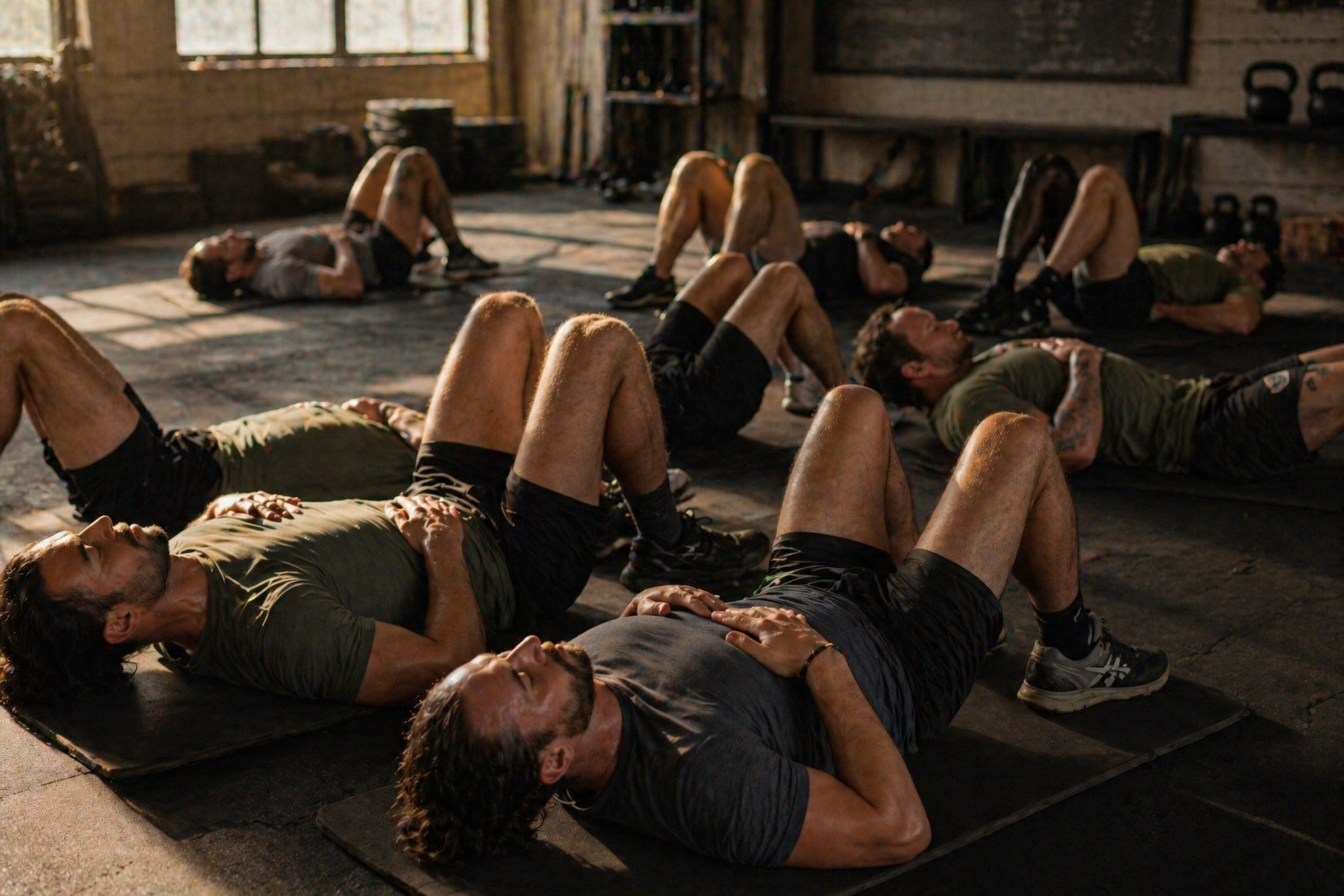
2. Supine Decompression (Foundation Training-Based)
At the end of the day—or when your body feels compressed—lie flat on your back.
Bring your legs together, bend your knees slightly. Press your heels lightly into the ground. Arms by your side with the palms facing down. Lengthen your spine by gently lifting your chest without arching your lower back. Squeeze your legs together, press your hands into the floor, tighten your abdomen and breathe as big as you can. Squeeze every muscle of the body - squeeze, squeeze, squeeze, then release everything at once.
Now breathe normally.
Stay here for 3–5 minutes. This is not passive rest. It is active reorganization. You are restoring alignment through the posterior chain, decompressing the spine, and reconnecting breath with structure. Over time, this teaches the body how to carry load without collapsing into tension.
3. Jaw + Breath Release Before Connection (Relational Reset)
Before a conversation that matters, pause.
Clench your jaw firmly for 3 seconds.
Then release it completely, let the tongue drop, lips soften, shoulders fall.
Take one slow breath in through your nose, and let it out fully.
Then step in.
This interrupts one of the most persistent stress loops in the body. The jaw is directly tied to the nervous system’s threat response. When it releases, the rest of the system follows. This simple act shifts you from guarded to present—allowing real connection instead of managed interaction.
Why This Works
The body is designed to move through cycles of activation and resolution, not remain in a constant state of low-grade tension. When stress is initiated but not completed, the nervous system stays partially activated, and different regions of the body begin to operate independently rather than as a coordinated whole. Contraction followed by full release re-engages the body’s natural reflex pathways—improving vagal tone, increasing circulation, and allowing the system to down-regulate below baseline. Practices like supine decompression go further by restoring structural alignment and integrating breath with movement, which reinforces stability at both a muscular and neurological level. When these systems begin working together again, the body shifts from fragmentation to coherence—and that coherence is what allows presence, connection, and ultimately, brotherhood to form both within the individual and between people.
About Dr. Rhett
Dr. Rhett Bogacz is a chiropractor and educator focused on posture, breath, and nervous system regulation. His work supports embodied formation and long-term resilience.
→ Learn more about Dr. Rhett’s work
La maggior parte delle persone pensa che la fratellanza inizi quando si trovano le persone giuste. In realtà, si tratta della fratellanza con te stesso e della consapevolezza di far parte del Corpo di Cristo – più capace di quanto tu creda. In pratica, inizia da qualcosa di molto più vicino. Inizia dal fatto che il tuo stesso sistema funzioni in modo armonioso o meno.
Puoi essere circondato da persone buone, persone di cui ti fidi, persone con cui ti impegni, eppure sentirti separato. Puoi sederti a un tavolo, far parte di una squadra, persino far parte di qualcosa di significativo, e comunque comportarti come se tutto dipendesse solo da te. Quella sensazione non è sempre psicologica. Spesso è fisiologica. È ciò che accade quando il tuo corpo non è integrato.
Quando la tensione, in tutte le sue forme, viene trattenuta e non viene mai risolta, la tua umanità si frammenta. Forse senti la mascella irrigidirsi e il respiro accorciarsi. Porti le spalle come una felpa con cappuccio, sollevate. Il tuo corpo è attivo, ma in qualche modo solo. Quello stato non rimane dentro di te. Si trasferisce in ogni interazione. Influenza il modo in cui ascolti, parli e rispondi. Rende più difficile la connessione, non perché tu non sia disposto, ma perché una parte di te sta ancora trattenendo qualcosa che non è stato portato a termine. È qui che l’idea di fratellanza deve espandersi.
Non è solo qualcosa che costruisci con gli altri. È qualcosa che deve prima essere ripristinato dentro di te. Il corpo, il respiro, il sistema nervoso e lo spirito devono tornare ad allinearsi. Senza questo, tutto il resto sembra uno sforzo. Puoi provare a connetterti, provare a guidare, provare a rimanere coinvolto, ma ti sembrerà sempre di stare gestendo te stesso invece di essere presente.
Questa è la differenza tra trattenere e dimorare. Quando Cristo dice: «Rimanete in me e io in voi», non sta descrivendo un’idea da comprendere. Sta descrivendo un modo di essere. Dimorare non è qualcosa che si ottiene con lo sforzo. È ciò che diventa possibile quando non sei più diviso dentro di te e il tuo corpo lo riconosce immediatamente.
Se stai trattenendo una tensione irrisolta, preparandoti a aggrapparti al passato quando la vita era facile prima dell’Attraversamento, non stai dimorando. Quando si trattiene qualcosa, qualcosa di incompiuto, questo influisce sul modo in cui si vive ogni cosa, compreso il rapporto con Cristo. Diventa qualcosa che si porta con sé invece di qualcosa che si vive dentro e che vive in noi.
Ecco perché il principio isometrico della Contrazione e Rilascio è importante. Quando si contrae deliberatamente il corpo e si attiva tutta la propria neurobiologia in modo completo e intenzionale, non si sta creando stress. Lo si sta organizzando. Si stanno portando tutte le parti del sistema in un unico momento unificato di coinvolgimento. Per un breve periodo, tutto lavora all’unisono. E poi il rilascio.
Ciò che segue non è qualcosa che controlli. Tutto il tuo corpo risponde da solo. Il respiro si espande, la tensione muscolare si rilassa e l’intero sistema umano si stabilizza al di sotto di dove era prima. Ciò che provi in quel momento non è semplice rilassamento o ASMR, sembra una risoluzione. Man mano che il ciclo si completa, in un certo senso ti risveglia. Cioè, Cristo dentro e intorno a te. In quel completamento, accade qualcosa di importante. Non stai più tenendo insieme te stesso. Sei semplicemente lì. Quello stato – per quanto breve possa essere – è più vicino a ciò che significa dimorare di quanto la maggior parte delle persone si renda conto. Il sistema non è più diviso. Il corpo non lavora contro se stesso. C’è coerenza. Da lì, la tua esperienza degli altri cambia. Sei in grado di rimanere presente in una conversazione senza gestirla. Sei in grado di ascoltare senza preparare la tua risposta. Sei in grado di rimanere connesso senza sentirti sopraffatto. Non perché la situazione sia più facile, ma perché non sei più frammentato al suo interno.
È lì che la fratellanza comincia a prendere forma, non come concetto, ma come realtà vissuta. Cominci a sperimentare cosa significa essere con gli altri, non solo al loro fianco. C’è meno sforzo nell’interazione e più stabilità nella stanza. Qualcosa regge, anche se non viene detto nulla di diverso. È qui che anche il tuo rapporto con Cristo diventa tangibile.
Non separato dalla tua esperienza fisica, ma presente al suo interno. Nei momenti in cui non ti stai più irrigidendo, in cui non stai più tenendo tutto insieme, inizi a riconoscere che non sei solo come pensavi di essere. Non stai portando il peso da solo. Sei sostenuto da qualcosa di più grande.
Prendersi cura della persona nella sua interezza, quindi, non significa gestire parti separate. Significa ripristinare il sistema affinché possa funzionare come un tutt'uno. Quando ciò accade, la mente è più lucida, il corpo è più stabile e lo spirito è più accessibile. Sei in grado di rimanere connesso a te stesso, agli altri e a Cristo, senza forzarlo.
1. Contrazione di tutto il sistema → Rilascio (Resetta il sistema)
A un certo punto della giornata, fermati e riunisci tutto il tuo sistema.
Stai in piedi o siediti con la schiena dritta. Stringi i pugni. Contrai le braccia, il petto, l’addome, le gambe e sì, anche la mascella. Mantieni la posizione per circa 8–10 secondi. Non a metà. Completamente.
Poi rilascia tutto in una volta.
Non affrettare ciò che succede dopo. Lascia che il respiro torni da solo. Lascia che il corpo si rilassi.
Quello che stai facendo qui non è “rilassarti”. Stai portando il sistema all’unità sotto tensione e poi gli permetti di risolversi come un tutt’uno. Questo è il modo più veloce per sentire la differenza tra un corpo che si porta da solo e un corpo che lavora insieme.
2. Decompressione supina (basata sul Foundation Training)
Alla fine della giornata — o quando il tuo corpo si sente compresso — sdraiati supino.
Avvicinate le gambe, piegate leggermente le ginocchia. Premete leggermente i talloni sul pavimento. Tenete le braccia lungo i fianchi con i palmi rivolti verso il basso. Allungate la colonna vertebrale sollevando delicatamente il petto senza inarcare la parte bassa della schiena. Stringete le gambe, premete le mani sul pavimento, contraete l’addome e respirate il più profondamente possibile. Contrarre ogni muscolo del corpo: stringete, stringete, stringete, poi rilasciate tutto in una volta.
Ora respirate normalmente.
Rimani in questa posizione per 3–5 minuti. Questo non è riposo passivo. È riorganizzazione attiva. Stai ripristinando l'allineamento attraverso la catena posteriore, decomprimendo la colonna vertebrale e ricollegando il respiro alla struttura. Col tempo, questo insegna al corpo come sostenere il carico senza cedere alla tensione.
3. Rilascio della mascella + respiro prima della connessione (reset relazionale)
Prima di una conversazione importante, fai una pausa.
Stringi forte la mascella per 3 secondi.
Poi rilasciala completamente, lascia cadere la lingua, ammorbidisci le labbra, abbassa le spalle.
Fai un respiro lento attraverso il naso ed espira completamente.
Poi entra in azione.
Questo interrompe uno dei circuiti di stress più persistenti nel corpo. La mascella è direttamente collegata alla risposta di minaccia del sistema nervoso. Quando si rilascia, il resto del sistema segue. Questo semplice atto ti sposta dallo stato di difesa a quello di presenza, consentendo una connessione reale invece di un'interazione controllata.
Perché funziona
Il corpo è progettato per muoversi attraverso cicli di attivazione e risoluzione, non per rimanere in uno stato costante di tensione di basso livello. Quando lo stress viene avviato ma non completato, il sistema nervoso rimane parzialmente attivato e diverse regioni del corpo iniziano a operare in modo indipendente piuttosto che come un insieme coordinato. La contrazione seguita da un rilascio completo riattiva i percorsi riflessi naturali del corpo, migliorando il tono vagale, aumentando la circolazione e consentendo al sistema di ridursi al di sotto del livello di base. Pratiche come la decompressione in posizione supina vanno oltre, ripristinando l'allineamento strutturale e integrando il respiro con il movimento, il che rafforza la stabilità sia a livello muscolare che neurologico. Quando questi sistemi ricominciano a lavorare insieme, il corpo passa dalla frammentazione alla coerenza — ed è proprio quella coerenza che permette alla presenza, alla connessione e, in ultima analisi, alla fratellanza di formarsi sia all'interno dell'individuo che tra le persone.
Informazioni sul dottor Rhett
Il dottor Rhett Bogacz è un chiropratico ed educatore specializzato in postura, respirazione e regolazione del sistema nervoso. Il suo lavoro sostiene la formazione incarnata e la resilienza a lungo termine.
Paolo Vizziello, Discipline & Daily Practice
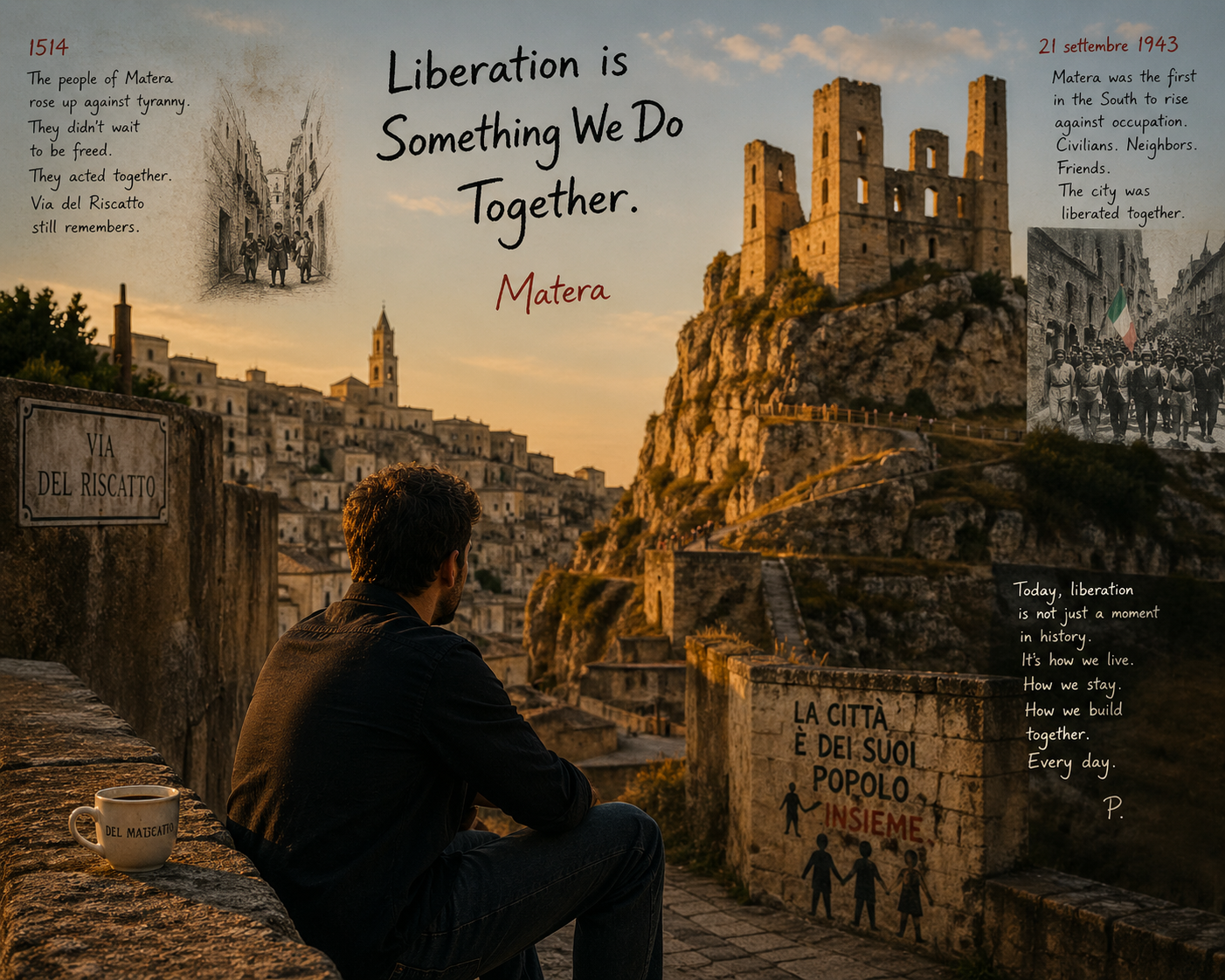
If you grow up in Matera, you don’t think of Liberation as one moment. At least, I don’t.
Liberation from Fascist rule is celebrated across Italy on April 25th and it matters.
If you visit, you’ll see the flags, and hear the conversations, you will know a tourist’s view of what it represents, the end of occupation, the fall of fascism, a country reclaiming itself. But here, that story never feels like it stands on its own. It sits on top of something older, something you pick up just by living here.
I grew up hearing about Count Tramontano. Not like a distant figure in a book, but like someone whose presence still lingers in the city. He ruled in the early 1500s, and everything about how he governed was about control. Heavy taxes, constant pressure, and a castle built not to protect the people, but to watch them. And at some point, the people had enough.
Not one person. Not a single act of defiance. The people came together. They waited for him as he left the Cathedral and ended his rule on what is now called Via del Riscatto, Redemption Street. The Castle he commissioned to be built was never finished. It still stands here, incomplete, as if the city itself decided it would be a monument of the will of the people. That’s something everyone from Matera, lives with.
Interestingly, four centuries later, something similar happened here again. In September 1943, two years before Liberation Day became what it is nationally, the Materano people rose up. Regular people, not soldiers, took their streets back from Nazi-Fascist forces. They used what they knew. The hills, the paths, the spaces around and tunnels under the Castle. They moved together, not as an army with an organized plan, but with a shared sense that they were not going to live that way anymore. Matera was the first city in Southern Italy to rise up in an armed insurrection against Nazi-Fascist occupation in 1943, so perhaps we or rather my ancestors from this region demonstrated what is possible when people work together.
About Paolo
Paolo Vizziello is a craftsman and formation guide whose reflections focus on discipline, presence, and daily practice rooted in lived experience.
Se cresci a Matera, non pensi alla Liberazione come a un singolo momento. Almeno, io non lo faccio.
La Liberazione dal regime fascista si celebra in tutta Italia il 25 aprile ed è un evento importante.
Se la visiti, vedrai le bandiere e sentirai le conversazioni, capirai cosa rappresenta dal punto di vista di un turista: la fine dell’occupazione, la caduta del fascismo, un paese che si riappropria di sé stesso. Ma qui, quella storia non sembra mai stare da sola. Si appoggia su qualcosa di più antico, qualcosa che capisci semplicemente vivendo qui.
Sono cresciuto sentendo parlare del conte Tramontano. Non come una figura lontana in un libro, ma come qualcuno la cui presenza aleggia ancora in città. Governò all’inizio del 1500 e tutto il suo modo di governare ruotava attorno al controllo. Tasse pesanti, pressione costante e un castello costruito non per proteggere il popolo, ma per sorvegliarlo. E a un certo punto, la gente ne ebbe abbastanza.
Non una sola persona. Non un singolo atto di sfida. La gente si è unita. L’ha aspettato mentre usciva dalla Cattedrale e ha posto fine al suo dominio in quella che oggi si chiama Via del Riscatto. Il castello che aveva fatto costruire non fu mai completato. È ancora lì, incompleto, come se la città stessa avesse deciso che sarebbe stato un monumento alla volontà del popolo. È qualcosa con cui tutti a Matera convivono.
È interessante notare che, quattro secoli dopo, qui accadde di nuovo qualcosa di simile. Nel settembre 1943, due anni prima che il Giorno della Liberazione diventasse ciò che è a livello nazionale, il popolo materano si ribellò. Gente comune, non soldati, si riprese le strade dalle forze nazifasciste. Usarono ciò che conoscevano. Le colline, i sentieri, gli spazi intorno e i cunicoli sotto il Castello. Si sono mossi insieme, non come un esercito con un piano organizzato, ma con la consapevolezza condivisa che non avrebbero più vissuto in quel modo. Matera è stata la prima città del Sud Italia a insorgere in un'insurrezione armata contro l'occupazione nazifascista nel 1943, quindi forse noi, o meglio i miei antenati di questa regione, abbiamo dimostrato cosa si può fare quando le persone lavorano insieme.
Informazioni su Paolo
Paolo Vizziello è un artigiano e guida formativa le cui riflessioni vertono sulla disciplina, la presenza e la pratica quotidiana radicata nell'esperienza vissuta.
→ Chi è Paolo
Protecting the Family Line
Unlike, America, In Italy, inheritance is not left entirely to personal preference. It is structured by law to reflect a cultural stance that the continuity of the family takes precedence over individual discretion.
Under Italian civil law, a portion of a person’s estate is reserved for close family members—typically children, spouses, and in some cases parents. This is known as legittima (the “legitimate share”). Regardless of what is written in a will, these heirs are entitled to a defined portion of the estate. What remains—the quota disponibile—is the only portion that can be freely distributed according to personal wishes.
This system can be surprising to people from cultures where inheritance is seen primarily as an individual right. In Italy, it is understood differently. Wealth, property, and assets are not considered purely personal achievements to be allocated at will, but part of a generational continuum that must be protected.
This does not eliminate disagreement or complexity. Families still navigate difficult conversations, differing expectations, and changing circumstances. But the structure itself reinforces a fundamental idea:
What you build does not belong only to you. It belongs, in part, to those who come after. In some ways generational teamwork is built into the legal system.
Something to think about: Are my decisions oriented only toward the present moment, or are they shaped by what I am leaving behind? From a S.M.A.R.T.E.R. perspective, this would be a legacy virtue.
A differenza degli Stati Uniti, in Italia l’eredità non è lasciata interamente alla discrezionalità personale. È regolata dalla legge in modo da riflettere una visione culturale secondo cui la continuità della famiglia ha la precedenza sulla discrezionalità individuale.
Secondo il diritto civile italiano, una parte del patrimonio di una persona è riservata ai familiari stretti, in genere figli, coniugi e, in alcuni casi, genitori. Questa parte è nota come legittima. Indipendentemente da quanto scritto nel testamento, questi eredi hanno diritto a una quota definita del patrimonio. Ciò che rimane, la quota disponibile, è l’unica parte che può essere distribuita liberamente secondo i desideri personali.
Questo sistema può sorprendere chi proviene da culture in cui l’eredità è vista principalmente come un diritto individuale. In Italia, la concezione è diversa. Ricchezza, proprietà e beni non sono considerati risultati puramente personali da allocare a proprio piacimento, ma parte di un continuum generazionale che deve essere protetto.
Ciò non elimina il disaccordo o la complessità. Le famiglie devono comunque affrontare conversazioni difficili, aspettative divergenti e circostanze mutevoli. Ma la struttura stessa rafforza un’idea fondamentale:
ciò che costruisci non appartiene solo a te. Appartiene, in parte, a coloro che verranno dopo. In un certo senso, il lavoro di squadra generazionale è integrato nel sistema giuridico.
Qualcosa su cui riflettere: le mie decisioni sono orientate solo al momento presente, o sono plasmate da ciò che lascerò dietro di me? Da una prospettiva S.M.A.R.T.E.R., questa sarebbe una virtù dell’eredità.
Jake Claxton, Fatherhood, Formation & the Track

I’ll be honest… most of the time, my instinct is to handle things myself. That’s just how I am wired. You take care of your responsibilities, you don’t complain, and you don’t make things bigger than they need to be. You keep moving. That works… until it doesn’t. Lately, I’ve noticed something. Not a big moment, just a pattern. Things feel heavier when I keep them to myself. Same work, same day, but different weight. And it’s not because the situation changed. It’s because I started carrying it alone.
What’s been different this week is simple. I’ve stayed in it with people a little more. I’ve said a little more than I normally would. Not everything, but enough to be real. And I’ve paid attention when someone else is off instead of just pushing through my own day.
It doesn’t fix everything, but it changes how it feels. I think a lot of us believe strength is about holding it together on our own. But I’m starting to see it differently. Strength might actually be staying connected when it would be easier to pull back.
Let’s not overcomplicate it, but just staying in the conversation. Offering help when you see it’s needed. Letting someone else step in when you don’t have it all figured out.
That’s where things start to change. You’re still responsible. You’re still doing your part. But you’re not carrying all of it by yourself. And that makes a difference. Not in theory. In how you show up tomorrow.
About Jake
Jake Claxton is a husband, father of two sons, and founder of Ride By Design. His reflections draw from family life, faith, and lessons learned on the motocross track.
Sarò sincera… il più delle volte, il mio istinto è quello di occuparmi delle cose da sola. Sono fatta così. Ci si prende cura delle proprie responsabilità, non ci si lamenta e non si ingigantiscono le cose più del necessario. Si va avanti. Funziona… finché non smette di funzionare. Ultimamente ho notato una cosa. Niente di eclatante, solo uno schema ricorrente. Le cose sembrano più pesanti quando le tengo tutte per me. Stesso lavoro, stessa giornata, ma un peso diverso. E non è perché la situazione è cambiata. È perché ho iniziato a portarne il peso da sola.
La differenza di questa settimana è semplice. Mi sono aperta un po' di più con le persone. Ho parlato un po' più del solito. Non di tutto, ma abbastanza da essere sincera. E ho prestato attenzione quando qualcun altro non stava bene, invece di limitarmi a portare avanti la mia giornata.
Non risolve tutto, ma cambia come ci si sente. Penso che molti di noi credano che la forza stia nel tenere tutto insieme da soli. Ma sto iniziando a vederla in modo diverso. La forza potrebbe in realtà essere rimanere in contatto quando sarebbe più facile tirarsi indietro.
Non complicamoci troppo la vita, ma restiamo semplicemente in contatto. Offriamo aiuto quando vediamo che è necessario. Lasciamo che qualcun altro intervenga quando non abbiamo le idee chiare.
È lì che le cose iniziano a cambiare. Sei ancora responsabile. Stai ancora facendo la tua parte. Ma non stai portando tutto il peso da solo. E questo fa la differenza. Non in teoria. Nel modo in cui ti presenterai domani.
Informazioni su Jake
Jake Claxton è marito, padre di due figli e fondatore di Ride By Design. Le sue riflessioni attingono dalla vita familiare, dalla fede e dalle lezioni apprese sulla pista di motocross.
“Sènza cumpàgn, manch u’ pane s’ magna.”
Literal Translation: Without people, not even bread is worth eating.
Bread is the most basic thing, you can eat it alone. But the proverb reminds us that even the simplest things in life lose their meaning when they’re not shared. It’s not about survival. It’s about fullness, in Matera and South Italy:
Life is meant to be shared, not managed alone
Work, meals, struggles, and success all carry more meaning togethe
Isolation, even with enough resources, is a kind of poverty
So the proverb isn’t just about food. It’s about teamwork, relationship, and belonging—the idea that what sustains you physically is never enough without what sustains you relationally.
Traduzione letterale: Senza persone, nemmeno il pane vale la pena di essere mangiato.
Il pane è la cosa più elementare, si può mangiare da soli. Ma il proverbio ci ricorda che anche le cose più semplici della vita perdono il loro significato quando non vengono condivise. Non si tratta di sopravvivenza. Si tratta di pienezza, a Matera e nel Sud Italia:
La vita è fatta per essere condivisa, non gestita da soli
Il lavoro, i pasti, le difficoltà e i successi hanno tutti più significato se vissuti insieme
L'isolamento, anche con risorse sufficienti, è una forma di povertà
Quindi il proverbio non riguarda solo il cibo. Riguarda il lavoro di squadra, le relazioni e il senso di appartenenza: l'idea che ciò che ti sostiene fisicamente non è mai abbastanza senza ciò che ti sostiene relazionalmente.
UMANIAMO® Spritz

Photo credit Tau Matera
There’s a moment before the meal that matters more than most people realize.
In Italy, it’s the aperitivo—not just a drink, but a transition. You don’t rush into dinner. You gather first. You stand, you sit, you reconnect. The day slows down enough for people to come back into rhythm with each other. It’s where conversation begins, where tension softens, where presence returns.
The spritz lives in that space.
And this week, we offer something slightly different.
The UMANIAMO® Spritz—a Campari Spritz with a small addition. A kiss of Cointreau. Just enough to bring a subtle brightness to the bitterness. Not to overpower it, but to round it. To remind you that even what is sharp or heavy can be held differently when something else is introduced.
That’s the spirit of the table.
The spritz began in Northern Italy in the 19th century, when Austro-Hungarian soldiers diluted local wine with water—a spritz. Over time, it evolved into what we know today: sparkling wine, a bitter liqueur, and soda.
Campari, created in 1860, became a central part of the aperitivo tradition. Its bitterness wasn’t meant to be avoided. It was meant to awaken the palate, to prepare the body, to mark the shift from doing to being.
The UMANIAMO® Spritz keeps that tradition—but adds something small.
A touch of sweetness. A note of citrus. Not to remove the bitterness. But to meet it.
Ingredients:
3 oz Prosecco
2 oz Campari
0.5 oz Cointreau (a light “kiss”)
1 oz soda water
Ice
Orange slice (for garnish)
Fill a large wine glass with ice. Pour the Prosecco first, then Campari, then the Cointreau. Add a splash of soda water. Stir gently. Garnish with an orange slice.
Simple and Balanced with Intention.
This is not just a drink. It’s a signal and a way of saying: we’re here now.
If there’s someone new this week, invite them in. If someone needs encouragement, offer it here—without expectation, without performance.
Because the aperitivo reminds us of something we often forget: Connection doesn’t start when everything is ready. It starts when you pause… and make room.
C'è un momento prima del pasto che conta più di quanto la maggior parte delle persone creda.
In Italia è l'aperitivo: non solo un drink, ma un momento di transizione. Non ci si precipita a cena. Prima ci si ritrova. Si sta in piedi, ci si siede, ci si ritrova. La giornata rallenta quel tanto che basta perché le persone ritrovino il loro ritmo comune. È lì che inizia la conversazione, dove la tensione si allenta, dove torna la presenza.
Lo spritz vive in quello spazio.
E questa settimana, vi proponiamo qualcosa di leggermente diverso.
L’UMANIAMO® Spritz: uno Spritz al Campari con una piccola aggiunta. Un bacio di Cointreau. Quanto basta per conferire una sottile luminosità all’amaro. Non per sovrastarlo, ma per arrotondarlo. Per ricordarvi che anche ciò che è tagliente o pesante può essere percepito in modo diverso quando viene introdotto qualcos’altro.
Questo è lo spirito della tavola.
Lo spritz ha avuto origine nel Nord Italia nel XIX secolo, quando i soldati austro-ungarici diluivano il vino locale con l’acqua: uno spritz. Nel corso del tempo, si è evoluto in ciò che conosciamo oggi: spumante, un liquore amaro e soda.
Il Campari, creato nel 1860, è diventato una parte centrale della tradizione dell’aperitivo. La sua amarezza non era pensata per essere evitata. Era pensata per risvegliare il palato, per preparare il corpo, per segnare il passaggio dall’agire all’essere.
Lo Spritz UMANIAMO® mantiene quella tradizione, ma aggiunge un piccolo tocco.
Un tocco di dolcezza. Una nota agrumata. Non per eliminare l’amaro. Ma per incontrarlo.
Ingredienti:
90 ml di Prosecco
60 ml di Campari
15 ml di Cointreau (un leggero “bacio”)
30 ml di acqua gassata
Ghiaccio
Fetta d’arancia (per guarnire)
Riempite un bicchiere da vino capiente con ghiaccio. Versate prima il Prosecco, poi il Campari e infine il Cointreau. Aggiungete un goccio di acqua gassata. Mescolate delicatamente. Guarnite con una fetta d’arancia.
Semplice. Equilibrato. Voluto.
Questo non è solo un drink. È un segnale e un modo per dire: siamo qui, adesso.
Se c’è qualcuno di nuovo questa settimana, invitalo a unirsi a noi. Se qualcuno ha bisogno di incoraggiamento, offrilo qui — senza aspettative, senza pretese.
Perché l’aperitivo ci ricorda qualcosa che spesso dimentichiamo: la connessione non inizia quando tutto è pronto. Inizia quando ti fermi… e fai spazio.
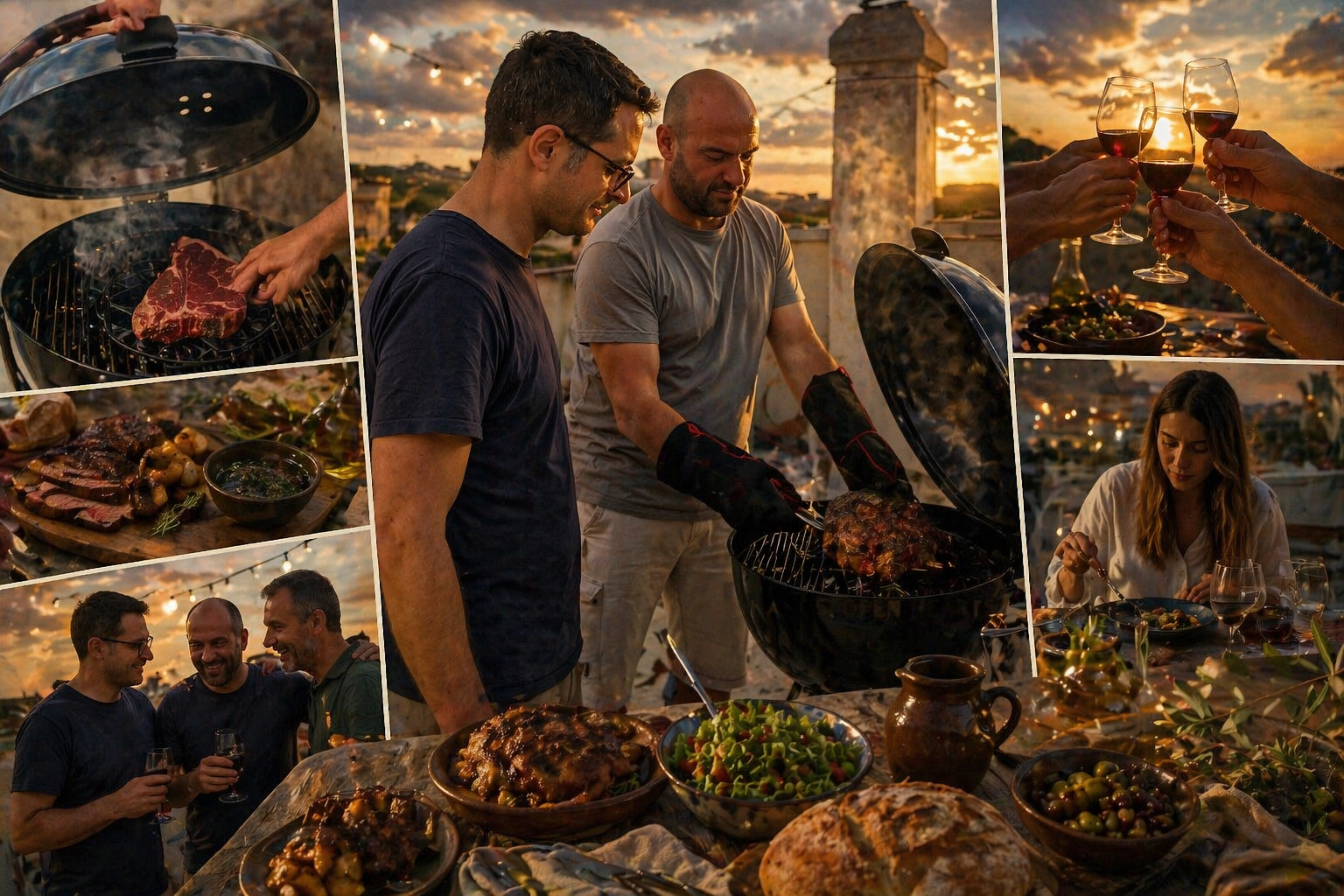
If you are like me, you can feel it sometimes, just sitting here. The weight of things you haven’t said. The questions you don’t have answers to yet. The quiet sense that something is shifting, even if you can’t explain it. And at the same time, there are other people at the table. Close enough to reach, but not always easy to let in. These days feel very unsettling in the Crossing and what may appear to be a larger global crossing.
Maybe that’s where this week lands. We are not solving it. Just in noticing that you’re not the only one carrying something.
“Don’t give up, it’s just the weight of the world…you are loved.” - Josh Groban
Those words don’t take anything away, but they change how it feels. Not everything has to be figured out tonight. Not everything has to be carried alone. As we read in Matthew 11:28, “Come to me, all who are weary and burdened, and I will give you rest.” Maybe it’s as simple as staying here a little longer. Letting the conversation go one step deeper. Saying something real instead of something safe. Or just listening, and letting someone else do the same and remembering in the brotherhood, Christ is the only constant.
This week invite someone in—to sit, to share, to be part of something they didn’t expect.
Se sei come me, a volte lo senti, semplicemente stando seduto qui. Il peso delle cose che non hai detto. Le domande a cui non hai ancora una risposta. La silenziosa sensazione che qualcosa stia cambiando, anche se non riesci a spiegarlo. E allo stesso tempo, ci sono altre persone al tavolo. Abbastanza vicine da poterle raggiungere, ma non sempre facili da far entrare. Questi giorni sembrano molto inquietanti nel Crossing e in quello che potrebbe sembrare un più ampio attraversamento globale.
Forse è lì che si colloca questa settimana. Non stiamo risolvendo nulla. Solo nel notare che non sei l'unico a portare un peso.
“Non arrenderti, è solo il peso del mondo… sei amato.” - Josh Groban
Quelle parole non tolgono nulla, ma cambiano come ci si sente. Non tutto deve essere risolto stasera. Non tutto deve essere portato da soli. Come leggiamo in Matteo 11:28: “Venite a me, voi tutti che siete affaticati e oppressi, e io vi darò riposo.” Forse è semplice come restare qui un po' più a lungo. Lasciare che la conversazione vada un po' più in profondità. Dire qualcosa di vero invece di qualcosa di sicuro. O semplicemente ascoltare, e lasciare che qualcun altro faccia lo stesso, ricordando che nella fratellanza, Cristo è l'unica costante.
Questa settimana invita qualcuno a entrare: a sedersi, a condividere, a far parte di qualcosa che non si aspettava.
Cosiamo | Founder, UMANIAMO® | Humaning Architecture
Please, stop trying to make everything make sense on your own and please do not rely on AI or the internet for help. Wait long enough to recognize that clarity usually doesn’t come in isolation not in the presence of those wanting to sell you something. What we’ve experienced this week is not something to figure out and move past. It is something to step into more fully. The Crossing does not resolve itself by effort. It opens through relationship and through remaining, through staying connected, through allowing something to form that cannot be formed alone.
This is where brotherhood with Christ becomes real.
Not as an idea or belief you hold, but as a way you begin to live. To remain in Him is not to withdraw from the world, but to move within it differently. You begin to notice that you are not the source of everything you carry. You are part of something that holds you as well. And when that becomes real, even in small ways, your presence changes. You are less reactive, less isolated, more able to stay with others without needing to control or withdraw.
27 Aprile — Santa Zita
Patron saint of domestic workers, Santa Zita lived a life of humble service in Lucca. Known for her generosity and quiet devotion, she reminds us that dignity is found in ordinary work done faithfully over time.
28 Aprile — San Pietro Chanel
A missionary and martyr, Saint Peter Chanel carried the Gospel across great distances. His life reflects perseverance and sacrifice, and the quiet strength required to remain committed in unfamiliar or difficult conditions.
29 Aprile — Santa Caterina da Siena
One of Italy’s most revered saints, Catherine of Siena is remembered for her courage, intellect, and unwavering faith. A Doctor of the Church, she lived in a time of division and called leaders back to truth with both conviction and humility.
30 Aprile — San Pio V
A reformer and Pope during a complex period in Church history, Saint Pius V is known for discipline, clarity, and the willingness to uphold order in times of uncertainty.
1 Maggio — San Giuseppe Lavoratore
On this day, Italy celebrates both labor and Saint Joseph the Worker. He stands as a model of integrity, craftsmanship, and quiet responsibility—a man who built, provided, and remained faithful without seeking recognition.
2 Maggio — Sant’Atanasio
A defender of doctrine during times of confusion, Saint Athanasius represents steadfastness. He remained firm in truth even when it isolated him, reminding us that clarity often requires endurance.
3 Maggio — Santi Filippo e Giacomo
Apostles of Christ, Philip and James are remembered together—a fitting image for this week’s theme of teamwork and brotherhood. Their shared mission reflects something essential: that faith and formation are not carried alone, but lived in relationship.
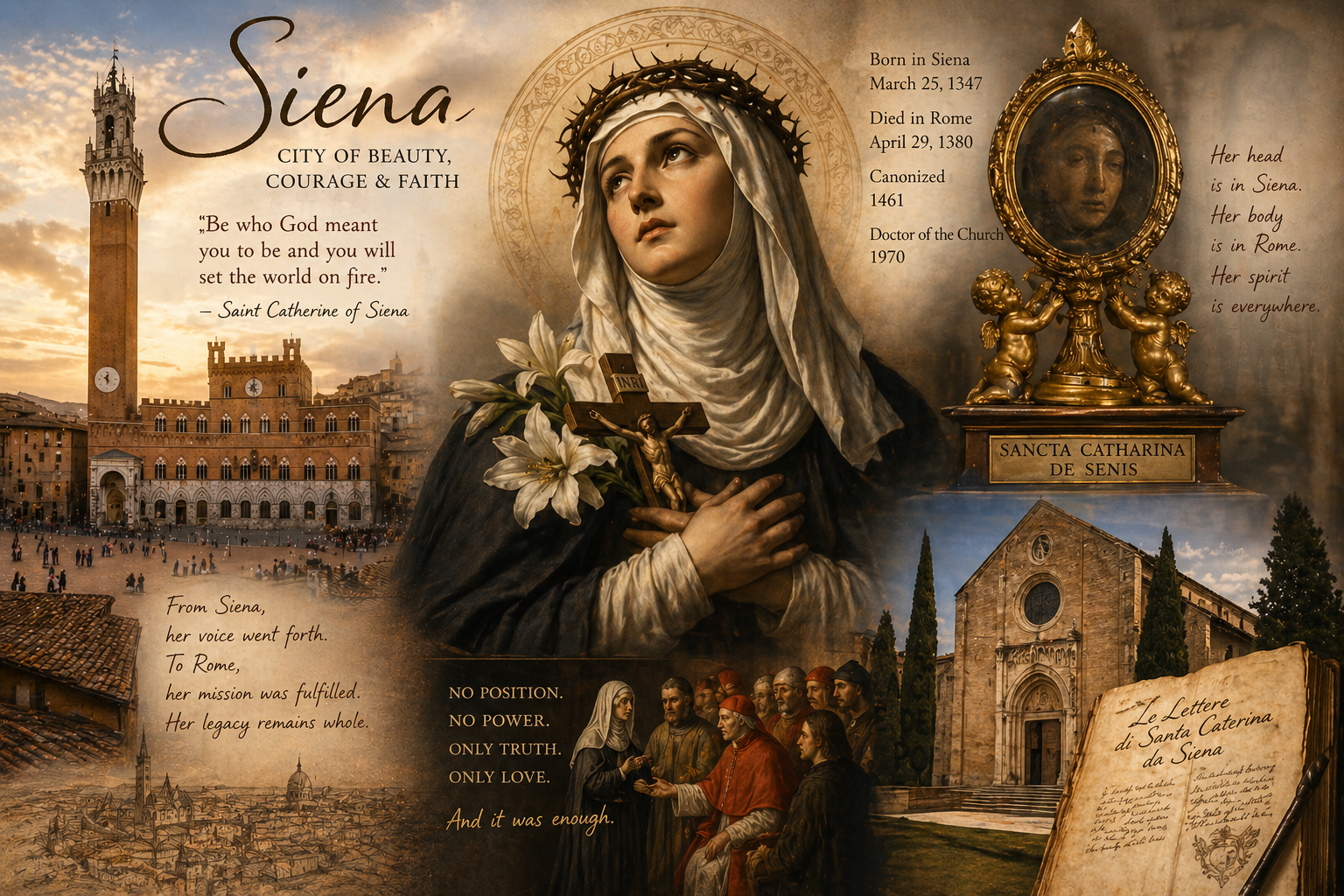
Some lives feel distant, beautiful, inspiring, but removed from anything we recognize in our own experience. Catherine of Siena is not one of those lives.
She feels close and her legacy lives even today. Her life was easy, since she lived in the middle of a huge amount of tension, within the Church, within her city, within herself. Born in 1347 in Siena, and one of 25 children in her family, she had no formal education, no title, no institutional or familial authority, yet, she became a forceful voice that the leaders of her time could not ignore.
Her strength did not come from position it came from her journey of Humaning.
From a young age, she entered into a disciplined life of prayer, silence, and interior work. But that life did not remove her from the world. It grounded her within it. When the Church fractured during the schism, and the papacy moved from Rome to Avignon, Catherine did something that should not have been possible. She wrote directly to those in power: bishops, rulers, and even the Pope, calling them back to integrity, back to unity, back to Rome.
She did not write as someone trying to win an argument. She wrote as someone who loved enough to tell the truth. And she did not stay behind her words. She traveled. She met leaders face-to-face. She entered rooms where she had no formal standing and spoke with a clarity that came from a life fully aligned. Over time, her voice carried weight, not because she demanded it, but because she embodied it. Her influence contributed to Pope Gregory XI’s return to Rome, but her legacy was never about a single outcome. It was about coherence. She lived what she spoke and spoke what she believed. She acted from a place that was integrated.
This integration also cost her. Catherine died at thirty-three, her body worn down by years of fasting, service, and the intensity of her devotion. Those who were with her at the end described a kind of peace that did not match the physical condition of her body. It was as if her life had been fully spent, not diminished, but given.
And then something happened that stays with you especially if you’ve been to Siena as I have. Her body did not remain whole. Her head was taken back to Siena, the city that formed her, while her body remained in Rome. Today, you can stand in the Basilica of San Domenico and see her head. It is not symbolic. It is real. It is direct. And depending on how it is presented to you, it can feel unsettling, even difficult to understand.
She helped unite something that was broken. Perhaps that was because she - herself, was integrated, mind, body, and spirit aligned in one direction. And yet, after her death, she was physically divided between two places Rome, where she served the Church, and Siena, where she belonged.
About names...
Names are not accidental. They carry memory, identity, and invitation. To remember a name is to remember that we are part of something that began before us and will continue after us. In a week centered on teamwork and shared life, these names remind us: No one builds alone, No one carries the work entirely by themselves and what endures is often formed quietly through lives that remained faithful over time.
Per favore, smettila di cercare di dare un senso a tutto da solo e non affidarti all’intelligenza artificiale o a Internet per trovare aiuto. Aspetta abbastanza a lungo da riconoscere che la chiarezza di solito non arriva nell'isolamento, né in presenza di chi vuole venderti qualcosa. Ciò che abbiamo vissuto questa settimana non è qualcosa da capire e superare. È qualcosa in cui entrare più pienamente. Il Passaggio non si risolve con lo sforzo. Si apre attraverso la relazione e il rimanere, attraverso il restare connessi, attraverso il permettere che si formi qualcosa che non può essere formato da soli.
È qui che la fratellanza con Cristo diventa reale.
Non come un'idea o una convinzione che hai, ma come un modo in cui inizi a vivere. Rimanere in Lui non significa ritirarsi dal mondo, ma muoversi al suo interno in modo diverso. Inizi a notare che non sei la fonte di tutto ciò che porti con te. Sei parte di qualcosa che sostiene anche te. E quando questo diventa reale, anche in piccoli modi, la tua presenza cambia. Sei meno reattivo, meno isolato, più capace di stare con gli altri senza bisogno di controllare o ritirarti.
27 aprile — Santa Zita
Patrona delle domestiche, Santa Zita visse una vita di umile servizio a Lucca. Nota per la sua generosità e la sua silenziosa devozione, ci ricorda che la dignità si trova nel lavoro ordinario svolto con fedeltà nel tempo.
28 aprile — San Pietro Chanel
Missionario e martire, San Pietro Chanel portò il Vangelo attraverso grandi distanze. La sua vita riflette perseveranza e sacrificio, e la forza silenziosa necessaria per rimanere fedeli all’impegno in condizioni sconosciute o difficili.
29 aprile — Santa Caterina da Siena
Una delle sante più venerate d’Italia, Caterina da Siena è ricordata per il suo coraggio, il suo intelletto e la sua fede incrollabile. Dottoressa della Chiesa, visse in un’epoca di divisioni e richiamò i leader alla verità con convinzione e umiltà.
30 aprile — San Pio V
Riformatore e Papa in un periodo complesso della storia della Chiesa, San Pio V è noto per la disciplina, la chiarezza e la volontà di sostenere l’ordine in tempi di incertezza.
1 maggio — San Giuseppe Lavoratore
In questo giorno, l’Italia celebra sia il lavoro che San Giuseppe Lavoratore. Egli è un modello di integrità, maestria artigianale e silenziosa responsabilità: un uomo che ha costruito, provveduto e è rimasto fedele senza cercare riconoscimenti.
2 maggio — Sant’Atanasio
Difensore della dottrina in tempi di confusione, Sant’Atanasio rappresenta la fermezza. Rimase saldo nella verità anche quando ciò lo isolò, ricordandoci che la chiarezza spesso richiede perseveranza.
3 maggio — Santi Filippo e Giacomo
Apostoli di Cristo, Filippo e Giacomo vengono ricordati insieme — un’immagine appropriata per il tema di questa settimana: lavoro di squadra e fratellanza. La loro missione condivisa riflette qualcosa di essenziale: che la fede e la formazione non si portano avanti da soli, ma si vivono in relazione.
Alcune vite sembrano lontane, belle, ispiratrici, ma distanti da qualsiasi cosa riconosciamo nella nostra esperienza. Caterina da Siena non è una di quelle vite.
Lei ci sembra vicina e la sua eredità vive ancora oggi. La sua vita non fu facile, poiché visse in mezzo a un’enorme tensione, all’interno della Chiesa, nella sua città, dentro di sé. Nata nel 1347 a Siena, una dei 25 figli della sua famiglia, non aveva un'istruzione formale, né un titolo, né un'autorità istituzionale o familiare, eppure divenne una voce potente che i leader del suo tempo non potevano ignorare.
La sua forza non derivava dalla posizione, ma dal suo percorso di umanizzazione.
Fin da giovane, intraprese una vita disciplinata di preghiera, silenzio e lavoro interiore. Ma quella vita non la allontanò dal mondo. La radicò in esso. Quando la Chiesa si frammentò durante lo scisma e il papato si trasferì da Roma ad Avignone, Caterina fece qualcosa che non avrebbe dovuto essere possibile. Scrisse direttamente a chi deteneva il potere: vescovi, governanti e persino il Papa, richiamandoli all’integrità, all’unità, a Roma.
Non scrisse come qualcuno che cercava di vincere una discussione. Scriveva come una persona che amava abbastanza da dire la verità. E non si limitava alle parole. Viaggiava. Incontrava i leader faccia a faccia. Entrava in stanze dove non aveva alcuna autorità formale e parlava con una chiarezza che derivava da una vita pienamente coerente. Col tempo, la sua voce acquisì peso, non perché lo esigesse, ma perché lo incarnava. La sua influenza contribuì al ritorno a Roma di papa Gregorio XI, ma la sua eredità non riguardò mai un singolo risultato. Riguardava la coerenza. Ha vissuto ciò che diceva e ha detto ciò in cui credeva. Ha agito da un luogo che era integrato.
Questa integrazione le è anche costata cara. Caterina morì a trentatré anni, il suo corpo logorato da anni di digiuno, servizio e dall’intensità della sua devozione. Coloro che erano con lei alla fine descrissero una sorta di pace che non corrispondeva alle condizioni fisiche del suo corpo. Era come se la sua vita fosse stata spesa appieno, non diminuita, ma donata.
E poi è successo qualcosa che ti rimane dentro, specialmente se sei stato a Siena come me. Il suo corpo non è rimasto integro. La sua testa è stata riportata a Siena, la città che l’ha formata, mentre il corpo è rimasto a Roma. Oggi, puoi stare nella Basilica di San Domenico e vedere la sua testa. Non è simbolico. È reale. È diretto. E a seconda di come ti viene presentato, può sembrare inquietante, persino difficile da capire.
Ha contribuito a unire qualcosa che era spezzato. Forse perché lei stessa era un tutt'uno, mente, corpo e spirito allineati in un'unica direzione. Eppure, dopo la sua morte, è stata fisicamente divisa tra due luoghi: Roma, dove ha servito la Chiesa, e Siena, dove apparteneva.
A proposito dei nomi...
I nomi non sono casuali. Portano con sé memoria, identità e invito. Ricordare un nome significa ricordare che siamo parte di qualcosa che è iniziato prima di noi e che continuerà dopo di noi. In una settimana incentrata sul lavoro di squadra e sulla vita condivisa, questi nomi ci ricordano: nessuno costruisce da solo, nessuno porta avanti il lavoro interamente da solo e ciò che dura nel tempo spesso si forma silenziosamente attraverso vite che sono rimaste fedeli nel tempo.
Cosiamo | Founder, UMANIAMO® | Humaning Architecture
As we gather at the Sunday Table, we do so under a shared commitment to one another.
The reflections, practices, and wellbeing and health insights offered here are meant to serve your formation—to support awareness, responsibility, and growth as you continue Humaning in your own life and relationships. They are not medical advice, nor are they intended to diagnose, treat, or replace the guidance of qualified healthcare professionals.
In the spirit of the UMANIAMOⓇ New Leadership Covenant, we hold a deeper responsibility.
We honor the dignity of the whole person, body, mind, and spirit. We practice accountability, not only for our actions, but for how we care for ourselves and others. We engage with these practices with wisdom, discernment, and respect for our own limits. And we seek appropriate guidance when needed, recognizing that strength includes knowing when to ask for help.
This is not a disclaimer of distance, it is a covenant of presence.
We commit to learning together, acting responsibly, and supporting one another with integrity so that what we build, in ourselves and with each other, is grounded, sustainable, and true.
We are human together, or not at all.
Cosiamo | Fondatore, UMANIAMO® | Humaning Architecture
Quando ci riuniamo alla Tavola della Domenica, lo facciamo sulla base di un impegno reciproco.
Le riflessioni, le pratiche e le intuizioni sul benessere e sulla salute qui offerte hanno lo scopo di servire alla vostra formazione, per sostenere la consapevolezza, la responsabilità e la crescita mentre continuate a praticare l'Humaning nella vostra vita e nelle vostre relazioni. Non si tratta di consigli medici, né sono intese a diagnosticare, curare o sostituire la guida di professionisti sanitari qualificati.
Nello spirito della Nuova Alleanza di Leadership di UMANIAMOⓇ, abbiamo una responsabilità più profonda.
Onoriamo la dignità della persona nella sua interezza: corpo, mente e spirito. Praticamo la responsabilità, non solo per le nostre azioni, ma anche per il modo in cui ci prendiamo cura di noi stessi e degli altri. Ci impegniamo in queste pratiche con saggezza, discernimento e rispetto per i nostri limiti. E cerchiamo una guida appropriata quando necessario, riconoscendo che la forza include anche il sapere quando chiedere aiuto.
Questo non è un rifiuto di distanza, è un patto di presenza.
Ci impegniamo a imparare insieme, ad agire in modo responsabile e a sostenerci a vicenda con integrità, affinché ciò che costruiamo, in noi stessi e tra di noi, sia solido, sostenibile e vero.
Siamo umani insieme, o non lo siamo affatto.