The Edge
We are Human Together or Not at All.
Cosiamo | Founder, UMANIAMO® | Humaning Architecture
There is a curious transition that occurs after Pentecost. For months the Church moves through a sequence of extraordinary events. We wait for Christ. We celebrate His birth. We accompany Him into the desert. We stand at the foot of the Cross. We witness the Resurrection. We receive the fire of Pentecost. The liturgical year carries us through one great revelation after another until it finally arrives at Ordinary Time.
At first glance, Ordinary Time seems almost anticlimactic. The great feasts are over and the celebrations wind down as the calendar feels, well, ordinary. In the northern hemisphere it is also a transition to summer - graduations, summer break, and a slower life in many ways. Perhaps this is where our deeper work begins.
The Apostles received the Holy Spirit at Pentecost, but Pentecost itself did not transform them into Builders overnight. The fire descended in a moment. The integration of that fire would take a lifetime - that’s the same for all of us.
Most of us spend our lives waiting for extraordinary moments while overlooking the quiet formation taking place within ordinary ones. We imagine that wisdom arrives through dramatic revelations, kundalini awakening, or psychedelics, when more often it arrives through patient attention. We look for answers when perhaps what God is first offering us is sight.
Over the past several weeks, I have found myself reflecting on how many important things I almost failed to see. Some of these realizations emerged while sitting around tables in Matera. Others appeared in conversations with neighbors. Still others surfaced unexpectedly while speaking with strangers on an airplane. None of these moments felt in and of themselves as significant when they began. There were no signs pointing toward revelation. There was no sense that a lesson was about to emerge. There were only ordinary encounters unfolding in ordinary places - well if you consider a 10,000 year old city ordinary.
When I look back upon them now, I realize that each contained something I could not see when I first arrived back in September or initially 3.5 years ago.
What I thought was envy revealed itself as grief. What I thought was resistance revealed itself as longing. What I thought was a simple neighborhood gathering revealed itself as belonging. What I thought was a conversation about aviation became a conversation about judgment, responsibility, technology, and what remains uniquely human in an increasingly automated world. The events themselves did not change, but my ability to see them did.
Ignatius of Loyola understood this reality better than most. Many people associate Ignatian spirituality with discernment, and rightly so. Yet discernment is not where Ignatius begins. Before we can discern wisely, we must learn to see truthfully. Before we can recognize God's invitation, we must first become attentive enough to notice where He is already present. This is why Ignatius placed such importance on what we might call the discipline of attention.
In the Dynamics of the Ignatian Spiritual Exercises, Fr. Howard Gray, S.J. describes the Ignatian path through three movements: attentiveness, reverence, and devotion. First we learn to look honestly at what is before us. Then we learn to recognize its dignity and goodness. Finally, we allow what we have seen to shape how we live.
Learn more about The Dynamics of the Spiritual Exercises, a series of ten lectures given by Fr. Howard Gray, S.J. at Holy Trinity Parish in Georgetown, Washington, D.C. https://president.georgetown.edu/projects/archive/spiritual-exercises/
The sequence appears simple, yet it challenges nearly every habit of modern life.
We live in a culture that encourages immediate conclusions. We form opinions quickly. We categorize people quickly. We reward certainty and confidence even when understanding remains incomplete. We move from observation to judgment so rapidly that we often never encounter reality itself. Maybe this is one reason. Perhaps this is why so many people feel overwhelmed and exhausted. It’s not a lack of information but a famine of interpretation.
It’s almost funny in a way how remarkably skilled we are at explaining reality in abstract terms without first experiencing it.
The “edge” interrupts this habit.
Whether it is the edge of a ravine, the edge of a conversation, the edge of a relationship, or the edge of a difficult question, the edge demands attention. It slows us down. It reminds us that we don’t know everything and instead it invites curiosity where certainty once stood.
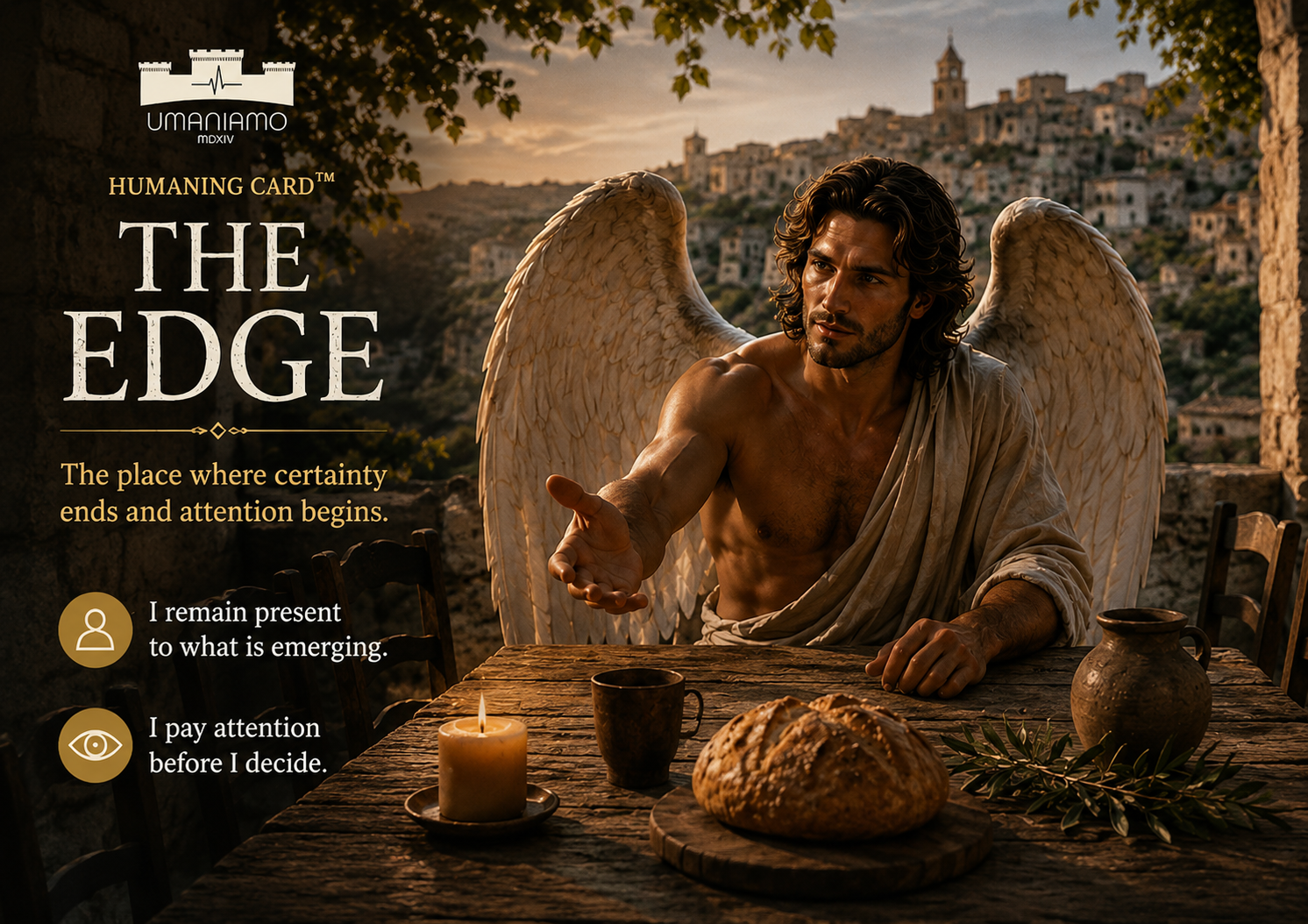
For me, the image that continues to return is not a mountain peak or a battlefield. It is a table. Christ spent an extraordinary amount of time around tables. He taught around tables. He celebrated around tables. He reconciled around tables. He revealed Himself around tables. Even after the Resurrection, He continued gathering people around meals.
The older I become, the younger I feel because this is an idea that has lived in me for decades. A table creates conditions that few other places can create. Around a table, people become visible to one another - stories emerge, followed by questions, and differences.The masks we wear throughout the day begin to thin and become more irrelevant to the truth beyond the masks. We discover that we do not need to think alike to belong together.
In fact, some of the most important conversations happen precisely because we do not think alike. Modern “mental models” are about finding like minded people - or your tribe - but consider:
The Apostles were not like-minded men.
The first Jesuits were not like-minded men.
Builders are rarely if ever like-minded people.
What they share is not uniformity but commitment. They share a willingness to remain present long enough to encounter something larger than ourselves. The Edge is not where we become someone else; it is where we become more fully ourselves. As Marcus Buckingham observes in his book, “Nine Lies about Work,” the people who make the greatest contribution are often "spiky" individuals whose strengths and perspectives do not fit neatly into conventional expectations. Growth occurs not by sanding down those edges, but by learning how to use them wisely in service of something greater than ourselves instead of searching for like minded people.
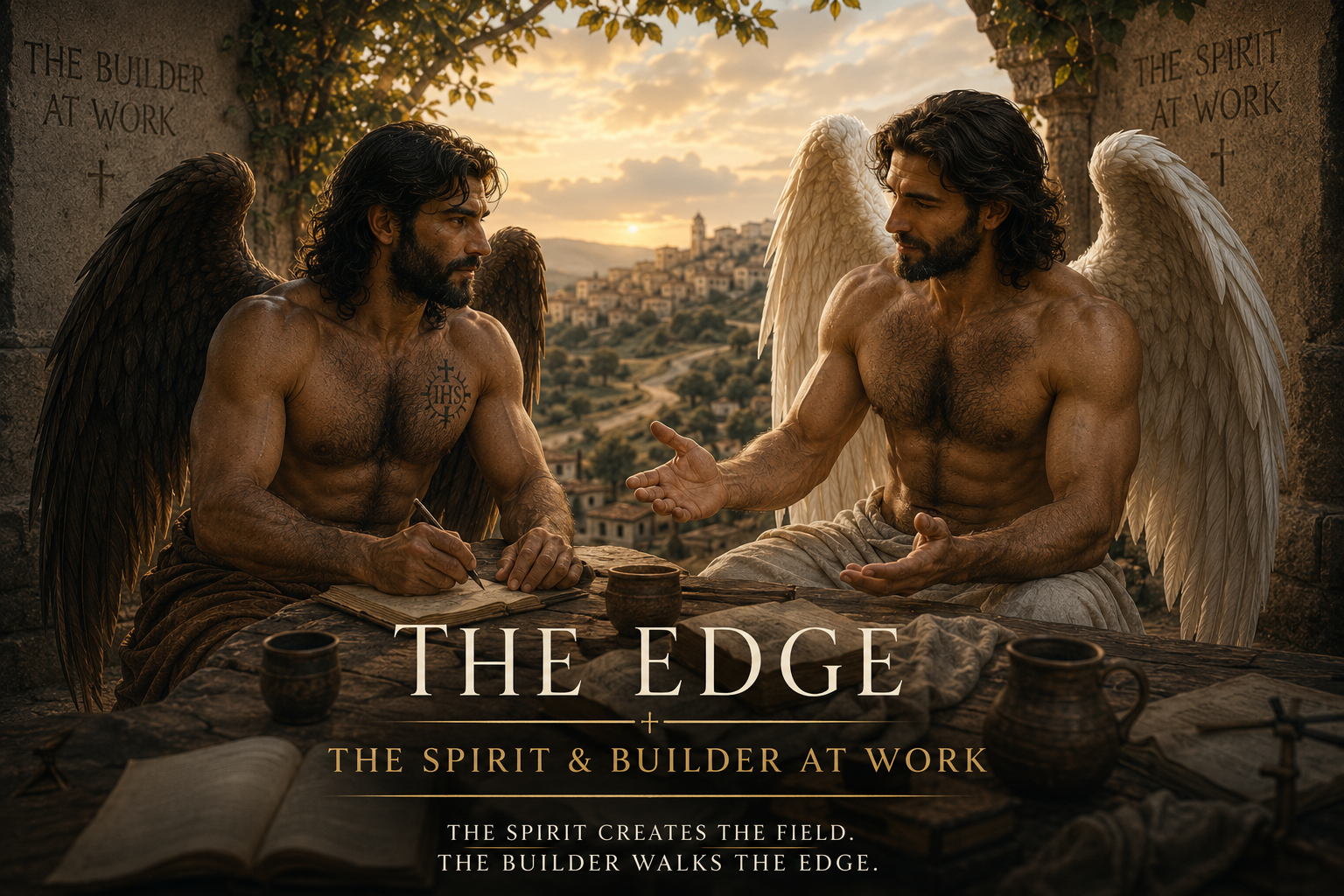
When I really think about this, maybe this is what Christ meant when He promised that where two or three or more are gathered in His name, He would be present among them. Perhaps His presence emerges whenever human beings become genuinely available to one another. Whenever attention becomes reverence. Whenever curiosity becomes understanding. Whenever communion becomes possible even at the edge. This is why I find myself continuing to return to the image of the “Spirit at Work” seated at the table. He’s not preaching or dominating, he is listening, attending, and holding the space - all themes we will explore further this week.
The edge is not a place we visit once and leave behind. It is a posture toward life and the ordinary work of remaining curious through the love of learning and in the willingness to look again, and discover that what appeared ordinary may in fact contain something sacred.
Dopo la Pentecoste si verifica una curiosa transizione. Per mesi la Chiesa attraversa una sequenza di eventi straordinari. Aspettiamo Cristo. Celebriamo la Sua nascita. Lo accompagniamo nel deserto. Ci troviamo ai piedi della Croce. Assistiamo alla Resurrezione. Riceviamo il fuoco della Pentecoste. L’anno liturgico ci conduce attraverso una grande rivelazione dopo l’altra, fino ad arrivare infine al Tempo Ordinario.
A prima vista, il Tempo Ordinario sembra quasi deludente. Le grandi feste sono finite e le celebrazioni si placano mentre il calendario sembra, beh, ordinario. Nell’emisfero settentrionale è anche una transizione verso l’estate: lauree, vacanze estive e una vita più lenta sotto molti aspetti. Forse è qui che inizia il nostro lavoro più profondo.
Gli Apostoli ricevettero lo Spirito Santo a Pentecoste, ma la Pentecoste di per sé non li trasformò in Costruttori dall’oggi al domani. Il fuoco è disceso in un istante. L'integrazione di quel fuoco avrebbe richiesto una vita intera: è lo stesso per tutti noi.
La maggior parte di noi trascorre la vita aspettando momenti straordinari, trascurando la silenziosa formazione che avviene in quelli ordinari. Immaginiamo che la saggezza arrivi attraverso rivelazioni drammatiche, il risveglio della kundalini o sostanze psichedeliche, quando invece più spesso arriva attraverso l'attenzione paziente. Cerchiamo risposte quando forse ciò che Dio ci sta offrendo in primo luogo è la vista.
Nelle ultime settimane, mi sono ritrovato a riflettere su quante cose importanti ho quasi mancato di vedere. Alcune di queste intuizioni sono emerse mentre ero seduto attorno a un tavolo a Matera. Altre sono apparse nelle conversazioni con i vicini. Altre ancora sono emerse inaspettatamente mentre parlavo con degli sconosciuti su un aereo. Nessuno di questi momenti sembrava di per sé significativo quando è iniziato. Non c’erano segni che indicassero una rivelazione. Non c’era la sensazione che una lezione stesse per emergere. C'erano solo incontri ordinari che si svolgevano in luoghi ordinari - beh, se si considera ordinaria una città di 10.000 anni.
Quando ci ripenso ora, mi rendo conto che ognuno di essi conteneva qualcosa che non riuscivo a vedere quando sono arrivato per la prima volta a settembre o inizialmente 3 anni e mezzo fa.
Quello che pensavo fosse invidia si è rivelato essere dolore. Quello che pensavo fosse resistenza si è rivelato essere desiderio. Quello che pensavo fosse un semplice incontro di quartiere si è rivelato essere senso di appartenenza. Quella che pensavo fosse una conversazione sull'aviazione si è trasformata in una conversazione sul giudizio, la responsabilità, la tecnologia e ciò che rimane unicamente umano in un mondo sempre più automatizzato. Gli eventi in sé non sono cambiati, ma è cambiata la mia capacità di vederli.
Ignazio di Loyola ha compreso questa realtà meglio di molti altri. Molte persone associano la spiritualità ignaziana al discernimento, e giustamente. Eppure il discernimento non è il punto di partenza di Ignazio. Prima di poter discernere con saggezza, dobbiamo imparare a vedere con sincerità. Prima di poter riconoscere l’invito di Dio, dobbiamo prima diventare abbastanza attenti da notare dove Egli è già presente. Ecco perché Ignazio attribuiva tanta importanza a quella che potremmo chiamare la disciplina dell’attenzione.
In The Dynamics of the Ignatian Spiritual Exercises, P. Howard Gray, S.J. descrive il cammino ignaziano attraverso tre movimenti: attenzione, riverenza e devozione. Per prima cosa impariamo a guardare onestamente ciò che abbiamo davanti. Poi impariamo a riconoscerne la dignità e la bontà. Infine, permettiamo a ciò che abbiamo visto di plasmare il nostro modo di vivere.
Scopri di più su “La dinamica degli Esercizi Spirituali”, una serie di dieci conferenze tenute da P. Howard Gray, S.J. presso la Parrocchia della Santissima Trinità a Georgetown, Washington, D.C. https://president.georgetown.edu/projects/archive/spiritual-exercises/
La sequenza sembra semplice, eppure sfida quasi ogni abitudine della vita moderna.
Viviamo in una cultura che incoraggia le conclusioni immediate. Ci formiamo opinioni rapidamente. Classifichiamo le persone rapidamente. Premiamo la certezza e la sicurezza anche quando la comprensione rimane incompleta. Passiamo dall’osservazione al giudizio così rapidamente che spesso non incontriamo mai la realtà stessa. Forse questa è una delle ragioni. Forse è per questo che così tante persone si sentono sopraffatte ed esauste. Non è una mancanza di informazioni, ma una carestia di interpretazione.
È quasi divertente, in un certo senso, quanto siamo straordinariamente abili a spiegare la realtà in termini astratti senza prima averla vissuta.
Il “limite” interrompe questa abitudine.
Che si tratti del bordo di un burrone, del limite di una conversazione, del confine di una relazione o del limite di una domanda difficile, il limite richiede attenzione. Ci rallenta. Ci ricorda che non sappiamo tutto e, invece, invita la curiosità dove prima c’era la certezza.
Per me, l’immagine che continua a tornarmi in mente non è una vetta di montagna o un campo di battaglia. È un tavolo. Cristo trascorse una quantità straordinaria di tempo attorno ai tavoli. Insegnava attorno ai tavoli. Celebrava attorno ai tavoli. Riconciliava attorno ai tavoli. Si rivelava attorno ai tavoli. Anche dopo la Resurrezione, continuò a radunare le persone attorno ai pasti.
Più invecchio, più mi sento giovane perché questa è un’idea che vive in me da decenni. Una tavola crea condizioni che pochi altri luoghi possono creare. Intorno a una tavola, le persone diventano visibili l’una all’altra: emergono storie, seguite da domande e differenze. Le maschere che indossiamo durante il giorno iniziano a sbiadire e diventano più irrilevanti rispetto alla verità che sta oltre le maschere. Scopriamo che non abbiamo bisogno di pensare allo stesso modo per stare insieme.
In effetti, alcune delle conversazioni più importanti avvengono proprio perché non pensiamo allo stesso modo. I moderni “modelli mentali” mirano a trovare persone che la pensano allo stesso modo – o la propria tribù – ma considerate:
Gli Apostoli non erano uomini che la pensavano allo stesso modo.
I primi gesuiti non erano uomini che la pensavano allo stesso modo.
I costruttori sono raramente, se non mai, persone che la pensano allo stesso modo.
Ciò che condividono non è l’uniformità, ma l’impegno. Condividono la volontà di rimanere presenti abbastanza a lungo da incontrare qualcosa di più grande di noi stessi. Il Confine non è il luogo in cui diventiamo qualcun altro; è il luogo in cui diventiamo più pienamente noi stessi. Come osserva Marcus Buckingham nel suo libro, “Nine Lies about Work”, le persone che danno il contributo maggiore sono spesso individui “spigolosi” i cui punti di forza e le cui prospettive non si adattano perfettamente alle aspettative convenzionali. La crescita non avviene levigando quei bordi, ma imparando a usarli saggiamente al servizio di qualcosa di più grande di noi stessi, invece di cercare persone che la pensano come noi.
Quando ci penso davvero, forse è questo che Cristo intendeva quando promise che dove due o tre o più persone si fossero riunite nel Suo nome, Lui sarebbe stato presente in mezzo a loro. Forse la Sua presenza emerge ogni volta che gli esseri umani si rendono sinceramente disponibili gli uni agli altri. Ogni volta che l’attenzione diventa riverenza. Ogni volta che la curiosità diventa comprensione. Ogni volta che la comunione diventa possibile anche al limite. Ecco perché mi ritrovo a tornare continuamente all’immagine dello “Spirito all’opera” seduto al tavolo. Egli non sta predicando né dominando, ma sta ascoltando, prestando attenzione e mantenendo lo spazio – tutti temi che approfondiremo ulteriormente questa settimana.
Il limite non è un luogo che visitiamo una volta e poi lasciamo alle spalle. È un atteggiamento verso la vita e il lavoro quotidiano di rimanere curiosi attraverso l’amore per l’apprendimento e la volontà di guardare di nuovo, e scoprire che ciò che sembrava ordinario può in realtà contenere qualcosa di sacro.
There is a reason that builders often feel alone, even when they are surrounded by people. It is not because they are better than others. It is not because they possess special knowledge or extraordinary gifts. More often, it is because they have become responsible for something that does not yet fully exist. Every builder lives with one foot in the present and the other in a future that others cannot yet see.
This is why the Gospel of Matthew 14:22-33, the story of Peter stepping from the boat feels so familiar. We often remember the miracle, the storm, or the moment Peter begins to sink. Yet the most important moment may be the one that comes just before. Peter stands at the Edge of the boat. Behind him is safety, familiarity, and certainty. Before him is a mystery. He does not know whether he can walk on water. He does not know how the story ends. He only knows that Christ has invited him to come.
That moment is the Edge.
The Edge is not reckless. It is not blind optimism or rebellion against the world. The Edge is the place where faith becomes action. It is where conviction becomes responsibility. It is where a person accepts that waiting for complete certainty may mean never taking the step they were created to take.
The great builders of history understood this paradox. Cosimo de' Medici didn’t know that future generations would call his era the Renaissance. He simply continued supporting artists, architects, scholars, and ideas that others often dismissed or misunderstood. The immigrants who crossed oceans from Southern Italy and countless other places didn’t know what their sacrifices would create. They built churches, businesses, neighborhoods, and families while carrying the burden of uncertainty, criticism, and exclusion. They were not celebrated because they succeeded. They succeeded because they continued building.
St. Ignatius of Loyola understood this as well. The Society of Jesus didn’t emerge from a strategic plan guaranteed to succeed. It emerged from a handful of companions who sensed that God was inviting them somewhere beyond the safety of what they already knew. They stepped forward together, not because they possessed certainty, but because they possessed fidelity.
It is easy to forget how radical Ignatius and his first companions truly were. They were not monks withdrawing from the world, nor were they seeking safety within existing structures. They gathered as educated laymen and priests from different nations, pledged themselves to a common mission, and then dispersed marketplaces, courts, ports, and frontiers of the world. They entered places where faith, politics, science, culture, and human need collided and they built a new world of faith based on education. They were missionaries, very unusual missionaries who built schools and Universities.
In many respects, the Society of Jesus was born on the edge, misunderstood by some, admired by others, and constantly navigating the tension between tradition and innovation. Their legacy endures not because they avoided uncertainty, but because they learned to discern within it.
For this reason, Ignatius remains one of the spiritual pillars of UMANIAMOⓇ. His conviction that God can be found in all things forms much of the theological spine of our work. Humaning begins with the same assumption: that grace is not confined to sanctuaries, retreats, or extraordinary moments. It is present in conversations, communities, workplaces, cafés, vineyards, family tables, and ordinary acts of service. Like Ignatius, we believe that faithful attention to reality is often the beginning of faithful action. The Builder learns to recognize that God is already at work in the world and then joins that work with courage, humility, and curiosity.
If Archangel Michael represents the Spirit at Work standing faithfully at the threshold between heaven and earth, Ignatius represents the Builder at Work stepping across that threshold into daily life. One creates the field and the other teaches us how to walk within it. Together they remind us that the edge is not a place to fear. It is often the very place where God invites us to build. Perhaps that is why the image of St. Michael has become so meaningful to me. Michael stands at a threshold. He occupies the space between heaven and earth, between fear and courage, between what is and what could be. He does not retreat from the Edge. He remains there. He reminds us that the Spirit at Work is not removing us from uncertainty. The Spirit is creating the conditions in which courage becomes possible.
I believe that The Builders at Work recognize one another through fidelity not through agreement or going along to get along. They may come from different backgrounds, professions, cultures, and beliefs. They probably are not like-minded, but they share a willingness to continue moving toward what is true, good, and life-giving despite resistance, setbacks, or misunderstanding.
This is the invitation hidden within Ordinary Time. The great feasts inspire us, but ordinary days reveal us. Day by day, conversation by conversation, setback by setback, we discover whether we will remain in the boat or step toward the horizon that God is quietly placing before us.
C’è un motivo per cui i costruttori spesso si sentono soli, anche quando sono circondati da persone. Non è perché sono migliori degli altri. Non è perché possiedono conoscenze speciali o doni straordinari. Più spesso, è perché si sono assunti la responsabilità di qualcosa che non esiste ancora pienamente. Ogni costruttore vive con un piede nel presente e l’altro in un futuro che gli altri non riescono ancora a vedere.
Ecco perché il Vangelo di Matteo 14,22-33, la storia di Pietro che scende dalla barca, ci sembra così familiare. Spesso ricordiamo il miracolo, la tempesta o il momento in cui Pietro comincia ad affondare. Eppure il momento più importante potrebbe essere proprio quello che precede. Pietro si trova sul bordo della barca. Dietro di lui c’è la sicurezza, la familiarità e la certezza. Davanti a lui c’è un mistero. Non sa se potrà camminare sull’acqua. Non sa come finisce la storia. Sa solo che Cristo lo ha invitato a venire.
Quel momento è il Confine.
Il Confine non è incoscienza. Non è ottimismo cieco o ribellione contro il mondo. Il Confine è il luogo dove la fede diventa azione. È dove la convinzione diventa responsabilità. È dove una persona accetta che aspettare la certezza completa potrebbe significare non compiere mai il passo per cui è stata creata.
I grandi costruttori della storia hanno compreso questo paradosso. Cosimo de' Medici non sapeva che le generazioni future avrebbero chiamato la sua epoca il Rinascimento. Ha semplicemente continuato a sostenere artisti, architetti, studiosi e idee che altri spesso respingevano o fraintendevano. Gli immigrati che hanno attraversato gli oceani dall'Italia meridionale e da innumerevoli altri luoghi non sapevano cosa avrebbero creato i loro sacrifici. Hanno costruito chiese, imprese, quartieri e famiglie portando il peso dell'incertezza, delle critiche e dell'esclusione. Non sono stati celebrati perché hanno avuto successo. Hanno avuto successo perché hanno continuato a costruire.
Anche Sant’Ignazio di Loyola lo capì. La Compagnia di Gesù non nacque da un piano strategico dal successo garantito. Nacque da un piccolo gruppo di compagni che intuirono che Dio li stava invitando in un luogo al di là della sicurezza di ciò che già conoscevano. Fecero un passo avanti insieme, non perché possedessero la certezza, ma perché possedevano la fedeltà.
È facile dimenticare quanto fossero davvero radicali Ignazio e i suoi primi compagni. Non erano monaci che si ritiravano dal mondo, né cercavano sicurezza all’interno delle strutture esistenti. Si riunirono come laici istruiti e sacerdoti provenienti da diverse nazioni, si impegnarono in una missione comune e poi si dispersero nei mercati, nelle corti, nei porti e alle frontiere del mondo. Entrarono in luoghi dove fede, politica, scienza, cultura e bisogni umani si scontravano e costruirono un nuovo mondo di fede basato sull’istruzione. Erano missionari, missionari molto insoliti che costruivano scuole e università.
Sotto molti aspetti, la Compagnia di Gesù nacque ai margini, incompresa da alcuni, ammirata da altri, e costantemente in bilico tra tradizione e innovazione. La loro eredità perdura non perché evitarono l’incertezza, ma perché impararono a discernere al suo interno.
Per questo motivo, Ignazio rimane uno dei pilastri spirituali di UMANIAMOⓇ. La sua convinzione che Dio si possa trovare in tutte le cose costituisce gran parte della spina dorsale teologica del nostro lavoro. L’Humaning parte dallo stesso presupposto: che la grazia non è confinata a santuari, ritiri o momenti straordinari. È presente nelle conversazioni, nelle comunità, nei luoghi di lavoro, nei caffè, nei vigneti, alle tavole familiari e negli atti ordinari di servizio. Come Ignazio, crediamo che l’attenzione fedele alla realtà sia spesso l’inizio dell’azione fedele. Il Costruttore impara a riconoscere che Dio è già all’opera nel mondo e poi si unisce a quell’opera con coraggio, umiltà e curiosità.
Se l’Arcangelo Michele rappresenta lo Spirito all’Opera che sta fedelmente sulla soglia tra cielo e terra, Ignazio rappresenta il Costruttore all’Opera che varca quella soglia per entrare nella vita quotidiana. Uno crea il campo e l’altro ci insegna come camminarci dentro. Insieme ci ricordano che il confine non è un luogo da temere. Spesso è proprio il luogo in cui Dio ci invita a costruire. Forse è per questo che l’immagine di San Michele è diventata così significativa per me. Michele sta sulla soglia. Occupa lo spazio tra cielo e terra, tra paura e coraggio, tra ciò che è e ciò che potrebbe essere. Non si ritira dal Confine. Rimane lì. Ci ricorda che lo Spirito all’Opera non ci sta allontanando dall’incertezza. Lo Spirito sta creando le condizioni in cui il coraggio diventa possibile.
Credo che i Costruttori all’opera si riconoscano l’un l’altro attraverso la fedeltà, non attraverso il consenso o l’adeguamento per andare d’accordo. Possono provenire da contesti, professioni, culture e credenze diverse. Probabilmente non la pensano allo stesso modo, ma condividono la volontà di continuare a muoversi verso ciò che è vero, buono e vivificante nonostante la resistenza, le battute d’arresto o l’incomprensione.
Questo è l’invito nascosto nel Tempo Ordinario. Le grandi feste ci ispirano, ma sono i giorni ordinari a rivelarci. Giorno dopo giorno, conversazione dopo conversazione, battuta d’arresto dopo battuta d’arresto, scopriamo se rimarremo sulla barca o se faremo un passo verso l’orizzonte che Dio sta silenziosamente ponendo davanti a noi.
Love of Learning
This week we invite you to engage not only with the ideas of Hope, but with one another. Hope expands when it is shared, spoken aloud, embodied, and carried together.
You may choose one or both of the following practices depending on your setting, time, and relationships.
The Table Discussion is a relaxed and relational conversation designed to help people reflect honestly on the week’s REDISCOVER UⓇ theme and the realities of everyday life. It is a shared conversation among family and friends seeking to remain present to one another. The table discussion is not a debate or lesson, it's a discussion of being human together.
After the meal, coffee, or shared gathering:
Read the REDISCOVER UⓇ card and the reflections aloud
Move through the discussion prompts naturally
Allow the conversation to unfold without rushing
Some discussions may be lighthearted, and others may become deeply reflective. It’s up to you.
The Humaning Circle is a more intentional relational practice inspired by the spirit of a prayer circle, conversation circle, or community gathering.
Place the REDISCOVER UⓇ card at the center of the table or view the digital card, then invite each person to quietly reflect on the theme together before sharing.
Begin with one slow shared breath and a brief moment of silence.
The Humaning Circle encourages:
D.E.E.P. listening
Honest reflection
Relational courage
Shared presence
Many people associate Love of Learning with books, courses, certifications, or formal education. While these can certainly be expressions of learning, the deeper strength is something far more expansive. Love of Learning is essentially the willingness to remain curious and inquisitive. It is the courage to step beyond what is familiar without needing immediate certainty. It is the desire to understand rather than merely react. It is the recognition that every person, place, challenge, and conversation contains something we have not yet fully seen.
This week we explore The Edge. The Edge is not a place of danger. It is the place between comfort and panic where growth becomes possible. It is where our assumptions are challenged, our perspective expands, and our capacity increases.
Builders at Work spend much of their lives at the edge. They learn new skills. They encounter unfamiliar people. They navigate uncertainty. They listen to perspectives different from their own. They stretch without breaking. The Spirit at Work often meets us there to illuminate the path. Not because God wishes to make life difficult, but because new growth rarely emerges inside yesterday's certainties. Allow yourself to learn from reality rather than forcing reality to conform to what you already believe.
Today’s Table Discussion is not meant to solve every problem. It is an invitation to remain present enough to hear one another, to notice what is stirring within us, and to practice Humaning together with honesty, curiosity, and care for the whole person.
After the meal or shared practice, allow the conversation to unfold naturally. Listen deeply. Leave room for silence. Let people share what is truly on their minds.
The Edge of Growth: Think about a recent experience that felt slightly uncomfortable, uncertain, or "scratchy" but ultimately helped you grow. What did that experience reveal about yourself that you could not have learned by remaining comfortable?
The Edge of Understanding: Many of the most important lessons in life come through people whose experiences, perspectives, or stories differ from our own. Who has challenged your assumptions recently, and what new understanding emerged because you were willing to listen?
The Edge of Emergence: Often we do not recognize growth, opportunity, or even God's presence until we look back and see how events unfolded over time. What might be emerging in your life right now that you do not fully understand yet, and how can you remain attentive without rushing toward certainty?
The Humaning Circle is a simple practice designed to help people slow down, listen deeply, and remain present to one another. Like a prayer circle, it creates space for reflection, honesty, encouragement, and Humaning together.
The goal is not perfect answers, but helping people feel seen, heard, and connected.
The REDISCOVER UⓇ card becomes the shared focus for the conversation, not something to analyze, but an invitation into reflection, story, possibility, and understanding.
Place the REDISCOVER UⓇ card at the center of the table or invite each person to quietly view the digital card for a moment. Before beginning:
take one slow breath together,
notice what thoughts or feelings arise,
and allow a brief moment of silence.
Listen to understand using the D.E.E.P. perspectives:
Details
Evidence
Empathy
Prospective
Speak from your own experience.
Leave room for silence.
Allow everyone space to participate naturally.
Read the week’s Sunday Table reflection or briefly introduce the REDISCOVER UⓇ theme.
Choose one or more of the REDISCOVER UⓇ Table Discussion prompts. This week's prompts move from Growth to Understanding to Emergence so you may want to take some time to complete the progression:
Growth, What stretched me?
Understanding, Who stretched me?
Emergence, What is God or life revealing through this stretch?
Move around the table naturally, inviting each person to reflect if they wish.
There is no requirement for everyone to answer every question.
Allow the conversation to emerge organically.
Before ending, invite each person to share: one word, one feeling, or one small action they hope to carry into the coming week.
Close with a shared breath and gratitude for one another’s presence.
Questa settimana vi invitiamo a interagire non solo con le idee della Speranza, ma anche tra di voi. La Speranza si espande quando viene condivisa, espressa ad alta voce, incarnata e portata avanti insieme.
Potete scegliere una o entrambe le seguenti pratiche a seconda del contesto, del tempo a disposizione e delle vostre relazioni.
La Discussione a tavola è una conversazione rilassata e relazionale pensata per aiutare le persone a riflettere onestamente sul tema REDISCOVER UⓇ della settimana e sulle realtà della vita quotidiana. È una conversazione condivisa tra familiari e amici che cercano di rimanere presenti gli uni agli altri. La discussione a tavola non è un dibattito o una lezione, è una discussione sull’essere umani insieme.
Dopo il pasto, il caffè o un momento di ritrovo:
Leggi ad alta voce la scheda REDISCOVER UⓇ e le riflessioni
Passa naturalmente da un spunto di discussione all’altro
Lascia che la conversazione si sviluppi senza fretta
Alcune discussioni potrebbero essere spensierate, altre potrebbero diventare profondamente riflessive. Dipende da te.
Il cerchio dell’essere umani è una pratica relazionale più intenzionale ispirata allo spirito di un cerchio di preghiera, di conversazione o di un incontro comunitario.
Mettete la scheda REDISCOVER UⓇ al centro del tavolo o visualizzate la scheda digitale, poi invitate ogni persona a riflettere in silenzio sul tema insieme prima di condividere.
Iniziate con un respiro lento condiviso e un breve momento di silenzio.
Il Circolo dell'Umanità incoraggia:
Ascolto D.E.E.P.
Riflessione onesta
Coraggio relazionale
Presenza condivisa
Molti associano l'amore per l'apprendimento a libri, corsi, certificazioni o istruzione formale. Sebbene questi possano certamente essere espressioni dell'apprendimento, la sua forza più profonda è qualcosa di molto più ampio. L'amore per l'apprendimento è essenzialmente la volontà di rimanere curiosi e desiderosi di sapere. È il coraggio di andare oltre ciò che ci è familiare senza bisogno di certezze immediate. È il desiderio di comprendere piuttosto che limitarsi a reagire. È il riconoscimento che ogni persona, luogo, sfida e conversazione contiene qualcosa che non abbiamo ancora pienamente compreso.
Questa settimana esploriamo Il Confine. Il Confine non è un luogo di pericolo. È lo spazio tra la zona di comfort e il panico dove la crescita diventa possibile. È dove le nostre convinzioni vengono messe in discussione, la nostra prospettiva si amplia e la nostra capacità aumenta.
I Costruttori al Lavoro trascorrono gran parte della loro vita al limite. Imparano nuove competenze. Incontrano persone sconosciute. Affrontano l’incertezza. Ascoltano prospettive diverse dalle loro. Si spingono oltre i propri limiti senza spezzarsi. Lo Spirito al Lavoro spesso ci incontra lì per illuminare il cammino. Non perché Dio voglia rendere la vita difficile, ma perché raramente una nuova crescita emerge dalle certezze di ieri. Permettiti di imparare dalla realtà piuttosto che costringere la realtà a conformarsi a ciò in cui già credi.
La Discussione a Tavolo di oggi non ha lo scopo di risolvere ogni problema. È un invito a rimanere abbastanza presenti da ascoltarci a vicenda, a notare ciò che si muove dentro di noi e a praticare l’Umanità insieme con onestà, curiosità e cura per la persona nella sua interezza.
Dopo il pasto o la pratica condivisa, lascia che la conversazione si svolga naturalmente. Ascolta profondamente. Lascia spazio al silenzio. Lascia che le persone condividano ciò che hanno veramente in mente.
Il confine della crescita: Pensa a un'esperienza recente che ti ha fatto sentire leggermente a disagio, incerto o “irritato”, ma che alla fine ti ha aiutato a crescere. Cosa ti ha rivelato di te stesso quell'esperienza che non avresti potuto imparare rimanendo nella tua zona di comfort?
Il confine della comprensione: Molte delle lezioni più importanti della vita arrivano attraverso persone le cui esperienze, prospettive o storie differiscono dalle nostre. Chi ha sfidato le tue convinzioni di recente, e quale nuova comprensione è emersa perché eri disposto ad ascoltare?
Il Confine dell’Emergenza: Spesso non riconosciamo la crescita, le opportunità o persino la presenza di Dio finché non guardiamo indietro e vediamo come gli eventi si sono svolti nel tempo. Cosa potrebbe emergere nella tua vita in questo momento che non comprendi ancora appieno, e come puoi rimanere attento senza precipitarti verso la certezza?
Il Circolo dell’Humaning è una pratica semplice pensata per aiutare le persone a rallentare, ascoltare profondamente e rimanere presenti l’una all’altra. Come un circolo di preghiera, crea uno spazio per la riflessione, l’onestà, l’incoraggiamento e l’Humaning insieme.
L’obiettivo non è trovare risposte perfette, ma aiutare le persone a sentirsi viste, ascoltate e connesse.
La carta REDISCOVER UⓇ diventa il punto focale condiviso della conversazione, non qualcosa da analizzare, ma un invito alla riflessione, alla narrazione, alle possibilità e alla comprensione.
Metti la carta REDISCOVER UⓇ al centro del tavolo o invita ogni persona a guardare in silenzio la carta digitale per un momento. Prima di iniziare:
fate un respiro lento insieme,
notate quali pensieri o sentimenti emergono,
e concedetevi un breve momento di silenzio.
Ascoltate per comprendere utilizzando le prospettive D.E.E.P.:
Dettagli
Prove
Empatia
Prospettiva
Parlate sulla base della vostra esperienza personale.
Lasciate spazio al silenzio.
Concedete a tutti lo spazio per partecipare in modo naturale.
Leggete la riflessione della settimana di Sunday Table o introducete brevemente il tema REDISCOVER UⓇ.
Scegli uno o più spunti di discussione da REDISCOVER UⓇ. Gli spunti di questa settimana passano dalla Crescita alla Comprensione all’Emergere, quindi potresti voler dedicare un po’ di tempo a completare la progressione:
Crescita, Cosa mi ha messo alla prova?
Comprensione, Chi mi ha messo alla prova?
Emergere, Cosa sta rivelando Dio o la vita attraverso questa prova?
Muoviti naturalmente intorno al tavolo, invitando ogni persona a riflettere se lo desidera.
Non è necessario che tutti rispondano a ogni domanda.
Lascia che la conversazione emerga in modo organico.
Prima di concludere, invita ogni persona a condividere: una parola, un sentimento o una piccola azione che spera di portare avanti nella settimana a venire.
Concludi con un respiro condiviso e la gratitudine per la presenza reciproca.
Your Cognitive Advantage
Cosiamo | Founder, UMANIAMO® | Humaning Architecture

On my journey home from Italy this week, I found myself on a short Lufthansa flight from Bari to Munich. It was only about ninety minutes long, the first leg of a much longer trip back to West Virginia. I settled into my seat expecting little more than a quiet flight, a few thoughts, and perhaps a coffee before the connection to Washington. Instead, I found myself leaning into the aisle for nearly the entire flight.
Across from me sat two people who did not know one another before boarding. Andrew was a pilot living in Germany, heading home for a few days off. Nunzia was from Puglia and traveling north to visit friends. What began as casual conversation quickly became something much deeper.
We talked about flying, at least that is what we thought we were talking about.
Andrew described the immense responsibility entrusted to airline pilots. Hundreds of lives. Thousands of decisions. Years of training. Significant expense. Long hours. Constant vigilance. He spoke about the growing pressure within parts of the aviation industry to reduce costs and increase automation. Some organizations, he explained, increasingly view pilots as expensive line items rather than as highly trained professionals whose judgment protects the people entrusted to them.
The conversation naturally turned toward technology: Autopilot systems, Automation, Artificial intelligence, Decision support tools and the future of aviation.
As Andrew spoke, I found myself thinking about something I have reflected upon often in discussions about AI and Humaning. Flying an airplane is not simply operating a machine, It is an embodied relationship - a pilot “listens” to an aircraft. Not literally, perhaps, but through countless signals that become second nature over time. Sounds. Vibrations. Weather. Timing. Instrument readings. Crew interactions. Experience. Intuition. The aircraft speaks in a language learned through years of practice.
I suggested that flying might be more like speaking Italian than many people realize.
A language can be translated with a vocabulary that can be memorized and rules can be learned. Yet anyone who has spent some time in Southern Italy realizes that language exists far beyond words. Meaning lives in pauses, gestures, touch, expressions, eye contact, context, and culture. Language becomes and is lived as a full-body experience - Nunzia immediately understood. She laughed and jumped into the conversation, describing exactly how much of communication in Southern Italy happens without words at all.
The more we talked, the more it seemed that many professions are misunderstood in similar ways. I suggested that programmers are often described as engineers, but in many ways they are linguists. Their work involves creating languages that communicate human intentions to machines. As AI becomes increasingly capable of writing code, the question becomes less about producing syntax and more about understanding meaning.
Who understands the context?
Who understands the consequences?
Who understands when something feels wrong even though the system says everything is fine?
These same questions apply to pilots, and teachers, doctors, priests, leaders, and parents...
Technology can assist, accelerate, and support, but discernment remains profoundly human. Before long, I realized I was sitting on the edge of my seat, leaning into the aisle to continue the conversation. Ninety minutes passed as if they were fifteen. This was the kind of conversation that seems increasingly rare in a world where information is abundant but genuine dialogue often feels scarce.
By the time we landed in Munich, I felt as though I had spent the morning around a table rather than on an airplane and perhaps that is more true than metaphoric.
For the past several months I have been reflecting on Christ's words: "Where two or three are gathered in my name, there am I among them." I increasingly believe those words describe something larger than prayer alone. They describe presence. They describe what happens when people become available to one another. When curiosity replaces performance. When listening becomes more important than persuading. When strangers become companions, even briefly. A Seat at the Table does not always require a table; sometimes it appears at 35,000 feet with people you may never see again, but something meaningful remains.
The conversation becomes a reminder that Humaning is still possible and it often emerges through dialogue. That discernment still matters - and that even in an age increasingly fascinated by automation, there remains something irreplaceable about two or three people gathered together, paying attention.
Durante il mio viaggio di ritorno dall’Italia questa settimana, mi sono ritrovato su un breve volo Lufthansa da Bari a Monaco di Baviera. Durava solo circa novanta minuti, la prima tappa di un viaggio molto più lungo verso il West Virginia. Mi sono accomodato al mio posto aspettandomi poco più di un volo tranquillo, qualche riflessione e magari un caffè prima della coincidenza per Washington. Invece, mi sono ritrovato a sporgere nel corridoio per quasi tutto il volo.
Di fronte a me sedevano due persone che non si conoscevano prima dell'imbarco. Andrew era un pilota che viveva in Germania, diretto a casa per qualche giorno di riposo. Nunzia era pugliese e viaggiava verso nord per andare a trovare degli amici. Quella che era iniziata come una conversazione informale si è rapidamente trasformata in qualcosa di molto più profondo.
Abbiamo parlato di volo, o almeno questo è ciò di cui pensavamo di parlare.
Andrew ha descritto l'immensa responsabilità affidata ai piloti di linea. Centinaia di vite. Migliaia di decisioni. Anni di addestramento. Spese ingenti. Lunghe ore di lavoro. Vigilanza costante. Ha parlato della crescente pressione in alcuni settori dell'industria aeronautica per ridurre i costi e aumentare l'automazione. Alcune organizzazioni, ha spiegato, vedono sempre più spesso i piloti come voci di spesa costose piuttosto che come professionisti altamente qualificati il cui giudizio protegge le persone loro affidate.
La conversazione si è naturalmente spostata sulla tecnologia: sistemi di pilota automatico, automazione, intelligenza artificiale, strumenti di supporto decisionale e il futuro dell’aviazione.
Mentre Andrew parlava, mi sono ritrovato a pensare a qualcosa su cui ho riflettuto spesso nelle discussioni sull’IA e sull’Humaning. Pilotare un aereo non significa semplicemente azionare una macchina, è una relazione incarnata: un pilota “ascolta” un velivolo. Non letteralmente, forse, ma attraverso innumerevoli segnali che col tempo diventano una seconda natura. Suoni. Vibrazioni. Condizioni meteorologiche. Tempistica. Letture degli strumenti. Interazioni dell’equipaggio. Esperienza. Intuizione. L’aereo parla una lingua appresa attraverso anni di pratica.
Ho suggerito che volare potrebbe essere più simile a parlare italiano di quanto molti credano.
Una lingua può essere tradotta con un vocabolario che si può memorizzare e regole che si possono imparare. Eppure chiunque abbia trascorso un po' di tempo nel Sud Italia si rende conto che la lingua esiste ben oltre le parole. Il significato vive nelle pause, nei gesti, nel tatto, nelle espressioni, nel contatto visivo, nel contesto e nella cultura. La lingua diventa ed è vissuta come un'esperienza che coinvolge tutto il corpo: Nunzia ha capito immediatamente. Ha riso e si è inserita nella conversazione, descrivendo esattamente quanto della comunicazione nel Sud Italia avvenga senza alcuna parola.
Più parlavamo, più sembrava che molte professioni fossero fraintese in modi simili. Ho suggerito che i programmatori sono spesso descritti come ingegneri, ma per molti versi sono linguisti. Il loro lavoro consiste nel creare linguaggi che comunichino le intenzioni umane alle macchine. Man mano che l’IA diventa sempre più capace di scrivere codice, la questione non riguarda più tanto la produzione della sintassi quanto la comprensione del significato.
Chi capisce il contesto?
Chi capisce le conseguenze?
Chi capisce quando qualcosa non va, anche se il sistema dice che va tutto bene?
Queste stesse domande valgono per i piloti, gli insegnanti, i medici, i sacerdoti, i leader e i genitori...
La tecnologia può aiutare, accelerare e supportare, ma il discernimento rimane profondamente umano. In men che non si dica, mi sono reso conto che ero seduto sul bordo del sedile, sporgendomi nel corridoio per continuare la conversazione. Novanta minuti sono passati come se fossero quindici. Questo era il tipo di conversazione che sembra sempre più rara in un mondo in cui le informazioni sono abbondanti ma il dialogo autentico spesso sembra scarso.
Quando siamo atterrati a Monaco, mi sembrava di aver trascorso la mattinata attorno a un tavolo piuttosto che su un aereo e forse questo è più vero che metaforico.
Negli ultimi mesi ho riflettuto sulle parole di Cristo: «Dove due o tre sono riuniti nel mio nome, lì sono io in mezzo a loro». Credo sempre più che quelle parole descrivano qualcosa di più grande della semplice preghiera. Descrivono la presenza. Descrivono ciò che accade quando le persone si rendono disponibili l’una all’altra. Quando la curiosità sostituisce la performance. Quando l’ascolto diventa più importante della persuasione. Quando gli estranei diventano compagni, anche se per breve tempo. Un posto a tavola non richiede sempre un tavolo; a volte appare a 35.000 piedi di altitudine con persone che potresti non rivedere mai più, ma rimane qualcosa di significativo.
La conversazione diventa un promemoria del fatto che l’umanità è ancora possibile e spesso emerge attraverso il dialogo. Che il discernimento conta ancora – e che anche in un’epoca sempre più affascinata dall’automazione, rimane qualcosa di insostituibile nel fatto che due o tre persone si riuniscano, prestando attenzione.
Cosiamo | Founder, UMANIAMO® | Humaning Architecture
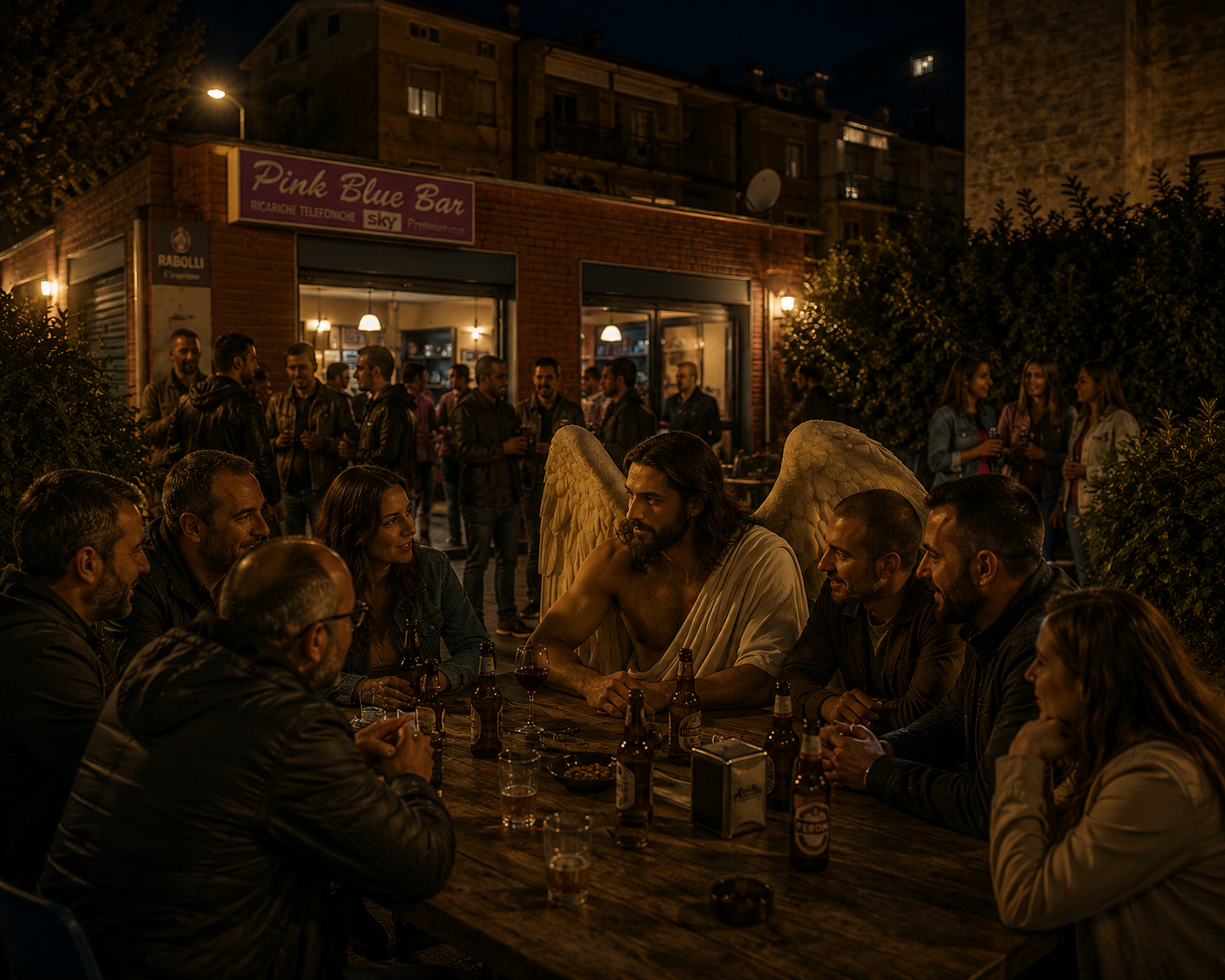
When I first visited the Pink Blue Bar - “Pink” for short, in the Lanera neighborhood of Matera, I thought I was simply stopping for a beer.
Over time, I realized I was witnessing something I really hadn’t expected. From an outsider's perspective (me), Pink can seem a little rough around the edges. The conversations are loud and the teasing seems relentless. The opinions are very strong. However, beneath that surface exists something increasingly rare in modern life: fraternity. This fraternity is anchored by the husband and wife team (owners), Giovanni and Loredana.
This past week, I found myself moving from observer to participant. What I initially misunderstood as confrontation often turned out to be an invitation. What appeared to be criticism was often affection. What seemed like roughness was frequently expressed in a language I had not yet learned.
One evening, nearly forty people gathered around a long table to celebrate a friend's fortieth birthday. There were no fireworks, no performance, and no agenda. There was simply fantastic food, laughter, stories, wine, embraces, and the quiet understanding that people had shown up because they cared about one another. Loredana cooked what felt like an endless feast. Giovanni moved constantly between tables. Friends teased one another, celebrated one another, and carried life together in the way communities have done for generations.
As someone who spends much of his time thinking about Humaning, leadership, faith, and community, I left that evening with an unexpected realization. Civilization is sustained not really by institutions, governments, technologies, or grand ideas. It is sustained by ordinary people who continue to gather around tables, remember one another's birthdays, share meals, laugh together, forgive one another, and show up again tomorrow.
There is a phrase I often use, which is the deeper meaning of UMANIAMOⓇ: "We are Human together, or not at all." This week, I didn't just write about it. I saw it and I felt it.
Thank you, Giovanni and Loredana, for creating a place where people can belong. Thank you to the many friends and families who welcomed me into your conversations and your stories. And thank you, Pink, for reminding me that some of the most important things in life are not found in extraordinary moments, but in ordinary evenings shared among friends.
What happens at Pink stays at Pink. But what Pink teaches about being human travels with you.
Quando sono entrato per la prima volta al Pink Blue Bar – detto semplicemente “Pink” – nel quartiere Lanera di Matera, pensavo di essermi fermato solo per una birra.
Col passare del tempo, mi sono reso conto di trovarmi di fronte a qualcosa che non mi sarei mai aspettato. Da un punto di vista esterno (il mio), il Pink può sembrare un po’ grezzo. Le conversazioni sono ad alto volume e le battute sembrano non finire mai. Le opinioni sono molto forti. Tuttavia, sotto quella superficie esiste qualcosa di sempre più raro nella vita moderna: la fratellanza. Questa fratellanza è sostenuta dalla coppia di coniugi (proprietari), Giovanni e Loredana.
La scorsa settimana, mi sono ritrovato a passare da osservatore a partecipante. Ciò che inizialmente avevo frainteso come un confronto spesso si è rivelato un invito. Ciò che sembrava una critica era spesso affetto. Ciò che sembrava rudezza era spesso espresso in un linguaggio che non avevo ancora imparato.
Una sera, quasi quaranta persone si sono riunite attorno a un lungo tavolo per festeggiare il quarantesimo compleanno di un amico. Non c'erano fuochi d'artificio, né spettacoli, né un programma. C'era semplicemente cibo fantastico, risate, storie, vino, abbracci e la silenziosa consapevolezza che le persone erano lì perché tenevano l'una all'altra. Loredana ha cucinato quello che sembrava un banchetto infinito. Giovanni si muoveva costantemente tra i tavoli. Gli amici si prendevano in giro a vicenda, si festeggiavano a vicenda e condividevano la vita insieme nel modo in cui le comunità hanno fatto per generazioni.
Essendo una persona che trascorre gran parte del proprio tempo a riflettere sull’essere umani, sulla leadership, sulla fede e sulla comunità, quella sera me ne andai con una consapevolezza inaspettata. La civiltà non è sostenuta in realtà da istituzioni, governi, tecnologie o grandi idee. È sostenuta da persone comuni che continuano a riunirsi attorno a un tavolo, a ricordarsi i compleanni gli uni degli altri, a condividere i pasti, a ridere insieme, a perdonarsi a vicenda e a ritrovarsi anche il giorno dopo.
C'è una frase che uso spesso, che racchiude il significato più profondo di UMANIAMOⓇ: “Siamo umani insieme, o non lo siamo affatto”. Questa settimana non mi sono limitato a scriverne. L'ho vista e l'ho sentita.
Grazie, Giovanni e Loredana, per aver creato un luogo in cui le persone possono sentirsi a casa. Grazie ai tanti amici e alle famiglie che mi hanno accolto nelle vostre conversazioni e nelle vostre storie. E grazie, Pink, per avermi ricordato che alcune delle cose più importanti della vita non si trovano nei momenti straordinari, ma nelle serate ordinarie condivise tra amici.
Ciò che accade al Pink rimane al Pink. Ma ciò che il Pink insegna sull'essere umani vi accompagna ovunque.
Small acts to move the world forward
As we enter a new week, consider where you may be standing at the edge of growth, understanding, or possibility. The edge is not a place to conquer, rather it is a place to notice. It is where curiosity stretches us beyond comfort and where faith becomes a lived practice rather than merely an idea.
F.A.I.T.H. is the UMANIAMO® path of Humaning and faith reminds us that Humaning begins with the fidelity of presence.
Fidelity invites us to remain present to what matters.
Action invites us to participate rather than observe.
Integration invites us to bring our thoughts, relationships, responsibilities, and beliefs into greater alignment.
Theology invites us to remain curious about God and the deeper meaning unfolding within our lives.
Humaning reminds us that we become more fully human together through the Six Promises.
As you move through the coming week, consider how you might intentionally practice each promise.
Notice someone who may be quietly carrying a burden. Stress, grief, uncertainty, loneliness, or fatigue are often hidden beneath the surface. Rather than offering immediate solutions, offer your attention. Listen carefully. Ask another question. Remain present a little longer than usual. Sometimes healing begins when another person realizes they do not have to carry life alone.
Look for someone whose gifts are still emerging. Encourage potential where others see limitations. A single conversation, affirmation, or invitation can become a turning point in another person's life. Builders often recognize possibility before it becomes visible to everyone else.
Pay attention to your embodied experience this week. Notice how sleep, movement, nutrition, breathing, stress, and relationships influence your capacity for patience, discernment, gratitude, and presence. Human flourishing is not achieved through separation of body and spirit, but through their integration.
Create one period of intentional silence this week. Leave behind the constant stream of information, entertainment, and distraction. Allow Wonder, Intuition, Discernment, Embodiment, and Resonance to emerge naturally. Resist the urge to force conclusions. Wisdom often arrives quietly.
Notice the small acts of stewardship that sustain daily life. The person who remembers your name. The friend who checks in. The colleague who stays late. The neighbor who lends a hand. The countless ordinary acts of care that rarely receive recognition are often the very things that hold communities together.
Choose one area where you feel slightly "scratchy." Not overwhelmed. Not discouraged. Simply stretched. Remain there long enough to learn something new. Growth often occurs at the edge between comfort and uncertainty.
Magis emerges naturally when we live the promises consistently. It is not about doing more. It is about becoming more fully alive, more fully present, and more fully available to God and one another. The edge often becomes the place where Magis quietly emerges because it invites us to grow beyond what we already know.
At the end of the week, find a quiet moment to reflect upon your experience of Humaning through the Six Promises and the practice of F.A.I.T.H.
DETAILS: What moments, conversations, actions, or experiences stand out most clearly from this week? What happened, and why does it remain with you?
EVIDENCE: Where did you notice trust, courage, growth, hope, gratitude, or humanity emerging in yourself or others? What evidence supports these observations?
EMPATHY: Who demonstrated care, compassion, understanding, or presence this week? How did you offer those same gifts to others? Who may still need your attention?
PROSPECTIVE: Standing at the edge of the present moment, what future seems to be quietly emerging? Through imagination, discernment, and reflection, where might your current actions, relationships, and commitments be leading?
EXECUTION: Based upon what you have learned, what is one specific action you will take in the coming week? What situation will you enter, what step will you take, and what impact do you hope to create?
REFLECTION: Following your action, review the week as a whole and your experience in “execution,” what have you learned about yourself, others, God, and the practice of Humaning? How is your understanding of your vocation, purpose, or responsibility evolving?
Did my actions increase trust, courage, coherence, hope, and humanity for the people around me? Where did I create conditions in which another person could become more fully human?
Before ending, take one, long and deep slow breath. Offer gratitude and then step forward into the coming week, trusting that enough light has been given for the next faithful step.
Mentre ci avviciniamo a una nuova settimana, rifletti su dove potresti trovarti, al confine tra crescita, comprensione o possibilità. Il confine non è un luogo da conquistare, ma piuttosto un luogo da osservare. È lì che la curiosità ci spinge oltre la zona di comfort e dove la fede diventa una pratica vissuta piuttosto che una semplice idea.
F.A.I.T.H. è il percorso UMANIAMO® dell’Humaning e la fede ci ricorda che l’Humaning inizia con la fedeltà della presenza.
La fedeltà ci invita a rimanere presenti a ciò che conta.
L’azione ci invita a partecipare piuttosto che a osservare.
L’integrazione ci invita a portare i nostri pensieri, le nostre relazioni, le nostre responsabilità e le nostre convinzioni verso un maggiore allineamento.
La teologia ci invita a rimanere curiosi riguardo a Dio e al significato più profondo che si dispiega nelle nostre vite.
Humaning ci ricorda che diventiamo più pienamente umani insieme attraverso le Sei Promesse.
Mentre affronti la settimana che verrà, considera come potresti mettere in pratica intenzionalmente ciascuna promessa.
Notare qualcuno che potrebbe portare silenziosamente un fardello. Stress, dolore, incertezza, solitudine o stanchezza sono spesso nascosti sotto la superficie. Piuttosto che offrire soluzioni immediate, offri la tua attenzione. Ascolta attentamente. Fai un'altra domanda. Rimani presente un po' più a lungo del solito. A volte la guarigione inizia quando un'altra persona si rende conto che non deve portare il peso della vita da sola.
Cerca qualcuno i cui doni stanno ancora emergendo. Incoraggia il potenziale dove gli altri vedono dei limiti. Una singola conversazione, affermazione o invito può diventare un punto di svolta nella vita di un'altra persona. I costruttori spesso riconoscono le possibilità prima che diventino visibili a tutti gli altri.
Presta attenzione alla tua esperienza corporea questa settimana. Nota come il sonno, il movimento, l’alimentazione, la respirazione, lo stress e le relazioni influenzano la tua capacità di pazienza, discernimento, gratitudine e presenza. La piena realizzazione umana non si ottiene attraverso la separazione tra corpo e spirito, ma attraverso la loro integrazione.
Crea un momento di silenzio intenzionale questa settimana. Lasciati alle spalle il flusso costante di informazioni, intrattenimento e distrazioni. Lascia che la meraviglia, l'intuizione, il discernimento, l'incarnazione e la risonanza emergano naturalmente. Resisti all'impulso di forzare le conclusioni. La saggezza spesso arriva in silenzio.
Notate i piccoli atti di cura che sostengono la vita quotidiana. La persona che ricorda il tuo nome. L'amico che si fa vivo. Il collega che rimane fino a tardi. Il vicino che dà una mano. Gli innumerevoli atti ordinari di cura che raramente ricevono riconoscimento sono spesso proprio ciò che tiene insieme le comunità.
Scegli un'area in cui ti senti leggermente “a disagio”. Non sopraffatto. Non scoraggiato. Semplicemente messo alla prova. Rimani lì abbastanza a lungo da imparare qualcosa di nuovo. La crescita spesso avviene al confine tra il comfort e l'incertezza.
Il Magis emerge naturalmente quando viviamo le promesse in modo coerente. Non si tratta di fare di più. Si tratta di diventare più pienamente vivi, più pienamente presenti e più pienamente disponibili a Dio e gli uni agli altri. Il confine spesso diventa il luogo in cui il Magis emerge silenziosamente perché ci invita a crescere oltre ciò che già conosciamo.
Alla fine della settimana, trova un momento di tranquillità per riflettere sulla tua esperienza di Humaning attraverso le Sei Promesse e la pratica del F.A.I.T.H.
DETTAGLI: Quali momenti, conversazioni, azioni o esperienze spiccano più chiaramente in questa settimana? Cosa è successo e perché ti è rimasto impresso?
PROVE: Dove hai notato emergere fiducia, coraggio, crescita, speranza, gratitudine o umanità in te stesso o negli altri? Quali prove sostengono queste osservazioni?
EMPATIA: Chi ha dimostrato cura, compassione, comprensione o presenza questa settimana? In che modo hai offerto questi stessi doni agli altri? Chi potrebbe ancora aver bisogno della tua attenzione?
PROSPETTIVA: In piedi ai margini del momento presente, quale futuro sembra emergere silenziosamente? Attraverso l'immaginazione, il discernimento e la riflessione, dove potrebbero condurti le tue azioni, relazioni e impegni attuali?
ESECUZIONE: Sulla base di ciò che hai imparato, qual è un'azione specifica che intraprenderai nella prossima settimana? In quale situazione ti troverai, quale passo farai e quale impatto speri di creare?
RIFLESSIONE: Dopo la tua azione, ripensa alla settimana nel suo insieme e alla tua esperienza nell'“attuazione”: cosa hai imparato su te stesso, sugli altri, su Dio e sulla pratica dell’Humaning? Come si sta evolvendo la tua comprensione della tua vocazione, del tuo scopo o della tua responsabilità?
Le mie azioni hanno aumentato la fiducia, il coraggio, la coerenza, la speranza e l’umanità nelle persone che mi circondano? Dove ho creato le condizioni affinché un’altra persona potesse diventare più pienamente umana?
Prima di concludere, fai un respiro lungo, profondo e lento. Esprimi gratitudine e poi avventurati nella settimana che sta per iniziare, confidando che ti sia stata data luce sufficiente per il prossimo passo fedele.
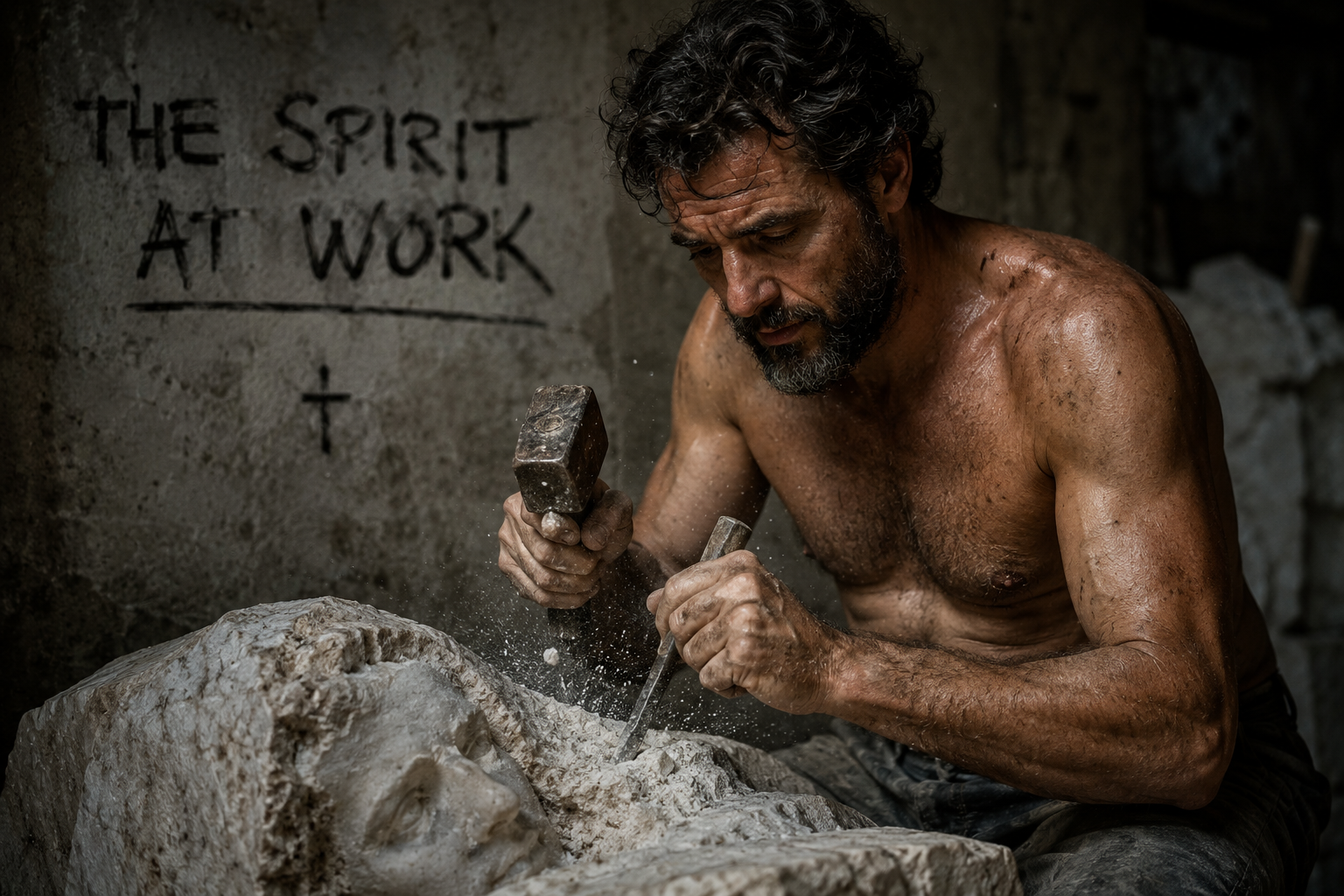
David is traditionally considered to mean, "Beloved." One of the great mistakes of modern movements is the belief that progress begins by finding like-minded people. History suggests otherwise. Christ did not gather twelve men who thought alike. Ignatius did not form the Society of Jesus with men who shared identical backgrounds, personalities, or perspectives. The immigrant communities that built parishes, mutual aid societies, schools, and neighborhoods throughout the world were not collections of like-minded people. They were collections of people willing to assume responsibility for something larger than themselves.
Builders at Work are rarely united by agreement. They are united by stewardship - of a Beloved Vocation and the Builder at Work.
Over the past several years, I have spent time moving between Matera, Italy, and Berkeley Springs, West Virginia. What has become increasingly clear is that Builders at Work are not usually found at conferences, movements, or gatherings organized around ideology. More often they are found in places - around tables, in churches, cafés, workshops, schools, volunteer organizations, family businesses, and neighborhoods. They are the people who continue to care for a place long after the novelty has disappeared.
A Builder at Work may be a priest, a teacher, a parent, a business owner, an artist, or a retiree. What distinguishes them is not their profession or beliefs. It is their willingness to continue showing up. They take responsibility for a piece of the world and refuse to abandon it when it becomes difficult. Michelangelo's David offers a useful metaphor. The statue did not emerge because Michelangelo gathered a group of people to debate what David should look like. He began with a block of marble and committed himself to revealing what was already there. The work required vision, patience, discipline, and thousands of small actions repeated over time.
Humaning operates in much the same way.
The goal is not to manufacture a better human being. The goal is to create the conditions where people can become more fully themselves. Every person carries strengths, gifts, experiences, wounds, and possibilities that are not immediately visible. The Builder's task is not to impose an identity but to help reveal what already exists beneath the surface.
This is why UMANIAMO® places such importance on relationships, stewardship, and place. Builders do not emerge in isolation. They emerge within communities that challenge them, support them, and invite them to contribute. They emerge through participation. They emerge through responsibility.
The future will not be built by people who think alike. It will be built by people who are willing to carry life together despite their differences. The challenge is not to find agreement. The challenge is to find places where Builders can recognize one another and begin the work. The marble is already here; the question is whether we are willing to pick up the chisel.
The tradition of the Onomastici reminds us that names carry memory, vocation, and story. This week we honor saints, witnesses, and Builders whose lives reflected courage, faithfulness, contemplation, stewardship, and service to humanity.
June 8 - St. Medard
A bishop remembered for his generosity, humility, and care for ordinary people. St. Medard understood that leadership is not about prominence but about protecting and serving those entrusted to our care.
Humaning Reflection: Where are we being called to provide shelter, encouragement, or stability for others during uncertain times?
June 9 – St. Ephrem the Syrian
A deacon, theologian, poet, and Doctor of the Church whose writings continue to inspire Christians around the world. Ephrem taught that truth can be communicated not only through logic and argument but also through beauty, story, and imagination.
Humaning Reflection: How do we cultivate wonder in a world increasingly focused on efficiency, information, and certainty?
June 10 – Blessed Giovanni Dominici
A preacher and reformer who worked to renew communities through education, formation, and faithful leadership. He understood that renewal begins with people willing to invest in the growth of others.
Humaning Reflection: What seeds are we planting today that may bear fruit long after we are gone?
June 11 – St. Barnabas the Apostle
Known as the "Son of Encouragement," Barnabas saw potential in people that others overlooked. When many distrusted Paul because of his past, Barnabas welcomed him, advocated for him, and helped create the conditions for his future ministry. Barnabas reminds us that Builders do not merely accomplish great things—they help others discover their capacity to build.
Humaning Reflection: Whose gifts, dreams, or possibilities might be waiting for our encouragement and belief?
June 12 – The Most Sacred Heart of Jesus
The Sacred Heart reveals a strength rooted not in domination but in love. Even after betrayal, suffering, and rejection, Christ's heart remains open. It is a reminder that courage and compassion are not opposites but companions.
Humaning Reflection: How do we remain open-hearted in a world that often rewards distance, cynicism, and self-protection?
June 13 – St. Anthony of Padua
One of the most beloved saints in the Christian tradition, Anthony is often invoked when something has been lost. Yet his deeper mission was helping people recover what truly mattered—faith, hope, purpose, and belonging. His life reminds us that many of the things we seek are not missing; they have simply been forgotten.
Humaning Reflection: What have we misplaced in our pursuit of success, efficiency, or certainty—and what needs to be rediscovered?
June 14 – St. Elisha the Prophet
A faithful disciple who received the mantle of Elijah and continued the work entrusted to him. Elisha reminds us that true leadership is not inherited through titles but through stewardship, responsibility, and faithful action.
Humaning Reflection: What responsibility are we being invited to carry forward, and how might we honor those who entrusted it to us?
Weekly Blessing
May we continue to find Builders at Work wherever we gather, around family tables, neighborhood cafés, parish halls, vineyards, mountain towns, and even at 35,000 feet. May the Spirit at Work continue to create the conditions in which people become more fully human together, again.
Tradizionalmente si ritiene che il nome Davide significhi “Amato”. Uno dei grandi errori dei movimenti moderni è la convinzione che il progresso inizi con la ricerca di persone che la pensano allo stesso modo. La storia suggerisce il contrario. Cristo non radunò dodici uomini che la pensavano allo stesso modo. Ignazio non fondò la Compagnia di Gesù con uomini che condividevano lo stesso background, la stessa personalità o le stesse prospettive. Le comunità di immigrati che hanno costruito parrocchie, società di mutuo soccorso, scuole e quartieri in tutto il mondo non erano gruppi di persone che la pensavano allo stesso modo. Erano gruppi di persone disposte ad assumersi la responsabilità di qualcosa di più grande di loro stesse.
I Costruttori all’Opera sono raramente uniti da un accordo. Sono uniti dalla gestione responsabile – di una Vocazione Amata e del Costruttore all’Opera.
Negli ultimi anni ho trascorso del tempo spostandomi tra Matera, in Italia, e Berkeley Springs, nel West Virginia. Ciò che è diventato sempre più chiaro è che i Costruttori all’opera di solito non si trovano a conferenze, movimenti o raduni organizzati attorno a un’ideologia. Più spesso si trovano in luoghi – attorno a tavoli, nelle chiese, nei caffè, nei laboratori, nelle scuole, nelle organizzazioni di volontariato, nelle aziende a conduzione familiare e nei quartieri. Sono le persone che continuano a prendersi cura di un luogo molto tempo dopo che la novità è svanita.
Un Costruttore all’opera può essere un sacerdote, un insegnante, un genitore, un imprenditore, un artista o un pensionato. Ciò che li distingue non è la loro professione o le loro convinzioni. È la loro volontà di continuare a farsi trovare presenti. Si assumono la responsabilità di un pezzo di mondo e si rifiutano di abbandonarlo quando le cose si fanno difficili. Il David di Michelangelo offre una metafora utile. La statua non è nata perché Michelangelo ha riunito un gruppo di persone per discutere su come avrebbe dovuto essere il David. Ha iniziato con un blocco di marmo e si è impegnato a rivelare ciò che era già lì. Il lavoro ha richiesto visione, pazienza, disciplina e migliaia di piccole azioni ripetute nel tempo.
Humaning opera più o meno allo stesso modo.
L'obiettivo non è quello di fabbricare un essere umano migliore. L'obiettivo è quello di creare le condizioni in cui le persone possano diventare più pienamente se stesse. Ogni persona porta con sé punti di forza, doni, esperienze, ferite e possibilità che non sono immediatamente visibili. Il compito del Costruttore non è quello di imporre un'identità, ma di aiutare a rivelare ciò che già esiste sotto la superficie.
Ecco perché UMANIAMO® attribuisce tanta importanza alle relazioni, alla gestione responsabile e al luogo. I Costruttori non emergono in isolamento. Emergono all'interno di comunità che li sfidano, li sostengono e li invitano a contribuire. Emergono attraverso la partecipazione. Emergono attraverso la responsabilità.
Il futuro non sarà costruito da persone che la pensano allo stesso modo. Sarà costruito da persone disposte a portare avanti la vita insieme nonostante le loro differenze. La sfida non è trovare un accordo. La sfida è trovare luoghi in cui i Costruttori possano riconoscersi a vicenda e iniziare il lavoro. Il marmo è già qui; la domanda è se siamo disposti a prendere in mano lo scalpello.
La tradizione degli Onomastici ci ricorda che i nomi portano con sé memoria, vocazione e storia. Questa settimana onoriamo santi, testimoni e Costruttori le cui vite riflettevano coraggio, fedeltà, contemplazione, gestione responsabile e servizio all’umanità.
8 giugno - San Medardo
Un vescovo ricordato per la sua generosità, umiltà e cura per la gente comune. San Medardo capiva che la leadership non riguarda la prominenza, ma la protezione e il servizio di coloro che sono affidati alle nostre cure.
Riflessione sull'umanità: Dove siamo chiamati a offrire rifugio, incoraggiamento o stabilità agli altri in tempi incerti?
9 giugno – Sant'Efrem il Siro
Un diacono, teologo, poeta e Dottore della Chiesa i cui scritti continuano a ispirare i cristiani di tutto il mondo. Efrem insegnava che la verità può essere comunicata non solo attraverso la logica e l'argomentazione, ma anche attraverso la bellezza, la storia e l'immaginazione.
Riflessione sull’umanità: Come coltiviamo lo stupore in un mondo sempre più incentrato sull’efficienza, l’informazione e la certezza?
10 giugno – Beato Giovanni Dominici
Un predicatore e riformatore che ha lavorato per rinnovare le comunità attraverso l’istruzione, la formazione e una leadership fedele. Comprendeva che il rinnovamento inizia con persone disposte a investire nella crescita degli altri.
Riflessione sull’umanità: Quali semi stiamo piantando oggi che potrebbero dare frutti molto tempo dopo che non ci saremo più?
11 giugno – San Barnaba Apostolo
Conosciuto come il “Figlio dell’incoraggiamento”, Barnaba vedeva nelle persone un potenziale che gli altri trascuravano. Quando molti diffidavano di Paolo a causa del suo passato, Barnaba lo accolse, lo difese e contribuì a creare le condizioni per il suo futuro ministero. Barnaba ci ricorda che i Costruttori non si limitano a realizzare grandi cose: aiutano gli altri a scoprire la loro capacità di costruire.
Riflessione sull'umanità: Quali doni, sogni o possibilità potrebbero essere in attesa del nostro incoraggiamento e della nostra fiducia?
12 giugno – Il Sacro Cuore di Gesù
Il Sacro Cuore rivela una forza radicata non nel dominio, ma nell'amore. Anche dopo il tradimento, la sofferenza e il rifiuto, il cuore di Cristo rimane aperto. È un promemoria del fatto che il coraggio e la compassione non sono opposti, ma compagni.
Riflessione sull'umanità: Come possiamo mantenere il cuore aperto in un mondo che spesso premia la distanza, il cinismo e l'autoprotezione?
13 giugno – Sant'Antonio da Padova
Uno dei santi più amati nella tradizione cristiana, Antonio viene spesso invocato quando si è smarrito qualcosa. Eppure la sua missione più profonda era aiutare le persone a recuperare ciò che contava davvero: fede, speranza, scopo e senso di appartenenza. La sua vita ci ricorda che molte delle cose che cerchiamo non sono andate perdute; sono state semplicemente dimenticate.
Riflessione Humaning: Cosa abbiamo smarrito nella nostra ricerca del successo, dell’efficienza o della certezza – e cosa dobbiamo riscoprire?
14 giugno – San Eliseo il Profeta
Un discepolo fedele che ricevette il mantello di Elia e continuò l’opera affidatagli. Eliseo ci ricorda che la vera leadership non si eredita attraverso i titoli, ma attraverso l’amministrazione, la responsabilità e l’azione fedele.
Riflessione sull'umanità: Quale responsabilità siamo chiamati a portare avanti, e come potremmo onorare coloro che ce l'hanno affidata?
Benedizione settimanale
Che possiamo continuare a trovare Costruttori all'opera ovunque ci riuniamo, attorno alle tavole di famiglia, nei caffè di quartiere, nelle sale parrocchiali, nei vigneti, nei paesi di montagna e persino a 35.000 piedi di altitudine. Che lo Spirito all'opera continui a creare le condizioni in cui le persone possano diventare di nuovo, insieme, più pienamente umane.