Rhythm Creates Capacity
Formation Library → Sunday Table → Rhythm Creates Capacity
February 16 - 22, 2026
Sustaining the Path of the Pilgrim
Cosiamo, Founder UMANIAMO® | Formation & Architecture

Carnevale has ended… the music fades, the costumes are folded away, and the sweetness that filled the air settles into memory. This tradition has persisted for centuries, and this particular celebration reminds us that we are human, embodied, and social. But celebration without rhythm eventually exhausts itself, and now we turn gently toward Lent.
Ash Wednesday, a quiet tradition that begins as the music of Carnevale quiets, whispers to us with a trace of dust on the forehead or top of the head. A reminder that time is finite, energy is abundant but not unlimited. We are also reminded that our attention matters and helps to orient us.
Over the past two weeks, we have moved from naming the path to stepping onto it. We recognized the difference between watching and walking. We acknowledged that belonging shapes belief, that formation is relational. We made a quiet decision to return to responsibility, to direction, to presence. This intention alone cannot carry you far… without rhythm, intention burns out. This week we ask a deeper question: can I sustain this path when the newness fades; when no one is watching or applauding; or when it becomes ordinary? Lent exists to help us answer these questions honestly.
Modern culture often treats restraint as restriction, as if boundaries diminish freedom. But restraint, rightly understood, protects capacity. It preserves strength long enough for it to mature and over time provides a level of certainty and stability.
The human body thrives on rhythm and is really built for rhythm. Sleep regulates itself through cycles. The nervous system stabilizes through repetition. Cardiac rhythms, when in sync, create a stable and clear signal to the brain. Muscles strengthen through measured load, not random intensity. When rhythm is lost, capacity erodes. The same is true inwardly.
When prayer or meditation happens only when convenient, it weakens. When discipline comes in bursts, it collapses. When work expands without proportion, exhaustion follows. Without rhythm, good intentions scatter and our internal world and external relationships suffer. This is where the REDISCOVER UⓇ strength for the week of Fairness and Justice becomes personally relevant.
We often imagine justice as something external, laws, systems, institutions. But justice begins much closer to home and begins with proportion. It begins with giving each part of your life its proper weight. For example, are you fair with your body, or do you push it hard and then neglect it? Are you fair with your time, or do you give it entirely to urgency while starving what matters most? Are you fair with your relationships, expecting patience from others while excusing your own inconsistency?
Injustice does not always look dramatic, sometimes it looks like imbalance. It looks like overindulgence followed by overcorrection. It looks like demanding standards from others that we quietly refuse to apply to ourselves. The Lenten period gently restores proportion.
It invites us to practice fairness inwardly so that justice can extend outwardly. It asks us to examine appetite, schedule, speech, and attention not with severity, but with steadiness. It calls us back to accountability not as punishment, but as self-respect.
When you say you will rise at a certain hour and you rise, something strengthens inside you. When you commit to restraint and quietly keep that commitment, internal trust increases. The Temple stabilizes. When you repeatedly negotiate against your own word, that trust weakens.
The Pilgrim learns quickly that enthusiasm cannot sustain a path but rhythm can. If you cannot repeat it, you cannot build on it. Builders understand this instinctively: foundations are poured carefully; structures cure slowly; and strength is developed through repetition, not intensity.
Carnevale expanded us outwardly, while Lent contracts us inwardly. Together they form maturity. Joy without restraint becomes careless, conversely, restraint without joy becomes brittle. Rhythm holds both in balance. You do not need dramatic sacrifice this week. You need one sustainable rhythm. One daily act of restraint that clarifies rather than shames. One practice that you can repeat tomorrow and the next day without resentment. One boundary that protects what you are building.
Capacity grows one step at a time. It grows when you sleep consistently. It grows when you pray regularly. It grows when you manage appetite gently rather than in binges. It grows when you show up reliably rather than intensely. Fairness and Justice are not abstract ideals. They are lived through proportion. They are practiced through daily choice. They are embodied through rhythm. The Pilgrim does not rush through Lent. He repeats what strengthens him. He allows structure to protect him from his own excess. He recognizes that capacity must increase before responsibility can expand. This week is not about dramatic improvement. It is about sustainable steadiness..
Let this Lent begin with steadiness and let restraint protect what you are becoming. Let fairness balance your effort and justice begin within.
Il Carnevale è finito... la musica si affievolisce, i costumi vengono riposti e la dolcezza che riempiva l'aria si deposita nella memoria. Questa tradizione persiste da secoli e questa particolare celebrazione ci ricorda che siamo esseri umani, incarnati e sociali. Ma una celebrazione senza ritmo alla fine si esaurisce e ora ci volgiamo dolcemente verso la Quaresima.
Il Mercoledì delle Ceneri, una tradizione silenziosa che inizia quando la musica del Carnevale si placa, ci sussurra con un segno di cenere sulla fronte o sulla sommità del capo. Un promemoria che il tempo è limitato, l'energia è abbondante ma non illimitata. Ci ricorda anche che la nostra attenzione è importante e ci aiuta a orientarci.
Nelle ultime due settimane, siamo passati dal dare un nome al percorso al metterci in cammino. Abbiamo riconosciuto la differenza tra guardare e camminare. Abbiamo riconosciuto che l'appartenenza modella la fede, che la formazione è relazionale. Abbiamo preso la tranquilla decisione di tornare alla responsabilità, alla direzione, alla presenza. Questa intenzione da sola non può portarvi lontano... senza ritmo, l'intenzione si esaurisce. Questa settimana poniamo una domanda più profonda: posso sostenere questo percorso quando la novità svanisce, quando nessuno guarda o applaude, o quando diventa ordinario? La Quaresima esiste per aiutarci a rispondere onestamente a queste domande.
La cultura moderna spesso considera la moderazione come una restrizione, come se i limiti diminuissero la libertà. Ma la moderazione, se compresa correttamente, protegge le capacità. Preserva la forza abbastanza a lungo da permetterle di maturare e, col tempo, fornisce un livello di certezza e stabilità.
Il corpo umano prospera grazie al ritmo ed è davvero costruito per il ritmo. Il sonno si regola attraverso cicli. Il sistema nervoso si stabilizza attraverso la ripetizione. I ritmi cardiaci, quando sono sincronizzati, creano un segnale stabile e chiaro al cervello. I muscoli si rafforzano attraverso un carico misurato, non un'intensità casuale. Quando si perde il ritmo, la capacità si erode. Lo stesso vale interiormente.
Quando la preghiera o la meditazione avvengono solo quando è conveniente, si indeboliscono. Quando la disciplina arriva a ondate, crolla. Quando il lavoro si espande senza proporzione, segue l'esaurimento. Senza ritmo, le buone intenzioni si disperdono e il nostro mondo interiore e le nostre relazioni esterne ne risentono. È qui che la forza REDISCOVER UⓇ per la settimana dell'Equità e della Giustizia diventa personalmente rilevante.
Spesso immaginiamo la giustizia come qualcosa di esterno, leggi, sistemi, istituzioni. Ma la giustizia inizia molto più vicino a casa e inizia con la proporzione. Inizia dando a ogni parte della tua vita il giusto peso. Ad esempio, sei equo con il tuo corpo o lo spingi al limite e poi lo trascuri? Sei equo con il tuo tempo o lo dedichi interamente alle urgenze, trascurando ciò che conta di più? Sei equo con le tue relazioni, aspettandoti pazienza dagli altri mentre giustifichi la tua incoerenza?
L'ingiustizia non sempre ha un aspetto drammatico, a volte sembra uno squilibrio. Sembra un eccesso di indulgenza seguito da una correzione eccessiva. Sembra pretendere dagli altri standard che noi stessi rifiutiamo silenziosamente di applicare a noi stessi. Il periodo quaresimale ripristina delicatamente la proporzione.
Ci invita a praticare l'equità interiormente, affinché la giustizia possa estendersi all'esterno. Ci chiede di esaminare l'appetito, gli impegni, le parole e l'attenzione non con severità, ma con costanza. Ci richiama alla responsabilità non come punizione, ma come rispetto di sé.
Quando dici che ti alzerai a una certa ora e ti alzi, qualcosa si rafforza dentro di te. Quando ti impegni a moderarti e mantieni silenziosamente quell'impegno, la fiducia interiore aumenta. Il Tempio si stabilizza. Quando si negozia ripetutamente contro la propria parola, quella fiducia si indebolisce.
Il Pellegrino impara rapidamente che l'entusiasmo non può sostenere un percorso, ma il ritmo sì. Se non si può ripetere, non si può costruire su di esso. I costruttori lo capiscono istintivamente: le fondamenta vengono gettate con cura; le strutture si consolidano lentamente; e la forza si sviluppa attraverso la ripetizione, non l'intensità.
Il Carnevale ci espande verso l'esterno, mentre la Quaresima ci contrae verso l'interno. Insieme formano la maturità. La gioia senza moderazione diventa incurante, al contrario, la moderazione senza gioia diventa fragile. Il ritmo mantiene entrambi in equilibrio. Non hai bisogno di sacrifici drammatici questa settimana. Hai bisogno di un ritmo sostenibile. Un atto quotidiano di moderazione che chiarisca piuttosto che vergognare. Una pratica che puoi ripetere domani e dopodomani senza risentimento. Un confine che protegga ciò che stai costruendo.
La capacità cresce un passo alla volta. Cresce quando dormite in modo regolare. Cresce quando pregate regolarmente. Cresce quando gestite l'appetito con moderazione piuttosto che con abbuffate. Cresce quando vi presentate in modo affidabile piuttosto che intenso. L'equità e la giustizia non sono ideali astratti. Si vivono attraverso la proporzione. Si praticano attraverso le scelte quotidiane. Si incarnano attraverso il ritmo. Il pellegrino non affronta la Quaresima con fretta. Ripete ciò che lo rafforza. Permette alla struttura di proteggerlo dai propri eccessi. Riconosce che la capacità deve aumentare prima che la responsabilità possa espandersi. Questa settimana non riguarda un miglioramento drammatico. Riguarda una stabilità sostenibile.
Lascia che questa Quaresima inizi con stabilità e lascia che la moderazione protegga ciò che stai diventando. Lascia che l'equità bilanci i tuoi sforzi e che la giustizia inizi dentro di te.
Fairness and Justice
Justice and Fairness are often misunderstood as abstract moral ideas or external systems. But before they ever shape society, they shape the person. Fairness begins as interior proportion, giving each part of life what is due. Justice becomes visible when our actions reflect steady discernment rather than impulse. The Pilgrim learns quickly that enthusiasm cannot sustain the path a balanced rhythm can.
This reflection works best around a meal, in the living room, or during unhurried time with friends or family. No preparation is required, only presence. Listen without fixing. Speak without posturing.
Let these questions open conversation rather than correction.
Where in my life right now do I sense imbalance… perhaps too much weight in one area, too little in another? Fairness begins with honest proportion. Notice without defensiveness.
When I make decisions under pressure, do I pause long enough for discernment or do I react? Justice requires clarity. Care requires empathy. Fairness requires both.
What one steady rhythm this Lent would restore balance in my body, relationships, or work? Not a dramatic change. A sustainable pattern that builds capacity.
Justice is consistent when it arises from discernment, and consistency strengthens in sustaining the path of the Pilgrim.
Allow each person to speak fully, no judgements and please resist advice. Formation deepens when honesty is received, not evaluated.
Focus: Fairness and Justice
The D.E.E.P.E.R. Examen is not about self-criticism. It is about aligning how you think with what is real so leadership begins from truth rather than impulse.The D.E.E.P.E.R. Examen strengthens interior fairness. It slows reaction. It strengthens conscience. It trains discernment so that wise action can follow reflection. Move through these stages deliberately and calmly.
DETAILS: What actually happened today? Where did your time go? How did you speak? How did you treat your body? What rhythms did you protect? Which ones did you ignore? Fairness begins with clarity.
EVIDENCE: What do the patterns show with some proof not just a feeling? Not what you intended, reflect deeper on what and the context occurred. Did your actions align with your commitments? Did your rhythms support your stated priorities? Justice weighs reality honestly.
EMPATHY: Who was affected by your consistency or inconsistency? Did your steadiness create safety? Did your distraction create tension? Did your restraint serve others, or did your indulgence cost them something? Fairness always considers impact.
PROSPECTIVE: If you continue in this pattern for forty days, what will it produce? Imagine visually the trajectory. Does it build capacity or erode it? Does it increase freedom or dependency? Does it strengthen trust? Discernment looks ahead before it chooses.
EXECUTION: What one small adjustment would restore proportion - do it? One rhythm to protect or one excess to reduce take the first steps. One conversation to have, have it. Justice becomes real through action.
REFLECTION: How did you carry responsibility today? What happened through your execution? Were you steady or reactive? Accountable or avoidant? Did you move with proportion, or did you drift toward excess? Notice calmly. Accountability is self-respect.
Justice and Fairness are not severe. They are steady. Lent gives us space to restore proportion gently. The Pilgrim does not aim for perfection. He aims for alignment. Rhythm protects what you are building, while D.E.E.P.E.R. discernment strengthens conscience.
Equità e giustizia
La giustizia e l'equità sono spesso fraintese come concetti morali astratti o sistemi esterni. Ma prima ancora di plasmare la società, esse plasmano la persona. L'equità inizia come proporzione interiore, dando a ogni parte della vita ciò che le spetta. La giustizia diventa visibile quando le nostre azioni riflettono un discernimento costante piuttosto che un impulso. Il pellegrino impara rapidamente che l'entusiasmo non può sostenere il percorso come può fare un ritmo equilibrato.
Questa riflessione funziona meglio durante un pasto, in salotto o durante un momento di tranquillità con amici o familiari. Non è necessaria alcuna preparazione, solo la presenza. Ascoltate senza giudicare. Parlate senza atteggiarvi.
Lasciate che queste domande aprano la conversazione piuttosto che correggere.
In quale ambito della mia vita attuale percepisco uno squilibrio... forse troppo peso in un'area, troppo poco in un'altra? L'equità inizia con una proporzione onesta. Notate senza mettervi sulla difensiva.
Quando prendo decisioni sotto pressione, mi fermo abbastanza a lungo per discernere o reagisco? La giustizia richiede chiarezza. La cura richiede empatia. L'equità richiede entrambe.
Quale ritmo costante in questa Quaresima ripristinerebbe l'equilibrio nel mio corpo, nelle mie relazioni o nel mio lavoro? Non un cambiamento drastico. Un modello sostenibile che sviluppi capacità.
La giustizia è coerente quando nasce dal discernimento, e la coerenza rafforza il sostegno al cammino del pellegrino.
Permettete a ciascuno di parlare liberamente, senza giudizi e resistete alla tentazione di dare consigli. La formazione si approfondisce quando l'onestà viene accolta, non valutata.
Focus: Equità e giustizia
Il D.E.E.P.E.R. Esame non riguarda l'autocritica. Riguarda l'allineamento del tuo modo di pensare con la realtà, in modo che la leadership inizi dalla verità piuttosto che dall'impulso. L'esame D.E.E.P.E.R. rafforza l'equità interiore. Rallenta le reazioni. Rafforza la coscienza. Allena il discernimento in modo che l'azione saggia possa seguire la riflessione. Passa attraverso queste fasi con calma e deliberatamente.
DETTAGLI: Cosa è successo realmente oggi? Dove è andato il tuo tempo? Come hai parlato? Come hai trattato il tuo corpo? Quali ritmi hai protetto? Quali hai ignorato? L'equità inizia con la chiarezza.
EVIDENZA: Cosa mostrano gli schemi con qualche prova, non solo una sensazione? Non ciò che intendevi, rifletti più profondamente su ciò che è accaduto e sul contesto. Le tue azioni erano in linea con i tuoi impegni? I tuoi ritmi hanno sostenuto le tue priorità dichiarate? La giustizia valuta la realtà in modo onesto.
EMPATIA: Chi è stato influenzato dalla tua coerenza o incoerenza? La tua costanza ha creato sicurezza? La tua distrazione ha creato tensione? La tua moderazione è stata utile agli altri o la tua indulgenza è costata loro qualcosa? L'equità considera sempre l'impatto.
PROSPETTIVA: Se continui con questo modello per quaranta giorni, cosa produrrà? Immagina visivamente la traiettoria. Costruisce capacità o le erode? Aumenta la libertà o la dipendenza? Rafforza la fiducia? Il discernimento guarda avanti prima di scegliere.
ESECUZIONE: Quale piccolo aggiustamento ripristinerebbe la proporzione? Fallo. Un ritmo da proteggere o un eccesso da ridurre: fai i primi passi. Una conversazione da avere: averla. La giustizia diventa reale attraverso l'azione.
RIFLESSIONE: Come hai portato avanti le tue responsabilità oggi? Cosa è successo attraverso la tua esecuzione? Sei stato costante o reattivo? Responsabile o evasivo? Ti sei mosso con proporzione o sei andato verso l'eccesso? Osserva con calma. La responsabilità è rispetto di sé.
La giustizia e l'equità non sono severe. Sono costanti. La Quaresima ci offre lo spazio per ripristinare delicatamente le proporzioni. Il pellegrino non mira alla perfezione. Mira all'allineamento. Il ritmo protegge ciò che stai costruendo, mentre il discernimento D.E.E.P.E.R. rafforza la coscienza.
La giustizia e l'equità non sono severe. Sono costanti. La Quaresima ci offre lo spazio per ripristinare delicatamente le proporzioni. Il pellegrino non mira alla perfezione. Mira all'allineamento. Il ritmo protegge ciò che stai costruendo, mentre il discernimento D.E.E.P.E.R. rafforza la coscienza.
Dr. Rhett Bogacz, DC, Health & Embodied Formation
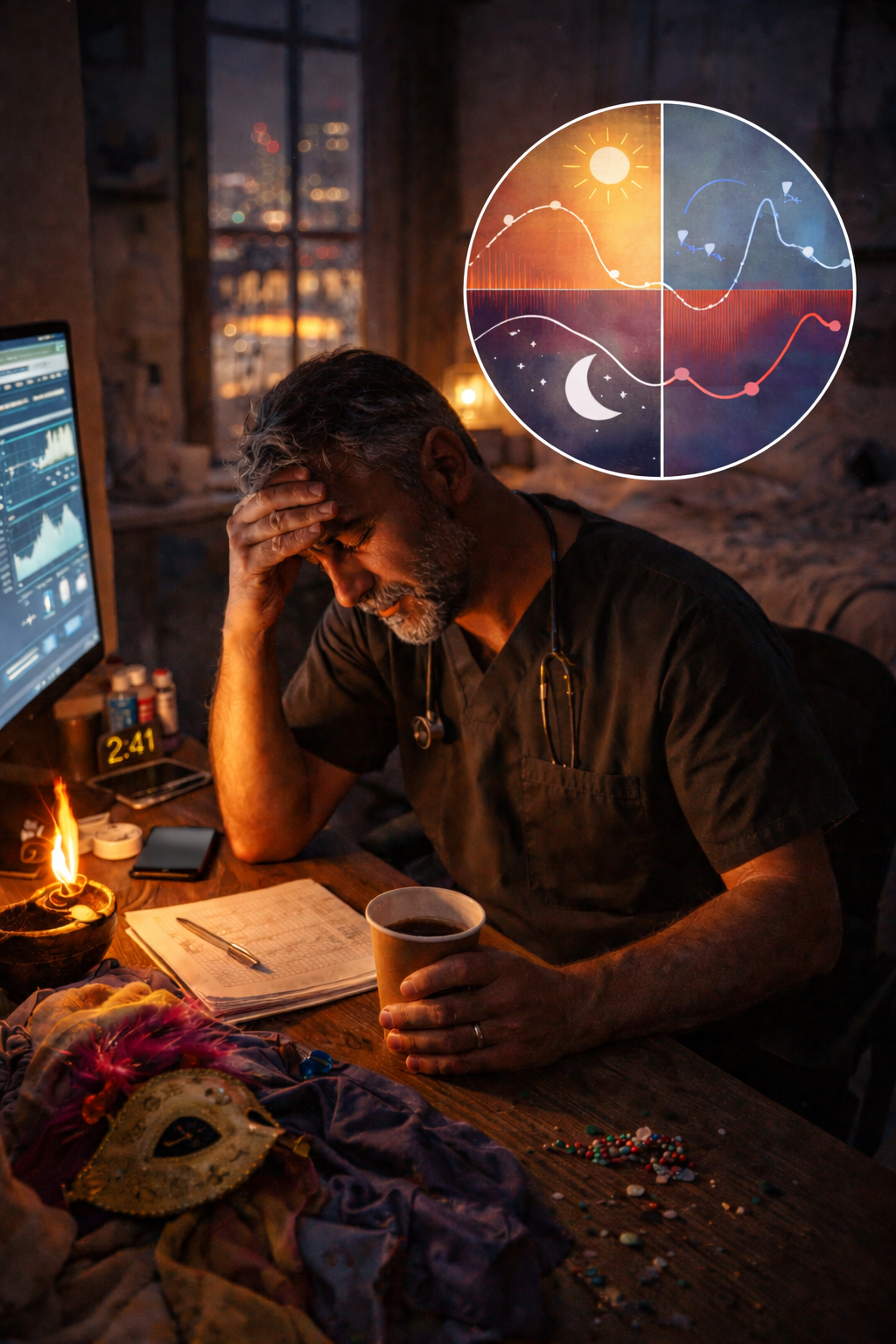
One of the most common patterns I see in practice is not injury, it is irregularity. People don’t usually fall apart because of one dramatic event. They slowly erode because their rhythms are inconsistent. Sleep shifts, they miss meals or they are rushed and irregular, stress comes in waves without recovery. Movement is either excessive or absent as is the breath. The body does not resist intensity as much as it resists unpredictability. The human nervous system is rhythmic by design.
Your hormones follow a 24-hour circadian cycle. Cortisol rises in the morning to help you wake. Body temperature shifts throughout the day. Digestion, coordination, attention, and recovery all rise and fall in patterns that are far more precise than we tend to acknowledge. When we align with those rhythms, the body becomes efficient. When we override them repeatedly, capacity decreases. Lent is not only a spiritual rhythm, it is physiological wisdom as the days become longer.
Rhythm stabilizes energy and most if not all bodily functions. Consistent wake and sleep times regulate hormones. Regular movement restores joint mobility and muscular balance. Repeated breathwork shifts the nervous system from vigilance to regulation. Small daily practices are far more powerful than occasional extreme efforts. But here is the counterintuitive part, sometimes restoring rhythm requires interrupting habitual rhythm.
Many people operate inside stress cycles that feel normal but are not healthy. Late-night stimulation, constant scrolling (even if it’s the mind scrolling into preoccupation). Reactive mornings, eating in a hurry while distracted or on the run. These habits form their own “rhythms,” but they are misaligned rhythms patterns of overstimulation and eventual exhaustion. To restore true capacity, you sometimes have to gently challenge what feels familiar.
Go to bed earlier when you “don’t feel tired”
Take a short walk in the middle of the day when your instinct is to push through
Pause before responding
Stand upright instead of collapsing into the chair
These small disruptions reset larger systems. Healing rarely requires dramatic intervention. It requires steady alignment.
This week, as we reflect on Fairness and Justice, consider what fairness looks like physiologically. Are you fair to your body’s need for sleep? Are you fair to your muscles’ need for movement? Are you fair to your nervous system’s need for recovery?
The body thrives on predictable structure and intelligent variation. Rhythm stabilizes the system; it regulates hormones, steadies the nervous system, and restores baseline. Rhythm builds resilience, the ability to return to center after stress. But variation, introduced wisely and in proportion, expands what the system can handle. A slightly heavier load. A longer exhale. A new movement pattern. A modest fast. Variation builds capacity or the ability to carry more than before. Too much rhythm without variation leads to stagnation. Too much variation without rhythm leads to breakdown. Together they create anti-fragility. Lent, at its best, honors both: steady daily practices that protect the foundation, and measured challenges that gently increase strength.
When patients leave my office smiling, it is not because something was “fixed” instantly. It is because something reorganized. The body remembered how to regulate. Often that reorganization begins with restoring rhythm and protecting it. Simplification restores rhythm. Rhythm restores capacity.
Within 10–20 minutes of waking, step outside for natural light exposure — even if it is cloudy. Stand upright. Breathe slowly. Let your eyes take in the horizon (without staring at the sun). This anchors your circadian clock and improves sleep quality later in the evening. Consistency matters more than duration.
At some point between late morning and mid-afternoon, interrupt your habitual pattern. If you usually push through, pause for five minutes of slow nasal breathing. If you usually sit for long stretches, take a 10-minute walk. If you are mentally overloaded, lie on the floor and elevate your legs against a wall.
This deliberate disruption recalibrates the nervous system and prevents the afternoon cortisol spike that many mistake for “needing more caffeine.”
Choose one small boundary that signals the body it is safe to power down.
Turn off screens 30 minutes earlier.
Dim lights after sunset.
Sit upright and practice five slow breaths with extended exhales (inhale 4, exhale 6).
Do this at roughly the same time each night. Repetition builds capacity. The Pilgrim walks with intention and the body heals with rhythm. Protect your rhythm this week, not as restriction, but as respect.
About Dr. Rhett
Dr. Rhett Bogacz is a chiropractor and educator focused on posture, breath, and nervous system regulation. His work supports embodied formation and long-term resilience.
Uno dei modelli più comuni che osservo nella mia pratica non è l'infortunio, ma l'irregolarità. Di solito le persone non crollano a causa di un evento drammatico. Si logorano lentamente perché i loro ritmi sono incostanti. Il sonno è irregolare, saltano i pasti o mangiano in fretta e in modo irregolare, lo stress arriva a ondate senza possibilità di recupero. Il movimento è eccessivo o assente, così come il respiro. Il corpo non resiste tanto all'intensità quanto all'imprevedibilità. Il sistema nervoso umano è ritmico per natura.
Gli ormoni seguono un ciclo circadiano di 24 ore. Il cortisolo aumenta al mattino per aiutare a svegliarsi. La temperatura corporea varia durante il giorno. La digestione, la coordinazione, l'attenzione e il recupero aumentano e diminuiscono secondo schemi molto più precisi di quanto tendiamo a riconoscere. Quando ci allineiamo a questi ritmi, il corpo diventa efficiente. Quando li sovrascriviamo ripetutamente, la capacità diminuisce. La Quaresima non è solo un ritmo spirituale, è saggezza fisiologica man mano che le giornate si allungano.
Il ritmo stabilizza l'energia e la maggior parte, se non tutte, le funzioni corporee. Orari di veglia e di sonno costanti regolano gli ormoni. Il movimento regolare ripristina la mobilità articolare e l'equilibrio muscolare. La respirazione ripetuta sposta il sistema nervoso dalla vigilanza alla regolazione. Piccole pratiche quotidiane sono molto più potenti di sforzi estremi occasionali. Ma ecco la parte controintuitiva: a volte ripristinare il ritmo richiede l'interruzione del ritmo abituale.
Molte persone operano all'interno di cicli di stress che sembrano normali ma non sono salutari. Stimolazione notturna, scorrimento costante (anche se è la mente che scorre verso la preoccupazione). Mattine reattive, mangiare in fretta mentre si è distratti o di corsa. Queste abitudini formano i propri “ritmi”, ma sono modelli di ritmi disallineati di sovrastimolazione e eventuale esaurimento. Per ripristinare la vera capacità, a volte è necessario sfidare delicatamente ciò che ci è familiare.
Andare a letto prima quando “non ci si sente stanchi”
Fare una breve passeggiata a metà giornata quando l'istinto è quello di andare avanti
Fermarsi prima di rispondere
Stare in piedi invece di sprofondare nella sedia
Queste piccole interruzioni ripristinano sistemi più grandi. La guarigione raramente richiede un intervento drammatico. Richiede un allineamento costante.
Questa settimana, mentre riflettiamo su equità e giustizia, considerate come si manifesta l'equità dal punto di vista fisiologico. Siete equi nei confronti del bisogno di sonno del vostro corpo? Siete equi nei confronti del bisogno di movimento dei vostri muscoli? Siete equi nei confronti del bisogno di recupero del vostro sistema nervoso?
Il corpo prospera grazie a una struttura prevedibile e a variazioni intelligenti. Il ritmo stabilizza il sistema, regola gli ormoni, stabilizza il sistema nervoso e ripristina la linea di base. Il ritmo costruisce la resilienza, la capacità di tornare al centro dopo lo stress. Ma la variazione, introdotta con saggezza e in proporzione, espande ciò che il sistema è in grado di gestire. Un carico leggermente più pesante. Un'espirazione più lunga. Un nuovo schema di movimento. Un digiuno moderato. La variazione costruisce la capacità o l'abilità di trasportare più di prima. Troppo ritmo senza variazione porta alla stagnazione. Troppa variazione senza ritmo porta al collasso. Insieme creano antifragilità. La Quaresima, nella sua forma migliore, onora entrambi: pratiche quotidiane costanti che proteggono le fondamenta e sfide misurate che aumentano delicatamente la forza.
Quando i pazienti lasciano il mio studio sorridendo, non è perché qualcosa è stato “aggiustato” all'istante. È perché qualcosa si è riorganizzato. Il corpo ha ricordato come regolarsi. Spesso questa riorganizzazione inizia con il ripristino del ritmo e la sua protezione. La semplificazione ripristina il ritmo. Il ritmo ripristina la capacità.
Entro 10-20 minuti dal risveglio, uscite all'aperto per esporvi alla luce naturale, anche se è nuvoloso. State in piedi. Respirate lentamente. Lasciate che i vostri occhi guardino l'orizzonte (senza fissare il sole). Questo fissa il vostro orologio circadiano e migliora la qualità del sonno più tardi la sera. La costanza è più importante della durata.
A un certo punto tra la tarda mattinata e il primo pomeriggio, interrompete il vostro schema abituale. Se di solito continuate a lavorare, fate una pausa di cinque minuti respirando lentamente con il naso. Se di solito state seduti per lunghi periodi, fate una passeggiata di 10 minuti. Se siete mentalmente sovraccarichi, sdraiatevi sul pavimento e sollevate le gambe contro un muro.
Questa interruzione deliberata ricalibra il sistema nervoso e previene il picco pomeridiano di cortisolo che molti scambiano per “bisogno di più caffeina”.
Scegli un piccolo limite che segnali al corpo che è sicuro spegnersi.
Spegni gli schermi 30 minuti prima.
Abbassa le luci dopo il tramonto.
Siediti con la schiena dritta e fai cinque respiri lenti con espirazioni prolungate (inspira 4, espira 6).
Fallo più o meno alla stessa ora ogni sera. La ripetizione rafforza la capacità. Il pellegrino cammina con intenzione e il corpo guarisce con il ritmo. Proteggi il tuo ritmo questa settimana, non come una restrizione, ma come rispetto.
Informazioni sul dottor Rhett
Il dottor Rhett Bogacz è un chiropratico ed educatore specializzato in postura, respirazione e regolazione del sistema nervoso. Il suo lavoro sostiene la formazione incarnata e la resilienza a lungo termine.
Paolo Vizziello, Formation, Discipline & Daily Practice
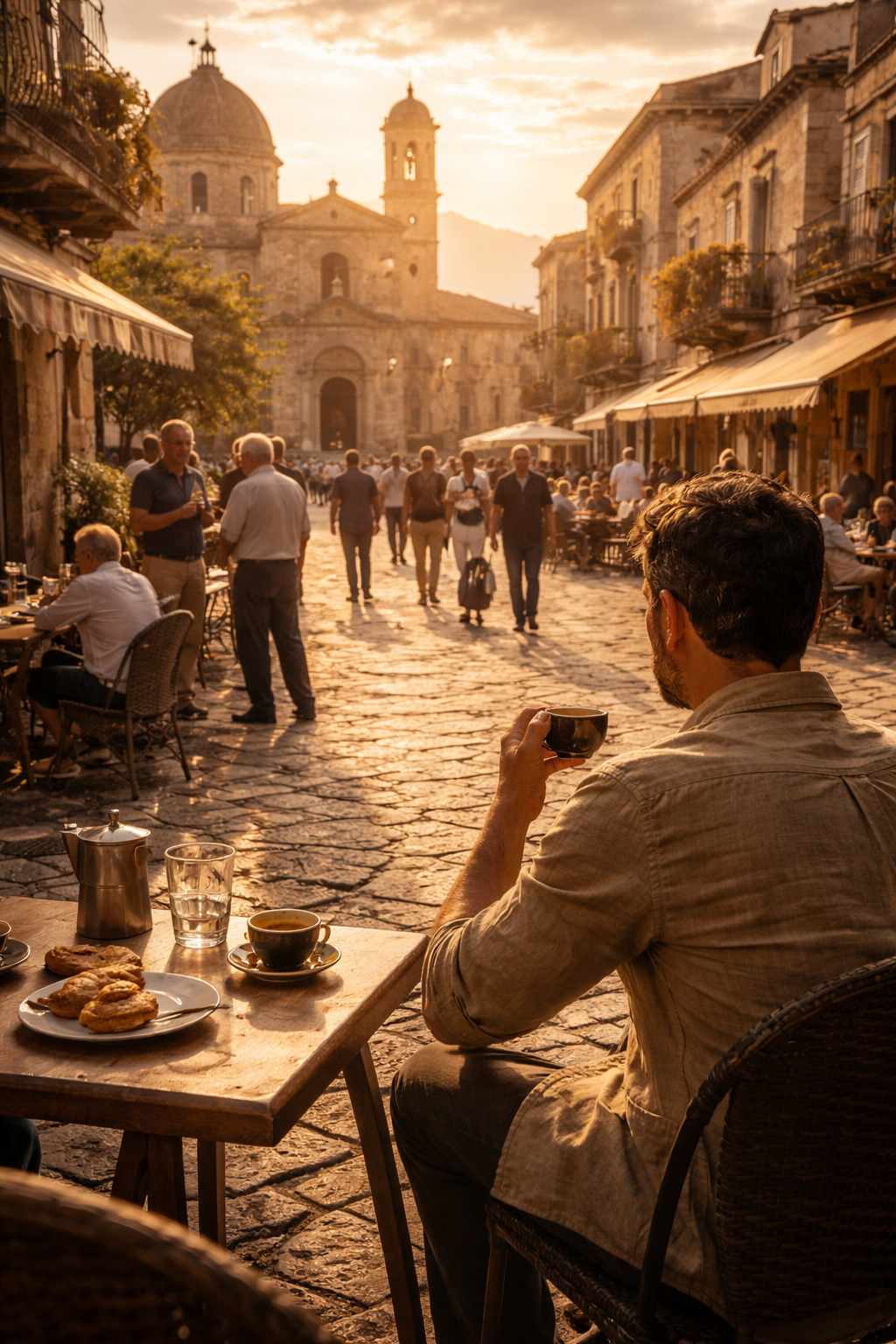
In Southern Italy, rhythm is not something we talk about often. It’s something we live inside. Shops close in the afternoon. Families gather on Sundays. Feast days interrupt the calendar in ways that feel ancient and ordinary at the same time. Even the way people move through the piazza has a tempo to it, slower than the north, slower than the United States, but not lazy. It's cyclical.
As a child, I didn’t think of that as formation. I thought of it as normal life. But the older I get and the more I consider making changes in my work, the more I see how deeply rhythm shapes capacity.
There’s a temptation in Southern Italy to swing between extremes. Long stretches of waiting, followed by sudden urgency. Bureaucratic delay, followed by last-minute pressure. Celebration, followed by fatigue. It’s easy to get caught in those waves. You adapt to irregularity. You normalize inconsistency. But that pattern doesn’t build anything lasting. If I’m honest, one of the tensions I feel right now isn’t about opportunity. It’s about sustainability. I can imagine a different professional direction. I can see possibilities. But the question beneath the ideas is simpler: can I build a rhythm that supports it? Because desire without rhythm becomes frustration.
I’ve realized something uncomfortable this year. Sometimes I’ve waited for clarity before committing to structure. I’ve told myself, “When I know exactly what I’m doing, then I’ll organize my time differently.” But rhythm doesn’t wait for certainty. Rhythm creates the conditions for clarity. This is where Fairness and Justice becomes personal.
It’s not only about how society treats opportunity. It’s about how I treat my own potential. Am I fair with my time? Do I give serious effort only to what is urgent, or also to what is important? Do I expect results from myself without building the structure that would make those results possible? Justice, at this level, is proportion.
If I want growth, I must give it space. If I want direction, I must return consistently. If I want to move from Pilgrim to Builder, I cannot live on bursts of motivation. I need repeatable patterns.
Lent makes this visible. Carnevale was loud and joyful but Lent is quiet and steady. Both belong to the culture. But only one increases capacity. This week I’m not trying to change everything. I’m trying to protect one rhythm. One daily return. One small discipline that I can sustain without resentment. Because I’m beginning to see that formation is less about the big decision and more about what I repeat. What I repeat, eventually, becomes what I can carry.
About Paolo
Paolo Vizziello is a craftsman and formation guide whose reflections focus on discipline, presence, and daily practice rooted in lived experience.
Nel Sud Italia, il ritmo non è qualcosa di cui si parla spesso. È qualcosa che viviamo dentro di noi. I negozi chiudono nel pomeriggio. Le famiglie si riuniscono la domenica. I giorni di festa interrompono il calendario in modi che sembrano antichi e ordinari allo stesso tempo. Anche il modo in cui le persone si muovono per la piazza ha un suo tempo, più lento rispetto al nord, più lento rispetto agli Stati Uniti, ma non pigro. È ciclico.
Da bambino non lo consideravo una formazione. Lo consideravo una vita normale. Ma più invecchio e più penso di apportare cambiamenti al mio lavoro, più mi rendo conto di quanto il ritmo influenzi profondamente le capacità.
Nel Sud Italia c'è la tentazione di oscillare tra gli estremi. Lunghi periodi di attesa seguiti da un'improvvisa urgenza. Ritardi burocratici seguiti da pressioni dell'ultimo minuto. Festeggiamenti seguiti da stanchezza. È facile farsi travolgere da queste onde. Ci si adatta all'irregolarità. Si normalizza l'inconsistenza. Ma questo modello non costruisce nulla di duraturo. Se devo essere sincero, una delle tensioni che provo in questo momento non riguarda le opportunità. Riguarda la sostenibilità. Posso immaginare una direzione professionale diversa. Vedo delle possibilità. Ma la domanda alla base delle idee è più semplice: posso costruire un ritmo che la sostenga? Perché il desiderio senza ritmo diventa frustrazione.
Quest'anno ho capito una cosa scomoda. A volte ho aspettato di avere chiarezza prima di impegnarmi in una struttura. Mi sono detto: “Quando saprò esattamente cosa sto facendo, organizzerò il mio tempo in modo diverso”. Ma il ritmo non aspetta la certezza. Il ritmo crea le condizioni per la chiarezza. È qui che l'equità e la giustizia diventano personali.
Non si tratta solo di come la società tratta le opportunità. Si tratta di come tratto il mio potenziale. Sono equo con il mio tempo? Mi impegno seriamente solo per ciò che è urgente o anche per ciò che è importante? Mi aspetto risultati da me stesso senza costruire la struttura che li renderebbe possibili? La giustizia, a questo livello, è proporzione.
Se voglio crescere, devo dargli spazio. Se voglio una direzione, devo tornare con costanza. Se voglio passare da pellegrino a costruttore, non posso vivere di slanci di motivazione. Ho bisogno di schemi ripetibili.
La Quaresima lo rende visibile. Il Carnevale era rumoroso e gioioso, ma la Quaresima è tranquilla e costante. Entrambi appartengono alla cultura. Ma solo uno aumenta la capacità. Questa settimana non sto cercando di cambiare tutto. Sto cercando di proteggere un ritmo. Un ritorno quotidiano. Una piccola disciplina che posso sostenere senza risentimento. Perché sto cominciando a capire che la formazione non riguarda tanto le grandi decisioni quanto ciò che ripeto. Ciò che ripeto, alla fine, diventa ciò che posso portare con me.
Informazioni su Paolo
Paolo Vizziello è un artigiano e guida alla formazione le cui riflessioni si concentrano sulla disciplina, la presenza e la pratica quotidiana radicata nell'esperienza vissuta.
Paolo Vizziello, Formation, Discipline & Daily Practice
In Southern Italy, Carnevale has its own rhythm: celebration, indulgence, parades, generosity. Tables are full, sweets are passed around all day, spending increases almost without thinking. And then Lent begins, and the tone shifts - streets are quiet, the appetite narrows, pace steadies, and the final weeks of winter will soon turn to the first weeks of spring. Money follows the same pattern.
Fairness and Justice apply to finances just as much as relationships. Fairness with money means giving each category of your life its proper proportion. It means not allowing appetite to override intention. It means being honest about what is sustainable. This week, instead of dramatic cuts or guilt-driven corrections, think rhythm.
Practice Financial Fairness with Future You: Set aside a small, steady amount even modest toward savings or debt reduction. Fairness includes tomorrow and sometimes we forget to “pay ourselves first.”.
Restore Proportion Before You Restrict: Look at last month honestly. Where did spending expand beyond intention? Not to criticize but to observe. Justice begins with clarity. Identify one category that needs rebalancing.
Create a Weekly “Return” Check-In: Choose one consistent time each week, Sunday evening, perhaps to review spending calmly. Not daily anxiety. Weekly awareness. Rhythm builds capacity.
Money magnifies your rhythm, irregular spending produces irregular stability, but measured, repeatable discipline produces freedom. Financial capacity, like physical and spiritual capacity, grows quietly through steady, fair, sustainable patterns. What you manage with discernment, you can build with confidence.
Nel Sud Italia, il Carnevale ha un suo ritmo: festeggiamenti, indulgenza, sfilate, generosità. Le tavole sono imbandite, i dolci vengono distribuiti tutto il giorno, le spese aumentano quasi senza che ce ne rendiamo conto. Poi inizia la Quaresima e il tono cambia: le strade sono tranquille, l'appetito diminuisce, il ritmo si stabilizza e le ultime settimane dell'inverno lasciano presto il posto alle prime settimane della primavera. Il denaro segue lo stesso schema.
L'equità e la giustizia si applicano alle finanze tanto quanto alle relazioni. Equità con il denaro significa dare a ogni categoria della tua vita la giusta proporzione. Significa non permettere che l'appetito prevalga sull'intenzione. Significa essere onesti su ciò che è sostenibile. Questa settimana, invece di tagli drastici o correzioni dettate dal senso di colpa, pensa al ritmo.
Pratica l'equità finanziaria con il tuo futuro: metti da parte una piccola somma costante, anche modesta, per risparmiare o ridurre i debiti. L'equità include il domani e a volte ci dimentichiamo di “pagare prima noi stessi”.
Ripristina le proporzioni prima di limitarti: guarda onestamente al mese scorso. Dove le spese hanno superato le intenzioni? Non per criticare, ma per osservare. La giustizia inizia con la chiarezza. Identifica una categoria che necessita di un riequilibrio.
Crea un controllo settimanale dei “rendimenti”: scegli un momento fisso ogni settimana, magari la domenica sera, per rivedere con calma le spese. Non ansia quotidiana. Consapevolezza settimanale. Il ritmo crea capacità.
Il denaro amplifica il tuo ritmo, le spese irregolari producono stabilità irregolare, ma una disciplina misurata e ripetibile produce libertà. La capacità finanziaria, come la capacità fisica e spirituale, cresce silenziosamente attraverso modelli costanti, equi e sostenibili. Ciò che gestisci con discernimento, puoi costruirlo con fiducia.
Jake Claxton, Fatherhood, Formation & the Track

If you’ve ever been around a motocross track after a big race weekend, you know the feeling. Noise, energy, movement and then suddenly, quiet. The trailers are gone, dust settles and what’s left is the track itself… Rutted - Marked - Honest.
That’s what this week feels like. The excitement fades, and what remains is the path. In motocross, there’s a difference between riding when it’s exciting and riding when it’s ordinary. Early in the season, adrenaline carries you. You show up because it’s fun. But if you want to grow and if you want to become more than a Tourist at the track, you have to return when it’s quiet. When no one is watching. When the weather isn’t perfect. That’s where rhythm begins.
The Pilgrim phase in riding isn’t dramatic. It’s repetitive. You show up at the same time. You warm up the same way. You work on the same fundamentals. You don’t try to impress anyone. You build something sustainable. And that rhythm is a form of fairness.
Fairness in motocross isn’t about treating every lap the same. It’s about giving each part of the process its proper weight. You don’t go full throttle on every straight. You don’t skip rest because you “feel good.” You don’t blame the bike when your own posture is off. Justice at the track looks like proportion. If you push too hard without recovery, you get sloppy. If you relax too much without effort, you stagnate. The body knows the difference and so does the bike.
This week, as Lent begins, I’ve been thinking about how rhythm protects us from ourselves. In racing, riders get hurt more often from inconsistency than from intensity. They ride hard one weekend, then disappear for weeks, then try to return at the same level. The body doesn’t respond well to that.
It’s the same in fatherhood and marriage. When I’m steady, my boys feel it. When I’m inconsistent: distracted, reactive, tired because I ignored sleep, or hungry, they feel that too. Fairness and Justice in a house doesn’t mean equal time every minute. It means appropriate presence. It means giving my wife and kids what they’re actually due, not what’s left over after everything else. The Pilgrim isn’t trying to prove strength. He’s trying to build sustainability.
Lent isn’t about dramatic sacrifice for me this year. It’s about protecting rhythm. Going to bed when I should. Returning to small disciplines. Being fair with my energy so that the people who depend on me don’t receive the leftovers. As we’ve elaborated, rhythm creates capacity and capacity is what lets you keep walking when the excitement fades. At the track, at home, and while sustaining the path the real strength isn’t in the big moment, it’s in the return.
About Jake
Jake Claxton is a husband, father of two sons, and founder of Ride By Design. His reflections draw from family life, faith, and lessons learned on the motocross track.
Se siete mai stati su una pista di motocross dopo un intenso weekend di gare, sapete di cosa sto parlando. Rumore, energia, movimento e poi, all'improvviso, silenzio. I rimorchi se ne sono andati, la polvere si è posata e ciò che rimane è la pista stessa... Solcata, segnata, sincera.
È così che mi sento questa settimana. L'eccitazione svanisce e ciò che rimane è il viaggio. Nel motocross, c'è una differenza tra guidare quando è emozionante e guidare quando è normale. All'inizio della stagione, l'adrenalina ti trascina. Ti presenti perché è divertente. Ma se vuoi crescere e se vuoi diventare più di un turista in pista, devi tornare quando è tranquillo. Quando nessuno ti guarda. Quando il tempo non è perfetto. È allora che inizia il ritmo.
La fase pellegrina della guida non è drammatica. È ripetitiva. Ti presenti alla stessa ora. Ti riscaldi allo stesso modo. Lavori sugli stessi fondamentali. Non cerchi di impressionare nessuno. Stai costruendo qualcosa di sostenibile. E quel ritmo è una forma di equità.
L'equità nel motocross non significa trattare ogni giro allo stesso modo. Significa dare a ogni parte del processo il giusto peso. Non si va a tutto gas su ogni rettilineo. Non si salta il riposo perché “ci si sente bene”. Non si incolpa la moto quando è la propria postura a essere sbagliata. L'equità in pista è proporzione. Se si spinge troppo senza recuperare, si diventa sciatti. Se ci si rilassa troppo senza sforzo, si ristagna. Il corpo conosce la differenza, e anche la moto.
Questa settimana, con l'inizio della Quaresima, ho riflettuto su come il ritmo ci protegga da noi stessi. Nelle corse, i piloti si fanno male più spesso a causa dell'inconsistenza che dell'intensità. Corrono forte un fine settimana, poi scompaiono per settimane, poi cercano di tornare allo stesso livello. Il corpo non risponde bene a questo.
Lo stesso vale per la paternità e il matrimonio. Quando sono costante, i miei figli lo percepiscono. Quando sono incoerente, distratto, reattivo, stanco perché ho ignorato il sonno o sono affamato, lo percepiscono anche loro. Equità e giustizia a casa non significano tempo uguale ogni minuto. Significano presenza appropriata. Significano dare a mia moglie e ai miei figli ciò che effettivamente spetta loro, non ciò che rimane dopo tutto il resto. Il pellegrino non sta cercando di dimostrare la sua forza. Sta cercando di costruire la sostenibilità.
La Quaresima quest'anno non è un sacrificio drammatico per me. Si tratta di proteggere il ritmo. Andare a letto quando dovrei. Tornare alle piccole discipline. Essere equo con la mia energia in modo che le persone che dipendono da me non ricevano gli avanzi. Come abbiamo spiegato, il ritmo crea capacità, e la capacità è ciò che ti permette di continuare a camminare quando l'entusiasmo svanisce. In pista, a casa e mentre si mantiene la strada, la vera forza non sta nel grande momento, ma nella rimonta.
Informazioni su Jake
Jake Claxton è marito, padre di due figli e fondatore di Ride By Design. Le sue riflessioni traggono ispirazione dalla vita familiare, dalla fede e dalle lezioni apprese sulla pista di motocross.
“U pass’ giust’ nun stanc’, u pass’ senza misur’ t’arruvìn.”
Literal translation: The measured step does not exhaust you; the step without proportion ruins you.
In Matera, and across much of the South, walking has always been more than movement, it has been survival. The Sassi, city of stones, while mostly ancient caves, the paths were later built stone paths that climb, narrow, descend, and rise again. You learn quickly that pace matters. If you rush the stairs, you lose breath. If you move without measure, you tire before you arrive or tumble down the steep paths.
This proverb speaks directly to this week’s theme. Justice and Fairness are about measure. Rhythm is about the right pace and the Pilgrim is not the one who walks the fastest, he is the one who walks proportionately. The right step preserves strength. The excessive step depletes it. Lent is not about stopping but the measured step.
Traduzione letterale: Il passo misurato non ti stanca; il passo senza proporzione ti rovina.
A Matera, e in gran parte del Sud, camminare è sempre stato più che un semplice spostamento, è stata una questione di sopravvivenza. I Sassi, città di pietra, sono per lo più antiche grotte, ma in seguito sono stati costruiti sentieri in pietra che salgono, si restringono, scendono e risalgono. Si impara rapidamente che il ritmo è importante. Se si salgono le scale di corsa, si perde il fiato. Se ti muovi senza misura, ti stanchi prima di arrivare o cadi lungo i sentieri ripidi.
Questo proverbio si riferisce direttamente al tema di questa settimana. La giustizia e l'equità riguardano la misura. Il ritmo riguarda il passo giusto e il pellegrino non è colui che cammina più velocemente, ma colui che cammina in modo proporzionato. Il passo giusto preserva la forza. Il passo eccessivo la esaurisce. La Quaresima non riguarda il fermarsi, ma il passo misurato.
Pasta con Mollica e Alici (Pasta with Anchovies and Toasted Breadcrumbs)

This is classic cucina povera from Basilicata, very humble, structured, and deeply satisfying. Breadcrumbs were often called “il formaggio dei poveri” (the poor man’s cheese). It is a dish of proportion: salt, oil, garlic, heat, and a little crunch… nothing is ever wasted, nothing excessive. Perfect for the first week of Lent.
400g spaghetti or linguine
4–6 anchovy fillets (in olive oil)
1 cup stale bread, finely grated (or coarse breadcrumbs)
3–4 tablespoons extra virgin olive oil
1–2 cloves garlic, thinly sliced
1 small dried peperoncino (optional)
Zest of ½ lemon (optional but beautiful)
Fresh parsley, finely chopped
Salt (lightly — anchovies are salty)
Toast the Mollica (Breadcrumbs)
Heat 1–2 tablespoons olive oil in a pan over medium heat.
Add breadcrumbs and stir continuously until golden and crisp (5–7 minutes).
Remove and set aside. They should be fragrant and lightly crunchy — not dark.
Cook the Pasta
Bring a large pot of salted water to a boil.
Cook pasta until al dente. Reserve ½ cup of pasta water before draining.
Build the Sauce
In a large pan, gently heat remaining olive oil.
Add sliced garlic and peperoncino (if using).
Cook slowly until fragrant — do not brown.
Add anchovies and stir until they dissolve into the oil.
Combine
Add drained pasta to the pan.
Toss well, adding a splash of reserved pasta water to emulsify.
Stir in lemon zest (optional) and half of the toasted breadcrumbs.
Plate and top generously with remaining breadcrumbs and fresh parsley. Serve immediately.
This dish reflects the wisdom of Lent in Southern Italy. It is simple but not austere. It honors restraint without denying flavor. It teaches proportion, salt balanced by bread, richness balanced by texture.
It also embodies fairness in the kitchen: nothing wasted, everything used with intention. Stale bread becomes essential. Anchovies provide depth without excess. Olive oil carries the structure. It is a Pilgrim’s meal.
Questo è un classico piatto della cucina povera della Basilicata, molto semplice, strutturato e profondamente soddisfacente. La mollica di pane era spesso chiamata “il formaggio dei poveri”. È un piatto equilibrato: sale, olio, aglio, calore e un po' di croccantezza... nulla viene sprecato, nulla è eccessivo. Perfetto per la prima settimana di Quaresima.
400 g di spaghetti o linguine
4-6 filetti di acciughe (in olio d'oliva)
1 tazza di pane raffermo, grattugiato finemente (o pangrattato grossolano)
3-4 cucchiai di olio extravergine d'oliva
1-2 spicchi d'aglio, affettati sottilmente
1 peperoncino secco piccolo (facoltativo)
Scorza di ½ limone (facoltativa ma gradevole)
Prezzemolo fresco tritato finemente
Sale (poco, perché le acciughe sono salate)
Tostare la mollica (pangrattato): scaldare 1-2 cucchiai di olio d'oliva in una padella a fuoco medio. Aggiungere il pangrattato e mescolare continuamente fino a quando non diventa dorato e croccante (5-7 minuti). Togliere dalla padella e mettere da parte. Dovrebbe essere fragrante e leggermente croccante, non scuro.
Cuocere la pasta: portare a ebollizione una pentola capiente di acqua salata. Cuocere la pasta al dente. Prima di scolarla, mettere da parte ½ tazza di acqua di cottura.
Preparare il sugo: in una padella capiente, scaldare delicatamente l'olio d'oliva rimanente. Aggiungere l'aglio affettato e il peperoncino (se lo si utilizza). Cuocere lentamente fino a quando non diventa fragrante, senza farlo dorare. Aggiungere le acciughe e mescolare fino a quando non si sciolgono nell'olio.
Unire: aggiungere la pasta scolata nella padella. Mescolare bene, aggiungendo un po' dell'acqua di cottura messa da parte per emulsionare. Aggiungere la scorza di limone (facoltativo) e metà del pangrattato tostato.
Impiattare e guarnire generosamente con il pangrattato rimanente e il prezzemolo fresco. Servire immediatamente.
Questo piatto riflette la saggezza della Quaresima nel Sud Italia. È semplice ma non austero. Onora la moderazione senza rinunciare al sapore. Insegna la proporzione, il sale bilanciato dal pane, la ricchezza bilanciata dalla consistenza.
Incarna anche l'equità in cucina: niente viene sprecato, tutto viene usato con intenzione. Il pane raffermo diventa essenziale. Le acciughe danno profondità senza eccessi. L'olio d'oliva sostiene la struttura. È un pasto da pellegrini.
Cosiamo, Founder UMANIAMO® | Formation & Architecture

There is a quiet truth hidden in plain sight, so ordinary that it is easy to overlook: human beings are not designed for constant output. We are designed for rhythm. Every living system depends on it; the heart expands and contracts; the lungs fill and release; muscles tense and relax. Even the seasons move through cycles of growth, harvest, rest, and renewal. Capacity is never created by constant strain. Capacity is created by patterned renewal.
When rhythm is present, strength accumulates. When rhythm is broken, even the strongest systems begin to fail. This is true not only for the body, but for fairness and justice.
Fairness requires clarity. Justice requires the ability to hold competing truths without collapsing into reaction. Neither can emerge from exhaustion, distraction, or fragmentation. They require steadiness. They require presence and capacity, and capacity does not appear on demand. It is built over time, through rhythm.
This is why, in cultures that still remember how to live, Sunday is different. In Southern Italy, Sunday is not merely a pause from work. It is a reoccupation of time. Families gather for lunch, yes, but the meal is only the visible anchor. The deeper structure unfolds slowly across the entire day. Conversation lingers. Rest follows naturally. Later, people return to the streets and cafés, not in a rush, but in continuity. They walk. They talk. They see and are seen. Nothing is optimized. Nothing is accelerated. And yet, something essential is restored. Without naming it explicitly, they are protecting their capacity and the future strength of their relationships.
Because when rhythm is protected, something else becomes possible. People listen more carefully. They speak more truthfully. They respond instead of react. They remember who they are to one another. Fairness lives in that space. Justice lives there too.
The opposite is also true. When rhythm disappears, capacity erodes. Decisions become reactive, patience shortens, listening becomes shallow hearing. Eventually, relationships become transactional and we begin to treat one another not as whole persons, but as functions within systems. Not out of malice, but out of depletion.
This is one of the quiet distortions of modern life. We are surrounded by tools designed to increase efficiency, but efficiency without rhythm eventually weakens the very capacities that make us human. We move faster, but see less clearly. We do more, but understand less deeply. We remain connected, but feel less present. When presence in all its forms disappears, fairness becomes difficult. Rhythm is not a luxury, it’s a responsibility.
To care for the whole person, we must protect the rhythms that restore coherence. To empower individuals for a greater purpose, we must ensure they have the internal steadiness to recognize their gifts. To integrate faith and science, we must honor what both reveal: that human beings require cycles of engagement and renewal to remain healthy and whole. To encourage reflection and discernment, we must create spaces where the mind can settle and see clearly. To value every act of service, we must remember that service flows from capacity, not depletion. To invite continuous growth, we must allow time for integration, not just activity. These are not abstract, ideas they are part of our shared promises of leadership.
When you sit at this table, you are doing more than sharing a meal. You are participating in the restoration of rhythm. You are strengthening the very capacities that allow you to live and lead with fairness, clarity, and purpose. You are remembering that capacity is not created by pushing harder, but by returning regularly to what restores you. This is how justice begins not in systems, but in persons sitting at tables who are steady enough to see clearly and act with integrity.
Simple acts of presence repeated over time as rhythm creates capacity, and capacity, sustained over a lifetime, becomes character. As you step into the week ahead, carry this question with you: what rhythms in your life restore your capacity to see clearly, to listen fully, and to act justly?
Protect those rhythms. They are not interruptions to your purpose. They are what make your purpose possible.
Monday, 23 February — San Policarpo (Vescovo e Martire)
A disciple of Saint John the Apostle, Polycarp represents continuity between the apostolic age and the early Church. His martyrdom in the 2nd century reflects steadfastness under pressure, a reminder that faithfulness is sustained through rhythm, not reaction.
Tuesday, 24 February — San Sergio (Monaco e Martire)
An early Christian witness remembered for courage and constancy. Saints like Sergio remind us that quiet fidelity over time forms character more than dramatic moments ever could.
Wednesday, 25 February — San Cesario di Nazianzo
Brother of Saint Gregory of Nazianzus, Cesario was both physician and civil servant. He represents integration, faith lived within professional life. Justice and fairness are not separate from daily work; they are expressed through it.
Thursday, 26 February — Sant’Alessandro di Alessandria
A bishop who defended orthodox teaching during theological conflict. He models discernment under pressure, holding truth firmly without collapsing into aggression.
Friday, 27 February — San Gabriele dell’Addolorata
A young Passionist saint known for joyful devotion and simplicity. He died at 24, yet his life reflects the power of steady interior rhythm over long years of dramatic achievement.
Saturday, 28 February — San Romano
An early martyr remembered for steadfast courage. His witness reminds us that justice often requires perseverance more than force.
Sunday, 1 March — Sant’Albino (Vescovo)
A bishop known for defending the vulnerable and advocating for fairness in social life. Albino’s legacy connects directly to this week’s theme: justice begins in persons who are willing to protect the dignity of others.
We now move deeper into Lent. The celebration of Carnevale has given way to reflection. The sweetness fades, but clarity increases. The Pilgrim continues walking not with intensity, but with rhythm. And rhythm, protected faithfully, will carry us all the way to Easter.
Rhythm Creates Capacity
There is a quiet truth hidden in plain sight, one so ordinary that it is easy to overlook: human beings are not designed for constant output. We are designed for rhythm.
Every living system depends on it. The heart expands and contracts. The lungs fill and release. Muscles tense and relax. Even the seasons themselves move through cycles of growth, harvest, rest, and renewal. Capacity is never created by constant strain. Capacity is created by patterned renewal.
C'è una verità silenziosa nascosta in bella vista, così ordinaria che è facile trascurarla: gli esseri umani non sono progettati per una produzione costante. Siamo progettati per il ritmo. Ogni sistema vivente dipende da esso; il cuore si espande e si contrae; i polmoni si riempiono e si svuotano; i muscoli si tendono e si rilassano. Anche le stagioni seguono cicli di crescita, raccolto, riposo e rinnovamento. La capacità non viene mai creata da uno sforzo costante. La capacità è creata dal rinnovamento sistematico.
Quando c'è ritmo, la forza si accumula. Quando il ritmo viene interrotto, anche i sistemi più forti iniziano a fallire. Questo vale non solo per il corpo, ma anche per l'equità e la giustizia.
L'equità richiede chiarezza. La giustizia richiede la capacità di sostenere verità contrastanti senza crollare nella reazione. Nessuna delle due può emergere dall'esaurimento, dalla distrazione o dalla frammentazione. Richiedono costanza. Richiedono presenza e capacità, e la capacità non appare su richiesta. Si costruisce nel tempo, attraverso il ritmo.
Ecco perché, nelle culture che ricordano ancora come vivere, la domenica è diversa. Nel Sud Italia, la domenica non è solo una pausa dal lavoro. È una rioccupazione del tempo. Le famiglie si riuniscono per il pranzo, sì, ma il pasto è solo l'ancora visibile. La struttura più profonda si dispiega lentamente nell'arco dell'intera giornata. La conversazione si protrae. Il riposo segue naturalmente. Più tardi, le persone tornano per le strade e nei caffè, non di fretta, ma con continuità. Camminano. Parlano. Vedono e sono visti. Nulla è ottimizzato. Nulla è accelerato. Eppure, qualcosa di essenziale viene ripristinato. Senza nominarlo esplicitamente, stanno proteggendo la loro capacità e la forza futura delle loro relazioni.
Perché quando il ritmo è protetto, qualcos'altro diventa possibile. Le persone ascoltano con più attenzione. Parlano con più sincerità. Rispondono invece di reagire. Ricordano chi sono l'uno per l'altro. In quello spazio vive l'equità. E vive anche la giustizia.
È vero anche il contrario. Quando il ritmo scompare, la capacità si erode. Le decisioni diventano reattive, la pazienza si riduce, l'ascolto diventa superficiale. Alla fine, le relazioni diventano transazionali e iniziamo a trattarci non come persone complete, ma come funzioni all'interno di sistemi. Non per malizia, ma per esaurimento.
Questa è una delle silenziose distorsioni della vita moderna. Siamo circondati da strumenti progettati per aumentare l'efficienza, ma l'efficienza senza ritmo alla fine indebolisce proprio quelle capacità che ci rendono umani. Ci muoviamo più velocemente, ma vediamo meno chiaramente. Facciamo di più, ma comprendiamo meno profondamente. Rimaniamo connessi, ma ci sentiamo meno presenti. Quando la presenza in tutte le sue forme scompare, l'equità diventa difficile. Il ritmo non è un lusso, è una responsabilità.
Per prenderci cura della persona nella sua interezza, dobbiamo proteggere i ritmi che ripristinano la coerenza. Per responsabilizzare gli individui verso uno scopo più grande, dobbiamo assicurarci che abbiano la stabilità interiore necessaria per riconoscere i propri doni. Per integrare fede e scienza, dobbiamo onorare ciò che entrambe rivelano: che gli esseri umani hanno bisogno di cicli di impegno e rinnovamento per rimanere sani e integri. Per incoraggiare la riflessione e il discernimento, dobbiamo creare spazi in cui la mente possa calmarsi e vedere chiaramente. Per valorizzare ogni atto di servizio, dobbiamo ricordare che il servizio scaturisce dalla capacità, non dall'esaurimento. Per invitare alla crescita continua, dobbiamo concedere tempo all'integrazione, non solo all'attività. Queste non sono idee astratte, ma fanno parte delle nostre promesse condivise di leadership.
Quando vi sedete a questo tavolo, state facendo molto più che condividere un pasto. State partecipando al ripristino del ritmo. State rafforzando proprio quelle capacità che vi permettono di vivere e guidare con equità, chiarezza e determinazione. State ricordando che la capacità non si crea spingendo più forte, ma tornando regolarmente a ciò che vi rigenera. È così che la giustizia inizia, non nei sistemi, ma nelle persone sedute a tavola che sono abbastanza salde da vedere chiaramente e agire con integrità.
Semplici atti di presenza ripetuti nel tempo come ritmo creano capacità, e la capacità, sostenuta per tutta la vita, diventa carattere. Mentre ti avvicini alla settimana che ti aspetta, porta con te questa domanda: quali ritmi nella tua vita ripristinano la tua capacità di vedere chiaramente, di ascoltare pienamente e di agire con giustizia?
Proteggi questi ritmi. Non sono interruzioni del tuo scopo. Sono ciò che rende possibile il tuo scopo.
Lunedì 23 febbraio — San Policarpo (Vescovo e Martire)
Discepolo di San Giovanni Apostolo, Policarpo rappresenta la continuità tra l'età apostolica e la Chiesa primitiva. Il suo martirio nel II secolo riflette la fermezza sotto pressione, un promemoria che la fedeltà è sostenuta dal ritmo, non dalla reazione.
Martedì 24 febbraio — San Sergio (Monaco e Martire)
Un testimone dei primi cristiani ricordato per il suo coraggio e la sua costanza. Santi come Sergio ci ricordano che la fedeltà silenziosa nel tempo forma il carattere più di quanto potrebbero mai fare i momenti drammatici.
Mercoledì 25 febbraio — San Cesario di Nazianzo
Fratello di San Gregorio di Nazianzo, Cesario era sia medico che funzionario pubblico. Egli rappresenta l'integrazione, la fede vissuta nella vita professionale. La giustizia e l'equità non sono separate dal lavoro quotidiano, ma si esprimono attraverso di esso.
Giovedì 26 febbraio — Sant'Alessandro di Alessandria
Un vescovo che difese l'insegnamento ortodosso durante un conflitto teologico. È un modello di discernimento sotto pressione, che mantiene saldamente la verità senza cadere nell'aggressività.
Venerdì 27 febbraio — San Gabriele dell'Addolorata
Un giovane santo passionista noto per la sua gioiosa devozione e semplicità. Morì a 24 anni, ma la sua vita riflette il potere di un ritmo interiore costante nel corso di lunghi anni di risultati drammatici.
Sabato 28 febbraio — San Romano
Un martire dei primi tempi ricordato per il suo coraggio incrollabile. La sua testimonianza ci ricorda che la giustizia spesso richiede perseveranza più che forza.
Domenica 1 marzo — Sant'Albino (Vescovo)
Un vescovo noto per aver difeso i vulnerabili e aver sostenuto l'equità nella vita sociale. L'eredità di Albino si collega direttamente al tema di questa settimana: la giustizia inizia nelle persone che sono disposte a proteggere la dignità degli altri.
Ora ci addentriamo nella Quaresima. La celebrazione del Carnevale ha lasciato il posto alla riflessione. La dolcezza svanisce, ma la chiarezza aumenta. Il Pellegrino continua a camminare non con intensità, ma con ritmo. E il ritmo, protetto fedelmente, ci porterà fino alla Pasqua.
Il ritmo crea capacità
C'è una verità silenziosa nascosta in bella vista, così ordinaria che è facile trascurarla: gli esseri umani non sono progettati per una produzione costante. Siamo progettati per il ritmo.
Ogni sistema vivente dipende da esso. Il cuore si espande e si contrae. I polmoni si riempiono e si svuotano. I muscoli si tendono e si rilassano. Anche le stagioni stesse attraversano cicli di crescita, raccolto, riposo e rinnovamento. La capacità non è mai creata da uno sforzo costante. La capacità è creata da un rinnovamento regolare.