Naming the Path
Cosiamo, Founder UMANIAMO® | Formation & Architecture

Every formation journey has a moment when curiosity gives way to direction. January brought us to a threshold. We named a truth that now stands beneath everything that follows: What God builds, He intends. That truth is no longer something to debate or revisit. It is something to walk from. This week, we name the path.
Not everyone begins in the same place. And not everyone is meant to. Formation is not a single experience or a single decision it is a movement, a maturation, a gradual assuming of responsibility. To make sense of that movement, the UMANIAMOⓇ path names four stages that many of us recognize intuitively, even if we’ve never had language for them:
Tourist → Pilgrim → Disciple → Builder
Each stage is honorable and none are permanent.
The Tourist is drawn by beauty, meaning, and possibility. The Tourist asks big questions, explores ideas, and senses that something more is available. This is not shallow or unserious—it is how awakening often begins. But the Tourist does not yet carry responsibility. He observes. He samples. He remains free to move on.
The Pilgrim takes a first decisive step. Something shifts from interest to intention. The Pilgrim chooses to walk with others, to return again, to submit to rhythm and relationship. Formation becomes relational. The road matters more than the view.
The Disciple learns to see clearly. This is the season of discernment, truth-telling, and humility. The Disciple allows assumptions to be challenged and habits to be examined. Discipline enters not as punishment, but as clarity. Lent belongs here.
And finally, the Builder emerges after formation has done its work. Builders are not defined by ideas or insight alone, but by responsibility in the world. They build structures, practices, and communities that serve others. They carry weight. They act.
This week is not about pushing ahead or measuring progress. It is about orientation, about taking a moment to notice where you are before deciding where to go next. Each of us finds ourselves on the path in a different place. Sometimes that place is shaped by curiosity, sometimes by fatigue, sometimes by a quiet sense that something more is possible. The question is not where you think you should be, or where you imagine others might place you. It is simply: where do you find yourself standing today? Naming that place is not an act of judgment. It is an act of honesty. And honesty is what allows formation to become possible.
Movement on this path doesn’t happen through pressure or performance. It happens through consent—through a willingness to take the next step that is actually yours to take. February is about that kind of consent. Not a grand declaration, but a steady readiness to walk. The invitation this week is gentle but real: to notice whether you are content to remain at the edge, or whether you feel a quiet pull to participate more fully—to return, to walk with others, to let rhythm and relationship do their work.
The Sunday Table is open to everyone, wherever they are on the path. There is no requirement to be further along than you are. There is only an invitation to begin from where you stand. The path does have a direction, but it unfolds one step at a time. And the first step is simply choosing to walk.
Ogni percorso formativo ha un momento in cui la curiosità lascia il posto alla direzione. Gennaio ci ha portato a una soglia. Abbiamo dato un nome a una verità che ora sta alla base di tutto ciò che segue: ciò che Dio costruisce, Lui lo intende. Questa verità non è più qualcosa da discutere o riesaminare. È qualcosa da cui partire. Questa settimana, diamo un nome al percorso.
Non tutti iniziano dallo stesso punto. E non tutti sono destinati a farlo. La formazione non è una singola esperienza o una singola decisione, è un movimento, una maturazione, un graduale assumersi di responsabilità. Per dare un senso a questo movimento, il percorso UMANIAMOⓇ dà un nome a quattro fasi che molti di noi riconoscono intuitivamente, anche se non abbiamo mai avuto un linguaggio per descriverle:
Turista → Pellegrino → Discepolo → Costruttore
Ogni fase è onorevole e nessuna è permanente.
Il Turista è attratto dalla bellezza, dal significato e dalle possibilità. Il Turista pone grandi domande, esplora idee e percepisce che c'è qualcosa di più. Questo non è superficiale o poco serio: è così che spesso inizia il risveglio. Ma il Turista non ha ancora alcuna responsabilità. Osserva. Assaggia. Rimane libero di andare avanti.
Il Pellegrino fa un primo passo decisivo. Qualcosa cambia dall'interesse all'intenzione. Il pellegrino sceglie di camminare con gli altri, di tornare di nuovo, di sottomettersi al ritmo e alla relazione. La formazione diventa relazionale. La strada è più importante del panorama.
Il discepolo impara a vedere chiaramente. Questa è la stagione del discernimento, della verità e dell'umiltà. Il discepolo permette che le supposizioni siano messe in discussione e le abitudini esaminate. La disciplina non entra come punizione, ma come chiarezza. La Quaresima appartiene a questo momento.
E infine, il Costruttore emerge dopo che la formazione ha fatto il suo lavoro. I costruttori non sono definiti solo dalle idee o dall'intuizione, ma dalla responsabilità nel mondo. Costruiscono strutture, pratiche e comunità che servono gli altri. Hanno un peso. Agiscono.
Questa settimana non si tratta di andare avanti o di misurare i progressi. Si tratta di orientarsi, di prendersi un momento per notare dove ci si trova prima di decidere dove andare. Ognuno di noi si trova sul percorso in un punto diverso. A volte quel punto è determinato dalla curiosità, a volte dalla stanchezza, a volte dalla tranquilla sensazione che qualcosa di più sia possibile. La domanda non è dove pensi di dover essere o dove immagini che gli altri potrebbero collocarti. È semplicemente: dove ti trovi oggi? Dare un nome a quel punto non è un atto di giudizio. È un atto di onestà. E l'onestà è ciò che rende possibile la formazione.
Il movimento su questo percorso non avviene attraverso la pressione o la performance. Avviene attraverso il consenso, attraverso la volontà di compiere il passo successivo che spetta effettivamente a te. Febbraio riguarda questo tipo di consenso. Non una grande dichiarazione, ma una costante disponibilità a camminare. L'invito di questa settimana è gentile ma reale: notare se sei contento di rimanere ai margini o se senti una silenziosa spinta a partecipare più pienamente, a tornare, a camminare con gli altri, a lasciare che il ritmo e le relazioni facciano il loro lavoro.
La Tavola della Domenica è aperta a tutti, ovunque si trovino lungo il percorso. Non è necessario essere più avanti di quanto non si sia. C'è solo un invito a iniziare da dove ci si trova. Il percorso ha una direzione, ma si snoda un passo alla volta. E il primo passo è semplicemente scegliere di camminare.
Honesty, Authenticity, and Genuineness
This week invites a specific kind of honesty, not emotional exposure and not self-criticism, but accurate self-representation. Honesty is the strength that allows a man to locate himself truthfully on the formation path without collapse or pretense. As we name the path—Tourist → Pilgrim → Disciple → Builder—honesty becomes the bridge between curiosity and commitment. Without it, movement forward is imagined. With it, formation becomes real.
Each week, we offer two simple ways to reflect depending on how and where you find yourself.
The Table Conversation is a short, shared reflection.
It works best around a meal, in the living room, or during unhurried time with friends or family. No preparation is required, only presence.
The D.E.E.P.E.R. Examen is a longer, personal reflection.
It’s designed to be done on your own, at your own pace, with space for silence, journaling, or prayer. You don’t need to do both. Choose the one that fits your moment. Both are ways of paying attention to what has been forming you, so experience can mature into wisdom.
Three reflections for Honesty, Authenticity, and Genuineness
1. Locating Myself Honestly: When you consider the formation path (Tourist, Pilgrim, Disciple, Builder), where do you honestly find yourself right now—and what tells you that?
Purpose: Honesty allows us to name where we are without pretending to be further along or less engaged than we truly are.
2. Alignment and Drift: Where in your life do you feel most aligned at the moment? Where do you sense a quiet drift between what you value and how you are living?
Purpose: The body often reveals misalignment before the mind is ready to admit it. Fatigue, tension, and restlessness can be information rather than failure.
3. The Next True Step: If you weren’t trying to perform, impress, or justify yourself, what would an honest next step look like this week?
Purpose: Formation does not require a full plan. It requires one step that matches reality.
Table Guidance:
Allow responses to emerge without fixing, coaching, or affirming. Leadership strengthens when honesty is witnessed, not evaluated.
Focus: Honesty, Authenticity, and Genuineness
The D.E.E.P.E.R. Examen is not about self-criticism. It is about aligning how you think with what is real so leadership begins from truth rather than impulse.
DETAILS: What actually happened? Allow the events of your day or week to surface plainly, without interpretation. What did you do? Where did you go? Who did you encounter? What commitments did you keep or set aside? Let the facts stand as they are and resist the urge to explain or justify. This step is not about meaning yet. It is about accuracy. The Examen has always begun with reality, because formation cannot proceed from illusion.
EVIDENCE: What do the facts reveal? What evidence is presented through your reflection? Now, look at what the evidence suggests, not what you feel about them, but what they show. Where did your actions align with your stated values? Where did they quietly drift and how do you know? What patterns are becoming visible if you step back far enough to see them? Analytical clarity prevents emotional hijacking and protects you from narratives that are either harsh or flattering, but untrue.
EMPATHY: Who was affected by my choices? Shift your attention from yourself alone to the field of relationship around you. Who benefited from your presence? Who may have felt the absence of your attention, patience, or care? How did your choices affect your body, your energy, your breath, your capacity? Empathy in the Examen is not sentimentality. It is moral awareness. It restores relational intelligence and reminds us that formation is never private, it is always shared.
PROSPECTIVE: What future am I quietly shaping? Now allow imagination to enter, not fantasy, but vision. If you were to continue living as you have been with these rhythms, these patterns, these choices what kind of man would be forming over time? What kind of leader? What kind of builder? Do not force an answer. Let an image or sense emerge. This is the heart of the Examen: seeing forward so that today’s choices gain weight and meaning.
EXECUTION: What is the next right step? From everything you have seen and sensed, name one action - one concrete movement that increases alignment between who you are and how you live. Small actions, taken with clarity, carry more power than grand plans formed under pressure. This is discipline in its truest sense: choosing what is next and doing it faithfully.
REFLECTION: How did I respond to truth? Finally, notice how you processed this time of discernment. Reflection is not evaluation. It is awareness. It helps you recognize your habitual responses to truth whether you hide, argue, collapse, or grow more present. Over time, this awareness becomes wisdom.
REDISCOVER U®, strength of Honesty, Authenticity, and Genuineness
Honesty, authenticity, and genuineness are not traits you perform—they are conditions you return to. The purpose of the Examen is not to produce a better story about yourself, but a truer one. When you tell the truth about where you are on the path, you stop leaking energy into pretense and resistance. Authenticity gathers your strength back into one place. Genuineness allows formation to proceed without distortion. As you walk this path—Tourist → Pilgrim → Disciple → Builder —this kind of honesty becomes the ground beneath every step. Not to judge your progress, but to ensure that the movement forward is real.
Onestà, autenticità e genuinità
Questa settimana invita a un tipo specifico di onestà, non all'esposizione emotiva e non all'autocritica, ma a una rappresentazione accurata di sé. L'onestà è la forza che permette a un uomo di collocarsi sinceramente sul percorso di formazione senza crolli o finzioni. Mentre diamo un nome al percorso - Turista → Pellegrino → Discepolo → Costruttore - l'onestà diventa il ponte tra la curiosità e l'impegno. Senza di essa, il movimento in avanti è immaginario. Con essa, la formazione diventa reale.
Ogni settimana offriamo due semplici modi per riflettere a seconda di come e dove ti trovi.
La conversazione a tavola è una breve riflessione condivisa.
Funziona meglio durante un pasto, in salotto o durante un momento di tranquillità con amici o familiari. Non è necessaria alcuna preparazione, solo la presenza.
L'esame D.E.E.P.E.R. è una riflessione personale più lunga.
È pensata per essere fatta da soli, al proprio ritmo, con spazio per il silenzio, la scrittura di un diario o la preghiera. Non è necessario fare entrambe le cose. Scegli quella più adatta al tuo momento. Entrambe sono modi per prestare attenzione a ciò che ti ha formato, in modo che l'esperienza possa maturare in saggezza.
Tre riflessioni su onestà, autenticità e genuinità
1. Individuare me stesso onestamente: quando consideri il percorso di formazione (Turista, Pellegrino, Discepolo, Costruttore), dove ti trovi onestamente in questo momento e cosa te lo dice?
Scopo: l'onestà ci permette di definire dove siamo senza fingere di essere più avanti o meno impegnati di quanto siamo realmente.
2. Allineamento e deriva: in quale ambito della tua vita ti senti più allineato in questo momento? Dove percepisci una silenziosa deriva tra ciò che apprezzi e il modo in cui vivi?
Scopo: il corpo spesso rivela un disallineamento prima che la mente sia pronta ad ammetterlo. La stanchezza, la tensione e l'irrequietezza possono essere informazioni piuttosto che fallimenti.
3. Il prossimo passo vero: se non cercassi di ottenere risultati, impressionare o giustificarti, quale sarebbe il prossimo passo onesto da compiere questa settimana?
Scopo: la formazione non richiede un piano completo. Richiede un passo che corrisponda alla realtà.
Guida al tavolo:
Lascia che le risposte emergano senza correggere, guidare o affermare. La leadership si rafforza quando l'onestà viene testimoniata, non valutata.
Focus: onestà, autenticità e genuinità
Il D.E.E.P.E.R. Examen non riguarda l'autocritica. Riguarda l'allineamento del proprio modo di pensare con la realtà, affinché la leadership abbia origine dalla verità piuttosto che dall'impulso.
DETTAGLI: cosa è successo realmente? Lascia che gli eventi della tua giornata o della tua settimana affiorino chiaramente, senza interpretazioni. Cosa hai fatto? Dove sei andato? Chi hai incontrato? Quali impegni hai mantenuto o accantonato? Lascia che i fatti rimangano tali e quali e resisti alla tentazione di spiegare o giustificare. Questo passo non riguarda ancora il significato, ma l'accuratezza. L'Esame è sempre iniziato con la realtà, perché la formazione non può procedere dall'illusione.
EVIDENZA: Cosa rivelano i fatti? Quali prove emergono dalla tua riflessione? Ora, guarda cosa suggeriscono le prove, non cosa provi al riguardo, ma cosa mostrano. In quali casi le tue azioni sono state in linea con i valori che hai dichiarato? In quali casi si sono discostate silenziosamente e come lo sai? Quali schemi diventano visibili se fai un passo indietro abbastanza lontano da poterli vedere? La chiarezza analitica impedisce il dirottamento emotivo e ti protegge da narrazioni dure o lusinghiere, ma non veritiere.
EMPATIA: Chi è stato influenzato dalle mie scelte? Sposta la tua attenzione da te stesso al campo delle relazioni che ti circondano. Chi ha beneficiato della tua presenza? Chi potrebbe aver sentito la mancanza della tua attenzione, pazienza o cura? In che modo le tue scelte hanno influenzato il tuo corpo, la tua energia, il tuo respiro, le tue capacità? L'empatia nell'Esame non è sentimentalismo. È consapevolezza morale. Ripristina l'intelligenza relazionale e ci ricorda che la formazione non è mai privata, ma sempre condivisa.
PROSPETTIVA: Quale futuro sto silenziosamente plasmando? Ora lascia entrare l'immaginazione, non la fantasia, ma la visione. Se continuassi a vivere come hai fatto finora con questi ritmi, questi schemi, queste scelte, che tipo di uomo si formerebbe nel tempo? Che tipo di leader? Che tipo di costruttore? Non forzare una risposta. Lascia che emerga un'immagine o una sensazione. Questo è il cuore dell'Esame: guardare avanti affinché le scelte di oggi acquisiscano peso e significato.
EXECUZIONE: Qual è il prossimo passo giusto? Da tutto ciò che hai visto e percepito, nomina un'azione, un movimento concreto che aumenti l'allineamento tra chi sei e come vivi. Le piccole azioni, intraprese con chiarezza, hanno più potere dei grandi piani formati sotto pressione. Questa è la disciplina nel suo senso più vero: scegliere cosa fare dopo e farlo con fedeltà.
RIFLESSIONE: Come ho reagito alla verità? Infine, osserva come hai elaborato questo momento di discernimento. La riflessione non è valutazione. È consapevolezza. Ti aiuta a riconoscere le tue risposte abituali alla verità, che tu ti nasconda, discuta, crolli o diventi più presente. Col tempo, questa consapevolezza diventa saggezza.
REDISCOVER U®, la forza dell'onestà, dell'autenticità e della genuinità
L'onestà, l'autenticità e la genuinità non sono tratti che si interpretano, ma condizioni a cui si ritorna. Lo scopo dell'Esame non è quello di produrre una storia migliore su te stesso, ma una più vera. Quando dici la verità su dove ti trovi nel tuo percorso, smetti di sprecare energia in finzioni e resistenze. L'autenticità raccoglie la tua forza in un unico luogo. La genuinità permette alla formazione di procedere senza distorsioni. Mentre percorri questo cammino - Turista → Pellegrino → Discepolo → Costruttore - questo tipo di onestà diventa il terreno su cui poggia ogni tuo passo. Non per giudicare i tuoi progressi, ma per assicurarti che il movimento in avanti sia reale.
Dr. Rhett Bogacz, DC, Health & Embodied Formation
Every formation journey reaches a moment when curiosity gives way to direction. A moment when we stop collecting insights and begin to ask a quieter, more demanding question: Where am I actually standing?
As we move into the Builder’s Year, we name a truth that now stands beneath everything that follows: What God builds, He intends. That truth is no longer something to debate. It is something to walk from.
This week, we name the path. Naming the path is not about progress or comparison. It is not about pushing forward or fixing what feels broken. It is about orientation, about taking an honest inventory of where we are before deciding where we are being invited to go. This is why the REDISCOVER UⓇ focus this week is Honesty, Authenticity, and Genuineness. Formation does not begin with ambition. It begins with truth. And one of the most honest truths many of us must face is this: we have forgotten how to heal, not only mentally or spiritually, but also physically.
Modern life has trained us into a subtle form of amnesia. We forget that the body has intelligence; that sensation carries information; that movement can restore coherence. We forget that rest, breath, posture, rhythm, and awareness are not “adjuncts” to healing, but central to it. Instead, we outsource authority and wait for permission. We look for answers in white coats, dashboards, apps, and metrics… often helpful, sometimes necessary, but we quietly lose trust in the body’s own capacity to regulate, adapt, and recover. This forgetting has a name.
Thomas Hanna described Sensory Motor Amnesia as the gradual loss of conscious control and sensory awareness of muscular patterns. Under stress, injury, or chronic tension, the nervous system adapts by tightening, guarding, or bracing. Over time, those patterns become unconscious. We no longer feel the tension because the brain has stopped receiving clear feedback. The result is not just stiffness or pain, it is disconnection.
When sensory feedback diminishes; movement becomes less coordinated; breathing becomes shallow; and posture collapses or hardens. The body compensates, energy drains, and healing slows not because the body is broken, but because communication has been interrupted. This is physical amnesia and it mirrors what happens mentally and spiritually. When awareness narrows, we rely on external instruction rather than internal discernment. We lose confidence in our own perception and begin to mistrust sensation, intuition, and timing. The Builder’s Year asks us to reverse that trend, not by rejecting medicine or expertise, but by remembering the role we were designed to play in our own healing and formation.
About Thomas Hanna and the Body’s Forgotten Intelligence
Thomas Hanna (1928–1990) was a philosopher, educator, and movement pioneer who offered a radical but deeply practical insight: many of the aches, pains, and limitations we accept as “normal” are not the result of structural damage, but of lost communication between the brain and the body.
Hanna coined the term Sensory Motor Amnesia (SMA) to describe what happens when muscles remain chronically contracted due to stress, injury, or emotional strain—and the brain gradually stops sensing and regulating those muscles consciously. Over time, these patterns feel “normal,” even though they limit movement, breathing, posture, and vitality. In simple terms, the body hasn’t forgotten how to move the brain has forgotten how to feel.
Honesty is not self-criticism, it’s really self-contact. To name the path from Tourist to Pilgrim to Disciple to Builder, we must first notice how we are inhabiting ourselves - our bodies. Not how we wish we were, but how we actually are. Are we present in our bodies, or living primarily in our heads? Do we trust sensation, or override it? Do we listen for signals, or wait until symptoms force our attention? Authenticity begins with awareness and genuineness begins with permission. The Spirit does not rush this process and neither should we.
These are not exercises to master. They are orienting gestures ways of reintroducing the nervous system to itself inspired by Somatics. Move slowly enough that you can feel how you move, not just that you move (you will want to move slower than you think you should, think slow motion. If you feel strain, you are doing too much. They can be practiced by anyone, at any stage of the path.
1. Pelvic Tilt (Hanna-Style): Restoring communication to the lower spine and pelvis
Purpose: This movement reawakens awareness in the pelvis and lower back—areas that often “go offline” during stress, sitting, or illness.
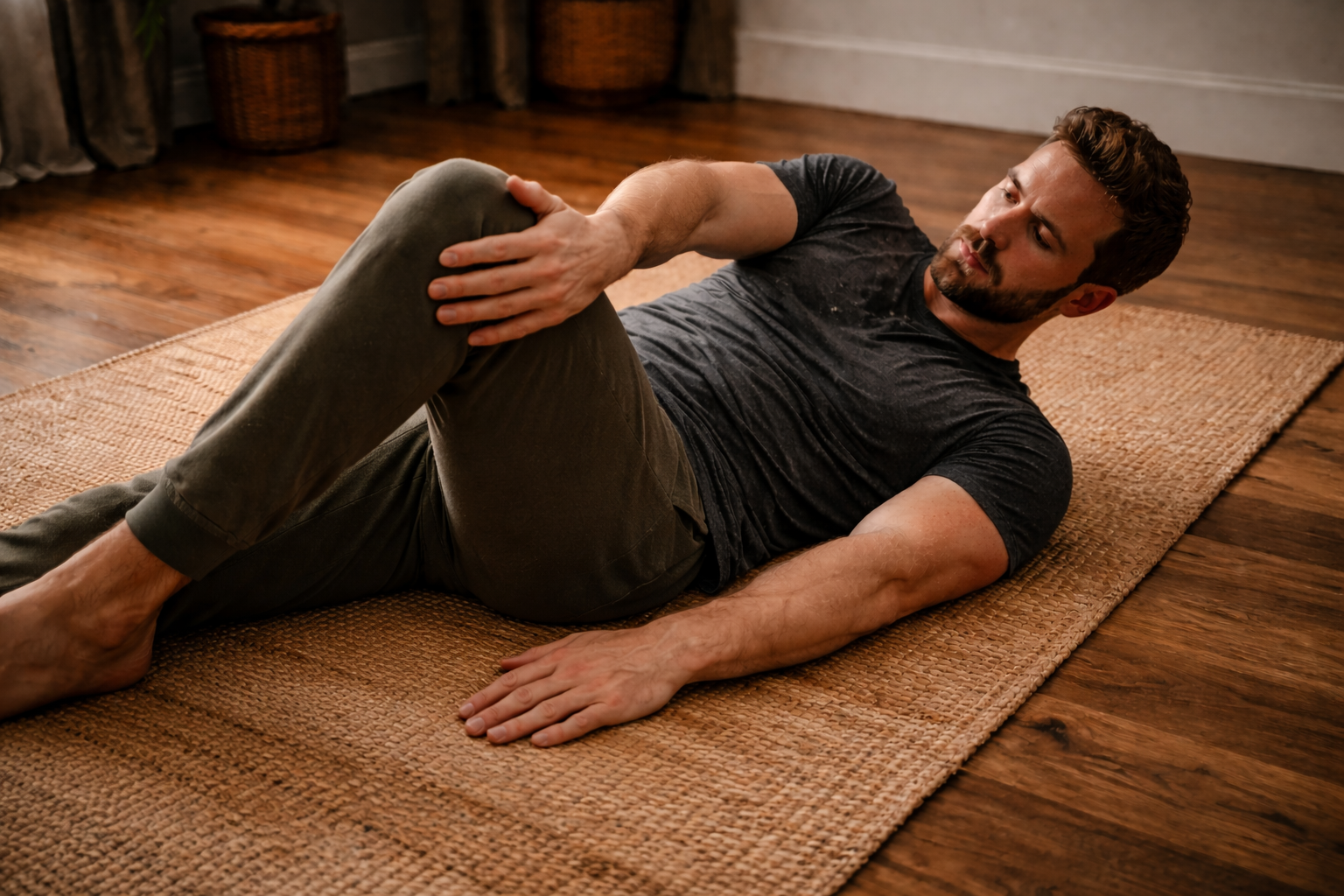
Position: Lie on your back with knees bent and feet flat on the floor, hip-width apart. Let your arms rest comfortably.
Movement
Slowly tilt your pelvis so that your lower back gently presses into the floor.
Notice the effort.
Hold for 2–3 seconds—just long enough to feel the contraction.
Then, very slowly, release and allow the pelvis to tilt in the opposite direction, creating a small arch in the lower back.
Pause. Notice the sensation of release.
Repeat 5–7 times, moving more slowly on the release than the contraction.
Key Awareness Question: Can I feel the difference between effort and ease?
2. Spinal Wave (Gentle Spinal Articulation): Restoring flow and coordination along the spine
Purpose: This movement helps the brain sense the spine as a continuous, living structure rather than a rigid column.
Position: Lie on your back with knees bent, or sit upright on a chair with feet grounded.
Movement (Lying Down)
Begin with a pelvic tilt (as above).
As you press the lower back into the floor, imagine the movement gently traveling upward—through the mid-back, then the upper back.
Release slowly, letting the spine return one segment at a time.
Think of this as a wave, not a push. Repeat 5 times, staying within a small, comfortable range.
Key Awareness Question: Where does the movement feel smooth? Where does it feel unclear or interrupted?
3. Diagonal Reach (Cross-Midline Coordination): Reconnecting left and right sides of the body and brain
Purpose: Cross-midline movements restore coordination and help integrate thinking, feeling, and movement.
Position: Lie on your back or sit comfortably.
Movement
Slowly lift your right arm and reach it gently toward your left knee.
Do not strain to touch, just reach.
Return to center.
Switch sides.
Move slowly, allowing your body time to organize the movement. Repeat 4–6 times per side.
Key Awareness Question: Does one side feel more coordinated than the other?
4. Standing Spinal Wave (Optional): Bringing awareness into upright posture
Position: Stand with feet hip-width apart, knees soft.
Movement
Gently tuck the pelvis and let the movement ripple upward through the spine.
Slowly release back to neutral.
Keep the movement small and smooth.
Repeat 3–5 times.
Key Awareness Question: Can I feel my spine supporting me, rather than holding me up?
Slow the movements down more than you think you need to
Comfort is is communication
Less effort often creates more change
Awareness is the work
Ask yourself gently:
What parts of my body feel familiar? What parts feel forgotten?
How might honesty begin with sensation rather than explanation?
What would it mean to trust my body a little more this week?
About Dr. Rhett
Dr. Rhett Bogacz is a chiropractor and educator focused on posture, breath, and nervous system regulation. His work supports embodied formation and long-term resilience.
Ogni percorso formativo arriva a un punto in cui la curiosità lascia spazio alla direzione. Un momento in cui smettiamo di raccogliere intuizioni e iniziamo a porci una domanda più silenziosa e impegnativa: Dove mi trovo realmente?
Mentre ci avviciniamo all'Anno del Costruttore, diamo un nome a una verità che ora sta alla base di tutto ciò che segue: Ciò che Dio costruisce, è ciò che intende. Questa verità non è più qualcosa su cui discutere. È qualcosa da cui partire.
Questa settimana diamo un nome al percorso. Dare un nome al percorso non significa progredire o fare confronti. Non significa andare avanti o riparare ciò che sembra rotto. Significa orientarsi, fare un inventario onesto di dove ci troviamo prima di decidere dove siamo invitati ad andare. Ecco perché il tema centrale di REDISCOVER UⓇ questa settimana è Onestà, Autenticità e Genuinità. La formazione non inizia con l'ambizione. Inizia con la verità. E una delle verità più oneste che molti di noi devono affrontare è questa: abbiamo dimenticato come guarire, non solo mentalmente o spiritualmente, ma anche fisicamente.
La vita moderna ci ha abituati a una forma sottile di amnesia. Dimentichiamo che il corpo ha intelligenza, che le sensazioni trasportano informazioni, che il movimento può ripristinare la coerenza. Dimentichiamo che il riposo, il respiro, la postura, il ritmo e la consapevolezza non sono “accessori” della guarigione, ma sono fondamentali per essa. Invece, deleghiamo l'autorità e aspettiamo il permesso. Cerchiamo risposte nei camici bianchi, nei cruscotti, nelle app e nelle metriche... spesso utili, a volte necessarie, ma perdiamo silenziosamente la fiducia nella capacità del corpo di regolarsi, adattarsi e recuperare. Questa dimenticanza ha un nome.
Thomas Hanna ha descritto l'amnesia sensoriale motoria come la graduale perdita del controllo cosciente e della consapevolezza sensoriale dei modelli muscolari. In condizioni di stress, lesioni o tensione cronica, il sistema nervoso si adatta irrigidendosi, proteggendosi o rinforzandosi. Con il tempo, questi modelli diventano inconsci. Non sentiamo più la tensione perché il cervello ha smesso di ricevere un feedback chiaro. Il risultato non è solo rigidità o dolore, ma anche disconnessione.
Quando il feedback sensoriale diminuisce, i movimenti diventano meno coordinati, la respirazione diventa superficiale e la postura collassa o si irrigidisce. Il corpo compensa, l'energia si esaurisce e la guarigione rallenta, non perché il corpo sia danneggiato, ma perché la comunicazione è stata interrotta. Si tratta di amnesia fisica, che rispecchia ciò che accade a livello mentale e spirituale. Quando la consapevolezza si restringe, ci affidiamo alle istruzioni esterne piuttosto che al discernimento interno. Perdiamo fiducia nella nostra percezione e iniziamo a diffidare delle sensazioni, dell'intuizione e del tempismo. L'Anno del Costruttore ci chiede di invertire questa tendenza, non rifiutando la medicina o le competenze, ma ricordando il ruolo che siamo stati progettati per svolgere nella nostra guarigione e formazione.
Thomas Hanna e l'intelligenza dimenticata del corpo
Thomas Hanna (1928-1990) è stato un filosofo, educatore e pioniere del movimento che ha offerto una visione radicale ma profondamente pratica: molti dei dolori, dei fastidi e delle limitazioni che accettiamo come “normali” non sono il risultato di danni strutturali, ma della perdita di comunicazione tra il cervello e il corpo.
Hanna ha coniato il termine amnesia sensoriale motoria (SMA) per descrivere ciò che accade quando i muscoli rimangono cronicamente contratti a causa di stress, lesioni o tensione emotiva e il cervello smette gradualmente di percepire e regolare consapevolmente quei muscoli. Con il tempo, questi schemi sembrano “normali”, anche se limitano il movimento, la respirazione, la postura e la vitalità. In termini semplici, il corpo non ha dimenticato come muoversi, ma il cervello ha dimenticato come sentire.
L'onestà non è autocritica, è in realtà contatto con se stessi. Per definire il percorso da turista a pellegrino, da discepolo a costruttore, dobbiamo prima notare come abitiamo noi stessi, i nostri corpi. Non come vorremmo essere, ma come siamo realmente. Siamo presenti nei nostri corpi o viviamo principalmente nelle nostre teste? Ci fidiamo delle sensazioni o le ignoriamo? Ascoltiamo i segnali o aspettiamo che i sintomi costringano la nostra attenzione? L'autenticità inizia con la consapevolezza e la genuinità inizia con il permesso. Lo Spirito non affretta questo processo e nemmeno noi dovremmo farlo.
Questi non sono esercizi da padroneggiare. Sono gesti orientativi, modi per reintrodurre il sistema nervoso a se stesso, ispirati alla somatica. Muoviti abbastanza lentamente da poter sentire come ti muovi, non solo che ti muovi (ti consigliamo di muoverti più lentamente di quanto pensi sia necessario, pensa al rallentatore). Se senti tensione, stai esagerando. Possono essere praticati da chiunque, in qualsiasi fase del percorso.
1. Inclinazione pelvica (stile Hanna): ripristina la comunicazione con la parte inferiore della colonna vertebrale e il bacino
Scopo: questo movimento risveglia la consapevolezza nel bacino e nella parte bassa della schiena, aree che spesso “si disattivano” durante lo stress, la posizione seduta o la malattia.
Posizione: sdraiatevi sulla schiena con le ginocchia piegate e i piedi appoggiati sul pavimento, alla larghezza dei fianchi. Lasciate riposare le braccia in modo confortevole.
Movimento
Inclinate lentamente il bacino in modo che la parte bassa della schiena prema delicatamente sul pavimento. Notate lo sforzo.
Mantenete la posizione per 2-3 secondi, il tempo necessario per sentire la contrazione.
Poi, molto lentamente, rilasciate e lasciate che il bacino si inclini nella direzione opposta, creando una piccola curva nella parte bassa della schiena.
Fermatevi. Notate la sensazione di rilascio.
Ripetete 5-7 volte, muovendovi più lentamente nel rilascio che nella contrazione.
Domanda chiave di consapevolezza: Riesco a sentire la differenza tra sforzo e facilità?
2. Onda spinale (delicata articolazione spinale): Ripristinare il flusso e la coordinazione lungo la colonna vertebrale
Scopo: Questo movimento aiuta il cervello a percepire la colonna vertebrale come una struttura continua e vivente piuttosto che come una colonna rigida.
Posizione: Sdraiatevi sulla schiena con le ginocchia piegate o sedetevi su una sedia con i piedi ben saldi a terra.
Movimento (sdraiati)
Iniziate con un'inclinazione del bacino (come sopra).
Mentre premi la parte bassa della schiena sul pavimento, immagina che il movimento si sposti delicatamente verso l'alto, attraverso la parte centrale della schiena e poi quella superiore.
Rilascia lentamente, lasciando che la colonna vertebrale torni indietro un segmento alla volta.
Consideralo come un'onda, non come una spinta. Ripeti 5 volte, rimanendo entro un range piccolo e confortevole.
Domanda chiave di consapevolezza: Dove il movimento è fluido? Dove è poco chiaro o interrotto?
3. Allungamento diagonale (coordinazione trasversale della linea mediana): riconnettere i lati sinistro e destro del corpo e del cervello
Scopo: i movimenti trasversali della linea mediana ripristinano la coordinazione e aiutano a integrare il pensiero, le sensazioni e il movimento.
Posizione: sdraiatevi sulla schiena o sedetevi comodamente.
Movimento
Sollevate lentamente il braccio destro e allungatelo delicatamente verso il ginocchio sinistro. Non sforzatevi di toccarlo, limitatevi ad allungarlo.
Ritornate al centro.
Cambia lato.
Muoviti lentamente, dando al tuo corpo il tempo di organizzare il movimento. Ripeti 4-6 volte per lato.
Domanda chiave di consapevolezza: Un lato sembra più coordinato dell'altro?
4. Onda spinale in piedi (facoltativo): Portare la consapevolezza nella postura eretta
Posizione: Stai in piedi con i piedi alla larghezza delle anche e le ginocchia morbide.
Movimento
Inclina delicatamente il bacino e lascia che il movimento si propaghi verso l'alto attraverso la colonna vertebrale.
Rilassate lentamente tornando alla posizione neutra.
Mantenete il movimento piccolo e fluido.
Ripetete 3-5 volte.
Domanda chiave di consapevolezza: Riesco a sentire la mia colonna vertebrale che mi sostiene, piuttosto che mi tiene in piedi?
Rallentate i movimenti più di quanto pensiate sia necessario
Il comfort è comunicazione
Meno sforzo spesso crea più cambiamento
La consapevolezza è il lavoro
Chiediti con delicatezza:
Quali parti del mio corpo mi sembrano familiari? Quali parti mi sembrano dimenticate?
In che modo l'onestà potrebbe iniziare con la sensazione piuttosto che con la spiegazione?
Cosa significherebbe fidarsi un po' di più del proprio corpo questa settimana?
Informazioni sul dottor Rhett
Il dottor Rhett Bogacz è un chiropratico ed educatore specializzato in postura, respirazione e regolazione del sistema nervoso. Il suo lavoro sostiene la formazione incarnata e la resilienza a lungo termine.
Paolo Vizziello, Formation, Discipline & Daily Practice
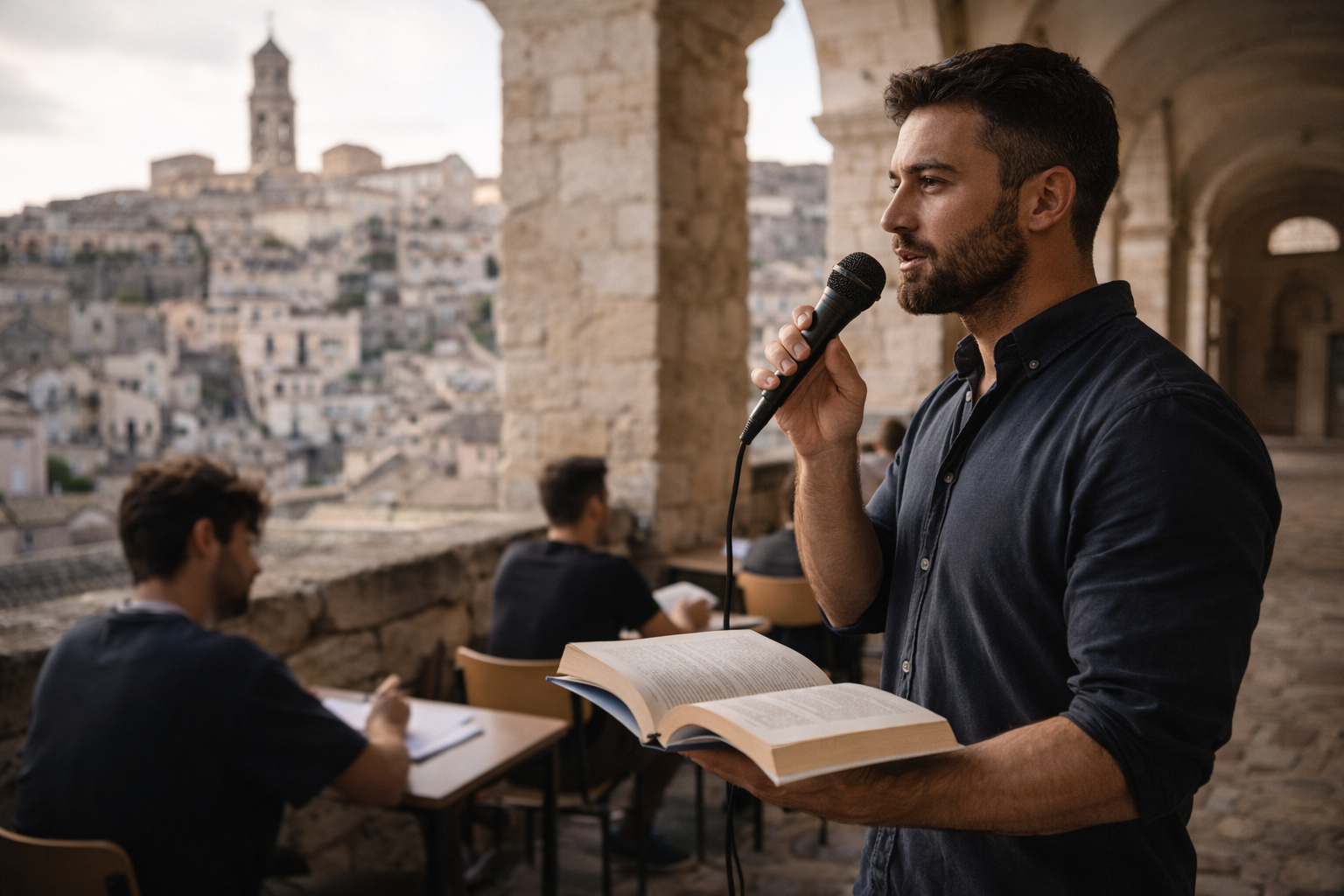
Growing up in Southern Italy gives you a particular relationship with formation, one that isn’t always obvious until you see it from the outside. Education here is still treated as something that shapes the person, not just the résumé. You’re expected to learn languages, often more than one. Latin isn’t unusual. Oral exams are common, which means you can’t hide behind memorization, you have to stand in what you know. Leadership projects, presentations, and public defense of ideas are part of growing up. You’re trained early to speak, to reason, to respond under pressure. In many ways, that kind of formation is deeper than what I see elsewhere. It builds articulation, patience, and a certain intellectual courage. You learn how to think, not just what to repeat. And yet, there’s a tension that comes with it.
In much of Southern Italy, the path from formation to building is not always clear. History, politics, and bureaucracy have shaped a culture where public systems are heavy, opportunities feel limited, and initiative is sometimes met with resistance rather than encouragement. You can be well-formed and still feel unsure where to direct that formation. You can be capable and still hesitate to commit fully, because the environment doesn’t always reward builders. That tension creates a strange risk: remaining permanently prepared.
It’s easy to become a kind of lifelong pilgrim: educated, reflective, relational, but cautious about stepping into full responsibility. Not because of lack of motivation, but because the cost of building can feel disproportionate to the return. Many people hover in that space, waiting for clearer conditions, better timing, or permission that never really comes. This is where this week’s focus on honesty matters so much.
Naming where you are on the path is different from explaining why you’re there. One leads to movement. The other can quietly keep you stuck. Honesty doesn’t deny the realities of culture, history, or politics, but it also doesn’t let them decide everything for you. South Italian culture has taught me patience, depth, and respect for formation. It has also taught me how easy it is to delay building while waiting for ideal circumstances. The challenge is learning when formation has done enough work and when it’s time to carry responsibility anyway.
Builders don’t wait for perfect systems. They work within imperfect ones. They start small. They build locally. They take what has formed them and offer it where it’s needed, even if recognition is slow or incomplete. For me, this week is a reminder that formation isn’t an excuse to stay undecided. It’s preparation for commitment. Honesty helps me see whether I’m still learning or whether I’m avoiding the weight of building.
South Italy has formed me well, now the question is not whether I am formed, it’s where and how I’m willing to build.
About Paolo
Paolo Vizziello is a craftsman and formation guide whose reflections focus on discipline, presence, and daily practice rooted in lived experience.
Imparare da dove proviene la formazione
Crescere nel Sud Italia ti porta ad avere un rapporto particolare con la formazione, che non è sempre evidente finché non lo vedi dall'esterno. Qui l'istruzione è ancora considerata come qualcosa che plasma la persona, non solo il curriculum. Ci si aspetta che tu impari le lingue, spesso più di una. Il latino non è insolito. Gli esami orali sono comuni, il che significa che non puoi nasconderti dietro la memorizzazione, devi difendere ciò che sai. I progetti di leadership, le presentazioni e la difesa pubblica delle idee fanno parte della crescita. Si viene addestrati fin da piccoli a parlare, a ragionare, a rispondere sotto pressione. Per molti versi, questo tipo di formazione è più profonda di quella che vedo altrove. Sviluppa l'eloquenza, la pazienza e un certo coraggio intellettuale. Si impara a pensare, non solo a ripetere. Eppure, c'è una tensione che ne deriva.
In gran parte dell'Italia meridionale, il percorso dalla formazione alla costruzione non è sempre chiaro. La storia, la politica e la burocrazia hanno plasmato una cultura in cui i sistemi pubblici sono pesanti, le opportunità sembrano limitate e l'iniziativa a volte incontra resistenza piuttosto che incoraggiamento. Si può essere ben formati e tuttavia sentirsi incerti su dove indirizzare tale formazione. Si può essere capaci e tuttavia esitare a impegnarsi pienamente, perché l'ambiente non sempre premia i costruttori. Questa tensione crea uno strano rischio: rimanere permanentemente preparati.
È facile diventare una sorta di pellegrino per tutta la vita: istruito, riflessivo, relazionale, ma cauto nell'assumersi la piena responsabilità. Non per mancanza di motivazione, ma perché il costo della costruzione può sembrare sproporzionato rispetto al ritorno. Molte persone rimangono in questo limbo, in attesa di condizioni più chiare, di un momento più propizio o di un permesso che non arriva mai. È qui che l'onestà, tema centrale di questa settimana, assume grande importanza.
Dire dove ti trovi nel percorso è diverso dallo spiegare perché ti trovi lì. Una cosa porta al movimento. L'altra può tenerti tranquillamente bloccato. L'onestà non nega le realtà della cultura, della storia o della politica, ma non lascia che siano loro a decidere tutto per te. La cultura dell'Italia meridionale mi ha insegnato la pazienza, la profondità e il rispetto per la formazione. Mi ha anche insegnato quanto sia facile ritardare la costruzione in attesa di circostanze ideali. La sfida è imparare quando la formazione ha fatto abbastanza e quando è comunque il momento di assumersi la responsabilità.
I costruttori non aspettano sistemi perfetti. Lavorano all'interno di sistemi imperfetti. Iniziano in piccolo. Costruiscono a livello locale. Prendono ciò che li ha formati e lo offrono dove è necessario, anche se il riconoscimento è lento o incompleto. Per me, questa settimana è un promemoria del fatto che la formazione non è una scusa per rimanere indecisi. È una preparazione all'impegno. L'onestà mi aiuta a capire se sto ancora imparando o se sto evitando il peso della costruzione.
Il Sud Italia mi ha formato bene, ora la domanda non è se sono formato, ma dove e come sono disposto a costruire.
Informazioni su Paolo
Paolo Vizziello è un artigiano e guida alla formazione le cui riflessioni si concentrano sulla disciplina, la presenza e la pratica quotidiana radicata nell'esperienza vissuta.
→ Informazioni su Paolo
Paolo Vizziello, Formation, Discipline & Daily Practice
Most financial advice starts with strategy: how to optimize, how to invest, how to grow faster. But strategy only works when it’s built on something solid. This week’s theme, honestyals applies to money more than we usually admit. The most important financial step is not earning more or spending less. It’s accurately naming your current reality.
Many people live with a vague sense of anxiety around money, not because their situation is unsolvable, but because it’s undefined. Numbers are avoided; accounts aren’t reviewed; and decisions are delayed. That avoidance creates pressure not the kind that strengthens, but the kind that erodes confidence over time.
Financial formation begins the same way all formation does: with orientation.
Where are you actually standing?
What do you earn?
What do you owe?
What do you consistently spend, whether you like it or not?
This is not about judgment, it’s about clarity. Until you tell the truth about your financial position, every plan remains theoretical. Once you do, even small adjustments start to matter.
This week’s practical tip: Set aside 30 uninterrupted minutes. Review one thing honestly such as your monthly expenses, a single account, or one recurring financial decision. Don’t fix it yet, just look at it and name it accurately. Builders don’t fear numbers, they use them and with this clarity anxiety turns into agency.
La maggior parte dei consigli finanziari inizia con la strategia: come ottimizzare, come investire, come crescere più rapidamente. Ma la strategia funziona solo quando è basata su qualcosa di solido. Il tema di questa settimana, l'onestà, si applica al denaro più di quanto siamo soliti ammettere. Il passo finanziario più importante non è guadagnare di più o spendere di meno. È definire con precisione la propria realtà attuale.
Molte persone vivono con un vago senso di ansia riguardo al denaro, non perché la loro situazione sia irrisolvibile, ma perché è indefinita. Si evitano i numeri, non si controllano i conti e si rimandano le decisioni. Questo evitamento crea una pressione che non rafforza, ma che con il tempo erode la fiducia.
La formazione finanziaria inizia come tutte le altre formazioni: con l'orientamento.
A che punto sei effettivamente?
Quanto guadagni?
Quanto devi?
Cosa spendi costantemente, che ti piaccia o no?
Non si tratta di giudicare, ma di fare chiarezza. Finché non dici la verità sulla tua posizione finanziaria, ogni piano rimane teorico. Una volta fatto, anche i piccoli aggiustamenti iniziano ad avere importanza.
Consiglio pratico di questa settimana: dedica 30 minuti ininterrotti a rivedere onestamente una cosa, come le tue spese mensili, un singolo conto o una decisione finanziaria ricorrente. Non risolvere ancora il problema, limitati a esaminarlo e a definirlo con precisione. Chi costruisce non teme i numeri, li usa e, grazie a questa chiarezza, l'ansia si trasforma in capacità di agire.
Jake Claxton, Fatherhood, Formation & the Track

One of the first things motocross teaches you is that pretending doesn’t last very long. You can’t fake skill on a track. You can’t bluff your way through a bad setup; and you definitely can’t ride as if the ground underneath you doesn’t matter. The track always tells the truth usually faster than you’re ready for.
I see the same thing in life and family. There’s a season where curiosity and excitement are enough. You’re interested. You’re watching. You’re learning by proximity. That season has value. But at some point, you have to own the path you’re on. In motocross, that moment shows up when you stop riding wherever the bike takes you and start choosing your path or lane intentionally. You commit to where you’re headed because hesitation is what gets you hurt. You don’t need to be aggressive, you just need to be clear.
The danger is trying to stay a tourist too long showing up occasionally, enjoying the environment, but never fully committing to the discipline it requires. Even being a pilgrim has its limits. You can ride with others, learn from the group, and still avoid full responsibility for your own setup, your own decisions, your own mistakes. On a track, that’s when things get unpredictable fast.
Fatherhood and marriage work the same way. You can’t be a tourist in your own family, dropping in when it’s convenient, staying emotionally light, avoiding the weight of responsibility. You also can’t stay a pilgrim forever, always “learning,” always “working on it,” without ever taking full ownership. Kids and spouses feel that hesitation immediately. Instability doesn’t come from lack of love it comes from lack of commitment.
Having two young boys has made me much more honest about what I can and can’t carry. Kids don’t respond to intention; they respond to presence. You can’t half-show up and expect things to hold together. They don’t need perfection, but they do need consistency. And consistency only comes when you stop hovering and start committing.
This week’s focus on honesty and naming where you stand hits close to home. It’s easy to stay interested without stepping fully in to keep options open, to delay decisions, to tell yourself you’re “getting ready.” But readiness isn’t something you reach by waiting. It’s something that forms when you choose the road and keep walking it. The track doesn’t care what you meant to do. It responds to what you actually do. The same is true in leadership, fatherhood, and marriage. When you own your path, your lane, your rhythm, your responsibilities, and your limits things stabilize. The ride gets smoother not because the terrain changes, but because you do. For me, this week is a reminder that honesty isn’t harsh. It’s protective. It keeps you upright. It helps you move forward without forcing speed.
About Jake
Jake Claxton is a husband, father of two sons, and founder of Ride By Design. His reflections draw from family life, faith, and lessons learned on the motocross track.
Una delle prime cose che il motocross ti insegna è che fingere non dura a lungo. Non puoi fingere di essere bravo su una pista. Non puoi bluffare con una cattiva configurazione e sicuramente non puoi guidare come se il terreno sotto di te non avesse importanza. La pista dice sempre la verità, di solito più velocemente di quanto tu sia pronto ad accettare.
Vedo la stessa cosa nella vita e nella famiglia. C'è un periodo in cui la curiosità e l'entusiasmo sono sufficienti.
Sei interessato. Stai guardando. Stai imparando per vicinanza. Quel periodo ha un valore. Ma a un certo punto, devi prendere possesso del percorso che stai seguendo. Nel motocross, quel momento arriva quando smetti di guidare dove ti porta la moto e inizi a scegliere intenzionalmente la tua strada o la tua corsia. Ti impegni a raggiungere la tua meta perché l'esitazione è ciò che ti fa male. Non devi essere aggressivo, devi solo essere chiaro.
Il pericolo è cercare di rimanere un turista troppo a lungo, presentandosi di tanto in tanto, godendosi l'ambiente, ma senza mai impegnarsi completamente nella disciplina che richiede. Anche essere un pellegrino ha i suoi limiti. Puoi guidare con gli altri, imparare dal gruppo e comunque evitare la piena responsabilità per la tua configurazione, le tue decisioni, i tuoi errori. Su una pista, è allora che le cose diventano rapidamente imprevedibili.
La paternità e il matrimonio funzionano allo stesso modo. Non puoi essere un turista nella tua famiglia, fare un salto quando ti fa comodo, rimanere emotivamente distaccato, evitare il peso delle responsabilità. Non puoi nemmeno rimanere un pellegrino per sempre, sempre “imparando”, sempre “lavorandoci”, senza mai assumerti la piena responsabilità. I figli e i coniugi percepiscono immediatamente questa esitazione. L'instabilità non deriva dalla mancanza di amore, ma dalla mancanza di impegno.
Avere due bambini piccoli mi ha reso molto più onesto su ciò che posso e non posso sopportare. I bambini non rispondono alle intenzioni, rispondono alla presenza. Non puoi presentarti a metà e aspettarti che le cose funzionino. Non hanno bisogno di perfezione, ma hanno bisogno di coerenza. E la coerenza arriva solo quando smetti di stare lì a guardare e inizi a impegnarti.
L'attenzione di questa settimana sull'onestà e sul definire la propria posizione mi tocca da vicino. È facile rimanere interessati senza impegnarsi completamente per mantenere aperte le opzioni, ritardare le decisioni, dirsi che ci si sta “preparando”. Ma la preparazione non è qualcosa che si raggiunge aspettando. È qualcosa che si forma quando si sceglie la strada e si continua a percorrerla. Il percorso non si cura di ciò che si intendeva fare. Risponde a ciò che si fa realmente. Lo stesso vale per la leadership, la paternità e il matrimonio. Quando si possiede il proprio percorso, la propria corsia, il proprio ritmo, le proprie responsabilità e i propri limiti, le cose si stabilizzano. Il viaggio diventa più agevole non perché il terreno cambia, ma perché si cambia. Per me, questa settimana è un promemoria del fatto che l'onestà non è dura. È protettiva. Ti mantiene in piedi. Ti aiuta ad andare avanti senza forzare la velocità.
Informazioni su Jake
Jake Claxton è marito, padre di due figli e fondatore di Ride By Design. Le sue riflessioni traggono ispirazione dalla vita familiare, dalla fede e dalle lezioni apprese sulla pista di motocross.
“Quann’ ‘a strada è chiara, pure ‘u passo s’ fa sicuro.”
Literal Translation: When the road is clear, even the step becomes steady.
This proverb captures a quiet wisdom that fits this week perfectly. In Matera, uncertainty was never solved by speed or force, but by clarity. When people knew where they were going, or at least where they stood, their movement became more confident, even on uneven ground. The saying reminds us that hesitation doesn’t usually come from weakness. It comes from not seeing clearly. Once the road is named, the body and the will know how to respond.
Formation works the same way: honesty clears the road and the steps follow naturally. There is no need to run, only to see where you are going.
Traduzione letterale: Quando la strada è chiara, anche il passo diventa sicuro.
Questo proverbio racchiude una saggezza silenziosa che si adatta perfettamente a questa settimana. A Matera, l'incertezza non è mai stata risolta con la velocità o la forza, ma con la chiarezza. Quando le persone sapevano dove stavano andando, o almeno dove si trovavano, i loro movimenti diventavano più sicuri, anche su terreni irregolari. Il detto ci ricorda che l'esitazione di solito non deriva dalla debolezza, ma dal non vedere chiaramente. Una volta che la strada è stata definita, il corpo e la volontà sanno come reagire.
La formazione funziona allo stesso modo: l'onestà apre la strada e i passi seguono naturalmente. Non c'è bisogno di correre, basta vedere dove si sta andando.
Pancotto Lucano (Pane Cotto della Basilicata)
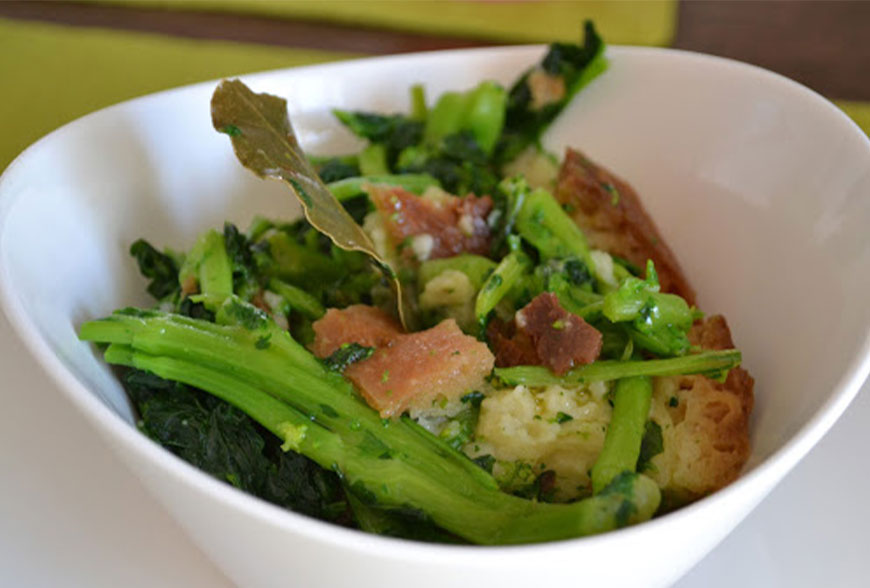
Pancotto was born from clarity and restraint, not scarcity romanticized after the fact. It’s what people made when they told the truth about what they had: stale bread, bitter greens, garlic, olive oil, and time. That makes Pancotto the perfect companion to a week focused on honesty, authenticity, and orientation.
In Lucania, Pancotto was often eaten at the beginning of seasons winter into early spring when people needed warmth, steadiness, and nourishment without excess. It doesn’t stimulate appetite; it settles it. It brings the body back into rhythm.
300–400 g stale bread, preferably rustic country bread
1–1.2 liters water (or light vegetable broth)
1–2 cloves garlic, lightly crushed
200–300 g greens (cicoria, dandelion greens, escarole, chard, or spinach)
Extra virgin olive oil, generous
Salt, to taste
Optional (very traditional):
Chili flakes (peperoncino)
A small onion or leek, thinly sliced
Grated pecorino (added at the table, not in the pot)
Prepare the bread: Tear the stale bread into rough pieces by hand. Do not cut it. The irregular pieces help it absorb liquid properly.
Bring the liquid to a simmer: In a large pot, bring the water (or broth) to a gentle boil. Add a pinch of salt and the crushed garlic. Let it simmer for 2–3 minutes to lightly flavor the liquid.
Add the greens: Add the greens to the pot and cook until tender (3–5 minutes depending on the type).
Add the bread: Lower the heat. Add the bread pieces and stir gently. Let them soften and break down naturally. Do not rush this step, the bread should absorb some of the liquid and become soft but not soupy.
Adjust texture: Cook for 5–10 minutes, stirring occasionally. Add a little water if needed. Pancotto should be thick and spoonable.
Finish with olive oil: Remove from heat. Drizzle generously with extra virgin olive oil. Taste and adjust salt. Add chili flakes if using.
Serve immediately: Serve hot. Pecorino, if used, is added at the table.
In Basilicata, bread is sacred. Pancotto exists because throwing bread away was unthinkable. Instead, it was transformed honestly, simply, and without embellishment. Pancotto is not about making do, it is about making something real from what is already there. A perfect dish for a week devoted to honesty, orientation, and beginning the journey as a Pilgrim.
Pancotto Lucano (Pane Cotto della Basilicata)
Il Pancotto nasce dalla chiarezza e dalla moderazione, non dalla scarsità romanticizzata a posteriori. È ciò che la gente preparava quando diceva la verità su ciò che aveva: pane raffermo, verdure amare, aglio, olio d'oliva e tempo. Questo rende il Pancotto il compagno perfetto per una settimana incentrata sull'onestà, l'autenticità e l'orientamento.
In Lucania, il Pancotto veniva spesso consumato all'inizio delle stagioni, dall'inverno all'inizio della primavera, quando le persone avevano bisogno di calore, stabilità e nutrimento senza eccessi. Non stimola l'appetito, ma lo calma. Riporta il corpo al suo ritmo naturale.
300-400 g di pane raffermo, preferibilmente pane rustico di campagna
1-1,2 litri di acqua (o brodo vegetale leggero)
1-2 spicchi d'aglio, leggermente schiacciati
200-300 g di verdure (cicoria, tarassaco, scarola, bietola o spinaci)
Olio extravergine d'oliva, abbondante
Sale, q.b.
Facoltativo (molto tradizionale):
Peperoncino in fiocchi
Una cipolla piccola o un porro, affettati sottilmente
Pecorino grattugiato (da aggiungere a tavola, non nella pentola)
Preparare il pane: spezzettare il pane raffermo con le mani in pezzi grossolani. Non tagliarlo. I pezzi irregolari aiutano ad assorbire bene il liquido.
Portare il liquido a ebollizione: in una pentola capiente, portare l'acqua (o il brodo) a ebollizione. Aggiungere un pizzico di sale e l'aglio schiacciato. Lasciare sobbollire per 2-3 minuti per insaporire leggermente il liquido.
Aggiungere le verdure: aggiungere le verdure alla pentola e cuocere fino a quando non saranno tenere (3-5 minuti a seconda del tipo).
Aggiungere il pane: abbassare il fuoco. Aggiungere i pezzi di pane e mescolare delicatamente. Lasciarli ammorbidire e sfaldarsi naturalmente. Non affrettare questo passaggio, il pane dovrebbe assorbire parte del liquido e diventare morbido ma non brodoso.
Regolare la consistenza: cuocere per 5-10 minuti, mescolando di tanto in tanto. Aggiungere un po' d'acqua se necessario. Il pancotto deve essere denso e versabile con il cucchiaio.
Completare con l'olio d'oliva: togliere dal fuoco. Condire generosamente con olio extravergine d'oliva. Assaggiare e regolare di sale. Aggiungere i fiocchi di peperoncino, se utilizzati.
Servire immediatamente: servire caldo. Il pecorino, se utilizzato, viene aggiunto a tavola.
In Basilicata, il pane è sacro. Il pancotto esiste perché buttare via il pane era impensabile. Invece, veniva trasformato in modo onesto, semplice e senza abbellimenti. Il pancotto non è un ripiego, ma un modo per creare qualcosa di reale da ciò che è già presente. Un piatto perfetto per una settimana dedicata all'onestà, all'orientamento e all'inizio del viaggio come pellegrini.
Cosiamo, Founder UMANIAMO® | Formation & Architecture
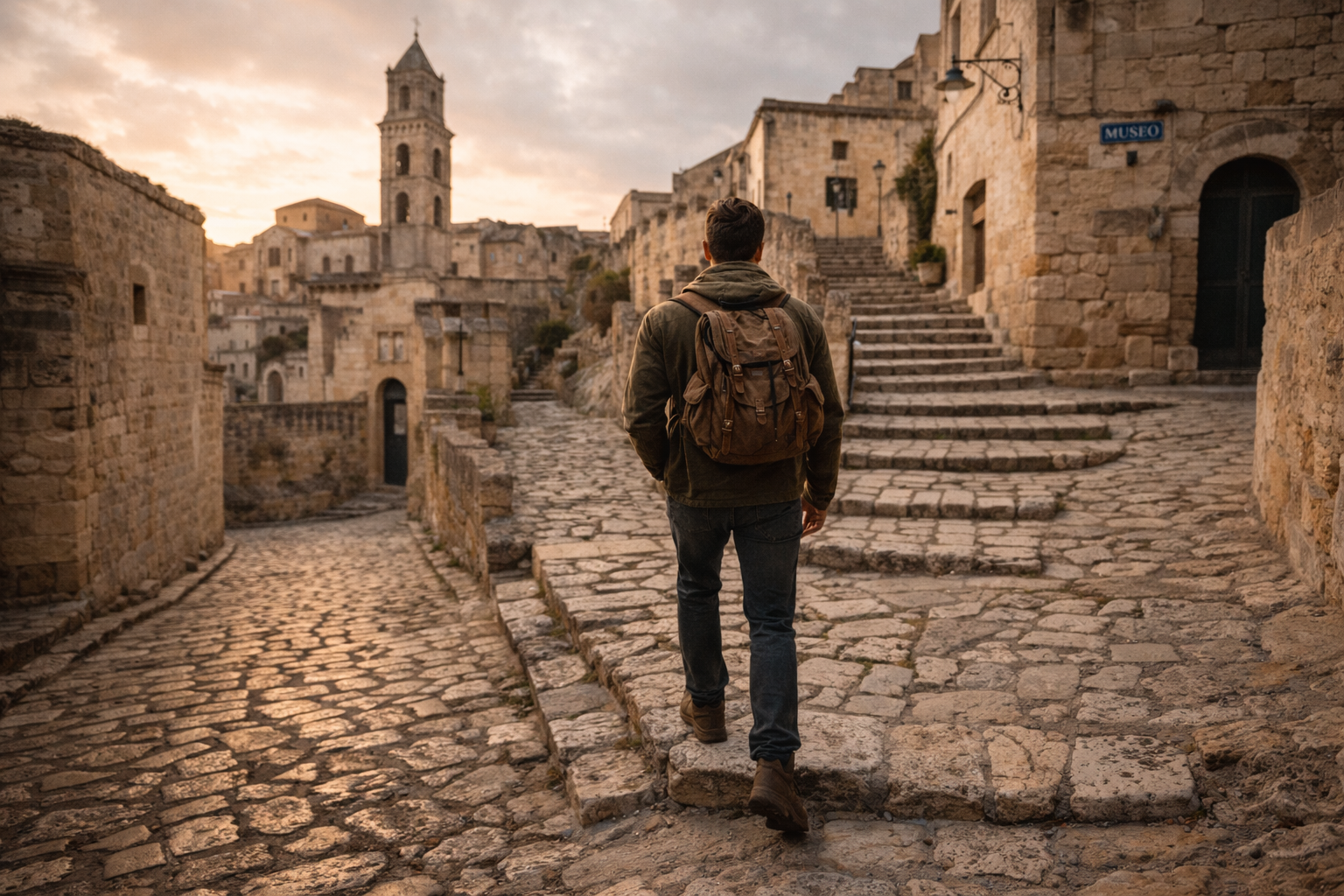
We haven’t changed anything this week, not yet. What we did was look at our lives honestly. Where we are, what we are carrying, and how we show up.
Throughout this week’s Sunday Table, in the Examen, in the body practices, and in the reflections shared, one theme has quietly held everything together: honesty is orientation. When honesty is present, formation becomes possible without force. Energy stops leaking into pretense; the nervous system settles; and potential direction begins to emerge.
Naming the path —Tourist → Pilgrim → Disciple → Builder— is meant to give us language for movement, not a comparison or rank. When we know where we stand, the next step becomes available. This is why honesty, authenticity, and genuineness matter so much at the beginning of a Builder’s Year. Builders don’t begin by proving strength. They begin by standing on solid ground. They know what they can carry and what they cannot yet. They respect formation enough not to rush past it, and themselves enough not to pretend. As this week closes, nothing is finished. But something has been set in place.
Next week, we will begin to explore from Interest to Intention — The Birth of the Pilgrim. That shift does not require certainty or confidence. It requires willingness, a decision to return and to walk with others.
Monday, 9 February — Sant’Apollonia
Patron saint of dentistry and those who suffer physical pain. Her witness reminds us that endurance, when grounded in faith, does not harden the heart but refines it.
Tuesday, 10 February — Santa Scolastica
Twin sister of Saint Benedict and co-founder of Western monastic life. She represents the quiet power of fidelity, prayer, and relational wisdom in shaping lasting structures of life.
Wednesday, 11 February — Beata Vergine Maria di Lourdes
World Day of the Sick. A day dedicated to prayer for healing, caregivers, and those accompanying others through illness—reminding us that care and presence are sacred works.
Thursday, 12 February — Sant’Eulalia
A young witness of courage and truth. Her life speaks to integrity held firmly, even when it costs something.
Friday, 13 February — San Benigno
A reminder that faithfulness often unfolds quietly, strengthened through trial rather than applause.
Saturday, 14 February — San Valentino
Often reduced to romance, Saint Valentine’s deeper legacy is covenantal love… faithful, courageous, and protective of commitment. A fitting patron for marriages, friendships, and love that endures beyond feeling.
Sunday, 15 February — Santi Faustino e Giovita
Patrons of civic courage and brotherhood. Their witness reminds us that faith matures when lived publicly, together, and for the good of the whole.
Today, Valentine’s Day is associated with romance, flowers, and gestures of affection. But the figure behind the celebration, San Valentino, represents something far more demanding—and far more enduring. Valentine was a third-century bishop living under Roman rule at a time when Christian marriage was viewed as a threat to imperial control. According to tradition, Emperor Claudius II believed unmarried men made better soldiers and restricted marriage for young men. Valentine defied the decree, continuing to perform Christian marriages in secret affirming love not as convenience or sentiment, but as covenant.
This act was not romantic in the modern sense; it was pastoral and political. Valentine believed that love grounded in commitment, fidelity, and mutual responsibility formed stronger people and stronger communities. He continued to marry people in defiance of the emperor and for that conviction, he was arrested, imprisoned, and ultimately executed.
Over time, the story softened. Martyrdom gave way to metaphor. Covenant was replaced by chemistry. What remains, however, is a deeper truth worth recovering: Valentine’s witness was not about fleeting affection, but about choosing one another intentionally, even when the cost was real. In that sense, Saint Valentine belongs not only to couples, but to anyone discerning commitment.
Questa settimana non abbiamo cambiato nulla, non ancora. Quello che abbiamo fatto è stato guardare con onestà alle nostre vite. Dove siamo, cosa portiamo con noi e come ci presentiamo.
Durante tutta la Sunday Table di questa settimana, nell'Esame, nelle pratiche corporee e nelle riflessioni condivise, un tema ha tenuto insieme silenziosamente tutto: l'onestà è orientamento. Quando c'è onestà, la formazione diventa possibile senza sforzo. L'energia smette di disperdersi nella finzione, il sistema nervoso si calma e la direzione potenziale comincia ad emergere.
Dare un nome al percorso —Turista → Pellegrino → Discepolo → Costruttore— ha lo scopo di fornirci un linguaggio per il movimento, non un confronto o una classifica. Quando sappiamo dove ci troviamo, il passo successivo diventa disponibile. Ecco perché l'onestà, l'autenticità e la genuinità sono così importanti all'inizio dell'Anno del Costruttore. I Costruttori non iniziano dimostrando la loro forza. Iniziano mettendosi su un terreno solido. Sanno cosa possono portare e cosa non possono ancora portare. Rispettano la formazione abbastanza da non affrettarla e se stessi abbastanza da non fingere. Alla fine di questa settimana, nulla è finito. Ma qualcosa è stato messo in atto.
La prossima settimana inizieremo ad esplorare dall'Interesse all'Intenzione — La nascita del Pellegrino. Questo cambiamento non richiede certezza o fiducia. Richiede volontà, la decisione di tornare e di camminare con gli altri.
Lunedì 9 febbraio — Sant'Apollonia
Santa patrona dell'odontoiatria e di coloro che soffrono di dolori fisici. La sua testimonianza ci ricorda che la perseveranza, quando è fondata sulla fede, non indurisce il cuore, ma lo raffina.
Martedì 10 febbraio — Santa Scolastica
Sorella gemella di San Benedetto e cofondatrice della vita monastica occidentale. Rappresenta il potere silenzioso della fedeltà, della preghiera e della saggezza relazionale nel plasmare strutture di vita durature.
Mercoledì 11 febbraio — Beata Vergine Maria di Lourdes
Giornata mondiale del malato. Una giornata dedicata alla preghiera per la guarigione, per chi presta assistenza e per chi accompagna gli altri nella malattia, ricordandoci che la cura e la presenza sono opere sacre.
Giovedì 12 febbraio — Sant'Eulalia
Una giovane testimone di coraggio e verità. La sua vita parla di integrità mantenuta con fermezza, anche quando questo comporta un costo.
Venerdì 13 febbraio — San Benigno
Un promemoria del fatto che la fedeltà spesso si manifesta in modo silenzioso, rafforzata dalle prove piuttosto che dagli applausi.
Sabato 14 febbraio — San Valentino
Spesso ridotto al romanticismo, l'eredità più profonda di San Valentino è l'amore fedele, coraggioso e protettivo dell'impegno. Un patrono adatto per i matrimoni, le amicizie e l'amore che dura oltre i sentimenti.
Domenica 15 febbraio — Santi Faustino e Giovita
Patroni del coraggio civico e della fratellanza. La loro testimonianza ci ricorda che la fede matura quando è vissuta pubblicamente, insieme e per il bene di tutti.
Oggi, il giorno di San Valentino è associato al romanticismo, ai fiori e ai gesti d'affetto. Ma la figura dietro questa celebrazione, San Valentino, rappresenta qualcosa di molto più impegnativo e duraturo. Valentino era un vescovo del III secolo che viveva sotto il dominio romano in un'epoca in cui il matrimonio cristiano era considerato una minaccia al controllo imperiale. Secondo la tradizione, l'imperatore Claudio II credeva che gli uomini non sposati fossero soldati migliori e limitò il matrimonio per i giovani. Valentino sfidò il decreto, continuando a celebrare matrimoni cristiani in segreto, affermando l'amore non come convenienza o sentimento, ma come patto.
Questo atto non era romantico nel senso moderno del termine, ma era pastorale e politico. Valentino credeva che l'amore fondato sull'impegno, la fedeltà e la responsabilità reciproca formasse persone e comunità più forti. Continuò a sposare le persone sfidando l'imperatore e per questa sua convinzione fu arrestato, imprigionato e infine giustiziato.
Nel corso del tempo, la storia si è ammorbidita. Il martirio ha lasciato il posto alla metafora. Il patto è stato sostituito dalla chimica. Ciò che rimane, tuttavia, è una verità più profonda che vale la pena recuperare: la testimonianza di Valentino non riguardava un affetto fugace, ma la scelta intenzionale l'uno dell'altro, anche quando il costo era reale. In questo senso, San Valentino non appartiene solo alle coppie, ma a chiunque riconosca l'importanza dell'impegno.